This Swamp Thing Artwork Is Worth at Least $10,000 Because of the Iconic Character It Introduced

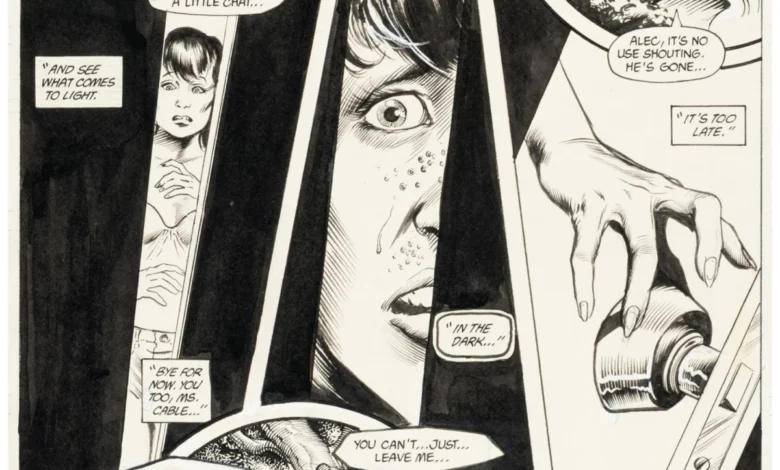
The booming market for vintage comic book memorabilia has achieved another significant milestone at Heritage Auctions, where a rare, hand-drawn interior page from 1985 has captured the intense interest of serious collectors. Page 19 of The Saga of Swamp Thing #37—the historic issue that introduced DC Comics’ iconic occult detective, John Constantine—has gone to public auction with an early opening bid of $10,500. This offering highlights a broader, sustained financial surge in the original comic book art sector, where single pages of historical illustrations routinely command five-figure sums, driven by scarcity, nostalgia, and the enduring multi-media popularity of the characters depicted.
Background Context of the Historic Issue
Published in 1985 during a revolutionary era for American comic books, The Saga of Swamp Thing #37 was written by Alan Moore with artwork penciled by Rick Veitch and inked by John Totleben. At the time, DC Comics was experimenting with more mature, literary, and horror-infused storytelling under its editorial banners, creating an environment where avant-garde concepts could flourish.
Within this specific issue, writers and artists introduced John Constantine, a trench coat-wearing, cynical working-class magician from Liverpool. Notably, the character’s visual design was intentionally modeled after English musician and actor Sting by artist John Totleben. Constantine initially entered the narrative as a mysterious, manipulative supernatural observer who pushed the main protagonist, Swamp Thing, toward a deeper understanding of his own elemental nature.
This single-issue introduction catalyzed a massive narrative shift. The character proved so compelling that he soon spun off into his own dedicated solo series, Hellblazer, launched in 1988 under DC’s Vertigo imprint. Hellblazer went on to publish a historic 300-issue run, establishing Constantine as one of the most resilient, complex, and distinct antiheroes in modern comic book history.
Physical Description and Auction Specifications
The artifact currently listed by Heritage Auctions is a single, one-of-a-kind physical page measuring approximately 10 by 15 inches. Executed in ink over graphite on standard DC Bristol board, the artwork features not only the distinct visage of John Constantine in his original incarnation, but also powerful illustrations of Swamp Thing and Abby Cable.
According to professional grading notes provided by the auction house, the board remains in exceptional condition relative to its age. It exhibits minor, expected signs of historical production use, including slight paper toning, trace smudging, blue editorial production markings, and modest handling wear typical of mid-1980s comic book publishing workflows before the widespread adoption of digital art production. The presence of these traditional editorial artifacts often enhances the appeal for purists who value the raw, unadulterated history embedded within the physical medium.
Chronology of the Comic Art Boom
To understand the current valuation of Page 19, industry analysts point to a rapidly evolving collectibles timeline over the past several decades:
1985: The Saga of Swamp Thing #37 hits newsstands, quietly planting the seeds for a major new franchise within DC Comics’ mature-reader portfolio.
1988: John Constantine receives his own ongoing monthly title, Hellblazer, securing a permanent place in comic book publishing history.
Late 1990s to 2000s: Original comic book artwork transitions from a dismissed byproduct of commercial publishing into a recognized fine art asset class, as collectors begin preserving production pages that were previously discarded or given away to staff.
2005: A live-action feature film adaptation starring Keanu Reeves brings mainstream global visibility to John Constantine, expanding the character’s intellectual property footprint far beyond traditional comic book readers.
2010s to Present: High-end auction houses like Heritage, Sotheby’s, and Christie’s routinely secure record-shattering bids for classic comic books and original illustration boards, with entire collections and key single pages frequently clearing hundreds of thousands of dollars.
Supporting Data and Market Analysis
The valuation of comic book artwork is governed by a distinct set of economic metrics that separate it from printed comic books. While rare printed issues depend largely on the numerical condition grade certified by third-party services like CGC, original art is fundamentally unique—there is only one master page drawn by the artists for any given story sequence.
With standard comic books of the mid-1980s typically averaging around 22 to 24 story pages per issue, the survival rate of complete, key-issue art run sequences is remarkably low. If a single foundational page can command a starting interest level upwards of $10,000, a hypothetical complete interior sequence or cover art piece from a historic milestone issue can scale exponentially higher. Furthermore, market data from recent specialty sales—such as the $30,000 realized for original 1987 Masters of the Universe paintings and substantial six-figure realizations for British comic archives—indicates that 1980s pop culture ephemera is experiencing a massive wave of nostalgic investment from Gen X and Millennial collectors who now possess significant disposable income.
Official Industry Perspectives and Expert Reactions
While auction houses rarely disclose the identities of consignors or prospective bidders prior to the close of a live sale, market observers and comic historians have noted clear trends regarding why specific characters like John Constantine consistently outperform their peers in the secondary market.
According to veteran art dealers and auction catalogers, historical significance remains the primary driver of value. A page that simply features a recurring character in a standard action sequence will command a baseline collector’s fee. Conversely, a page documenting a first appearance, a death, a major costume shift, or the debut of an enduring cultural icon enters the tier of museum-grade collectibles.
Furthermore, the cross-media viability of John Constantine has cemented his long-term financial baseline. Beyond his foundational comic runs, the character has maintained a prominent pop-culture presence through Matt Ryan’s portrayal in NBC’s short-lived Constantine series, subsequent appearances in the CW’s Arrowverse and Legends of Tomorrow, membership in Justice League Dark, and continuous updates surrounding potential cinematic sequels to the 2005 Keanu Reeves film. This diverse multimedia visibility ensures a continuous influx of new fans entering the collector market, thereby underpinning long-term demand for original artifacts tied to his creation.
Broader Impact and Implications for Collectors
The strong early bidding activity surrounding Page 19 of The Saga of Swamp Thing #37 underscores a maturing collector market that increasingly values the physical craftsmanship behind commercial illustration. As original comic art continues to bridge the gap between pop-culture ephemera and recognized fine art, institutional and private collectors are treating these production pages as historical documents rather than mere toys or reading materials.
As the auction draws to its official close, industry analysts will closely monitor the final hammer price. The result will serve as a reliable barometer for the health of the 1980s original art sector, providing further clarity on how much modern investors are willing to pay to own a tangible piece of the creative genesis of modern comic book mythology.