Mutiny Delivers High-Stakes Maritime Thrills in Jason Statham’s Latest Action Showcase

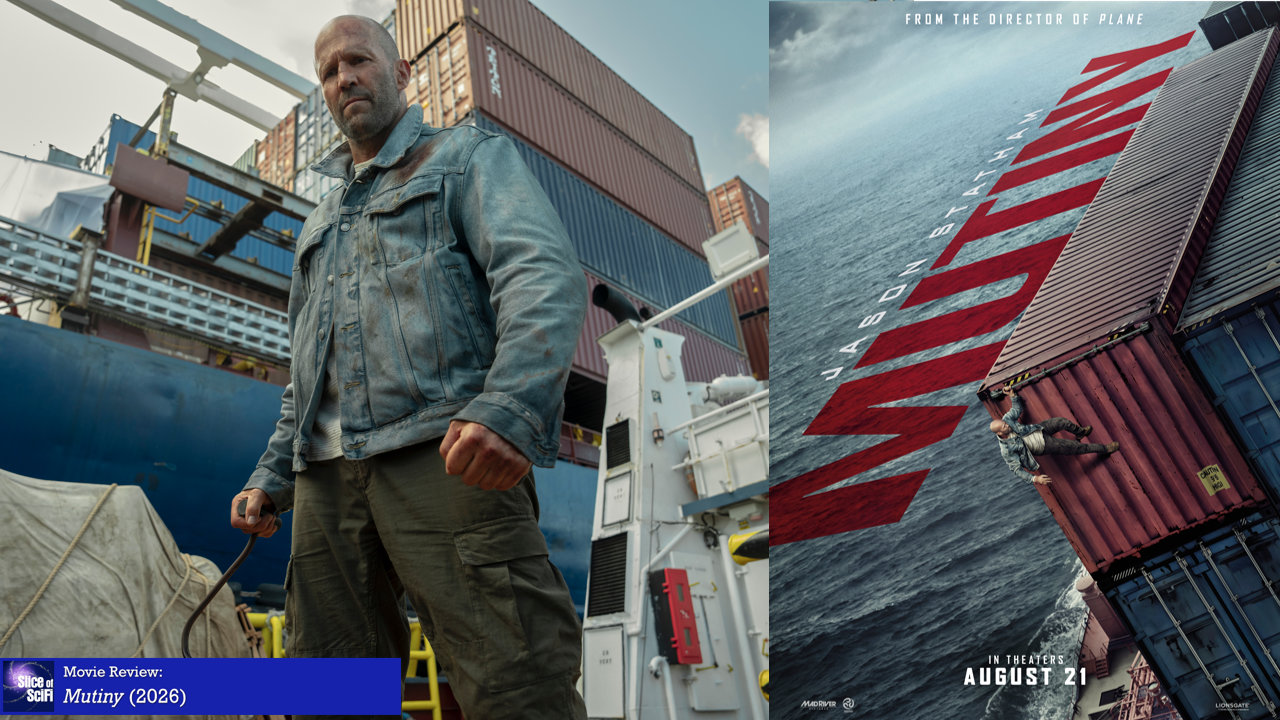
Directed by Jean-François Richet and driven by a compact, high-octane 95-minute runtime, the new action-thriller Mutiny anchors itself firmly within the modern cinematic tradition of high-stakes, uncompromising genre filmmaking. Headlined by action veteran Jason Statham alongside a robust international ensemble cast that includes Annabelle Wallis, Roland Møller, and Adrian Lester, the feature film strips away convoluted subplots in favor of a lean, focused narrative centered on corporate betrayal, maritime human trafficking, and a desperate pursuit of survival on the open ocean.
The Main Facts of the Plot
Mutiny centers on Cole Reed, a professional security operative portrayed by Jason Statham, whose life is upended during a routine assignment protecting a wealthy shipping magnate. Tibu Campallo, played by Ramon Tikaram, and his son Kameron, played by Chaneil Kular, are on the verge of finalizing the lucrative sale of their family-owned shipping enterprise when violence shatters their transition of power. Following a celebratory dinner at the Campallo family estate in Bangkok—where Reed is formally integrated into their inner circle—the patriarch is assassinated in a meticulously planned roadblock ambush executed with automatic weapons fire.
In the immediate aftermath, Reed discovers a crucial piece of physical evidence: an identification card linking one of the slain assailants to a commercial cargo vessel named the Artemis. Before Reed can investigate or clear his name, the mastermind behind the conspiracy, Jaran Daniles (portrayed by Simon Kluth), frames Reed for the murder, issuing an all-points bulletin that casts the seasoned operative as a fugitive.
Simultaneously, Angie Ellis, played by Annabelle Wallis, finds herself involuntarily drawn into the unfolding crisis. A third mate recently returned from an arduous voyage, Ellis is eager to return to Los Angeles to meet mandatory custody arrangements with her young daughter. However, under pressure from maritime employers threatening termination, she reluctantly accepts an emergency deployment aboard the very same ship: the Artemis.
Chronology and Narrative Escalation
The narrative trajectory of Mutiny unfolds in structured phases, moving swiftly from corporate boardrooms in Thailand to the claustrophobic and isolated corridors of a vessel traversing the Andaman Sea.
The story’s timeline begins with an abrupt act of vehicular violence—a car deliberately ramming another on a public thoroughfare—setting a tense, unpredictable tone before the perspective shifts to Cole Reed’s protective detail work. Following the assassination of Tibu Campallo and the subsequent framing of Reed by Jaran Daniles, the protagonist initiates a high-stakes infiltration. Disguising himself as an ordinary crew member, Reed successfully boards the Artemis.
Upon descending into the ship’s subterranean cargo hold, Reed uncovers the central illicit operation driving the conspiracy: a massive human trafficking ring holding vulnerable individuals against their will inside locked shipping containers. The situation escalates when Angie Ellis inspects the cargo hold independently, stumbling upon the smuggled victims and immediately recognizing the gravity of the infraction.
Ellis attempts to report the violation to the vessel’s captain, Marko Madsen, played by Roland Møller. Unbeknownst to Ellis, Captain Madsen and the majority of the ship’s crew are active participants in the criminal conspiracy. Following a tense confrontation in the captain’s quarters, Ellis bolts toward the bridge, successfully transmitting a distress call before being subdued. The transmission is intercepted by a U.S. Navy vessel operating nearby in the Andaman Sea, commanded by an officer played by Adrian Lester. Although Madsen attempts to neutralize the distress signal and fabricate an excuse regarding an accidental transmission prompted by a nearby fishing boat, the U.S. Navy command decides to launch an independent investigation, introducing an external federal dimension to the maritime conflict.
Supporting Data, Production Metrics, and Cast Dynamics
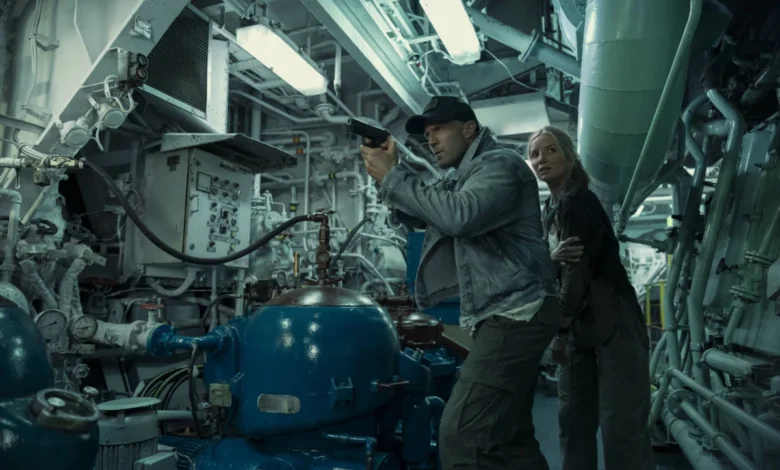
Written by Lindsay Michel and J.P. Davis, Mutiny employs a disciplined 95-minute structure designed to maintain narrative momentum. This economic runtime allows director Jean-François Richet to prioritize practical stunt work, tightly choreographed close-quarters combat sequences, and atmospheric tension. Much of the film’s visual identity relies on the confined, oppressive architecture of the Artemis, where stairwells, machinery rooms, and metallic corridors substitute for open spaces, creating an inescapable sense of claustrophobia.
The production benefits significantly from its supporting cast. Annabelle Wallis delivers a grounded performance as Angie Ellis, eschewing conventional cinematic tropes by portraying a character who is immediately competent, physically resilient, and morally steadfast without sacrificing emotional vulnerability regarding her family obligations. Roland Møller provides a formidable antagonistic presence as Captain Madsen, balancing corporate criminality with physical intimidation. Meanwhile, Adrian Lester anchors the naval subplot with a composed, analytical performance that contrasts sharply with the relentless violence unfolding aboard the cargo vessel.
Action choreography within the film departs from standard firearm exchanges, incorporating the unique environment of a working ship. Alongside traditional weaponry, characters utilize specialized maritime tools, including harpoons and industrial equipment, enhancing the visceral nature of the confrontations. Stunt sequences on the exterior hull of the Artemis showcase inventive spatial navigation as Reed utilizes non-traditional pathways to evade hostile crew members.
Broader Impact and Genre Implications
Within the broader landscape of contemporary action cinema, Mutiny exemplifies the enduring commercial viability of mid-budget, star-driven thrillers. By anchoring high-concept violence within a grounded, socially relevant framework—specifically the exploitation of maritime logistics networks for human trafficking—the film elevates itself above standard revenge narratives.
Furthermore, the integration of a parallel military intelligence investigation through the U.S. Navy subplot provides structural relief from the relentless interior violence of the ship, offering audiences a dual-perspective narrative structure. The resolution of the conspiracy ties together the initial corporate assassination, the logistical operations of the Artemis, and the systemic corruption within international shipping lanes.
Ultimately, Mutiny delivers a polished, efficient cinematic experience that relies on tight pacing, committed performances, and technical precision. By prioritizing direct narrative progression over distracting subplots, the film stands as a disciplined entry in the modern action-thriller catalog, appealing directly to enthusiasts of high-seas adventure and tactical survival narratives.