The State of Cooperative Gaming in 2026: How Creative Design and Long-Awaited Releases Are Redefining Multiplayer Play

The landscape of interactive entertainment has shifted decisively toward cooperative multiplayer titles, a genre that has steadily eclipsed strictly competitive and solitary experiences in terms of active player engagement and retention. Throughout 2026, the video game industry has delivered a robust slate of games engineered specifically for collaborative play, with many titles featuring exceptional longevity and deep replayability mechanics. As developers continue to issue major system overhauls and content expansions slated throughout late 2026 and early 2027, the infrastructure supporting multiplayer gaming is experiencing a technical and structural renaissance.
Navigating the Shift Away From Generic Multiplayer Design
In recent years, industry critics and consumers frequently raised concerns regarding market oversaturation, often using pejorative terms to describe low-effort, trend-chasing multiplayer releases that flooded digital storefronts. However, market data from major analytics firms indicates that generic, uninspired cooperative titles are rapidly dwindling in commercial viability. Instead, developers are finding success by addressing core systemic complaints through direct implementation of player feedback, resulting in refined mechanics, unique thematic frameworks, and innovative cooperative loops.
As the industry enters the final quarter of 2026 release schedules, a distinct cohort of standout cooperative titles has emerged. These games distinguish themselves not merely through shared player counts, but by introducing asymmetrical mechanics, physics-driven coordination challenges, and dynamic sandbox environments that reward structured teamwork over repetitive action loops.
Valheim 1.0: A Monumental Milestone for Survival Gaming
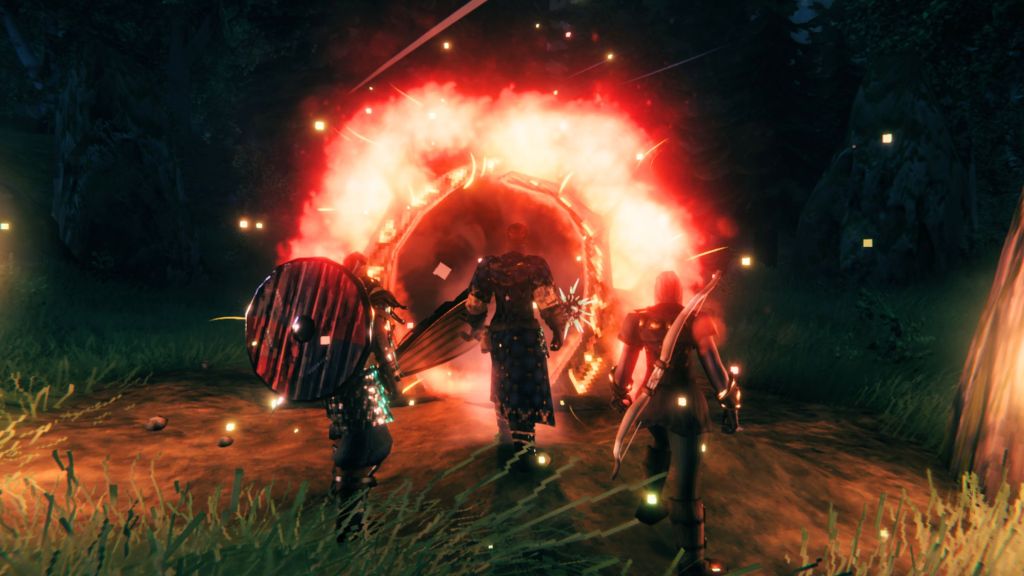
Following an extensive tenure in early access that began in early 2021, Iron Gate and Coffee Stain Studios officially launched the 1.0 version of Valheim on September 9, 2026. The milestone release mirrors the celebrated developmental trajectories of other long-form early access successes, such as Unknown Worlds’ Subnautica and Supergiant Games’ Hades series.
The official launch brings a comprehensive structural overhaul to the Norse-themed survival sandbox, most notably introducing the Deep North biome. This endgame region presents extreme environmental hazards, advanced crafting tiers, and formidable new adversaries designed specifically to test coordinated multiplayer teams. Furthermore, the 1.0 deployment coincides with strategic platform expansions, bringing native support to the PlayStation 5 and Nintendo Switch 2. This expanded hardware footprint has significantly streamlined cross-platform cooperative sessions, widening the player base and stabilizing server infrastructure.
Industry analysts have noted that Valheim’s sustained relevance over a five-year development cycle demonstrates the viability of community-driven design. By continually refining core gameplay loops based on millions of concurrent player hours, the development team has ensured that cooperative base-building, seafaring expeditions, and boss progression yield dozens—if not hundreds—of hours of cohesive gameplay per user.
Physics-Based Frustration and Coordination in Hold Your King
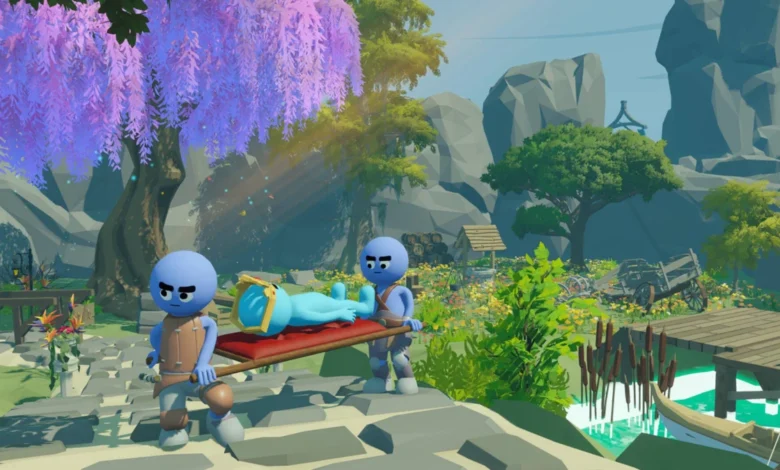
Shifting from expansive open-world survival to hyper-focused cooperative coordination, Next Big Game Studio’s Hold Your King has carved out a unique niche within the physics-based platforming genre. Reminiscent of titles like Chained Together, the game requires absolute synchronization between participants, tasking players with jointly transporting an unconscious monarch across treacherous, trap-laden terrains on a stretcher.
The core gameplay functions as an interactive puzzle where momentum, velocity, and spatial awareness dictate success. Players must continuously adjust their walking speed and angular momentum to navigate sudden drops, swinging blades, and unstable bridges. Adding a layer of dark humor and mechanical depth, participants are permitted to directly manipulate the king’s body—either by using tactical strikes to steady him during transit or by repositioning him manually—though excessive mistreatment risks invoking the monarch’s wrath.
While this sub-genre of frustration-focused multiplayer games historically occupies a polarizing space among consumers, industry observers point out that Hold Your King avoids monotony by introducing rigorous biomechanical variety. The precise calculation required for every step ensures that communication remains paramount, elevating the title above a mere novelty into a genuine test of interpersonal cooperation.
SWAMPMEAT: Asymmetrical Rogue-Lite Combat and Adaptive Mechanics
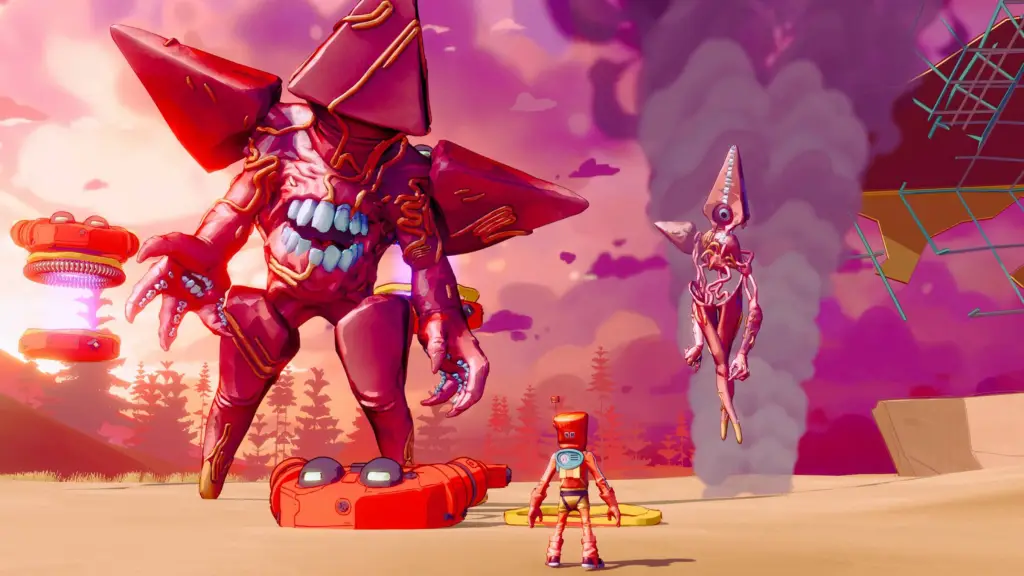
Developed by One More Game, SWAMPMEAT approaches the one-to-four player cooperative shooter space through an inventive, highly chaotic lens. Players assume the roles of Squishy, a shape-shifting operative employed by the fictional Rangus Corp., tasked with harvesting and utilizing the anatomical components of defeated alien adversaries.
The game’s rogue-lite architecture dynamically scales enemy spawn rates and compositions based on the number of active players in a session. This mechanics-driven scaling results in a high volume of dropped enemy parts on screen, unlocking thousands of potential power-combining permutations. Participants can rapidly scavenge enemy limbs to acquire specialized combat attributes, subsequently shedding them as tactical requirements shift throughout a run.

Positioned alongside established cooperative benchmarks like Risk of Rain 2 and Helldivers 2, SWAMPMEAT utilizes procedurally generated landscapes and four distinct difficulty tiers to maximize replayability. According to early sales data and platform metrics, the title’s arcade-style pacing resonates strongly with groups looking to push cooperative progression systems to their absolute limits.
Big Walk: Large-Scale Emergent Social Play
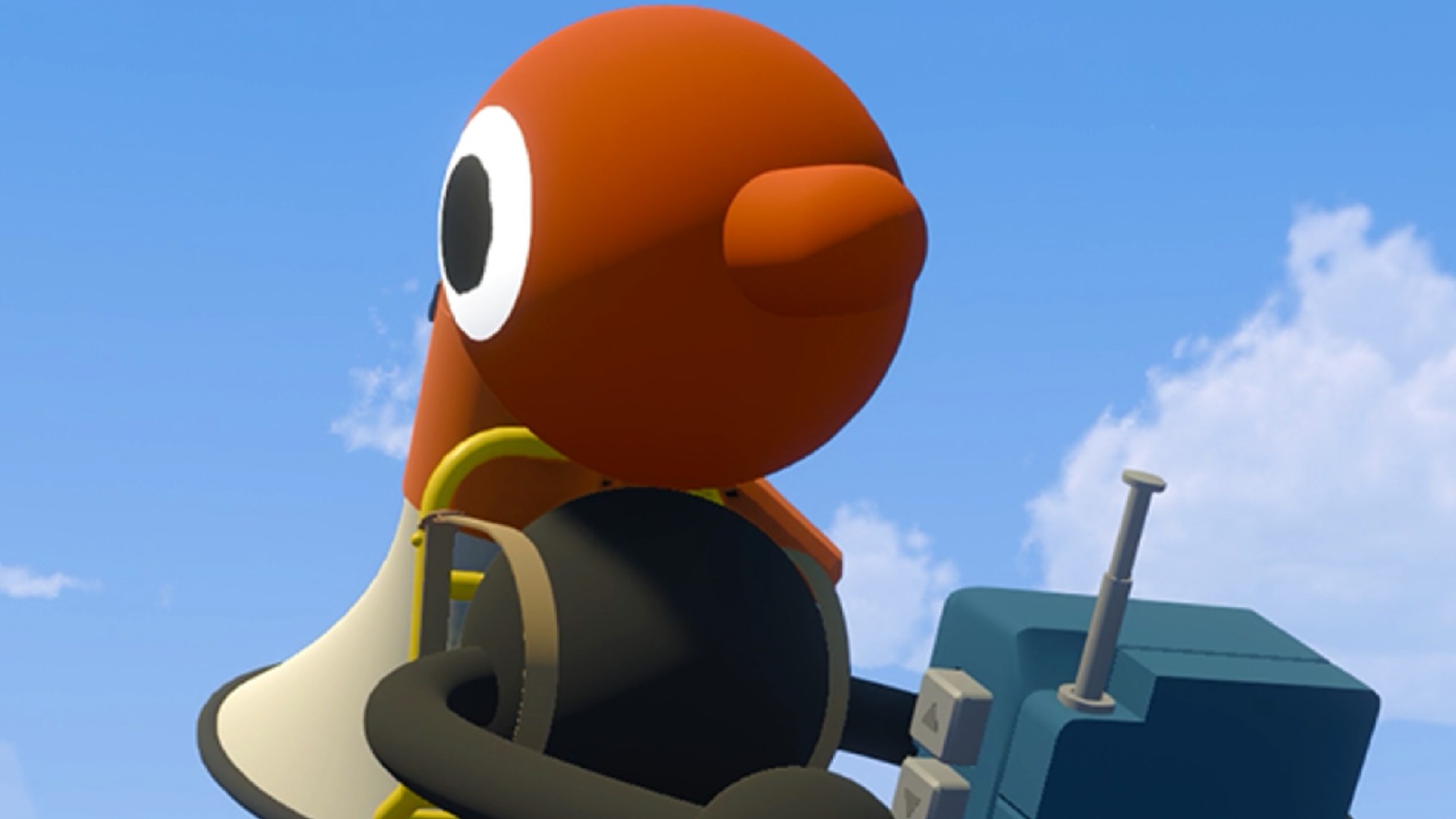
House House, the studio renowned for Untitled Goose Game, has fundamentally rethought scale and pacing in multiplayer environments with Big Walk. Supporting up to 12 players simultaneously, the cooperative puzzle adventure deliberately eschews traditional combat and explicit directional objectives, instead prioritizing ambient exploration and social interaction.
Upon entering the game, participants are dropped into a vast natural landscape with no prescribed path, tasked simply with walking, coordinating movements, and customizing avatar aesthetics. The title utilizes advanced proximity chat systems, incorporating spatial audio attenuation and a dynamic day-night cycle to foster an immersive atmosphere reminiscent of a real-world hiking excursion.
As groups traverse the environment, structured objectives emerge organically. Players collaborate to solve environmental puzzles, gathering items necessary to unlock regional access keys. These keys progressively alter the map’s layout and introduce new transit mechanics, including functional ski lifts and rail systems. Crucially, Big Walk imposes no linear restrictions on problem-solving. Teams can fragment into smaller exploratory units or cluster together to tackle complex spatial tasks, establishing a low-pressure, emergent social space that reflects a broader industry appetite for relaxing, non-competitive multiplayer experiences.
Broader Industry Implications and Market Forecast
The commercial and critical performance of titles like Valheim 1.0, Hold Your King, SWAMPMEAT, and Big Walk highlights a maturation within the cooperative multiplayer market. Publishers are increasingly recognizing that sustained player engagement relies less on aggressive monetization or superficial live-service treadmills, and more on systemic depth, player agency, and robust cross-platform accessibility.
As development studios look toward the remainder of the decade, the integration of advanced physics engines, scalable difficulty loops, and nuanced communication tools will likely remain standard benchmarks for successful cooperative design. By shifting focus toward unique mechanics that require genuine collaboration, developers are successfully transforming the cooperative genre from a transient trend into a permanent cornerstone of modern interactive entertainment.