The Quest for the Competitive Edge: Evaluating Refresh Rate Diminishing Returns in Esports

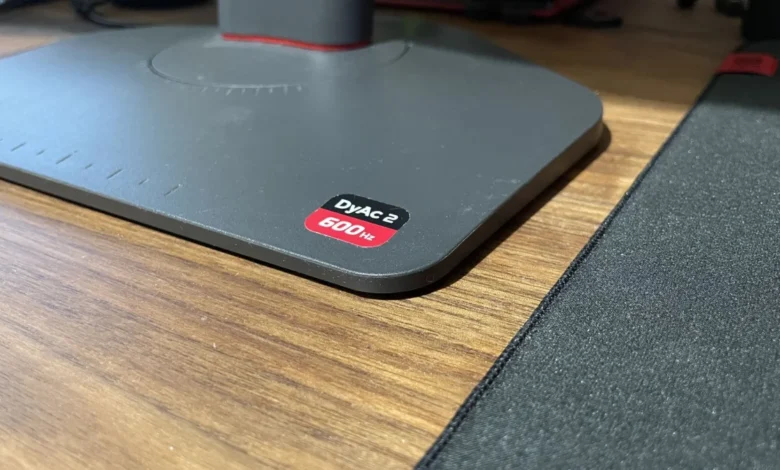
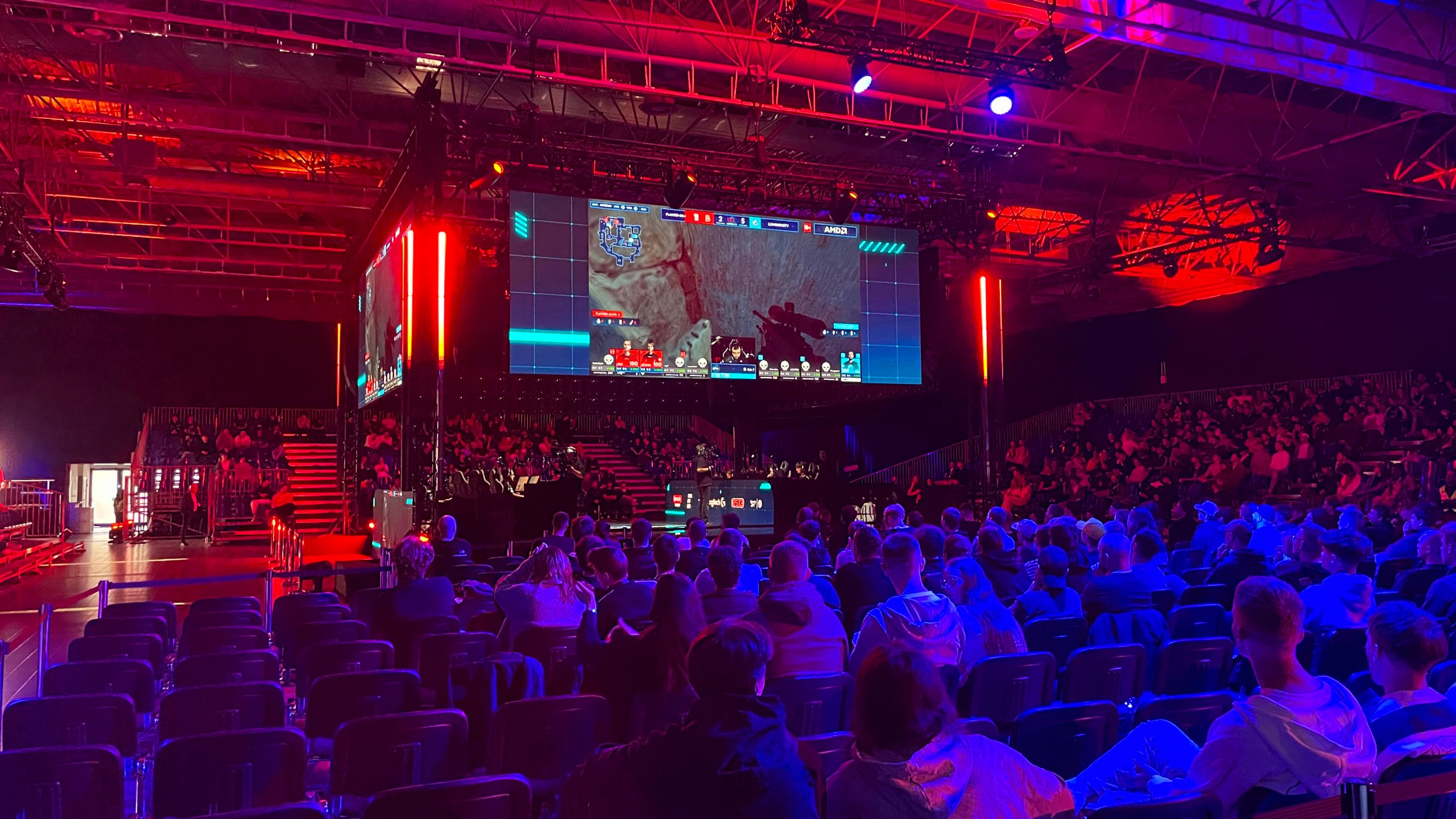
The pursuit of absolute parity between player input and visual feedback has driven the esports hardware industry toward increasingly aggressive refresh rate benchmarks, leading to the emergence of 600 Hz monitors as the new frontier for professional competitive gaming. At the recent Logitech G Play event in Warsaw, Poland—a focal point for the intersection of professional Counter-Strike 2 (CS2) competition and cutting-edge peripheral technology—the debate regarding whether these ultra-high refresh rates provide a tangible performance advantage or represent a plateau in technological utility reached a critical inflection point.
The Technological Arms Race in Professional Esports
For over a decade, the standard for competitive first-person shooters (FPS) shifted from 60 Hz to 144 Hz, then to 240 Hz, and eventually to the current 360 Hz baseline. This progression has been fueled by the desire to minimize system latency and maximize motion clarity, essential factors for high-precision aim-tracking in titles like Valve’s Counter-Strike 2.
The introduction of 600 Hz display technology, pioneered by manufacturers such as Zowie, marks a potential shift into a realm of diminishing returns. To understand the impact of these displays, one must look at the entire ecosystem of a gaming PC. A monitor’s refresh rate is only as effective as the frame rate output by the GPU and CPU. In a title as resource-intensive as CS2, achieving a consistent 600 frames per second (FPS) requires top-tier hardware, such as the AMD Ryzen 7 7800X3D and high-performance dedicated graphics cards. Even with such configurations, maintaining a stable 600 FPS is challenging, often resulting in fluctuations that render the benefits of a 600 Hz panel secondary to the stability of the frame delivery.
Perspectives from the Professional Circuit
During the Logitech G Play event, professional players from Luminosity Gaming provided first-hand insights into the transition from 360 Hz to higher thresholds. Oscar Bell, known in the community as ‘Azuwu,’ noted that while the jump from 240 Hz to 360 Hz was a noticeable improvement in fluidity, the subsequent climb toward 600 Hz lacks the same degree of impact.
"When I was using a 240 Hz monitor at home, the transition to 360 Hz was not immediately intuitive," Bell stated. "However, once I adjusted to the 360 Hz standard, returning to a lower refresh rate felt restrictive. Regarding the jump to 600 Hz, I view it as an incremental enhancement rather than a transformative one. 400 Hz represents a comfortable threshold for most competitive scenarios, and while 600 Hz is technically superior, the current reality of PC performance means hitting that frame rate consistently is rarely feasible in a live tournament setting."
Echoing this sentiment, teammate Simon Boije (‘yxngstxr’) highlighted the role of psychological factors and hardware limitations. "There is a degree of placebo effect involved," Boije observed. "If a machine cannot output 600 frames per second, a 600 Hz monitor cannot synthesize information that isn’t being generated. At that level of saturation, the hardware performance of the PC becomes the primary bottleneck, rendering the higher refresh rate largely theoretical for the majority of gameplay instances."
The Role of Motion Clarity: DyAc and Beyond
Beyond raw refresh rates, the conversation among professionals has shifted toward motion clarity technology. Proprietary features, such as Zowie’s DyAc (Dynamic Accuracy), have become a staple for professional setups. DyAc utilizes backlight strobing to reduce motion blur, allowing players to track moving targets with greater precision during rapid camera movements.
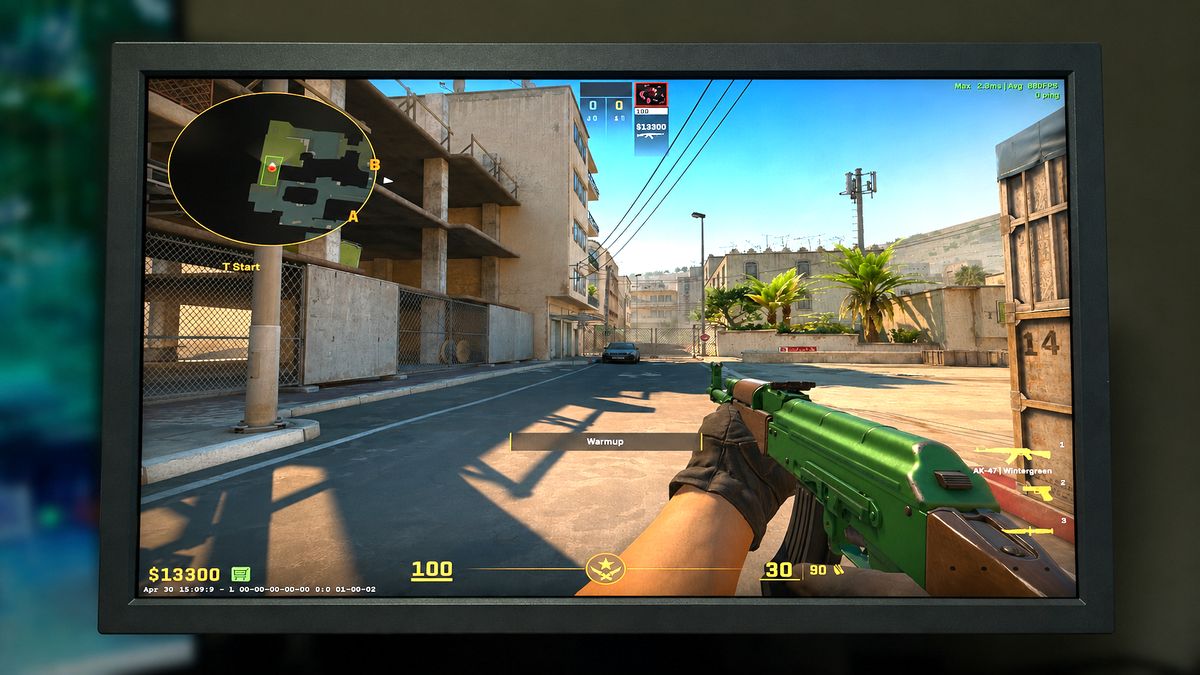
Boije emphasized that for professional-grade play, the clarity provided by anti-ghosting and strobing technologies often outweighs the sheer quantity of frames. "The edge of the player models becomes significantly more defined with these features enabled," he explained. "When you are competing at the highest level, distinguishing a player from the background during a flick shot is a matter of milliseconds. That clarity is where the real competitive advantage lies."
While these technologies are highly regarded, they remain a point of subjective preference. Bell noted that he maintains these settings but finds the practical, observable difference to be nuanced. This reflects a broader trend in professional esports where players often prioritize consistency and familiarity over experimental features that may introduce flickering or brightness variations.
Analytical Implications of Hardware Saturation
The technical data supports the anecdotal observations of the players. In the context of visual perception, the human eye is capable of processing information at incredibly high speeds, yet there is a threshold where the reduction in input lag—the time between a mouse click and the corresponding action appearing on screen—becomes negligible.
Moving from 60 Hz to 144 Hz results in a massive reduction in latency (roughly 10 milliseconds). Moving from 360 Hz to 600 Hz results in a reduction of less than 2 milliseconds. For a professional player, every millisecond is valuable, but this must be weighed against the potential for system instability. If a user forces a 600 Hz refresh rate but their hardware only outputs 450 FPS, they may experience frame pacing issues or screen tearing, which are more detrimental to competitive integrity than a slightly lower, but perfectly synchronized, refresh rate.
Historical Context and the Path Forward
Historically, the monitor market was driven by resolution, moving from 1080p to 1440p and 4K. However, in the competitive esports segment, resolution has largely stagnated at 1080p or 1440p to prioritize speed. The current focus on 500+ Hz displays suggests that we are reaching the physical limits of current display interfaces, such as DisplayPort 1.4 and HDMI 2.1, which struggle to push such massive amounts of data without significant compression.
As the industry looks toward the next generation of hardware, the question remains whether the focus should remain on increasing raw refresh rates or improving other metrics, such as color accuracy, panel response times, and overall system latency (often measured by technologies like NVIDIA Reflex).
Conclusion: Finding the Sweet Spot
The consensus emerging from the professional scene suggests that 360 Hz has indeed become the "sweet spot" for competitive FPS titles. It provides a level of fluid motion that is perceptibly superior to legacy standards while remaining achievable for high-end professional hardware.
The push for 600 Hz and beyond serves as a testament to the industry’s commitment to innovation, but it also highlights a shift in focus. The marginal gains provided by these extreme refresh rates are increasingly overshadowed by the need for system-wide stability and advanced motion clarity features. For the average competitive player, the path to improvement remains rooted in hardware that offers consistent performance and reliable input latency, rather than chasing the theoretical ceiling of ultra-high refresh rates that the current generation of PC architecture is still struggling to fully realize. As developers continue to optimize game engines like Source 2, and monitor manufacturers refine backlight technology, the definition of the "competitive standard" will continue to evolve, but it will likely do so with a greater emphasis on efficiency rather than pure, brute-force speed.
Related posts: