Christmas at the Kringles: Talking with the Filmmakers Reveals Behind-the-Scenes Chaos of a Holiday Horror Romp

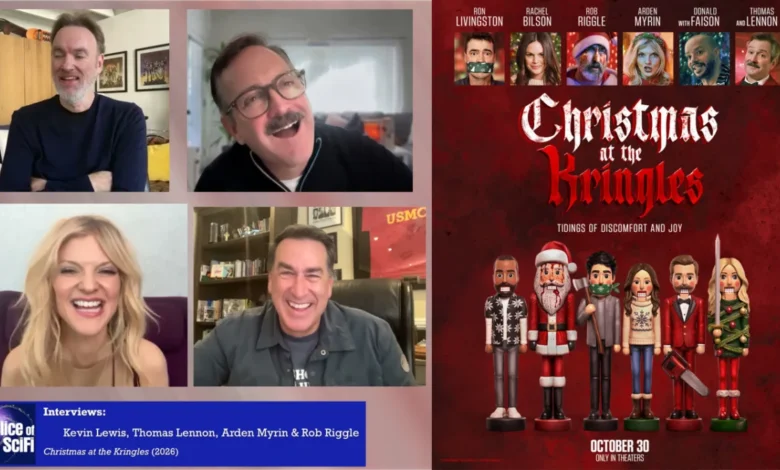
The subgenre of holiday-themed horror-comedy has carved out a distinct and fiercely loyal niche within contemporary cinema, offering audiences a subversive alternative to the traditional, saccharine sentimentality of conventional festive viewing. From classic cult favorites like Black Christmas and Gremlins to modern hits such as Kramps and Violent Night, the intersection of yuletide cheer and visceral terror provides a unique sandbox for filmmakers looking to subvert expectations. The latest entry into this chaotic cinematic canon is Christmas at the Kringles, a feature film that leans heavily into bloody action, practical effects, and dark comedic timing. Recently, the creative forces behind the project—including director Kevin Lewis and principal cast members Thomas Lennon, Arden Myrin, and Rob Riggle—sat down for an extensive discussion to dissect the meticulous planning, physical demands, and absolute glee involved in bringing this chaotic North Pole-adjacent nightmare to the silver screen.
Main Facts and Production Overview
At its core, Christmas at the Kringles is designed as an energetic, high-stakes collision between family holiday dysfunction and unbridled cinematic violence. Helmed by director Kevin Lewis, whose background in genre filmmaking has well-equipped him for the logistical nightmares of blending humor with horror, the production was a massive undertaking that prioritized tangible, tactile filmmaking over digital shortcuts. Lewis and his crew opted to utilize as many practical special effects as physically possible, a decision that significantly elevated the authenticity of the carnage on screen while presenting unique hurdles for the actors and stunt coordinators alike.
The narrative revolves around an eccentric, deeply unhinged family dynamic anchored by patriarch Nick Kringle, played with manic energy by Thomas Lennon, and matriarch Carol Kringle, brought to life with calculated camp by Arden Myrin. Adding to the heavy-hitting comedic and action lineup is Rob Riggle, who steps into the role of Battle Santa—a character whose very title suggests a radical departure from the jolly, gift-giving figure of folklore. Together, the ensemble navigates a third act defined by relentless destruction, wherein actors and elaborate set pieces alike are subjected to a barrage of physical gags, combat choreography, and catastrophic property damage.
Directorial Vision: Balancing Slapstick and Slaughter
Directing a horror-comedy requires a razor-thin balancing act. If the comedy plays too broadly, the stakes evaporate and the horror loses its teeth; if the violence is too grim, the film risks alienating audiences looking for a fun, popcorn-eating experience. For director Kevin Lewis, achieving this tonal equilibrium was the central challenge of the production, particularly as the film barrels toward its explosive third act.
In discussing the creative process, Lewis emphasized the delicate science of comedic timing amidst total physical chaos. When sets are being systematically destroyed and actors are being tossed across rooms or pelted with debris, every gag must be choreographed with the precision of a silent film slapstick routine, yet executed with the grit of an action picture. Furthermore, Lewis’s commitment to practical effects meant that the destruction witnessed by viewers was largely happening in real-time on the soundstage. Stunt performers, actors, and prop masters worked in tandem to ensure that squibs, breakaway furniture, and specialized holiday-themed weaponry functioned seamlessly. This hands-on approach not only fostered a palpable sense of camaraderie among the cast but also grounded the surreal, over-the-top premise in a tactile reality that CGI-heavy productions often struggle to achieve.
Character Conception and Cast Perspectives
The success of Christmas at the Kringles heavily relies on its ensemble cast fully committing to the absurd premise without winking at the audience. During the retrospective discussion, the actors elaborated on how they crafted their respective characters, blending idiosyncratic behavioral quirks with high-octane physical performance.
Thomas Lennon as Nick Kringle
Stepping into the boots of the crazy family patriarch Nick Kringle, comedian and actor Thomas Lennon embraced the role with characteristic zeal. Lennon discussed his unique interpretation of the character, noting that playing a deranged household head required a fine-tuned blend of paternal authority and unhinged unpredictability. Rather than relying on stunt doubles for the majority of the physical altercations, Lennon insisted on doing most of his own fighting, specifically during the grueling sequences opposite co-star Peter Livingston. This hands-on approach added a layer of frantic realism to their confrontations. When asked about the prospect of revisiting the holiday horror landscape in the future, Lennon expressed enthusiastic interest, signaling that his appetite for festive carnage has not been satiated by a single outing.
Arden Myrin as Carol Kringle
Arden Myrin brought a distinct satirical flair to the matriarch of the household, Carol Kringle. Describing the character’s behavior and personality quirks, Myrin painted a picture of a woman driven by intense social ambitions and deeply buried neuroses—essentially channeling what she playfully termed the "Real Housewives of the North Pole." To visually communicate Carol’s manic devotion to holiday aesthetics, Myrin worked closely with the wardrobe department to customize a specialized Christmas wardrobe characterized by excessive ornamentation, blindingly bright color palettes, and aggressive elegance. Behind Carol’s hyper-polished smile and festive sweaters lies a deeply volatile personality, giving Myrin ample room to explore the dark comedic undercurrents of domestic holiday stress.
Rob Riggle as Battle Santa
Perhaps no character encapsulates the genre-bending nature of the film quite like Battle Santa, played by comedic powerhouse Rob Riggle. Preparing for the role required a rigorous physical regimen, particularly given the extensive combat choreography Riggle shared with veteran actress Beverly D’Angelo. Riggle described the character as the physical embodiment of a Santa Claus pushed to the absolute brink, taking up arms to violently safeguard the true spirit of Christmas from external threats.
However, embodying an action-hero iteration of Saint Nick came with unexpected occupational hazards. Riggle humorously recounted the perils of shooting action sequences while completely committed to the visual motif of the character, noting the surprisingly dangerous nature of having copious amounts of glitter permanently embedded in his facial hair for weeks on end. Despite the cosmetic annoyances and physical bruises accrued during production, Riggle left the door wide open for a potential sequel, jokingly teasing preparations for a "Round 2" if the audience demands it.
The Evolution of Holiday Horror-Comedy
The release and reception of Christmas at the Kringles arrive at a fascinating juncture for genre cinema. For decades, holiday programming was strictly bifurcated into two mutually exclusive categories: wholesome, family-friendly holiday classics meant to evoke nostalgia and warmth, and grim, unrelenting slasher films that utilized holidays merely as a thematic backdrop for stalking victims. However, the twenty-first century has witnessed a renaissance of hybrid cinema that intentionally mashes these two opposing forces together.
This shift reflects changing audience tastes. Modern moviegoers increasingly appreciate genre subversion, dark irony, and tonal whiplash. Films that successfully marry the cozy iconography of decorated trees, twinkling lights, and festive music with high-stakes violence and slapstick humor offer a cathartic release. The holiday season, despite its cultural associations with peace and joy, is universally recognized as a period of immense stress, forced familial proximity, and commercial exhaustion. By channeling those very real anxieties into exaggerated, blood-soaked horror-comedies, filmmakers provide an entertaining outlet for collective tension.
Furthermore, the logistical reliance on practical effects seen in Christmas at the Kringles speaks to a broader industry trend. As audiences grow increasingly fatigued by heavy digital compositing and computer-generated spectacles, films that highlight tactile stunts, makeup effects, and physical set destruction are experiencing a resurgence in critical and commercial favor. The tangible grit of practical filmmaking enhances the comedy by making the physical punishment look and feel immediate, dangerous, and absurdly funny.
Broader Implications and Audience Engagement
As Christmas at the Kringles continues to find its audience through specialized platforms, podcasts, and digital distribution, the film’s creative team is actively engaging with fans to gauge the appetite for more holiday-themed genre mashups. The ongoing dialogue between filmmakers and the sci-fi and horror community highlights the growing importance of direct-to-fan engagement in contemporary indie and mid-budget filmmaking.
The success of projects like this relies heavily on word-of-mouth promotion from dedicated genre enthusiasts who champion unique, risk-taking cinema. Whether horror-comedies set during sacred cultural holidays will ever fully displace traditional holiday fare remains unlikely, but their expanding footprint on the cinematic landscape is undeniable. They have carved out a permanent, highly anticipated seasonal slot for viewers who prefer their stockings stuffed with laughter and a healthy dose of cinematic mayhem.
As the discourse surrounding the film demonstrates, the intersection of comedy and horror requires a rare alchemy of talented casting, disciplined direction, and a willingness to embrace the ridiculous. With Kevin Lewis at the helm and a cast featuring Lennon, Myrin, and Riggle operating at the peak of their comedic and physical abilities, Christmas at the Kringles stands as a testament to the enduring appeal of holiday subversion. Whether audiences ultimately choose to keep their festive cheer and their horror strictly separated or enthusiastically mix them together under the mistletoe, productions like this ensure that the cinematic landscape remains unpredictable, daring, and unapologetically entertaining.