Elizabeth Olsen Addresses Scarlet Witch’s Potential Return in Avengers: Doomsday Amidst Persistent MCU Speculation

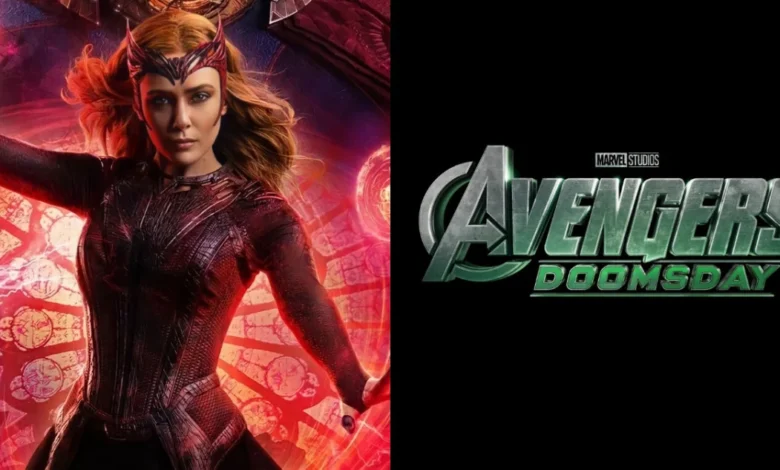
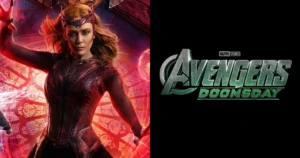
Elizabeth Olsen, the acclaimed actress behind the Marvel Cinematic Universe’s formidable Scarlet Witch, Wanda Maximoff, has once again become the focal point of intense fan speculation regarding her character’s future, particularly concerning the highly anticipated film, Avengers: Doomsday. At a recent appearance at the Chicago Comics and Entertainment Expo (C2E2), Olsen was directly confronted with questions about her involvement in the upcoming superhero epic, offering a response that, while seemingly dismissive, has only fueled further conjecture among the global fanbase. Her comments underscore the pervasive secrecy surrounding major MCU projects and the unique position her character holds within the franchise’s evolving narrative.
Wanda Maximoff’s journey in the MCU has been nothing short of transformative, evolving from a vengeance-driven Sokovian experiment to one of the most powerful and tragically complex figures in the cinematic universe. Introduced alongside her brother Pietro in a post-credits scene for Captain America: The Winter Soldier (2014) before making her full debut in Avengers: Age of Ultron (2015), Wanda’s initial powers stemmed from HYDRA’s experiments with the Mind Stone. Over successive films, including Captain America: Civil War (2016), Avengers: Infinity War (2018), and Avengers: Endgame (2019), her abilities grew exponentially, culminating in her embracing the mantle of the Scarlet Witch, a mystical designation rooted in ancient prophecy.
Her character reached unprecedented narrative depth and prominence in the Disney+ series WandaVision (2021), a groundbreaking exploration of grief, reality manipulation, and the true extent of her Chaos Magic. This series cemented her status as a central figure, directly influencing subsequent multiversal events. Her arc continued dramatically in Doctor Strange in the Multiverse of Madness (2022), where she became the primary antagonist, corrupted by the Darkhold and driven by a desperate desire to reunite with her children, Billy and Tommy, in an alternate reality. The film concluded with Wanda seemingly sacrificing herself to destroy all copies of the Darkhold across the multiverse, bringing Mount Wundagore down upon herself. This ambiguous "death" has left the door wide open for her return, making her absence in future pivotal events almost unthinkable for many viewers.
The enduring impact of the Scarlet Witch’s actions, even years after her apparent demise, is a testament to the character’s significance. Her manipulation of reality, her mastery of Chaos Magic, and her deep emotional ties to the fabric of the MCU have established her as a linchpin in any discussion of the franchise’s future. This narrative weight is precisely why persistent rumors have linked Elizabeth Olsen to a substantial role in Avengers: Doomsday, a film whose title itself hints at a confrontation with one of Marvel’s most iconic and formidable villains, Doctor Doom.
At the Chicago Comics and Entertainment Expo, the question of Avengers: Doomsday was inevitably posed to Olsen, given her character’s central role in the MCU’s recent mythological developments. Her response, delivered with a characteristic blend of earnestness and potential evasiveness, was succinct: "I know nothing. I know about VisionQuest, because I’ve seen Paul [Bettany] in the last six months. I know nothing about any of it. Is [Secret Wars] what happens after? I’m not kidding. Why did I think there were two Secret Wars? Are there not?" This statement, reported by ComicBookMovie.com, served to highlight the tight-lipped nature of Marvel Studios, a practice well-known within the industry to preserve plot integrity and surprise reveals.
Olsen’s acknowledgement of VisionQuest, the upcoming Disney+ series centered on Paul Bettany’s Vision, offers a tantalizing, albeit indirect, connection to her character’s past. Wanda and Vision’s tragic love story is a cornerstone of the MCU, and any project involving Vision naturally raises questions about Wanda’s potential involvement, even if only in a flashback or a multiversal context. However, her professed ignorance regarding Avengers: Doomsday and her confusion about the Secret Wars timeline ("Why did I think there were two Secret Wars? Are there not?") could be interpreted in multiple ways. It could be genuine, reflecting the fragmented nature of Marvel’s production information, where actors often only receive scripts pertinent to their scenes. Alternatively, and perhaps more likely given Marvel’s history, it could be a carefully crafted deflection, a standard operating procedure for actors tasked with guarding major plot spoilers.
The precedent for Marvel actors feigning ignorance or outright denying involvement in major projects is well-established. Perhaps the most famous recent example involved Andrew Garfield and Tobey Maguire’s repeated denials of their appearances in Spider-Man: No Way Home (2021), only for them to emerge as pivotal figures in the film’s multiversal climax. Similarly, Benedict Cumberbatch initially denied his role as Doctor Strange for months before his official casting was announced. This pattern suggests that Olsen’s "I know nothing" could very well be a protective shield for a significant upcoming role, particularly given the sensitive nature of revealing a character’s return from apparent death.

The title Avengers: Doomsday itself is a strong indicator of the film’s potential narrative direction. While not a direct adaptation of any specific Marvel Comics storyline, "Doomsday" evokes a sense of impending catastrophe and often points towards the iconic villain Doctor Doom, ruler of Latveria and one of the Marvel Universe’s most intelligent and dangerous adversaries. Doctor Doom’s vast powers, scientific genius, and mastery of magic make him a formidable threat capable of challenging the Avengers on multiple fronts. In the comics, Doom has often been associated with events of cosmic and multiversal significance, even playing a pivotal role in certain iterations of Secret Wars. Should Doctor Doom indeed be the antagonist, Wanda Maximoff’s unique blend of magical prowess and multiversal experience would make her an invaluable asset, or even a crucial target, for the Avengers. Her ability to manipulate reality and wield Chaos Magic positions her as one of the few beings capable of confronting a magical and technological threat like Doom.
Furthermore, the impending "Mutant Saga" in the MCU provides another compelling reason for Wanda Maximoff’s eventual re-emergence. In Marvel Comics, Wanda’s status as a mutant has undergone several retcons. Originally introduced as a mutant, the daughter of Magneto, her origins were later changed to explain her powers as stemming from magical experimentation by the High Evolutionary, effectively decoupling her from the mutant gene. However, recent comic storylines have re-established her as a mutant, further complicating her already intricate history. In the MCU, her powers were initially attributed to the Mind Stone, but WandaVision and Doctor Strange in the Multiverse of Madness clarified that the Mind Stone merely "unlocked" an innate magical ability, specifically Chaos Magic, and that she was born the Scarlet Witch, a mythical nexus being.
The introduction of mutants into the MCU, which has been subtly teased and is expected to accelerate significantly, presents a unique opportunity for Wanda’s character. She could be recontextualized as a mutant, aligning her more closely with her comic book heritage, or her connection to Chaos Magic could be presented as a distinct, yet powerful, force within a world increasingly populated by mutants. Her return could provide a bridge between the established magical elements of the MCU and the nascent mutant population, offering a powerful figure who understands both the dangers and potential of extraordinary abilities. A "final send-off or a rebirth into a new era," as the original article posits, seems almost inevitable for a character of her magnitude within this evolving narrative landscape.
The narrative significance of Scarlet Witch’s potential return cannot be overstated. Her unparalleled power level, especially her ability to reshape reality and traverse the multiverse, makes her a critical player for threats that transcend conventional superhero combat. Her deeply emotional and often tragic character arc resonates strongly with audiences, adding profound stakes to any conflict she is involved in. Moreover, her actions in Multiverse of Madness directly contributed to the current multiversal instability, making her return not just desirable but potentially necessary for resolving the overarching saga. Her sacrifice was ambiguous, leaving a narrative opening that Marvel Studios rarely leaves unexplored, especially for characters with such immense fan appeal and storytelling potential.
Avengers: Doomsday is currently slated for release in December 2026, serving as a pivotal precursor to Avengers: Secret Wars, scheduled for May 2027. This two-part event is expected to culminate the Multiverse Saga, much as Infinity War and Endgame concluded the Infinity Saga. The Secret Wars comic storyline, known for its universe-shattering implications and the convergence of multiple realities, would undeniably benefit from a character like Scarlet Witch, whose powers are inherently tied to the fabric of reality and the multiverse. Her confusion about "two Secret Wars" could also be a subtle nod to the different comic book iterations of the event, or simply a misdirection to mask her deeper knowledge.
Fan anticipation for Scarlet Witch’s return is exceptionally high, reflecting her status as one of the MCU’s most beloved and complex figures. Her potential re-entry into the narrative could take several forms: a direct resurrection, a variant from another universe, or a reimagining of her character within the context of the newly introduced mutant elements. Each possibility carries significant implications for the MCU’s future, impacting the portrayal of magic, the integration of mutants, and the resolution of the multiversal narrative.
In conclusion, Elizabeth Olsen’s recent comments at C2E2, while seemingly straightforward, are steeped in the characteristic mystery that defines major Marvel Studios productions. Her professed ignorance regarding Avengers: Doomsday and the Secret Wars timeline is entirely consistent with the studio’s rigorous spoiler protocols, and historical precedent suggests that such denials often precede significant reveals. Given Wanda Maximoff’s profound impact on the MCU’s narrative, her immense power, her unresolved character arc, and the impending multiversal and mutant-centric storylines, it is highly probable that the Scarlet Witch will play a crucial role in the upcoming Avengers: Doomsday and the broader Multiverse Saga. Her return, in whatever form it takes, would not only satisfy a fervent fanbase but also provide a powerful narrative engine for the unfolding cosmic drama. As the MCU continues its ambitious expansion, all eyes remain on the enigmatic Scarlet Witch and the inevitable unraveling of her cinematic destiny. Fans are encouraged to stay tuned for official announcements regarding the future of the Marvel Cinematic Universe as the release dates for Avengers: Doomsday and Secret Wars draw closer.
Related posts: