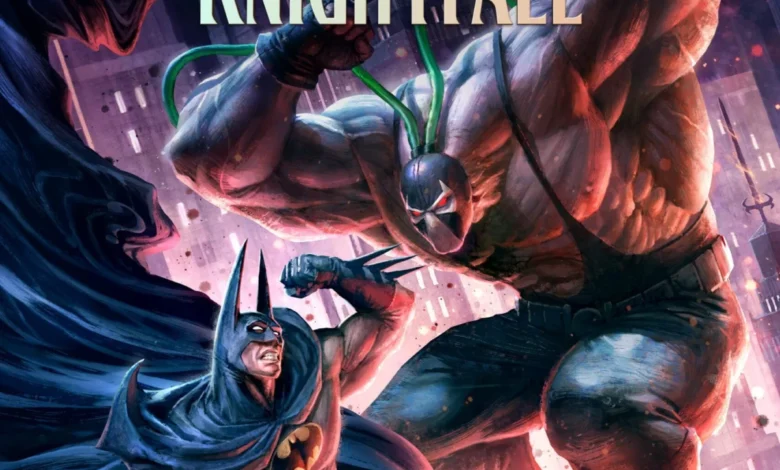
Warner Bros. Home Entertainment, in conjunction with Warner Bros. Animation and DC, has officially announced the highly anticipated animated adaptation of the seminal 1990s comic book storyline, Batman: Knightfall. The first installment, titled Batman: Knightfall, Part One: Knightfall, is slated for a digital release on August 25, 2026, followed by its availability on 4K UHD, Blu-ray, and DVD formats on September 8, 2026. This cinematic event marks the beginning of a three-part animated movie trilogy designed to faithfully bring one of the Dark Knight’s most challenging and impactful sagas to life for a new generation of fans and long-time enthusiasts alike.
The Unveiling of a Landmark Adaptation
The announcement confirms that Batman: Knightfall, Part One: Knightfall will plunge audiences into the dark heart of Gotham as Batman faces one of his most brutal trials. The film is produced by Warner Bros. Animation, DC, and Warner Bros. Home Entertainment, entities renowned for their extensive portfolio of acclaimed DC animated features. This inaugural film is set to run for 78 minutes and has received an R-rating for strong bloody violence, signaling a commitment to the darker, more intense elements inherent in the original comic series. This rating places it among a select few DC animated features that cater to a mature audience, allowing for a more visceral and uncompromising portrayal of the story.
The core creative team behind this ambitious project includes Jeff Wamester, who takes the helm as director, and Jeremy Adams, who penned the screenplay. Both Wamester and Adams have significant experience within the DC animated universe, with Wamester having directed critically praised films such as Justice Society: World War II and Green Lantern: Beware My Power, and Adams contributing to projects like the Mortal Kombat Legends series and Justice Society: World War II. Supervising Producer Rick Morales, along with Producers Jim Krieg and Kimberly S. Moreau, and Executive Producers Sam Register and Michael Uslan, complete the formidable production team, ensuring a wealth of experience guides the adaptation.
A Phased Release: Digital and Physical Availability
The distribution strategy for Batman: Knightfall, Part One: Knightfall is structured to offer immediate access through digital platforms, followed by a robust physical media release for collectors and enthusiasts.
Digital Launch Details:
Starting August 25, 2026, fans in North America will be able to purchase and stream Batman: Knightfall, Part One: Knightfall through major participating digital platforms. These include, but are not limited to, Amazon Prime Video, Apple TV, Fandango, and others. This digital-first approach allows for instant gratification, enabling audiences to experience the beginning of the trilogy without delay.
Physical Media Options:
Two weeks later, on September 8, 2026, the film will become available for ownership on physical formats: 4K UHD, Blu-ray, and DVD. These editions will be accessible through both online retailers and traditional physical stores. The 4K UHD and Blu-ray versions will feature DTS-HD audio, promising an immersive auditory experience to complement the high-definition visuals. All physical releases will include English language tracks, with Blu-ray and DVD editions offering subtitles in English, Parisian French, and Latin Spanish, broadening the film’s accessibility to diverse audiences. The package art revealed showcases distinct designs for the 4K UHD, Blu-ray, and digital versions, appealing to different consumer preferences.
The Trilogy’s Unfolding Chronology:
This initial release is just the prelude. Warner Bros. Home Entertainment has confirmed that Part Two of the Batman: Knightfall Trilogy is slated for release later in 2026, building swiftly on the momentum of the first film. The concluding chapter, Part Three, will then follow in early 2027, ensuring that the entire epic saga is brought to completion within a relatively tight and consistent timeframe, allowing fans to follow Batman’s journey without extensive waiting periods between installments.
Voice to the Darkness: The Stellar Cast and Crew
The success of any animated adaptation heavily relies on its voice cast, and Batman: Knightfall, Part One: Knightfall boasts a compelling lineup of talent bringing these iconic DC characters to life.
The Man Behind the Bat: Anson Mount as Bruce Wayne/Batman:
Anson Mount, widely recognized for his portrayal of Captain Christopher Pike in Star Trek: Strange New Worlds, lends his voice to Bruce Wayne and Batman. Mount’s distinguished vocal presence and ability to convey gravitas and vulnerability make him an apt choice for a Batman facing unprecedented physical and psychological duress. His experience in leading roles, commanding authority while also exploring complex character arcs, will undoubtedly contribute to a nuanced portrayal of the Caped Crusader at his breaking point.
The Architect of Pain: Michael Mando as Bane:
Embodying the formidable villain Bane is Michael Mando, known for his intense performances as Nacho Varga in Better Call Saul and Mac Gargan/Scorpion in Spider-Man: Homecoming. Mando’s capacity to deliver menacing, intelligent, and physically imposing characters makes him an inspired selection for Bane, the mastermind who orchestrates Batman’s downfall. His vocal performance will be crucial in establishing Bane not just as a physical threat, but as an intellectual equal capable of dismantling Batman on multiple fronts.
The Controversial Heir: Pablo Schreiber as Jean-Paul Valley/Azrael:
Pablo Schreiber, acclaimed for his roles in series like Orange Is the New Black and as Master Chief in Halo, takes on the complex character of Jean-Paul Valley, who eventually assumes the mantle of Azrael and then a more brutal version of Batman. Schreiber’s range allows him to portray characters with internal conflict and a capacity for both heroism and darker tendencies, which will be essential for capturing Azrael’s descent into a more violent form of justice. His performance will be key to exploring the moral ambiguities at the heart of the Knightfall narrative.
Guiding the Narrative: The Visionary Creative Team:
The collective experience of the creative team, from director Jeff Wamester to writer Jeremy Adams, signifies a deep understanding of the source material and the animation medium. Their track record in delivering engaging and action-packed DC animated features suggests that Knightfall will be handled with both reverence for the original story and a keen eye for cinematic adaptation. The involvement of seasoned executive producers like Sam Register and Michael Uslan, a foundational figure in Batman film history, further assures the project’s quality and fidelity to the character’s legacy.
Delving Deeper: Special Features and Narrative Focus
The physical media releases of Batman: Knightfall, Part One: Knightfall will include two special features designed to offer viewers an enriched understanding of the film’s production and thematic depth:
– Breaking the Bat: Adapting the Knightfall: This behind-the-scenes feature promises an intimate look at the filmmaking process. It will explore how the creative team approached the daunting task of adapting such an epic and beloved story. Discussions will likely cover narrative choices, character design, animation techniques, and the challenges of translating the comic’s dark tone and intense action sequences to the animated screen. The title itself, "Breaking the Bat," directly references the iconic moment in the Knightfall saga and suggests a deep dive into how that pivotal event and its lead-up were conceived and executed.
– Batman Needs a Robin: This featurette will delve into the vital role Robin plays in the broader Batman mythology, with a specific emphasis on Tim Drake’s significance within the Knightfall storyline and its animated adaptation. The Knightfall comic event was crucial for Tim Drake, as he was the Robin who witnessed Bruce Wayne’s incapacitation and struggled with Jean-Paul Valley’s brutal methods, advocating for Bruce’s return and upholding the true spirit of Batman. This special feature indicates that the film will likely explore the mentor-apprentice dynamic, the moral compass Robin often provides, and the thematic importance of Batman’s allies in his darkest hour.
The Legacy of Knightfall: A Comic Book Epic Reimagined
To fully appreciate the scope of this animated trilogy, it is essential to understand the profound impact of the original Batman: Knightfall comic book event. Published by DC Comics between 1993 and 1994, Knightfall was a watershed moment in Batman’s history, fundamentally altering the status quo and challenging the very essence of the Caped Crusader.
The Genesis of a Saga:
In the early 1990s, DC Comics sought to revitalize Batman, pushing him to his physical and psychological limits. The creative team, including writers Doug Moench, Chuck Dixon, Alan Grant, and artists Jim Aparo, Graham Nolan, and Norm Breyfogle, crafted a narrative that would prove to be one of the most ambitious and brutal in Batman’s long history. The story unfolded across multiple Batman titles, creating a sprawling, interconnected epic that captured the imagination of readers worldwide.
The Cataclysmic Narrative Arc:
The Knightfall storyline begins with a seemingly unstoppable villain named Bane orchestrating a massive breakout at Arkham Asylum. This strategic move unleashes Batman’s entire rogue’s gallery upon Gotham City, forcing the Dark Knight into a relentless, exhausting campaign to recapture them. This prolonged ordeal pushes Batman beyond his physical and mental breaking point, weakening him for Bane’s ultimate confrontation.
Bane’s Ascent and Batman’s Fall:
Bane, a character introduced specifically for this storyline, quickly established himself as one of Batman’s most formidable adversaries. Unlike previous villains, Bane was not merely a physical powerhouse; he was a brilliant tactician who deduced Batman’s secret identity and systematically dismantled him. The climax of Knightfall sees a weakened Batman confronted by Bane in the Batcave, where Bane delivers the infamous blow, breaking Batman’s back and leaving him paralyzed. This iconic moment, where Bane literally "breaks the Bat," sent shockwaves through the comic book world and remains one of the most memorable and impactful events in superhero history.
The Rise and Fall of Azrael-Batman:
With Bruce Wayne incapacitated, he entrusts the mantle of Batman to Jean-Paul Valley, a vigilante known as Azrael, who had been conditioned by a fanatical religious order. Valley, initially a capable but troubled hero, quickly succumbs to his violent conditioning and a modified Batsuit, becoming a darker, more brutal, and increasingly unstable version of Batman. His methods alienate Robin (Tim Drake) and Jim Gordon, forcing Bruce Wayne to undergo a grueling rehabilitation process to reclaim his identity. This segment, often referred to as "Knightquest," explored themes of identity, the corrupting influence of power, and what truly defines Batman.
Enduring Impact on Batman Lore:
Knightfall had a lasting impact on the Batman mythos. It introduced Bane as a permanent fixture in Batman’s rogues’ gallery and solidified Tim Drake’s role as Robin. More importantly, it explored the idea that Batman is not just one man but an ideal, albeit one that can be perverted. The storyline’s commercial success was immense, contributing significantly to comic sales in the 1990s and cementing its place as a cornerstone event in DC Comics history. Elements of Knightfall have been referenced and loosely adapted in other media, most notably in Christopher Nolan’s The Dark Knight Rises, but this animated trilogy promises the most comprehensive and direct adaptation to date.
Rating the Darkness: The Significance of an R-Rating
The R-rating assigned to Batman: Knightfall, Part One: Knightfall is a pivotal detail, signifying Warner Bros. Animation’s intention to deliver a faithful and uncompromising adaptation of the source material’s mature themes and violence.
The original Knightfall comic storyline was notably dark and brutal. Bane’s methodical destruction of Batman, the graphic nature of the back-breaking moment, and Jean-Paul Valley’s descent into extreme violence as Batman were all elements that pushed the boundaries of traditional superhero comics at the time. An R-rating allows the animated film to depict this violence and grim atmosphere without dilution, staying true to the intensity that made the comic so impactful.
This decision aligns with a growing trend in DC animated films to explore more mature narratives. Titles like Justice League Dark: Apokolips War, Batman: The Long Halloween, Part One & Two, and Mortal Kombat Legends have successfully utilized R-ratings to deliver grittier, more adult-oriented stories, often to critical acclaim. By embracing the R-rating for Knightfall, the filmmakers are signaling to long-time fans that they intend to respect the original story’s gravitas and not shy away from its inherent darkness. This approach enables a more visceral portrayal of Batman’s physical and psychological torment, Bane’s calculated cruelty, and Azrael’s violent evolution, all of which are central to the narrative’s power. It also suggests a focus on character depth and emotional realism, rather than merely action, as the story demands a profound exploration of pain, despair, and the struggle for redemption.
Warner Bros. Animation and DC’s Continuing Vision
Warner Bros. Animation (WBA), a leading producer of animation in the entertainment industry, continues to be a driving force in bringing DC’s vast catalog of characters and stories to various platforms. Their extensive current slate includes diverse projects like Batman: Caped Crusader, Creature Commandos, and My Adventures with Superman, demonstrating a commitment to both established and fresh takes on DC lore. The studio’s rich history includes iconic animated characters from the DC, Hanna-Barbera, MGM, and Looney Tunes libraries, and it has consistently produced highly successful animated films for home entertainment, including the revered DC Universe Movies line.
DC, as part of Warner Bros. Discovery, stands as one of the world’s largest publishers of comics and graphic novels. Its iconic characters and enduring stories are integrated across Warner Bros. Discovery’s extensive portfolio, encompassing film, television, animation, consumer products, games, and themed experiences. The collaboration between DC, WBA, and Warner Bros. Home Entertainment on Batman: Knightfall underscores a unified strategy to leverage the power of DC’s intellectual property, delivering high-quality, engaging content to audiences globally. This trilogy is a testament to their ongoing commitment to adapting fan-favorite comic book events with meticulous attention to detail and a clear understanding of what makes these stories resonate.
Anticipation and Implications for the DC Animated Future
The announcement of Batman: Knightfall, Part One: Knightfall has generated considerable excitement within the fan community. Knightfall is a story that has long been requested for a faithful animated adaptation, and the prospect of a three-part series, coupled with an R-rating and a talented voice cast, suggests that these expectations may be met.
Fan Engagement and Expectations:
Fans of the original comic storyline carry a deep reverence for Knightfall. They will be scrutinizing the adaptation for its fidelity to the comic’s intricate plot, character development, and the emotional weight of Batman’s fall and subsequent return. The choices in voice casting, the visual style, and the overall tone will be key factors in how the trilogy is received. The special features, particularly "Breaking the Bat," indicate that the filmmakers are aware of this scrutiny and are prepared to discuss their creative process.
Shaping the Animated Landscape:
The success of Batman: Knightfall could further solidify the trend of adapting major comic book events directly into multi-part animated films, potentially paving the way for other expansive DC sagas to receive similar treatment. An R-rated, critically acclaimed Knightfall trilogy would reinforce the viability of mature-themed animated content, encouraging Warner Bros. Animation to explore more complex and darker narratives without compromise. This strategy allows for a differentiation from family-friendly animated content, catering to a distinct audience segment that appreciates deeper, more intense storytelling.
The Enduring Appeal of Batman’s Trials:
Decades after its original publication, the themes within Knightfall remain profoundly relevant. It explores the psychological toll of vigilantism, the fine line between justice and vengeance, the importance of a hero’s moral compass, and the idea that even the strongest among us can be broken. In a contemporary media landscape often grappling with complex ethical questions and hero fallibility, a story like Knightfall offers a timeless exploration of these concepts. Its animated adaptation has the potential to introduce these powerful themes to a new generation while reaffirming their significance for long-time admirers.
As Batman: Knightfall, Part One: Knightfall prepares for its digital debut in August 2026 and physical release in September 2026, it stands as a monumental undertaking for Warner Bros. Animation, DC, and Warner Bros. Home Entertainment. This trilogy promises to be a definitive animated portrayal of one of Batman’s most challenging and defining moments, an event that shattered and then rebuilt the legend of the Dark Knight.