A Comprehensive Guide to the Seven Rings of the Hellaverse Ahead of Helluva Boss Season Three

The animated dark comedy series Helluva Boss, alongside its sister production Hazbin Hotel, has established one of the most intricately constructed shared universes in contemporary independent animation, collectively known as the Hellaverse. Created by Vivienne Medrano, the franchise relies heavily on deep, meticulously developed world-building to anchor its hyper-violent, musical, and often profane narrative style. At the center of Helluva Boss is Immediate Murder Professionals (I.M.P.), a startup-style assassination agency operating out of the Pride Ring. Run by the erratic, impulsive, and financially unstable imp protagonist Blitzo—alongside weapons specialist Moxxie, powerhouse brawler Millie, and apathetic hellhound receptionist Loona—the firm utilizes magical grimoires to bridge the gap between Hell and the mortal realm.
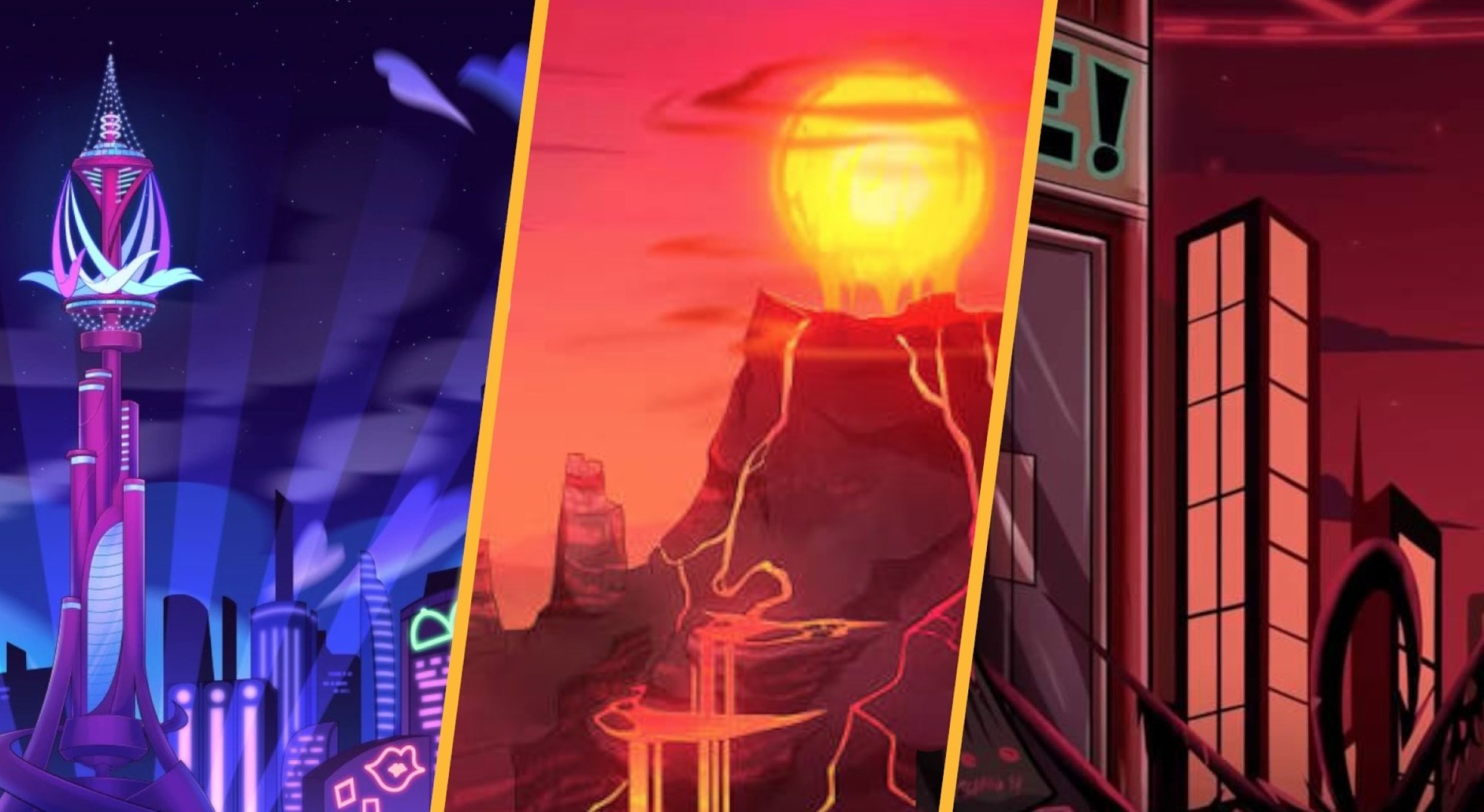
While the series frequently utilizes recognizable Earth environments for its standalone missions, the true foundation of the show’s longevity lies in its exploration of Hell itself. Divided vertically into the Seven Rings, the Hellaverse cosmology reinterprets traditional theological concepts through distinct architectural aesthetics, regional economies, and societal structures. As production ramps up for the highly anticipated third season, promotional trailers indicate that the narrative will take viewers deeper into these infernal layers than ever before, revisiting previously established territories while introducing long-awaited realms. Examining the geography, socio-economic exports, and governing figures of each ring provides essential context for understanding the broader geopolitical and narrative stakes of the upcoming episodes.
The Sloth Ring: Pharmaceuticals, Isolation, and the Sin of Excess Rest
Positioned as the lowest of the Seven Rings, the Sloth Ring subverts conventional depictions of infernal torment by presenting itself as a surreal, pastel-colored dreamland characterized by drifting clouds, floating waterfalls, and muted pink, teal, and purple palettes. Rather than defining sloth through mere inactivity, the Hellaverse frames the sin as an excess of comfort—an insulated, sedative detachment from the realities of existence.
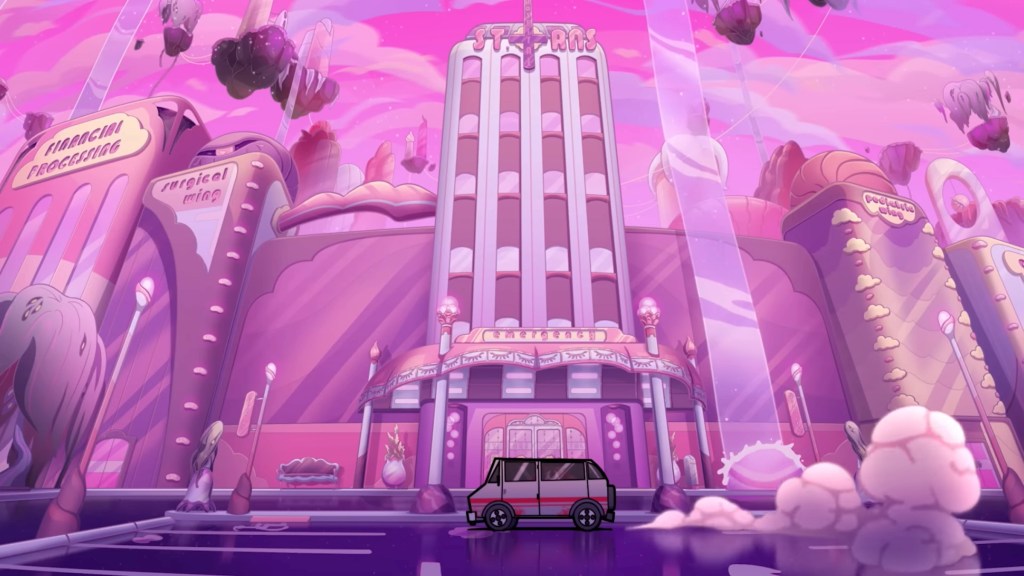
Economically, Sloth operates as the medical and pharmaceutical capital of Hell. Medical institutions dominate the region’s infrastructure, ranging from primary care facilities to intensive care units and rehabilitation centers. Most prescription medications referenced across the series bear the name of the ring’s ruling sovereign, Belphegor—affectionately known as "Belphie"—and are frequently marketed with severe side effects. Characters such as Beelzebub have casually noted acquiring substances from Belphegor’s personal reserves, suggesting that pharmaceutical manufacturing and export constitute the ring’s primary economic engine. Belphegor herself is characterized by a gangly, goat- or sheep-like morphology, featuring multiple eyes, a perpetually burning candle upon her head, and a permanent state of lethargy. Her populace mirrors this physiological and behavioral archetype, emphasizing a society built around perpetual sedation.
The Envy Ring: Aquatic Isolation and Impending Crossovers
Historically the most elusive territory within the Hellaverse, the Envy Ring is slated for its first substantial narrative exploration in the upcoming third season of Helluva Boss. While physical layouts and macroeconomic data remain scarce, the ring’s aquatic nature has been heavily telegraphed through its denizens, including the pop-duo twins Glitz and Glam, various background characters, and marine-based demons featured in related short-form media.

The ruling authority of Envy is the Von Eldritch family, headed by the Sin of Envy, Leviathan Von Eldritch—a composite entity featuring a two-headed structure housing separate consciousnesses. Leviathan’s son, Seviathan Von Eldritch, shares a canonical history as the former romantic partner of Charlie Morningstar, the protagonist of Hazbin Hotel. Given this inter-series connection, the Envy Ring is widely anticipated by fans to serve as a narrative bridge for the long-discussed crossover event between Helluva Boss and Hazbin Hotel, potentially integrating characters from both series into a shared storyline during the latter half of Season Three.
The Lust Ring: Neon Opulence and Advanced Prosthetics
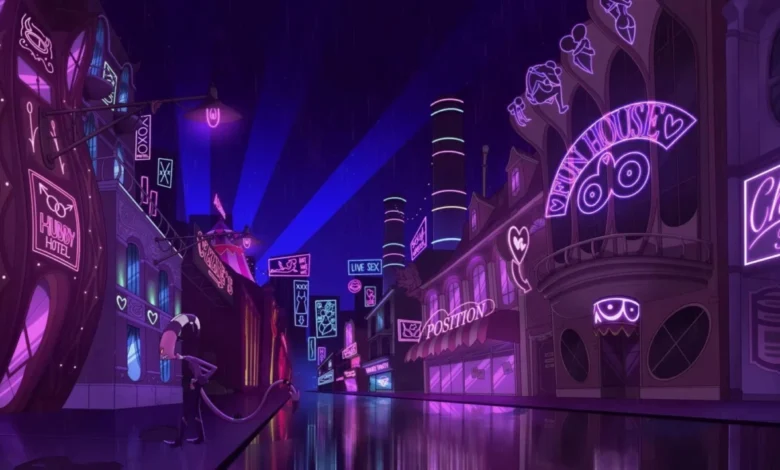
Operating as a neon-drenched metropolis beneath perpetually raining deep indigo skies, the Lust Ring represents a complex synthesis of hedonistic excess and advanced technological manufacturing. The regional economy extends far beyond nightlife and entertainment; it serves as the primary hub for cybernetics and animatronics. This is prominently demonstrated by the creation of the Robo-Fizz units—mass-produced robotic duplicates originally commissioned by the Greed Ring’s ruler, Mammon—and the sophisticated prosthetic limbs utilized by the real Fizzarolli.
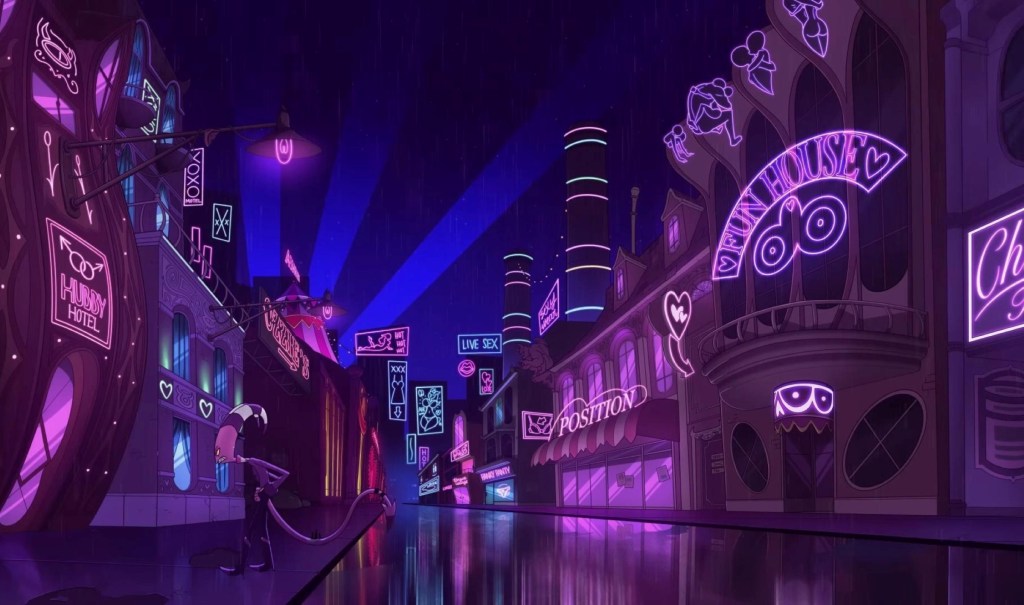
The ring is governed by Asmodeus, often called Ozzie, a towering avian entity wreathed in blue-black flame. Asmodeus champions a philosophy of desire defined by fleeting passion, physical experimentation, and transient connections devoid of emotional obligation. However, this public persona masks a profound hypocrisy: Asmodeus maintains a deeply committed, emotionally stable romantic relationship with Fizzarolli. This cross-caste romance between a ruling Sin and a lower-class imp defies deeply ingrained societal stratifications within Hell. Alongside Asmodeus and Fizzarolli, the Lust Ring houses notable figures such as the succubus pop star Verosika Mayday, whose access to the mortal realm via Asmodean Crystals highlights the ring’s geopolitical influence regarding inter-dimensional travel.
The Greed Ring: Industrial Decay, Organized Crime, and Corporate Greed
Mirroring traditional theological frameworks, the Greed Ring is an unyielding landscape of corporate exploitation, towering smoke-belching factories, scrapyards, and stagnant green canals. The society within Greed is largely sustained by a network of mafia families and organized crime syndicates locked in territorial conflicts. Demographically, the population consists primarily of imps, who typically occupy leadership and skilled labor roles within the syndicates, and shark demons, who function primarily as hired muscle.
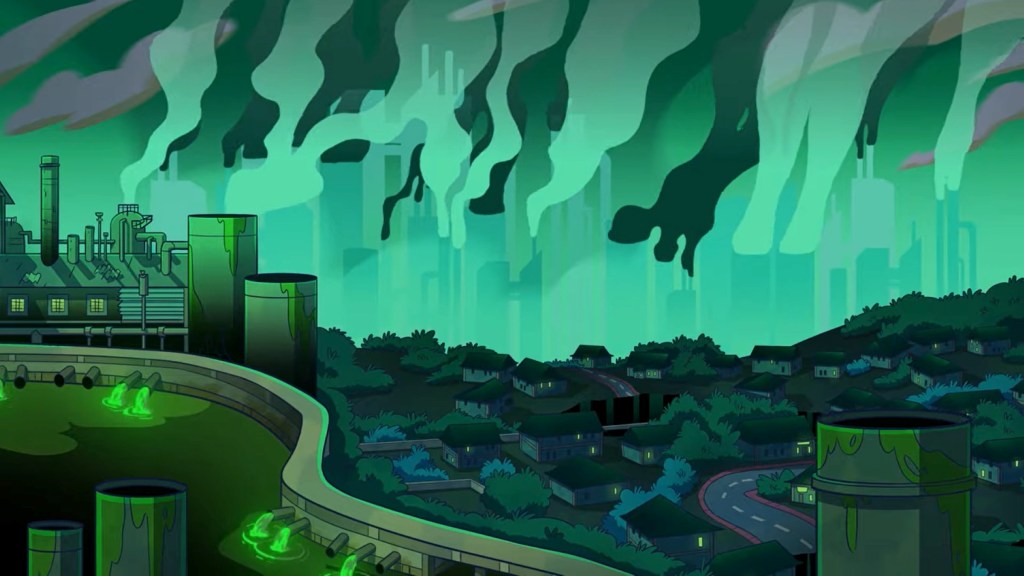
The ring is dominated by Mammon, the Sin of Greed, whose multi-media empire capitalizes heavily on merchandising and the commercialization of performing arts. Operating out of Loo Loo Land—a garish theme park that serves as a rare brightly lit oasis in an otherwise dismal landscape—Mammon views entertainment purely through the lens of capital accumulation. The fallout from Fizzarolli’s public disavowal of Mammon at the conclusion of Season Two has left simmering tensions, setting the stage for retaliatory conflicts in Season Three as Mammon seeks to recover financial and reputational losses.
The Gluttony Ring: Oasis Economics and the Celebration of Excess
The Gluttony Ring offers a stark visual contrast to the industrial gloom of Greed, presenting itself as a vibrant, sunlit paradise characterized by golden architecture, towering foliage, and sandy terrain. Defined as the ceaseless consumption of pleasurable but non-essential experiences, Gluttony’s cultural ethos is embodied by its ruler, Beelzebub. Taking the form of a jackal-like entity with insectoid features and a continually active internal combustion chamber in place of a torso, Beelzebub functions as an enthusiastic host who maintains regional morale through perpetual social gatherings, musical events, and the distribution of regional exports such as "Beelzejuice," a honey-based alcoholic beverage.

Populated primarily by Hellhounds—bipedal, highly adaptable canine demons capable of shifting into formidable quadrupedal combat forms—Gluttony serves as both an agrarian exporter of specialized consumables and a supplier of skilled security personnel to other rings. The cultural emphasis on communal celebration and uninhibited enjoyment distinguishes Beelzebub’s governance from the punitive rule structures seen in neighboring territories.
The Wrath Ring: Agricultural Backbone and Trial by Combat
The Wrath Ring embodies the traditional iconography of Hell through its vast expanses of arid desert, jagged canyons, and subterranean railway networks. Despite its hostile climate, Wrath functions as the primary agricultural supplier for the entire infernal ecosystem, producing essential food items ranging from livestock to produce. This production relies heavily on annual exposure to mortal lunar cycles, a meteorological requirement historically facilitated by Goetia magic.

Society in Wrath is structured around rural family units, farming ranches, and traditional festivals centered on athletic competition and physical conflict. The cultural definition of Wrath within this ring does not mandate chronic anger, but rather an active, enthusiastic desire for physical struggle and combat dominance. The ring is governed by Satan, a towering entity possessing the head of a red dragon and a muscular humanoid frame. Exhibiting characteristics true to the historical Hebrew translation of his name as "The Accuser," Satan recently assumed a judicial role during the high-profile tribunal of I.M.P. and Stolas, cementing his authority as a hardline enforcer of infernal law.
The Pride Ring: Imp City, Goetia Nobility, and Pentagram City
As the lowest and most politically complex ring of Hell, the Pride Ring is divided into three distinct sociological zones: Imp City, the Goetia estates, and Pentagram City. Imp City serves as the primary urban base for Helluva Boss’s main cast, characterized by dense, utilitarian apartment complexes, vibrant street markets, and lower-class infrastructure.
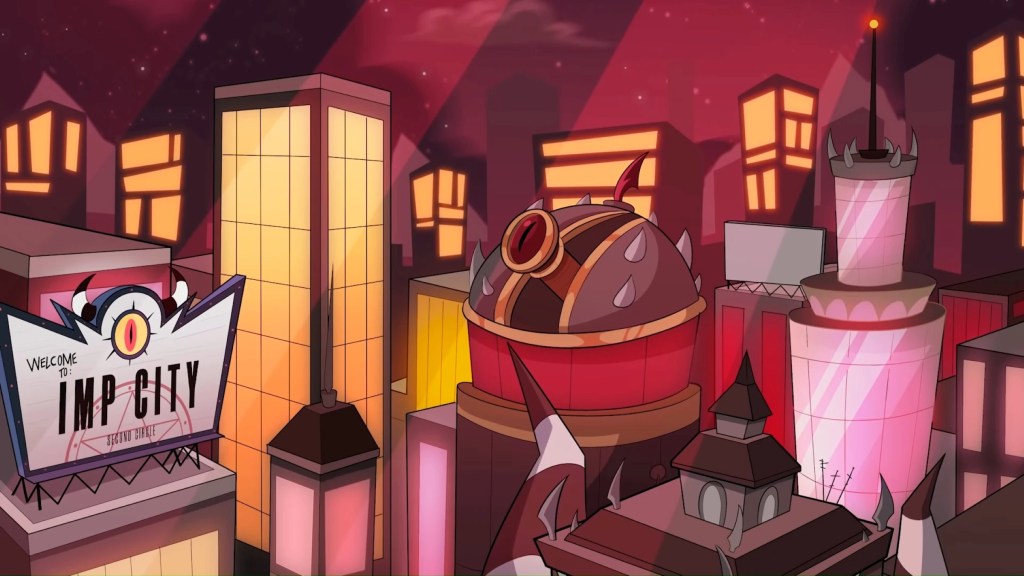
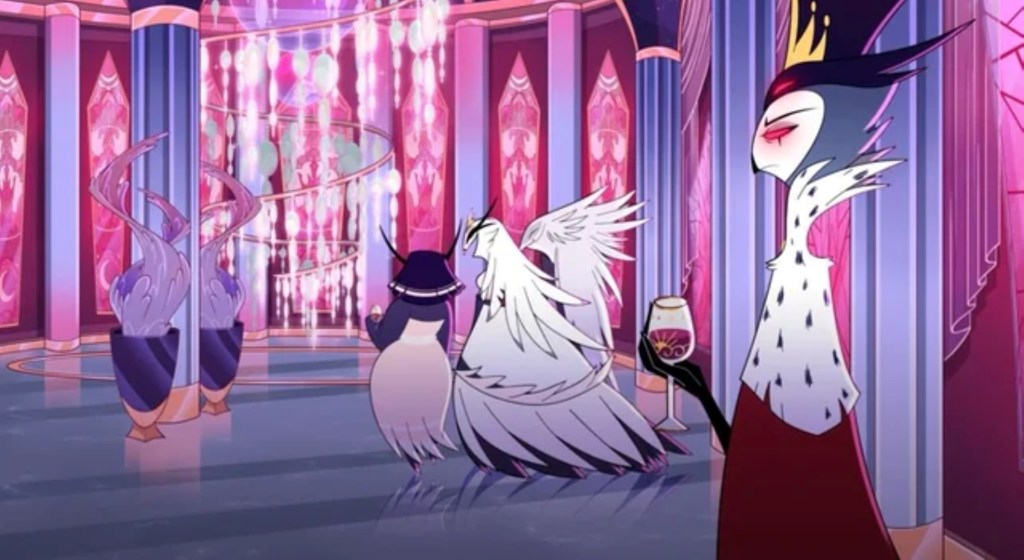
Adjacent to the urban sprawl are the aristocratic enclaves of the Goetia, an avian nobility possessing formidable celestial and elemental magic. Following the political downfall of Prince Stolas—who has been stripped of his title, powers, and status—the Goetia hierarchy faces internal instability, exacerbated by maneuvering from figures like Andrealphus and the impending re-introduction of senior Goetia nobility such as Vassago.
Pentagram City, the setting of Hazbin Hotel, represents the cultural and economic heart of the Pride Ring. Uniquely populated by human souls damned to eternal reincarnation as Sinners, the city operates as a hyper-competitive, capitalist dystopia ruled by powerful Overlords who leverage soul-binding contracts for political and magical dominance. At the pinnacle of this hierarchy sits Lucifer Morningstar, the Sin of Pride and ruler of the ring. Once a fallen angel consumed by reclusive depression following the disappearance of Lilith and the consequences of mortal creation, Lucifer has recently experienced a revitalization through his daughter Charlie’s establishment of the Hazbin Hotel.
Analytical Implications for Season Three
The convergence of narrative threads across the Seven Rings highlights a deliberate effort by creative leadership to expand the scope of the Hellaverse. By leveraging the unique geopolitical and economic frameworks of each ring—ranging from Sloth’s pharmaceutical dependency to Envy’s aquatic isolation and Pride’s aristocratic turbulence—Helluva Boss is positioned to explore deeper themes of systemic power imbalances, personal accountability, and inter-realm relations. As production continues toward the 2027 release schedules for both flagship properties, the meticulous world-building established across the Seven Rings will undoubtedly serve as the primary vehicle for the franchise’s ongoing expansion.