The cultural footprint of Marvel Comics’ premier mutant franchise has experienced a profound resurgence over recent years, driven largely by shifting corporate landscapes and a string of high-profile media adaptations. Following The Walt Disney Company’s acquisition of 21st Century Fox in 2019, the cinematic and television rights for the X-Men were formally repatriated to Marvel Studios. This monumental corporate consolidation eliminated decades of fragmented intellectual property rights, allowing Marvel Studios President Kevin Feige and his creative teams to seamlessly integrate mutants into the broader Marvel Cinematic Universe.
Subsequent media milestones have accelerated public enthusiasm. The critically acclaimed animated revival X-Men ’97 on Disney+ served as a potent generational touchstone, reminding both longtime readers and mainstream audiences of the emotional depth and dynamic action that defined the property’s heyday. Concurrently, theatrical blockbusters such as Deadpool & Wolverine shattered box office records by bridging legacy cinematic universes with modern superhero storytelling, while print initiatives like Spider-Man: Brand New Day and various mutant-centric publishing lines have capitalized on this renewed momentum.
Despite this soaring popularity, navigating the expansive print history of the X-Men presents a formidable barrier to entry. For casual enthusiasts drawn in by recent cinematic and television adaptations, diving headfirst into decades of interwoven continuity can quickly become an exercise in frustration. The franchise, established by Stan Lee and Jack Kirby in 1963, boasts one of the most labyrinthine fictional histories in modern literature, characterized by parallel dimensions, cloned characters, time travel, and sprawling crossover events.
To bridge the gap between casual interest and comprehensive comic book literacy, industry experts and literary analysts frequently recommend curated entry points. These specific narratives distill the core themes of the franchise—alienation, prejudice, and found family—without requiring an advanced degree in comic book lore. The following five narratives offer accessible, high-quality gateways for readers looking to deepen their appreciation of Marvel’s mutants.
Contextualizing the Mutant Metaphor: Historical Background and Themes
Since their inception during the Silver Age of comic books, the X-Men have functioned as a multifaceted allegory for civil rights, marginalization, and societal bigotry. Unlike traditional superheroes such as Spider-Man or the Avengers—who typically acquire their powers through scientific accidents or conscious choices—mutants are born with their abilities, often manifesting during the turbulent years of adolescence. This biological distinction positions the mutant population as a distinct minority group within the Marvel Universe, subject to systemic discrimination, legislative hostility, and violent opposition from radical anti-mutant organizations such as the Friends of Humanity and the Purifiers.
This thematic foundation has allowed creators to address real-world socio-political issues through a speculative lens. The ideological dichotomy between Professor Charles Xavier—who advocates for peaceful coexistence and integration with baseline humanity—and Erik Lehnsherr, the mutant terrorist and revolutionary known as Magneto, mirrors historical debates surrounding civil disobedience and self-defense within civil rights movements. Understanding this foundational conflict is essential for grasping the emotional stakes of nearly every major X-Men narrative.
5. X-Men: Deadly Genesis
Published in 2006 by writer Ed Brubaker and artist Trevor Hairsine, X-Men: Deadly Genesis stands as a compelling, albeit unconventional, entry point for readers seeking to understand the darker undercurrents of the mutant universe. The six-issue limited series revolves around a mysterious, highly powerful adversary who launches a coordinated assault on the X-Men, possessing intimate knowledge of the team’s inner workings and harboring a deep-seated grievance against Professor Charles Xavier.
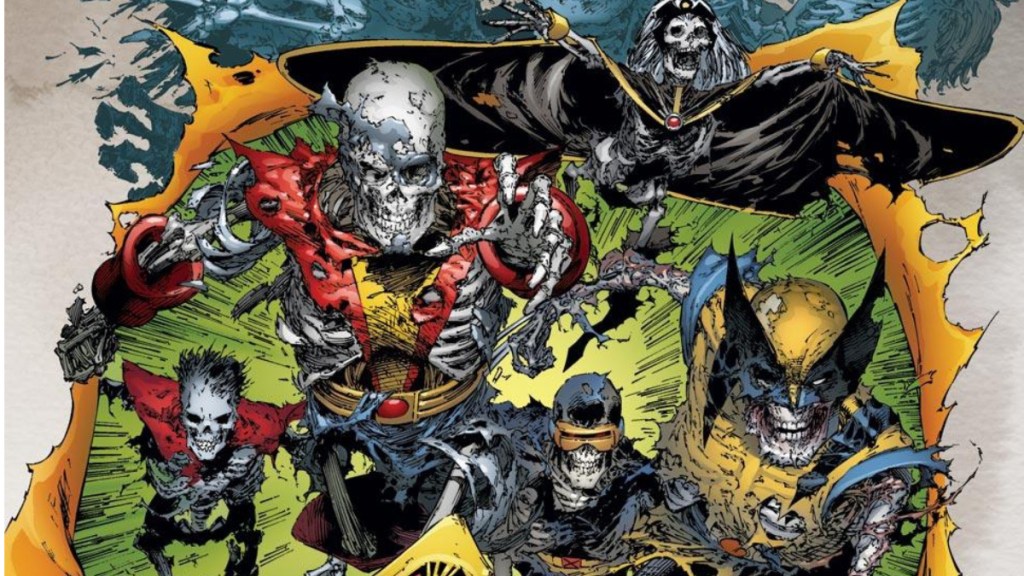
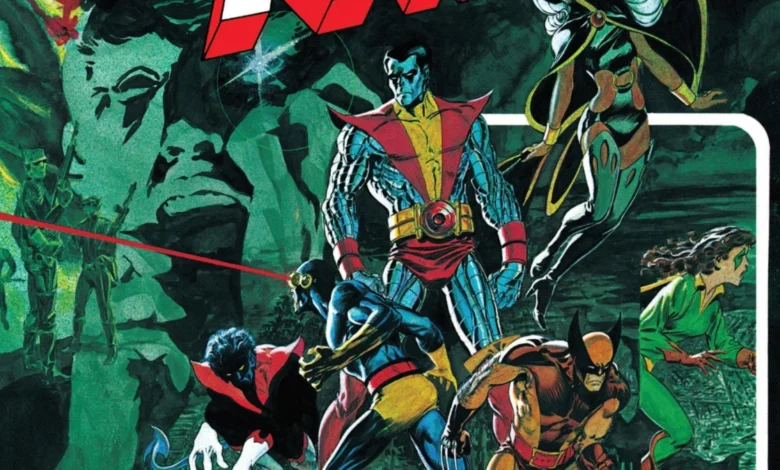
The narrative meticulously unravels a hidden chapter in X-Men history, revealing a clandestine team of young mutants dispatched by Xavier prior to the famous rescue mission depicted in 1975’s Giant-Size X-Men #1—a mission that ended in tragedy and was systematically erased from public and psychological records by Xavier himself. Deadly Genesis fundamentally recontextualized the moral integrity of Professor X, exposing the utilitarian lengths to which the character would go to protect his vision and shield his students from institutional failures. For casual fans accustomed to viewing Xavier as a universally benevolent mentor, this revelation provides a critical paradigm shift, preparing readers for the more nuanced, morally ambiguous storytelling characteristic of contemporary graphic fiction. Furthermore, the miniseries successfully blends classic soap-opera melodrama with high-stakes tactical action, making it a self-contained and digestible narrative arc.
4. X-Men: God Loves, Man Kills
Widely regarded as one of the finest graphic novels produced during the modern era of comic books, X-Men: God Loves, Man Kills (1982) by writer Chris Claremont and artist Brent Anderson represents the absolute zenith of the franchise’s socio-political commentary. Commissioned initially as a standalone prestige format graphic novel, the story bypasses standard monthly continuity constraints to deliver a searing examination of religious extremism and institutionalized bigotry.
The plot centers on Reverend William Stryker, a charismatic and fanatical televangelist who weaponizes religious rhetoric to incite hatred against mutants, whom he defines as abominations against divine creation. When Stryker’s paramilitary organization, the Purifiers, kidnaps and murders mutant children, the ideological chasm between the X-Men and Magneto temporarily closes. The two factions are forced into an uneasy alliance to thwart a televised execution of mutant prisoners.
Claremont’s script provides an unvarnished look at the mechanics of hate speech and societal scapegoating. The narrative’s unflinching engagement with real-world prejudices elevates the source material beyond traditional superhero tropes, cementing its status as an essential cultural artifact. For readers seeking to understand why the X-Men resonate so deeply as an allegory for marginalized communities, God Loves, Man Kills remains the definitive text.
3. New X-Men: "E Is for Extinction"
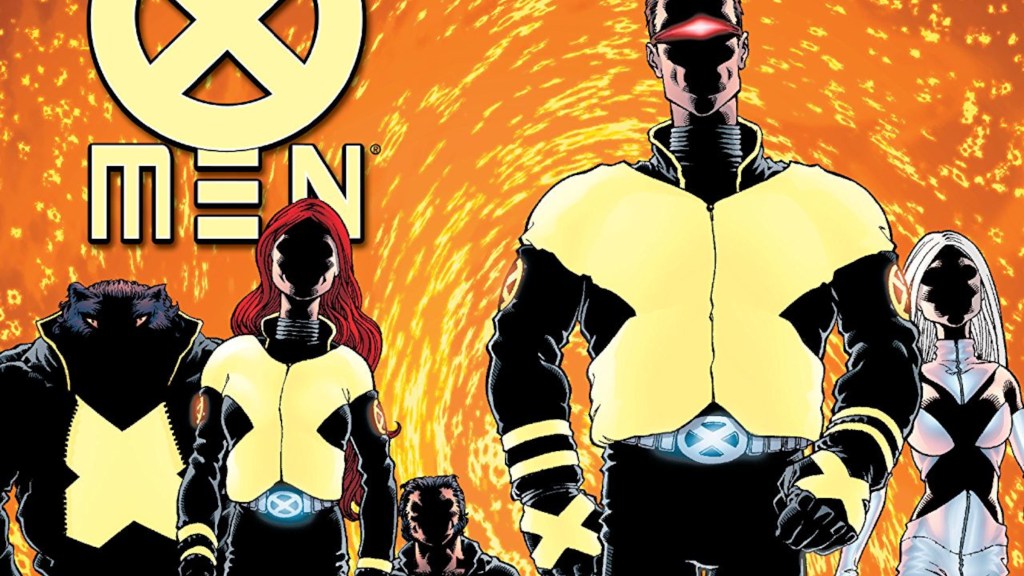
The turn of the 21st century marked a radical aesthetic and narrative overhaul for Marvel Comics, spearheaded by Scottish writer Grant Morrison. Beginning with New X-Men #114 in 2001, Morrison—alongside visionary artists Frank Quitely and Ethan Van Sciver—discarded decades of convoluted continuity to craft a progressive, cinematic vision of mutantkind that directly influenced subsequent film adaptations.
The opening story arc, "E Is for Extinction," introduces Cassandra Nova, a parasitic lifeform sharing a psychic entanglement with Professor Xavier, who orchestrates the complete eradication of the mutant population on the island nation of Genosha, resulting in the deaths of millions. Morrison’s approach was explicitly designed to welcome readers who had discovered the franchise through Bryan Singer’s 2000 feature film, utilizing accessible exposition and contemporary characterizations.
By replacing traditional colorful spandex costumes with utilitarian leather uniforms and redefining the Xavier Institute as a functioning boarding school rather than a covert combat base, Morrison modernized the franchise for a new generation. The narrative arc balances grand science-fiction concepts with intimate character drama, proving that serialized comic books could achieve high literary sophistication without alienating casual readers.
2. "The Dark Phoenix Saga"
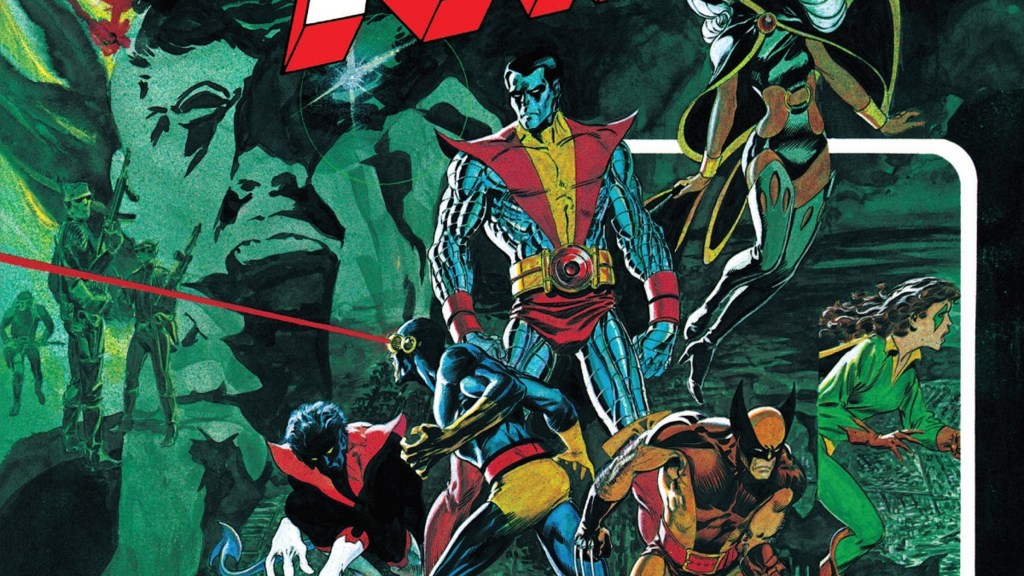
No discussion of essential X-Men literature is complete without examining "The Dark Phoenix Saga," serialized across Uncanny X-Men #129–137 in 1980 by writer Chris Claremont and artist/co-plotter John Byrne. Recognized universally as a masterpiece of serialized fiction, the storyline serves as the emotional and dramatic bedrock of the entire franchise.
The narrative chronicles the tragic corruption of Jean Grey, one of the founding members of the team, who becomes possessed by the cosmic entity known as the Phoenix. Manipulated by the clandestine criminal organization known as the Hellfire Club—which introduces iconic characters such as Emma Frost and Kitty Pryde to the mythos—Jean’s personality is fractured, giving rise to the destructive persona of Dark Phoenix. Her subsequent consumption of a star system draws the judgment of the alien Shi’ar Empire, forcing the X-Men into a desperate struggle to save their teammate’s soul while protecting the universe from her apocalyptic power.
The storyline’s climax, set on the airless blue area of the Moon, remains one of the most emotionally resonant finales in comic book history. Claremont’s mastery of pacing and character dynamics transforms a standard cosmic battle into a heartbreaking exploration of addiction, loss, and accountability. Its impact on popular culture is immeasurable, having inspired numerous animated adaptations and feature films.
1. X-Men (Vol. 2) #1-3
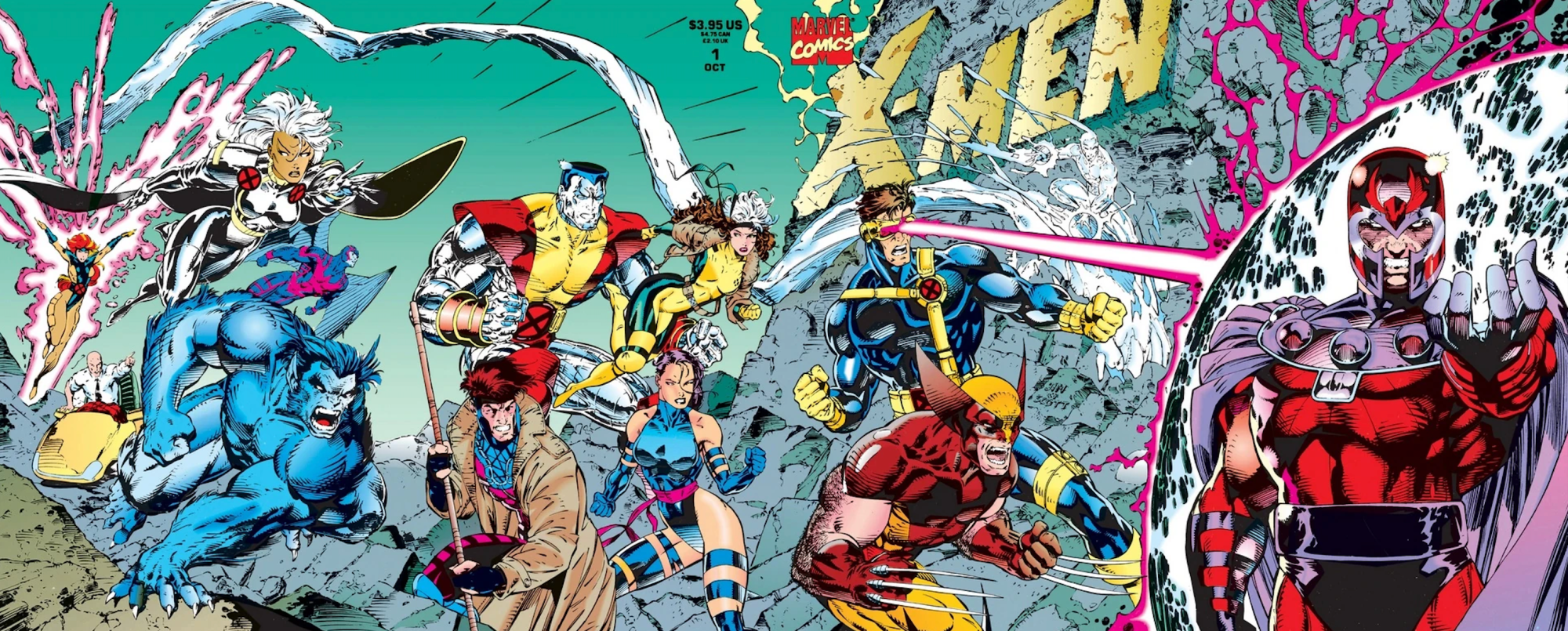
The 1991 publishing relaunch of the X-Men stands as the single most commercially successful initiative in the history of the comic book industry, driven primarily by the historic collaboration between veteran writer Chris Claremont and superstar artist Jim Lee. The opening three-issue arc of the newly launched second volume of X-Men marked the conclusion of Claremont’s legendary 16-year foundational tenure on the franchise and shattered publishing records, with the debut issue selling an unprecedented eight million copies—a Guinness World Record that remains unbroken.
This concise story arc witnesses the return of Magneto as a primary antagonist, supported by his militant faction known as the Acolytes. In response, Professor Xavier reorganizes the mutant population into two distinct operational units: the Blue Team, led by Cyclops, and the Gold Team, led by Storm. Operating from a restored Xavier Institute, the narrative delivers a masterclass in blockbuster comic book storytelling.

Claremont’s script seamlessly balances intricate character history with explosive, widescreen action, while Lee’s dynamic, highly influential character designs defined the visual aesthetic of the 1990s—popularized further by the iconic X-Men: The Animated Series. For casual readers seeking a single narrative that encapsulates the core roster, high-stakes action, and interpersonal drama of the franchise, these three issues serve as the ultimate historical gateway.
Broader Impact and Industry Implications
The enduring commercial viability of these foundational narratives underscores the unique adaptability of the X-Men intellectual property. As Marvel Studios continues to integrate mutants into its interconnected cinematic framework, industry analysts note a corresponding surge in trade paperback and digital comic sales. Publishing strategies increasingly mirror the cinematic pipeline, with Marvel releasing targeted omnibus editions and modern epic collections designed to shepherd casual film and television viewers into comic book specialty shops.
Ultimately, these five selected stories demonstrate that the enduring appeal of the X-Men lies not merely in kinetic superpower displays, but in their capacity to explore complex ethical dilemmas, social commentary, and deeply human emotional vulnerabilities. Whether approached through the historical lens of 1990s publishing phenomena or the modern sophistication of contemporary graphic novels, the mutant franchise continues to provide a rich, accessible literary landscape for new generations of readers.