The Death of the Superhero Genre Has Been Greatly Exaggerated: A Strategic Shift for Marvel and DC

The prevailing narrative throughout 2025 suggested that the era of the comic book adaptation had reached an inevitable conclusion. Industry analysts frequently cited "superhero fatigue" as the primary culprit for declining engagement, pointing toward market saturation and a perceived decline in narrative quality. However, the performance metrics of 2026 have upended these predictions. With Spider-Man: Brand New Day securing its position as the highest-grossing domestic box office release of all time—surpassing the long-standing record held by Star Wars: The Force Awakens—and DC Studios’ Lanterns achieving viewership numbers that rival the historical peaks of HBO’s Game of Thrones, the industry is undergoing a recalibration rather than a collapse.
While the "Peak Era" of 2012–2019 established a specific, high-velocity model for superhero content, the current landscape requires a more nuanced approach. Executives at Marvel Studios, led by Kevin Feige, and DC Studios, under the guidance of James Gunn and Peter Safran, are now navigating a marketplace that values brand differentiation and strategic medium placement over the sheer volume of content that defined the previous decade.

A Chronology of the Superhero Dominance (2012–2019)
The trajectory of the superhero genre can be traced back to 2012, a pivotal year that established the blueprint for modern cinematic universes. The release of Marvel’s The Avengers demonstrated that an interconnected narrative spanning multiple films could yield unprecedented financial returns. Simultaneously, the launch of Arrow on The CW proved that television could sustain a long-form, serialized superhero mythology.
During this seven-year window, the strategy was simple: volume and connectivity. Audiences flocked to theaters for nearly any project branded with a DC or Marvel logo. Between 2012 and 2019, the market exhibited an insatiable appetite for the genre. Even projects that received critical derision, such as the 2016 Suicide Squad, generated massive global box office returns, while unlikely properties like Aquaman surpassed the billion-dollar mark.
However, by 2019, the confluence of the Marvel Cinematic Universe’s Avengers: Endgame and the Arrowverse’s Crisis on Infinite Earths served as a natural closing chapter. These events signaled that the first generation of interconnected storytelling had reached its narrative and emotional limit. The subsequent global pandemic, combined with the structural fragmentation of the DCEU—where cinematic projects were disconnected from their television counterparts—led to brand dilution and viewer confusion, marking the formal end of the peak era.

Market Realities and the New Strategic Divide
In the current post-2019 landscape, the two major studios have begun to diverge in their strategic execution. DC Studios has demonstrated a clear understanding of brand hierarchy, differentiating between properties suited for the prestige of the silver screen and those that thrive in the serialized, character-focused environment of streaming services.
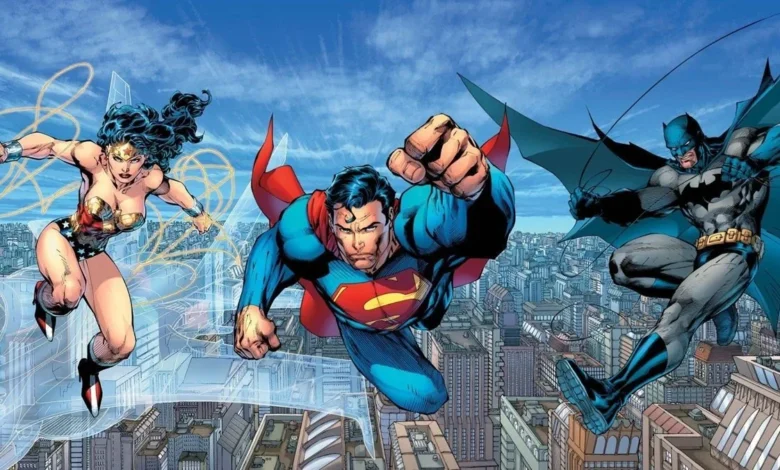
James Gunn’s Superman film served as a critical anchor for the DC brand, reinforcing the necessity of high-budget cinematic treatment for the "DC Trinity"—Superman, Batman, and Wonder Woman. These characters carry the historical and cultural weight that demands the spectacle of a major theatrical release. Conversely, the success of Lanterns and Peacemaker on HBO underscores that secondary and ensemble characters benefit from the deep-dive narrative capabilities of long-form television.
The underperformance of the Supergirl feature film acts as a cautionary tale for the industry. While the project was met with mixed reviews, its poor box office showing suggests that not every comic book property possesses the broad, universal recognition required to sustain a $200 million theatrical budget in the current economy. The implication is that streaming services, rather than being a "dumping ground" for lesser projects, are the ideal home for testing new IPs and expanding upon established ones with a lower barrier to entry for audiences.

The Refinement of the Marvel Studios Model
Marvel Studios, having faced challenges regarding the perceived dilution of its brand through a relentless release schedule on Disney+, appears to be shifting its focus back toward event-level cinema. The decision to scale back the frequency of streaming series is a direct response to data indicating that audience fatigue is often tied to the "homework" required to keep up with an ever-expanding library of interconnected shows.
The cancellation of projects such as Wonder Man after initial renewal signals a cold, pragmatic approach to portfolio management. Marvel’s objective for the remainder of the decade is clear: restore the "event" status of each release. By prioritizing quality and theatrical spectacle over the sheer quantity of content, the studio aims to re-engage the casual viewer who may have been overwhelmed by the sheer volume of content produced between 2021 and 2024.
Data-Driven Future and Institutional Learning
The current successes of Spider-Man: Brand New Day and Lanterns are not anomalies; they are indicators of a market that has matured. Audiences are no longer buying tickets based solely on the genre; they are buying tickets based on the perceived quality and specific narrative value of the product.

For DC Studios, the path forward appears to involve a rigorous evaluation of every property. The "Trinity" and established team-up brands will remain the bedrock of their theatrical slate, while secondary characters—such as Zatanna, Swamp Thing, or Vixen—are likely to be developed as prestige series. This approach mirrors the historical success of the Sandman and Dead Boy Detectives series, which utilized streaming to cultivate loyal, niche fanbases that might not have supported a traditional feature-length film.
For both studios, the primary takeaway from the last 18 months is that the "superhero" label is no longer a guarantee of profitability. The strategy of the early 2010s—market saturation and massive crossover events—has been replaced by a need for focused, high-impact storytelling.
Implications for the Industry
The shift in strategy at both Marvel and DC Studios represents a broader evolution in media consumption. The streaming-first approach for secondary characters allows studios to mitigate the financial risk associated with massive marketing campaigns for unknown entities, while theatrical releases are increasingly reserved for established, "must-see" cultural icons.

Furthermore, the integration of streaming and film will require a higher degree of coordination. As Marvel looks to condense its output into high-impact releases, and DC continues to optimize its split between HBO and the box office, the success of these companies will hinge on their ability to maintain quality control across all mediums.
As the industry moves into the latter half of the 2020s, the "superhero genre" is unlikely to vanish, but its form will continue to change. The era of the "blanket" release strategy is over, replaced by a tiered system that acknowledges the difference between a global blockbuster and a serialized prestige drama. By studying their own histories—the successes of the 2010s and the failures of the early 2020s—Marvel and DC are demonstrating a capacity for institutional evolution that is necessary for their long-term survival in an increasingly competitive entertainment landscape. The future of comic book media lies not in the constant production of content, but in the strategic, high-quality execution of stories that justify their place in the cultural zeitgeist.