The transition of digital intellectual property into the physical tabletop market has become an increasingly significant trend in the gaming industry, and the upcoming release of Terraria: The Board Game represents a high-profile addition to this category. Developed by Paper Fort Games in official partnership with the original video game’s creator, Re-Logic, the project aims to distill the complex, multi-layered experience of one of the world’s best-selling video games into a cohesive, cooperative tabletop format. With a crowdfunding campaign scheduled to go live on Kickstarter on May 28, the industry is closely watching to see how the title manages the balance between sandbox freedom and structured board game mechanics.
Chronology and Development History
The journey of Terraria from a 2011 PC release to a multifaceted media franchise has been marked by consistent growth. Originally developed by Andrew Spinks, known as "Redigit," and his team at Re-Logic, the game has sold over 58 million copies across various platforms, cementing its status as one of the most successful independent games in history.
The formal announcement of the board game adaptation occurred in the summer of 2023. Paper Fort Games, a studio known for its methodical approach to design, was selected by Re-Logic to translate the game’s core loops—mining, building, exploring, and combat—into a tactile experience. Following the announcement, the studio provided early previews of the game’s mechanics at major industry events, most notably the Essen Spiel convention in Germany in late 2023. These demonstrations served as a crucial testing ground, allowing the designers to refine the pacing of the game and ensure that the "sandbox" feel of the original title was not lost in the translation to a fixed set of rules.
Core Mechanics and Gameplay Design
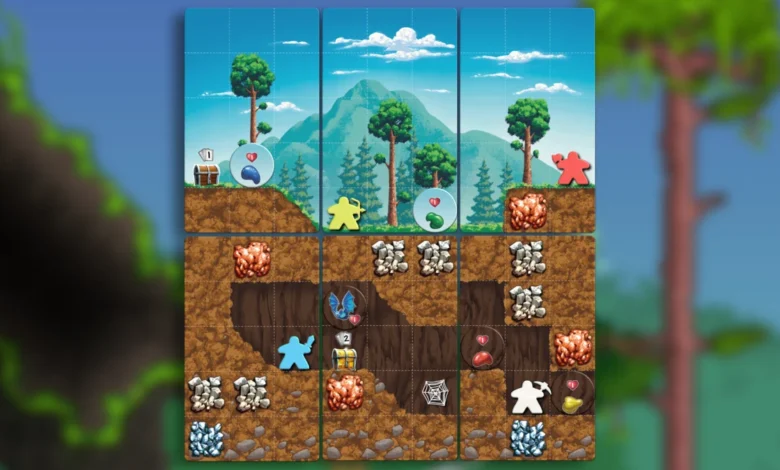
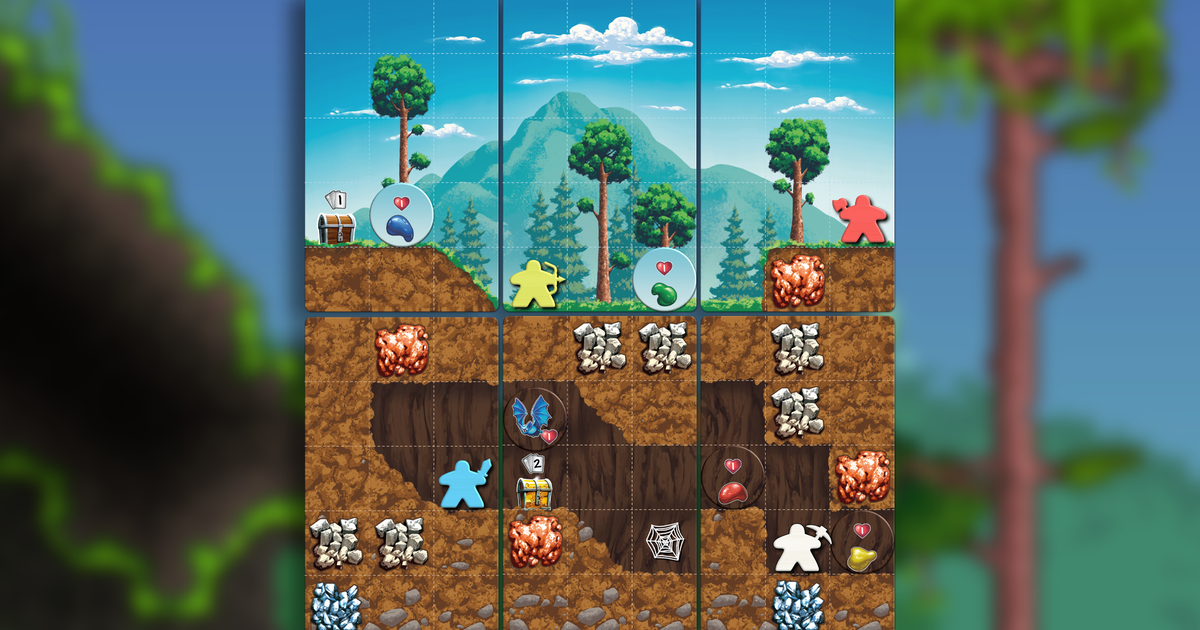
Terraria: The Board Game is designed as a cooperative experience for one to four players. A primary challenge in adapting an open-ended digital game is maintaining the sense of discovery without the benefit of an infinite, procedurally generated map. Paper Fort Games addresses this by utilizing a grid of cards to construct a 2D world. This modular approach allows for different biomes and environments to be laid out at the start of each session, ensuring high replayability.
The gameplay is anchored by an action-point system. Players must manage their limited resources each turn to navigate the terrain, extract materials, and construct fortifications. This system is intended to replicate the decision-making pressure found in the video game, where players must constantly choose between survival, progression, and expansion.
One of the most notable design features is the character progression system. Players utilize transparent cards that can be layered over their individual character boards. This visual mechanic allows for the physical "dressing" of avatars as players find and craft new armor and equipment. This adds a tangible layer of satisfaction to the loot-heavy gameplay loop, directly mirroring the visual progression system of the digital counterpart.
Combat, another pillar of the Terraria experience, is resolved through a combination of dice rolls and action cards. The game features over 30 distinct enemy types, requiring players to adapt their strategies based on the threats present in their current biome. For the "boss" encounters, the game introduces modular miniatures. These figures are designed to change appearance as they sustain damage, providing players with a clear visual indicator of the boss’s health and the progress of the encounter. These boss battles are designed to serve as the narrative and mechanical climax for each session, which are estimated to last between 90 and 120 minutes.
Base Building and NPC Integration
Beyond combat, the game places a significant emphasis on base construction, a fundamental element of the Terraria experience. Building houses within the game allows players to recruit NPCs, which in turn provide passive bonuses and support services. This system incentivizes players to balance their time between aggressive exploration and domestic development. By constructing specialized housing and crafting stations, players unlock the ability to forge more advanced gear, creating a "tech tree" progression that is essential for tackling the game’s more difficult challenges.
Market Context and Industry Implications
The decision to utilize crowdfunding for a property of this magnitude is a strategic move that serves both as a validation of consumer demand and a method to mitigate the risks associated with the high production costs of specialized components, such as the modular miniatures and layered character boards.
The tabletop market has seen a surge in "video-game-to-board-game" adaptations. Titles such as Stardew Valley: The Board Game and Dark Souls: The Board Game have demonstrated that there is a robust appetite among players for physical versions of their favorite digital worlds. However, these projects also face intense scrutiny. Fans of the source material often demand a high level of fidelity, while tabletop enthusiasts look for mechanics that stand on their own merits.
For Paper Fort Games, the challenge lies in satisfying the "Terraria faithful" who expect the same level of depth as the digital sandbox. If the game successfully captures the "miney-crafty" essence while providing a balanced cooperative experience, it could set a new benchmark for how sandbox survival games are adapted for the tabletop.
Official Responses and Future Outlook
While specific financial targets for the Kickstarter campaign have not yet been disclosed, the anticipation surrounding the release suggests that it will be one of the more significant crowdfunding projects in the tabletop sector for 2024. Re-Logic’s involvement in the design process suggests a high level of oversight intended to ensure brand consistency.
The studio has emphasized that the game’s objectives are customizable, allowing groups to tailor the length and difficulty of their sessions. This flexibility is a deliberate design choice aimed at accommodating both casual players and those seeking a more challenging, long-form experience.
As the May 28 launch date approaches, the industry is monitoring the project’s marketing and the community reception of the revealed components. The success of this campaign will likely hinge on how well the studio communicates the "sandbox" nature of the board game to potential backers who may be skeptical of how a digital, infinite-world game can be constrained within the limits of a box.
Fact-Based Analysis of the Project’s Scope
From an analytical perspective, the project represents a sophisticated integration of traditional board game mechanics with modern, player-centric design. The use of transparent cards for equipment is a particularly efficient design solution, as it solves the problem of "inventory management" that often plagues complex board games. By allowing players to physically see their character’s equipment status, the game reduces the mental overhead required to track buffs and stat changes.
Furthermore, the choice to focus on a cooperative, rather than competitive, framework is well-aligned with the core appeal of the original Terraria. The video game is widely played in multiplayer, where the synergy between players—such as one focusing on defense while another specializes in ranged damage—is a core component of the gameplay. By fostering this same collaborative spirit, the board game is positioned to attract the existing player base of the video game.
However, the primary hurdle remains the "session time" factor. In the video game, players can save their progress and return to their world over hundreds of hours. In the tabletop format, the developers must synthesize this experience into a two-hour session. If the game can successfully replicate the "progression dopamine" of the digital original—the sense of moving from basic wooden tools to advanced, glowing, high-tier armor—within that timeframe, it will likely be viewed as a success.
As the campaign nears, the team at Paper Fort Games continues to refine the rulebook and component quality, aiming to provide a final product that honors the legacy of the Re-Logic hit. With the crowdfunding phase serving as the next major milestone, the project stands at the intersection of digital nostalgia and the tabletop renaissance, poised to test the viability of complex sandbox adaptation on the physical stage.