Star Wars Brings Back the Worst Ever Ahsoka Design Ahead of The Mandalorian and Grogu

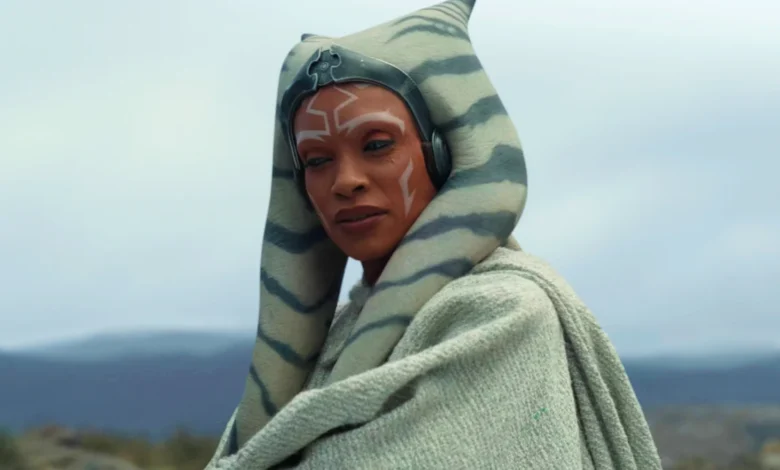
The expansive Star Wars galaxy is once again at the forefront of fan discussion, not only due to the highly anticipated film The Mandalorian and Grogu, but also an intriguing new collectible that stirs a long-standing debate. As details emerge about the upcoming movie, particularly the live-action debut of a mature Rotta the Hutt, voiced by Emmy winner Jeremy Allen White, the collectible market is looking back to Rotta’s origins. Hot Toys, renowned for its meticulously detailed 1/6 scale figures, has unveiled a new Ahsoka Tano figure that captures her appearance from the animated Clone Wars movie, complete with a baby Rotta. However, this figure has unexpectedly reignited conversations surrounding Ahsoka’s original, and often criticized, costume design, presenting a fascinating intersection of canonical evolution, fan sentiment, and the meticulous world of high-end collectibles.
The Anticipated Return of Rotta the Hutt
The announcement of Rotta the Hutt’s inclusion in The Mandalorian and Grogu has generated considerable buzz, marking a significant full-circle moment for the character. Long-time Star Wars enthusiasts will recall Rotta from the 2008 animated Star Wars: The Clone Wars film, where he was affectionately, if somewhat crudely, nicknamed "Stinky" by Ahsoka Tano due to his pungent odor. In that film, a crucial plot point revolved around the kidnapping of the infant Rotta, son of the infamous Jabba the Hutt. His abduction threatened to derail a vital alliance between the Galactic Republic and the Hutt Cartel, a powerful criminal organization known for its vast influence across the Outer Rim. Jedi Knights Anakin Skywalker and his newly assigned Padawan, Ahsoka Tano, were tasked with the perilous mission to rescue the baby Hutt and return him safely to Jabba. This mission was instrumental in establishing the dynamic between Anakin and Ahsoka, showcasing their burgeoning partnership and their unique approach to Jedi duties.
Rotta’s reappearance as a muscular, gladiator-esque warrior in The Mandalorian and Grogu signifies a substantial jump in his character’s timeline and potential narrative importance. The casting of Jeremy Allen White, known for his critically acclaimed roles, to voice the adult Rotta suggests a significant role, possibly indicating the Hutt’s rise to power within the criminal underworld, or at least a notable presence within the New Republic era depicted in The Mandalorian. This development raises questions about the Hutt Cartel’s current status, given the power vacuum left by Jabba’s death in Return of the Jedi. Rotta, as Jabba’s heir, could emerge as a formidable force, potentially interacting with the remnants of the Empire, emerging syndicates, or even the burgeoning New Republic itself. His transformation from a vulnerable infant to a formidable figure underscores the cyclical nature of power and ambition within the Star Wars universe, especially among the Hutts.
Ahsoka Tano’s Genesis and the Original Costume Controversy
Ahsoka Tano’s introduction in the 2008 Clone Wars film was met with a mix of excitement and skepticism. As Anakin Skywalker’s Padawan learner, she was designed to offer a new perspective on the Jedi Order and provide a foil for Anakin’s often impulsive nature. Her character quickly grew on fans, evolving from a sometimes brash apprentice to a wise and powerful Jedi, eventually becoming a fan-favorite figure across various Star Wars media. However, her initial character design, particularly her costume, became an immediate point of contention.
In her debut, Ahsoka, then a mere 14 years old, was depicted wearing a distinctive tube top that exposed her midriff, paired with a short skirt and leggings. This outfit immediately drew criticism from a segment of the audience for several compelling reasons. Primarily, its practicality in the heat of battle was questioned. As a Jedi Padawan frequently engaged in combat against Separatist forces, wearing an outfit that left significant portions of her torso exposed seemed illogical and highly impractical. Critics argued that such attire would offer minimal protection against blaster fire, shrapnel, or even environmental hazards, making her unnecessarily vulnerable in a galaxy rife with danger.
Beyond practicality, the more significant concern revolved around the sexualization of a minor character. Ahsoka’s age — 14 years old — made the choice of a revealing costume particularly problematic for many viewers. The design was perceived by some as an unnecessary and inappropriate sexualization of a young female character, especially within a franchise that often caters to a broad, all-ages audience. This ignited a broader discussion within the fandom and media criticism about the portrayal of female characters in animation, particularly young ones, and the responsibility of creators in designing age-appropriate attire. For years, fans speculated on the rationale behind Lucasfilm’s decision to present Ahsoka in this manner, with many expressing disappointment that a character intended to be a strong role model for young viewers was introduced with such a contentious design.
Lucasfilm’s Canonical Retcons and Ahsoka’s Evolving Image
Recognizing the widespread feedback and evolving sensibilities, Lucasfilm gradually addressed the concerns surrounding Ahsoka’s costume. Throughout the original The Clone Wars television series, her outfits underwent subtle but noticeable changes, becoming progressively more modest and practical as she matured. Her later designs featured more coverage, reflecting her growth as a Jedi Knight and a more seasoned warrior. These internal costume evolutions within the series were a direct response to the character’s journey and, implicitly, to the earlier criticisms.
However, Lucasfilm took a more explicit step towards retconning the original design in later animated and live-action projects. In Tales of the Jedi, an animated anthology series released in 2022, a flashback sequence depicting young Ahsoka during the Clone Wars era showcased a revised version of her initial attire. This updated design, while still recognizable as her early look, featured significantly more coverage, particularly around the midriff, making it more akin to a tunic than a tube top. The explicit intent behind this redesign was to align her early appearance with contemporary standards of age-appropriateness and combat practicality, effectively "correcting" the problematic aspects of the original.
This retcon was further cemented in Ahsoka Season 1 (2023) of the live-action series. During a pivotal flashback sequence, actress Ariana Greenblatt portrayed a young Ahsoka during the Clone Wars, and her costume was carefully adapted to reflect the updated, desexualized design seen in Tales of the Jedi. This consistent revision across different media underscored Lucasfilm’s deliberate effort to present Ahsoka’s early years in a manner that was more respectful of her age and character, solidifying the new design as the canonical representation of her younger self. These adjustments were widely praised by fans who had long advocated for a more appropriate portrayal, contributing to Ahsoka’s enduring popularity and reinforcing her status as a powerful and inspiring figure within the Star Wars narrative.
The Hot Toys Ahsoka Tano Figure: A Collector’s Quandary
Amidst this carefully managed canonical evolution, Hot Toys’ latest offering presents a fascinating, albeit controversial, departure. The new 1/6 scale Ahsoka Tano figure, designed to represent her appearance in The Clone Wars movie, meticulously recreates the character with a photorealistic likeness adapted from Ariana Greenblatt’s portrayal of young Ahsoka in the live-action series. The figure comes complete with a highly detailed baby Rotta, designed to fit into Ahsoka’s backpack, recreating an iconic scene from the animated film. Hot Toys is celebrated for its unparalleled attention to detail, intricate tailoring, and hyper-realistic sculpts, making their figures highly coveted by collectors worldwide.
However, the design choice for Ahsoka’s costume has sparked renewed debate. Instead of utilizing the updated, canonical design established in Tales of the Jedi and Ahsoka Season 1, Hot Toys opted to replicate her original, controversial tube top from the 2008 Clone Wars movie. This decision effectively undoes Lucasfilm’s retcon in the context of this specific collectible. Reactions from the fan community have been notably mixed. While some collectors appreciate the "screen accuracy" to the original Clone Wars film and Hot Toys’ commitment to recreating a specific moment in the character’s history, many others have expressed disappointment and even discomfort.
The juxtaposition of the original animated costume, which was already deemed "awkward" by some, with a hyper-realistic, photorealistic sculpt of a young Ahsoka, has amplified the perceived issues. As one fan on Instagram noted, the initial Clone Wars costume "looks majorly odd on the figure" in this new format. What might have been somewhat softened by the stylized nature of animation now appears starker and more pronounced on a realistic human form. This "hybrid" aesthetic — an animated design applied to a live-action-inspired sculpt — highlights the visual incongruity that Lucasfilm sought to correct through its retcons.
Analyzing Hot Toys’ Design Rationale and Market Impact
The specific reasoning behind Hot Toys’ decision to revert to the original Clone Wars movie costume remains officially unstated. Several plausible factors could be at play. The most straightforward explanation is a strict adherence to the source material that the figure is explicitly referencing: The Clone Wars film. For a company like Hot Toys, known for its meticulous accuracy to specific on-screen appearances, recreating the exact costume from that particular cinematic debut might have been deemed paramount. The figure is explicitly marketed as The Clone Wars film Ahsoka, and in that film, she wears the tube top. Therefore, from a purely historical "movie accuracy" perspective, the decision could be seen as consistent with their brand ethos.
Another possibility involves licensing agreements and directives from Lucasfilm. It is conceivable that for a figure tied to a specific film release from a particular era, the approved design brief might have specified the original movie costume, despite later canonical retcons. Navigating the vast and often complex continuity of the Star Wars universe, especially with its evolving character designs and timelines, presents unique challenges for licensees. Hot Toys may have been operating under a directive to capture the "original" moment, even if the broader canon has since moved on.
The implications for the high-end collectibles market are also significant. Hot Toys figures cater to a dedicated segment of collectors who value authenticity, detail, and sometimes, the capture of a historical moment, controversial or not. The limited production run of only 2,500 units for this particular figure further intensifies its collector appeal. Scarcity often drives demand, and for many collectors, the exclusivity of the item might outweigh any personal reservations about the costume design. This creates a fascinating tension: a product that sparks debate about character representation is simultaneously destined to be a highly coveted item due to its craftsmanship and rarity.
Broader Implications for Star Wars Lore and Character Representation
This Hot Toys figure and the ensuing discussion underscore several broader implications within the Star Wars franchise and the entertainment industry at large. Firstly, it highlights the ongoing dialogue surrounding character representation, particularly for young female characters. The initial controversy over Ahsoka’s costume was a pivotal moment in fan engagement, demonstrating the power of audience feedback in shaping how beloved characters are portrayed. Lucasfilm’s subsequent retcons are a testament to their responsiveness to these concerns and a commitment to evolving their characters in a way that resonates positively with a modern audience.
Secondly, it illustrates the inherent challenges in maintaining absolute continuity within a sprawling, multi-decade franchise like Star Wars. As stories expand and characters mature across different media, revisiting early designs can create friction with later established canon. Companies like Hot Toys must navigate this complex landscape, balancing the desire for "original" accuracy for specific nostalgic moments with the more current, updated canonical portrayals. This figure serves as a tangible representation of that tension.
Finally, it reinforces the power of collectibles not just as consumer products, but as artifacts that reflect and reignite ongoing cultural conversations. The Hot Toys Ahsoka figure, with its meticulously crafted details and controversial costume, is more than just a toy; it is a snapshot of a particular moment in Star Wars history, a physical embodiment of the debates surrounding character design, and a testament to the enduring, if sometimes complicated, legacy of Ahsoka Tano. As The Mandalorian and Grogu prepares to introduce an adult Rotta the Hutt to live-action audiences, this collectible serves as a poignant reminder of the characters’ shared past, and the long, evolving journey of their representation in a galaxy far, far away.