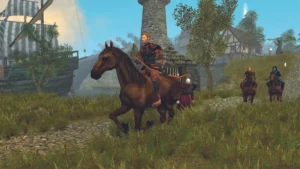
The recent conclusion of the beta phase for World of Warcraft: Forever has provided the gaming community with a clearer, if complex, vision of Blizzard Entertainment’s long-term strategy for its iconic MMORPG franchise. Designed to exist as a permanent, evolving environment without the traditional cycle of expansion-based resets, the title represents a fundamental shift in how the developer intends to manage player progression. While initial testing feedback has been largely positive regarding the leveling experience and questing systems, the project now faces the daunting architectural challenge of sustaining an endgame that avoids the pitfalls of vertical power creep over a prospective multi-decade lifespan.
A New Paradigm for Azeroth
World of Warcraft: Forever distinguishes itself from both the standard retail experience and the cyclical nature of World of Warcraft Classic by opting for a horizontal expansion model. In a traditional WoW expansion, each new release effectively renders previous gear sets obsolete, resetting the playing field to facilitate a new "gear treadmill." By contrast, Forever is structured to maintain relevance for end-game content for years.
The development team, led by designers such as Tim Jones and associate production director Clay Stone, has signaled a cautious approach to this transition. According to recent interviews and developer insights, the core philosophy is to keep legacy content meaningful while still providing the incremental sense of progression that players have historically associated with the genre. This creates a delicate balancing act: how to provide tangible rewards for new raid tiers without systematically devaluing the time investment players made in earlier stages of the game.
The Tension Between Progression and Longevity
The central conflict facing the development team lies in the definition of "endgame." Historically, World of Warcraft has relied on vertical progression—where higher-level gear is mathematically superior to previous tiers. However, in a game designed to last indefinitely, this model leads to exponential power creep. If the game continues to add raid tiers every few months, the gap between early-tier players and late-game participants becomes insurmountable without constant adjustments.
Clay Stone has emphasized that the design intent is to limit the magnitude of power gains between releases. The goal is to ensure that while new items offer improvements, they do not render the "Best-in-Slot" (BiS) gear from prior tiers completely useless. This approach is intended to keep older raids populated, as players may still need to farm specific items from earlier content to optimize their characters for the latest challenges.
Historical Context and Industry Precedents
The MMORPG industry has struggled with this issue for decades. Games like Guild Wars 2 have famously opted for horizontal progression, where gear statistics are capped, and character growth is instead defined by account-wide masteries, unique ability unlocks, and cosmetic prestige. In that model, a player who takes a year-long break can return to the game and find that their top-tier gear is still relevant.
Blizzard’s attempt to graft a "soft" vertical progression system onto the World of Warcraft formula is an experimental departure from its own history. The company has previously utilized "stat squishes"—mathematical reductions of all character and item stats—to manage the runaway inflation caused by years of power creep. However, these squishes are often perceived negatively by the player base, as they can lead to discrepancies in power perception and gameplay feel. Relying on such tools in a "Forever" title risks creating a perpetual cycle of frustration where players feel their progress is being periodically erased by administrative necessity.
The Risks of Fragmented Player Bases
Beyond the mathematical concerns of gear item levels, there is the sociological challenge of player distribution. In an MMO, the endgame is sustained by the density of the active population. If the raiding scene becomes too fragmented across an ever-increasing number of tiers, it becomes difficult for the matchmaking system—and the player-driven guild system—to function effectively.
If a player needs a specific item from a "Tier 1" raid to optimize their current "Tier 5" build, but the rest of the active player base has moved on to higher tiers, the game creates a bottleneck. Historically, Blizzard has solved this through "catch-up mechanics," such as tokens or badges that allow players to skip older content. However, these mechanics have the side effect of rendering older raids obsolete, which directly contradicts the stated goal of keeping content relevant for the game’s lifetime.
Looking Toward the Future of the Genre
The implementation of "Forever" suggests that Blizzard is looking to transition away from the "expansion-as-a-service" model toward a "game-as-a-platform" model. This is consistent with trends in the broader software industry, where long-term maintenance of a single, highly optimized product is often more cost-effective than constant rebooting.
However, the success of this model hinges on the developers’ ability to redefine what a reward looks like. If the team continues to view "better loot" as the only meaningful metric of progress, they will inevitably hit a ceiling. Experts in MMO design suggest that the next evolution for World of Warcraft: Forever may require moving beyond raw statistics. This could include:

- Ability Masteries: Unlocking new ways to use existing spells or talents rather than simply increasing damage numbers.
- Persistent World Influence: Allowing player factions or guilds to impact the state of the game world, providing non-numerical incentives for raiding.
- Horizontal Utility: Introducing gear that provides situational advantages in specific environments or against specific enemy types, rather than universal power increases.
Strategic Implications for Blizzard
The decision to pursue this trajectory carries significant weight for Blizzard’s long-term business strategy. By maintaining a single, unified environment, the company reduces the technical debt associated with managing multiple legacy versions of the game. It also creates a more stable community, as players do not feel the "fear of missing out" (FOMO) that accompanies the end of a seasonal expansion cycle.
Yet, this path is not without its risks. The "slow-motion power creep" mentioned by industry analysts is a ticking clock. If the developers are unable to find a way to make progression feel satisfying without numerical growth, they may find themselves in a position where they must choose between a stagnant, unchanging endgame or a game that eventually becomes unplayable due to its own complexity.
As the launch of World of Warcraft: Forever approaches in November, the focus will shift from the leveling experience to the sustained viability of the endgame. The development team has demonstrated a clear understanding of the challenges ahead, but the execution will require a fundamental shift in how they have approached game design for the last twenty years. Whether this transition proves to be a successful evolution or a cautionary tale in long-term service management remains to be seen. For now, the player base waits to see if the promised "Forever" is truly sustainable or if the structural issues inherent in the game’s design will necessitate a new approach before the first decade concludes.