
For decades, the term "immersive sim" has served as a badge of honor among a specific subset of PC gamers. It conjures images of ventilation shafts, tactical thievery, and the quiet satisfaction of emergent gameplay—where a player’s ingenuity with a physics object or a well-placed spell can circumvent an entire combat encounter. Yet, despite the critical reverence afforded to titles like Deus Ex, Thief, and Dishonored, a growing consensus among developers suggests that "immersive sim" is perhaps the most toxic marketing term in the industry.
Dave Oshry, CEO of New Blood Interactive, the publisher behind modern genre staples such as Gloomwood and Fallen Aces, has been vocal about this branding crisis. In his view, while the term holds significant cultural weight for a devoted subculture, it acts as an immediate barrier to entry for the broader gaming audience. "Is it a good marketing term? No," Oshry states. "It sucks. It’s awful."

The Etymology of an Industry Niche
To understand the current frustration, one must look at the history of the term. The phrase "immersive simulation" was coined in the late 1990s, largely attributed to the developers at Looking Glass Studios, the legendary team behind Ultima Underworld and Thief. At the time, the industry was struggling to categorize a new wave of first-person games that prioritized player agency and reactive environments over the linear, scripted corridors of traditional shooters.
Warren Spector, a seminal figure in the genre and director of Deus Ex, frequently utilized the term in interviews and postmortems to distinguish these titles from standard action games. For developers, it was a vital shorthand to describe a design philosophy centered on systems-driven play. For players, it became a tribal identifier—a way to signal membership in an elite club of gamers who valued complexity and intellectual engagement over mindless reflex testing.
However, as the decades passed, the industry evolved. What was once considered a niche set of "rules"—such as character leveling, dialogue trees, and environmental interaction—slowly bled into mainstream AAA design. Today, it is common to find role-playing mechanics in action-adventure titles, stealth mechanics in open-world shooters, and physics-based problem solving in nearly every major release. This dilution has made the "immersive sim" label feel increasingly antiquated and confusing to the average consumer.

The Marketing Disconnect: Immersive Sim vs. RPG
The primary friction point for publishers today is the lack of a clear definition for the average player. When a consumer sees "RPG" on a store page, they possess an intuitive understanding of the gameplay loop: story, progression, and character building. When they see "immersive sim," the response is often one of hesitation.
"If you market something as an RPG, I think you’ll do better than marketing it as an immersive sim," Oshry explains. This sentiment is echoed by Raphael Colantonio, the founder of Arkane Studios, a developer synonymous with the genre. Colantonio has frequently noted that the industry’s obsession with precise genre definitions often works against the commercial success of the product.
When Arkane marketed the 2017 reboot of Prey, the team spent significant resources attempting to define the "immersive sim" experience to a general audience. The resulting confusion likely hampered the game’s initial commercial performance. Bethesda, the publisher at the time, eventually pivoted the studio toward other projects, culminating in the development of Redfall—a game that struggled to reconcile its identity, ultimately contributing to the closure of Arkane Austin in 2024.
The Success of Alternative Branding
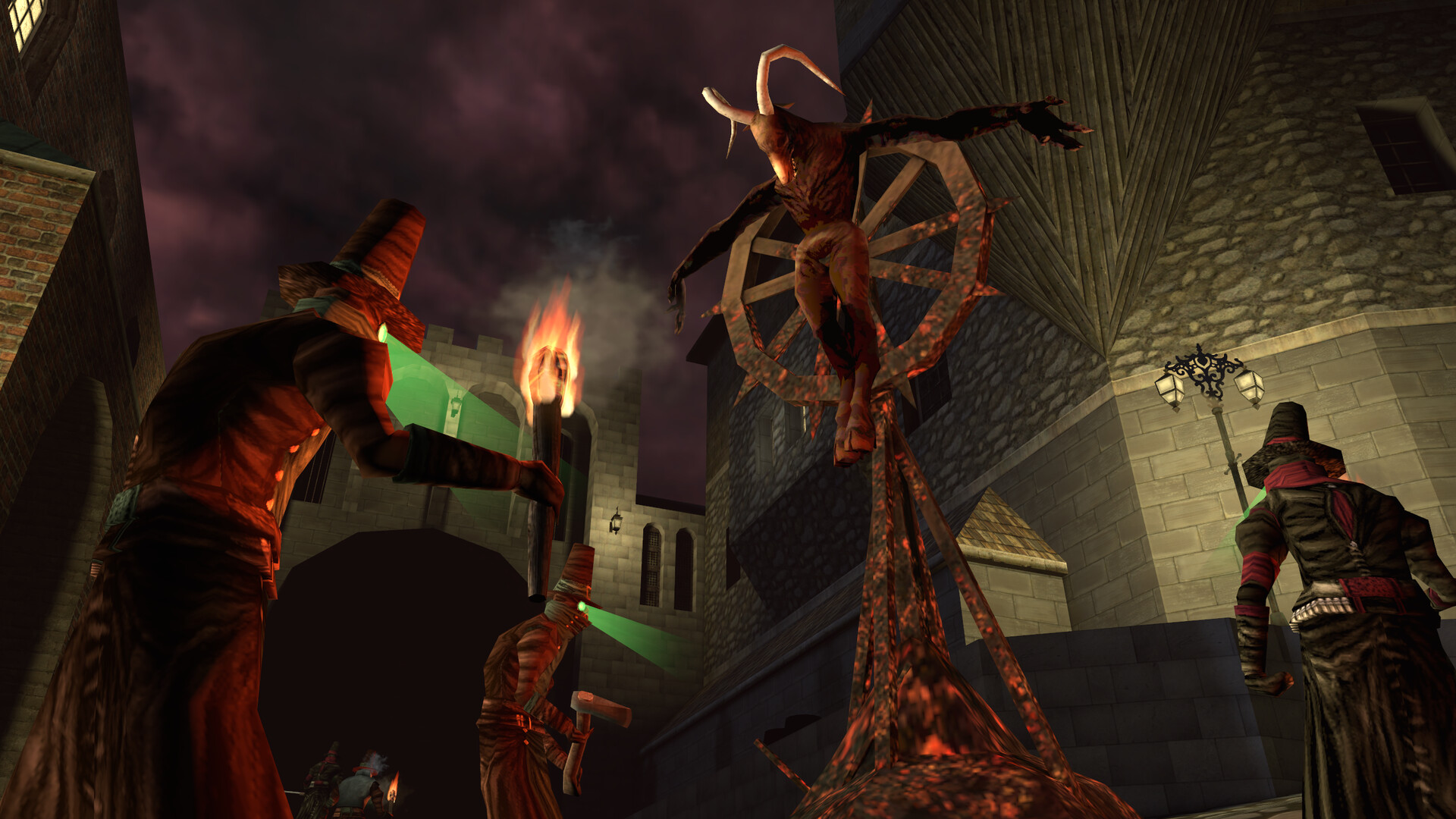
New Blood Interactive has found success by moving away from these labels. Instead of grouping their projects under the "immersive sim" banner, they utilize more descriptive, evocative categories. For instance, the company recently bundled Gloomwood, Fallen Aces, and the Western-themed Blood West under the moniker "the stealth trilogy."
"Because that’s what draws people in," says Oshry. "If we called it the immersive sim trilogy, nobody would buy the games."
This strategy mirrors the success of the "boomer shooter" label. While the term is technically inaccurate—referring to a style of 90s-era fast-paced shooters that have found a massive resurgence among modern players—it is functionally perfect for marketing. It conveys the speed, aesthetic, and "feel" of the experience to the consumer instantly. "Boomer shooter" has become a successful, colloquial marketing term because it is evocative and understood, even if it lacks technical precision.

The "Baldur’s Gate 3" Effect
The debate has been further complicated by the massive success of Larian Studios’ Baldur’s Gate 3. While it is undeniably a turn-based CRPG, many designers argue that its core philosophy is the purest expression of the "immersive sim" spirit in recent history. The game allows for deep environmental interaction, systemic exploitation of game rules, and player-driven problem-solving that would make any Looking Glass developer proud.
Crucially, however, Larian never marketed the game as an immersive sim. They marketed it as an RPG. By leaning into the well-understood expectations of the RPG genre, they achieved mass-market success while still delivering the "systemic freedom" that fans of immersive sims crave. This suggests that the gameplay design itself is not the problem; the issue is the linguistic baggage attached to the subgenre.
Financial Implications and Studio Sustainability
The struggle to sell these games is not just a branding annoyance; it is an existential threat to smaller studios. Developing systemic, reactive games is inherently more expensive and time-consuming than creating linear experiences. Every interaction, physics object, and systemic outcome must be tested and balanced, leading to long development cycles and high production costs.

Oshry jokingly notes that he is "dumping all the money into immersive sims so we can go broke like the great studios that came before us." Behind the hyperbole lies a sobering reality: studios that prioritize this level of complexity often face financial instability if their titles fail to capture a broad enough audience.
If the industry continues to use the "immersive sim" label, it effectively limits the potential audience to those who already know what the term means. This creates a ceiling for growth. By contrast, embracing more accessible genre terminology—or describing the experience rather than the category—allows developers to reach players who might appreciate the gameplay without being intimidated by the "simulation" tag.
The Future of Genre Labels
As the gaming industry moves toward a more platform-agnostic future, the utility of legacy genre labels continues to decline. The success of titles like Deathloop, Dishonored, and even the Zelda franchise—which has incorporated many systemic, immersive-sim-adjacent features—proves that players are hungry for these experiences.
The lesson for modern developers appears to be twofold: first, continue to innovate on systemic, player-driven gameplay; and second, stop trying to sell the "immersive sim" label to the general public. As it stands, the term is a relic of 90s game development that no longer serves a purpose in a marketplace where the "simulation" has become a standard feature of the "role-playing" experience.
For the legacy of Looking Glass and the future of immersive design to survive, the industry may need to retire the label entirely. By shifting focus toward the emotions, player agency, and narrative possibilities inherent in these games, developers can ensure that their work reaches the audience it deserves, rather than being trapped in the niche, academic, and ultimately restrictive category of the "immersive sim."