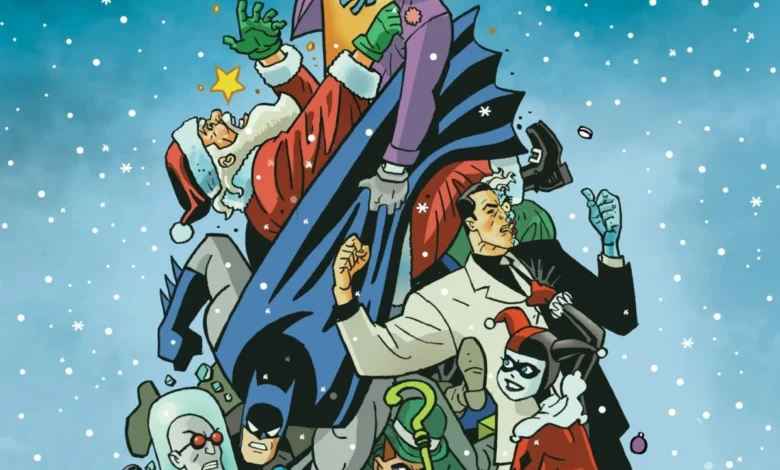
Creative Reunion: The Legacy of Dini and Altieri
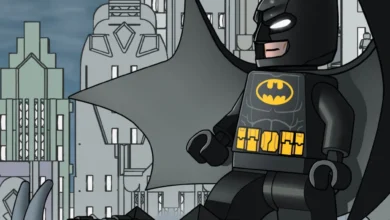
The collaboration between writer Paul Dini and artist Kevin Altieri is a significant milestone for animation and comic book history. Paul Dini, a primary architect of the DC Animated Universe, was instrumental in shaping the characterization of the Joker in Batman: The Animated Series, lending the villain a theatricality and psychological depth that defined the medium for a generation. Kevin Altieri, a veteran director and storyboard artist, brought the distinct, noir-inspired aesthetic of the series to life through his precise, angular visual style.
Their reunion for this project is not merely a creative partnership; it is a return to a specific visual and narrative language that has influenced decades of Batman content. By returning to this iteration of the character, Dini and Altieri are tapping into a well-established continuity that remains a benchmark for quality in superhero media. The decision to frame the story as a "Christmas Carol" narrative allows for a meta-commentary on the Joker’s cyclical nature as a villain, exploring whether a character so fundamentally committed to chaos can ever experience a moment of genuine reflection or transformation.
Project Details and Format
The Joker’s Christmas Carol is categorized as an oversized one-shot, a format that allows for a more cinematic pacing compared to standard monthly issues. The publication details are as follows:
- Release Date: December 2, 2026
- Format: Oversized one-shot, card stock
- Page Count: 64 pages
- Primary Creative Team: Paul Dini (Writer), Kevin Altieri (Art/Cover)
- Variant Cover Artists: Dustin Nguyen, Ty Templeton
- Pricing: $7.99 for the standard edition; $8.99 for the variant edition
The choice of Dustin Nguyen and Ty Templeton for variant covers is strategic, as both artists have deep ties to the Batman: The Animated Series aesthetic. Nguyen is renowned for his stylized, watercolor-inflected approach to the characters, while Templeton’s work has frequently appeared in the official Batman Adventures comic book tie-ins, maintaining a visual consistency that resonates with the show’s original character designs.
A Narrative Reimagining of a Classic Tale
The narrative structure of the book follows the familiar beats of A Christmas Carol, with the Joker serving as a warped stand-in for Ebenezer Scrooge. The synopsis confirms that the Joker, finding himself at a loss for time on Christmas Eve, is visited by three spectral forms. In the tradition of the Dickens story, these ghosts are intended to serve as mirrors to the protagonist’s past, present, and potential future.
The central conflict of the story—whether the Joker will be moved by these spectral encounters or if he will choose to reject them in favor of his own nihilistic ends—provides a compelling premise. Given the nature of the Joker, the narrative tension lies not in the possibility of his redemption, but in the absurdity and potential violence of his reaction to forced introspection. The inclusion of the "food for worms" motif in the official synopsis suggests that the book will retain the dark, cynical humor that made the animated series such a critical success.
Historical Context: The DC Animated Universe (DCAU)
To understand the significance of this release, one must consider the historical impact of Batman: The Animated Series, which premiered in 1992. The series was groundbreaking for its mature themes, sophisticated storytelling, and the landmark voice performance of Mark Hamill as the Joker. Over the subsequent decades, the DCAU expanded into various spinoffs, including The New Batman Adventures, Superman: The Animated Series, and Justice League.
The Joker’s Christmas Carol is the latest in a series of "return to" projects that DC Comics has utilized to engage with the legacy of their animated properties. These projects, often published under the "Batman Adventures" or similar banners, provide a bridge for creators to tell stories that the limitations of television production or broadcast standards prevented in the 1990s. The publication of a 64-page, premium-priced one-shot indicates that DC Comics views this material as a high-value collector’s item rather than a standard monthly filler issue.
Market Implications and Strategic Positioning
From a market perspective, the release of this comic in early December is a strategic move to capture the holiday market. By positioning a "Christmas special" featuring the most popular villain in the DC rogues’ gallery, the publisher is targeting both the casual holiday shopper and the dedicated comic book collector.
The use of card-stock covers and an oversized format suggests a focus on prestige quality. In the current comics market, where digital consumption is rising, physical comic books are increasingly marketed as tangible artifacts or "bookshelf pieces." By leaning into the legacy of the animated series, DC is leveraging the nostalgia of the 30-to-50-year-old demographic—the generation that grew up watching the series—while providing a self-contained story that requires no prerequisite reading.
Supporting Data and Industry Trends
Recent industry trends indicate a growing demand for "legacy" content that explores established versions of characters. Data from the direct market suggests that limited series or one-shots featuring creators associated with iconic runs tend to outperform generic tie-ins. The synergy between the creative team and the intellectual property (IP) is a significant factor in consumer confidence.
Furthermore, the expansion of the "The World’s Finest" subsite and the emphasis on social media engagement via platforms like Bluesky and Twitter (X) demonstrates a coordinated effort to maintain the community surrounding the DCAU. This community is one of the most dedicated in the comic book industry, and their involvement in tracking the production details of this project—from cover reveals to behind-the-scenes interviews—provides a feedback loop that sustains interest long after the initial announcement.
Analyzing the Impact of the "Dini-Altieri" Dynamic
The synergy between Paul Dini and Kevin Altieri is the primary value proposition of The Joker’s Christmas Carol. Dini’s writing is characterized by a "show, don’t tell" approach to character development, often utilizing dialogue that captures the Joker’s manic, performance-driven personality. Altieri’s art, meanwhile, is known for its stark use of shadow and geometric composition, which complements the moody, Gotham-centric atmosphere required for a holiday story.
The analytical implication of this release is that it serves as a "stress test" for the viability of returning to the DCAU in a comic format. If this project meets its sales targets, it may pave the way for further exploration of the 1990s animated continuity. The success of such a title rests on the ability of the creators to balance the nostalgia of the original series with a fresh narrative perspective that avoids the pitfalls of mere imitation.
Conclusion and Outlook
As December 2026 approaches, expectations for The Joker’s Christmas Carol remain high. The project serves as a bridge between the animation industry of the 1990s and the evolving landscape of 21st-century comic book publishing. By honoring the creative roots of the DC Animated Universe while embracing the narrative possibilities of the comic book medium, Dini and Altieri are poised to deliver a definitive holiday tale for Gotham’s most dangerous resident.
Whether the story functions as a grim parody of Dickens or a genuine psychological study of the Joker remains to be seen upon its release. However, given the track record of the creative team, the anticipation surrounding the cover art, and the enduring popularity of the source material, The Joker’s Christmas Carol is positioned to be a standout title in the winter publishing season. Fans are encouraged to follow official updates through The World’s Finest network and local comic book retailers to ensure availability of the preferred cover variants.