City of Six Moons challenges the boundaries of board game design with an untranslated alien rulebook

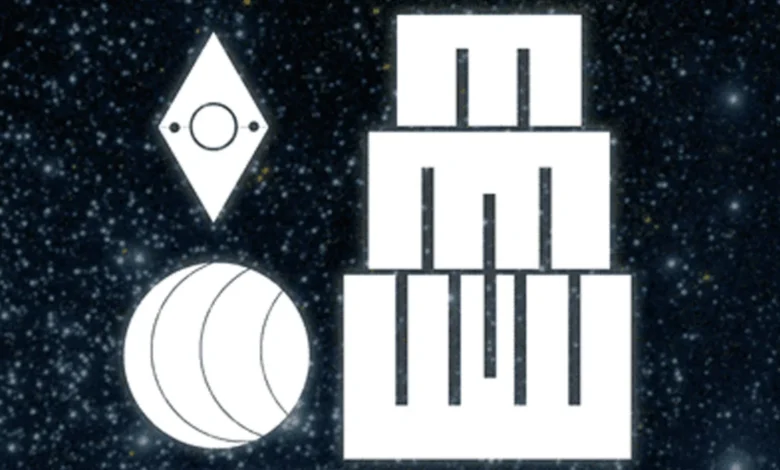
The upcoming solitaire board game City of Six Moons, developed by noted designer Amabel Holland and published by Hollandspiele, is set to redefine the player experience by presenting its entire rulebook in an invented, non-human language. This bold design choice requires players to treat the instruction manual not as a guide, but as an archeological puzzle. The game, which tasks the player with managing the fortunes of an alien civilization, forces participants to confront the possibility that their interpretation of the rules may never be definitively verified. By refusing to provide official clarifications or FAQ documentation, Holland is intentionally creating a vacuum of authority, shifting the focus from objective mastery to subjective discovery.
The Genesis of a Linguistic Puzzle
The concept of integrating non-human communication into tabletop gaming is not entirely new, but the scale of its implementation in City of Six Moons is unprecedented. While games like T.I.M.E Stories or various escape-room-style board games often require players to decode symbols, those systems typically provide an eventual key or a linear progression toward a correct solution. Holland’s approach deviates by withholding the key entirely.
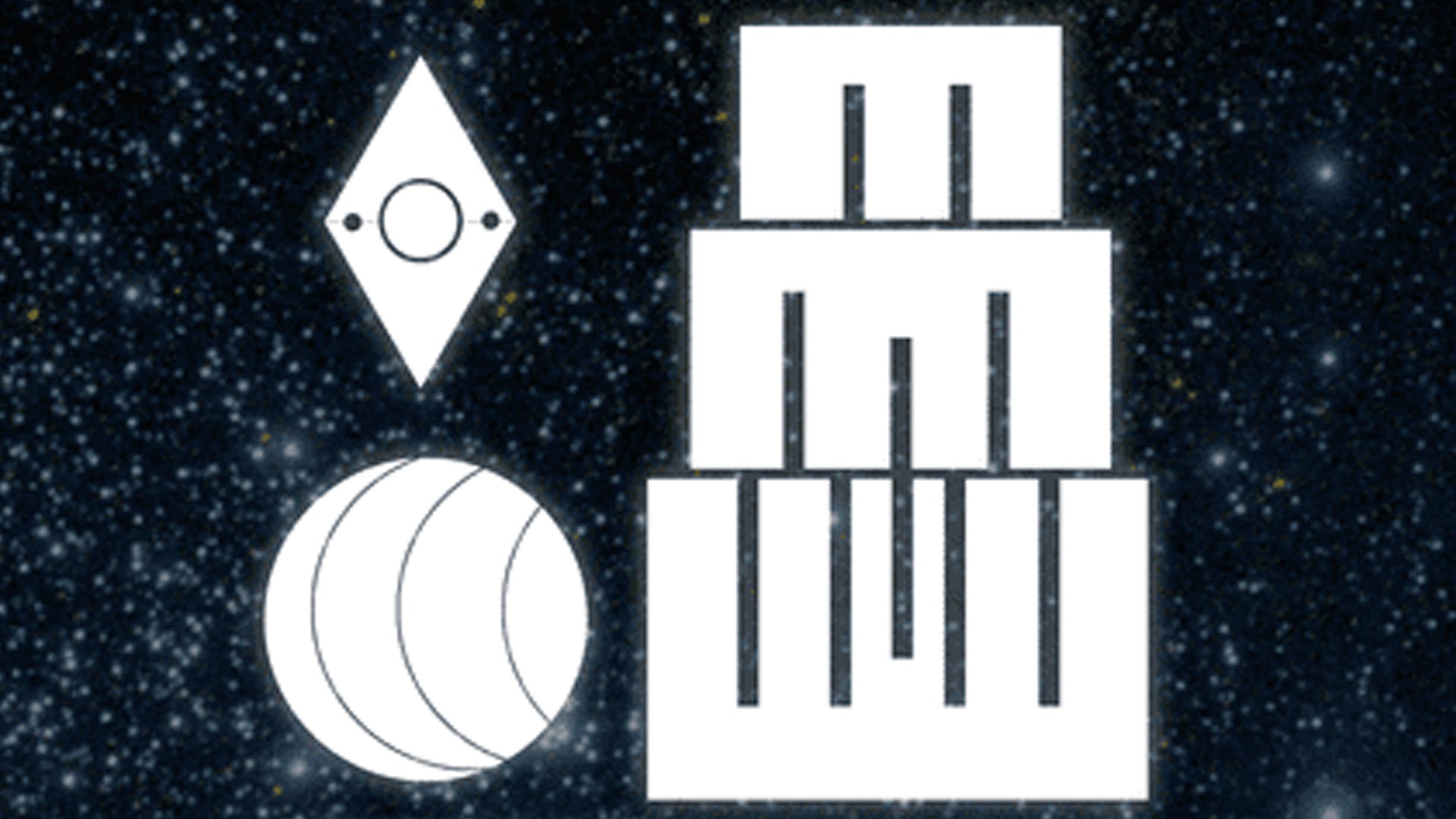
The design philosophy behind the project stems from a desire to immerse the player in the existential confusion of encountering a truly foreign culture. By utilizing a lexicon of icons, glyphs, and abstract symbols, the game demands that players rely on their own cultural biases and logical frameworks to hypothesize how the game functions. The inherent challenge is that the designer has explicitly stated she will not provide answers, effectively ending the traditional developer-player feedback loop. This decision forces the player to accept that their "successful" playthrough might be based on an entirely incorrect interpretation of the rules, a meta-layer of gameplay that exists outside the board itself.
Contextualizing the Hollandspiele Approach
Hollandspiele, the publishing house co-owned by Amabel and Mary Holland, has long been recognized for its focus on historical simulations and unconventional mechanics. The label has carved out a niche for high-complexity, low-friction historical wargames and thematic experiments. City of Six Moons represents a departure into the abstract, yet it retains the signature rigor of a Holland design.
The board game industry has seen a gradual shift toward more "evergreen" and approachable designs, favoring streamlined rulesets that prioritize accessibility. City of Six Moons stands in stark opposition to this trend. It is a "boutique" project that prioritizes the artistic and intellectual experience of the individual over mass-market appeal. By requiring players to learn a language before they can play the game, the barrier to entry is arguably the highest in the current market, positioning the title as a collector’s item for enthusiasts of ludic theory and experimental game design.
Chronology of Development and Release
The project first gained attention within the board game community through subtle teases on social media platforms, specifically Bluesky, where Holland began detailing the development of the iconography. The timeline of the game’s development has been characterized by a slow reveal of its visual language, with the cover art serving as the primary source of decipherable clues.
- Initial Concept Phase: Early 2023 – Amabel Holland begins drafting the structural logic of a game centered on an alien civilization’s decision-making process.
- Design Iteration: Late 2023 – Decision made to replace English text with a proprietary iconographic language.
- Announcement: Early 2024 – Initial public discourse on board game forums, including BoardGameGeek, highlights the radical nature of the rulebook.
- Pre-Launch Marketing: Ongoing – Disclosure of the "no-rules-clarification" policy, sparking significant debate regarding player agency.
- Scheduled Release: November 2024 – The official launch of the physical components through the Hollandspiele distribution network.
The Psychology of the "Lesser" Experience
One of the most compelling aspects of the game is the intentional "loss" of wonder that occurs once a player feels they have cracked the code. Holland has openly discussed this phenomenon, noting that the act of deciphering is the primary gameplay loop. Once the player understands the rules, the game transitions from an intellectual mystery into a functional strategy experience.
This lifecycle is deliberate. The designer views the period of uncertainty as the most valuable phase of the product’s lifespan. In an era where digital tools like BoardGameGeek and YouTube tutorials allow players to master a game in minutes, City of Six Moons creates a form of "friction" that preserves the sense of discovery. By the time a player reaches a state of total clarity, they have already exhausted the most compelling part of the game’s narrative: the struggle to comprehend the alien.
Broader Implications for the Tabletop Industry
The arrival of City of Six Moons invites a broader analysis of how we define "play." If a game’s rules are not explicitly readable, is it still a game, or is it an interactive art installation? This blurring of lines is becoming more common in the hobby sector as designers look for ways to push against the limits of standard game mechanics.
From a commercial perspective, this design is risky. Most board games rely on repeat playability and community sharing to sustain their value. By potentially frustrating the consumer base, the game invites a polarized reception. However, the move also aligns with the growing "solitaire gaming" market, which has exploded in popularity following the 2020 pandemic. Solo gamers are historically more willing to engage with high-complexity or high-concept designs than larger groups, as they are not beholden to a social contract that demands a quick, fair, and easily understood experience.
Technical Analysis of the Components
While the rulebook remains the primary point of contention, the physical components of the game are expected to mirror the aesthetic of the manuals. In most iconography-based games, the iconography is paired with text for clarity. Here, it is expected that the game pieces, cards, and board will be devoid of text entirely, relying solely on the symbols learned from the manual.
The dependency between the rulebook and the game components creates a high-stakes environment for the user. If the rulebook is lost or if the player misinterprets a symbol early on, the physical game pieces may become functionally useless. This creates a tactile, fragile connection between the user and the materials. It is a bold statement on the nature of information storage and the fragility of cross-cultural communication.
Official Stances and Public Response
The reception among hobbyists has been a mixture of skepticism and profound intrigue. Critics of the design have pointed to the potential for "unplayable" scenarios, where a player may become permanently stuck due to a linguistic misunderstanding. Supporters, however, argue that this is the point: that the game is a test of intuition and pattern recognition rather than a test of following instructions.
Amabel Holland’s refusal to answer rule questions is not merely a marketing gimmick; it is an extension of the game’s core premise. To provide answers would be to confirm that there is a "correct" way to play, which undermines the game’s central theme of alien ambiguity. By remaining silent, Holland preserves the integrity of the puzzle. The industry will be watching closely to see if this model—a game that refuses to be fully understood—can gain a foothold in a retail environment that usually demands clarity and ease of use.
Conclusion
As the release of City of Six Moons approaches, it stands as a testament to the versatility of tabletop games as a medium for creative expression. It is a project that prioritizes the philosophical journey over the convenience of the destination. Whether the game is viewed as a brilliant subversion of design tropes or an overly exclusionary experiment, its impact on the conversation surrounding board game literacy is undeniable. Players who embark on this challenge will be participating in an act of translation that is as much about themselves as it is about the game. The "city of six moons" may be a fictional place, but the experience of trying to find its map is grounded in a very human reality: the urge to make sense of the unknown.
Related posts: