Freak War is a new hybrid party trading card game that streamlines competitive monster battling for casual play

The landscape of tabletop gaming has long been divided between two distinct poles: the high-barrier-to-entry world of complex Trading Card Games (TCGs) and the low-friction, high-chaos environment of social party games. Sheltonshire Games, led by creator and cartoonist Nate Galbraith, is attempting to bridge this divide with the launch of Freak War, a title that seeks to distill the mechanics of creature-battling franchises like Pokémon into a format as accessible as the classic card game War. Successfully funded via Kickstarter as of mid-2024, the game represents a growing trend in the hobbyist market toward "gateway" experiences that prioritize immediate playability over extensive rule memorization.
The Origins and Conceptual Framework
The genesis of Freak War began with an observation of children attempting to reconcile their desire for complex fantasy combat with the tools at hand. Galbraith, known for his work as the cartoonist "sketchnate," observed a group of children attempting to simulate Pokémon-style duels using standard Uno cards. When the complexity of the mechanics proved difficult to manage, they pivoted to the rudimentary, luck-based gameplay of War. Galbraith recognized the inherent appeal in this intersection: the desire for the visual storytelling of creature evolution combined with the zero-setup speed of classic card games.
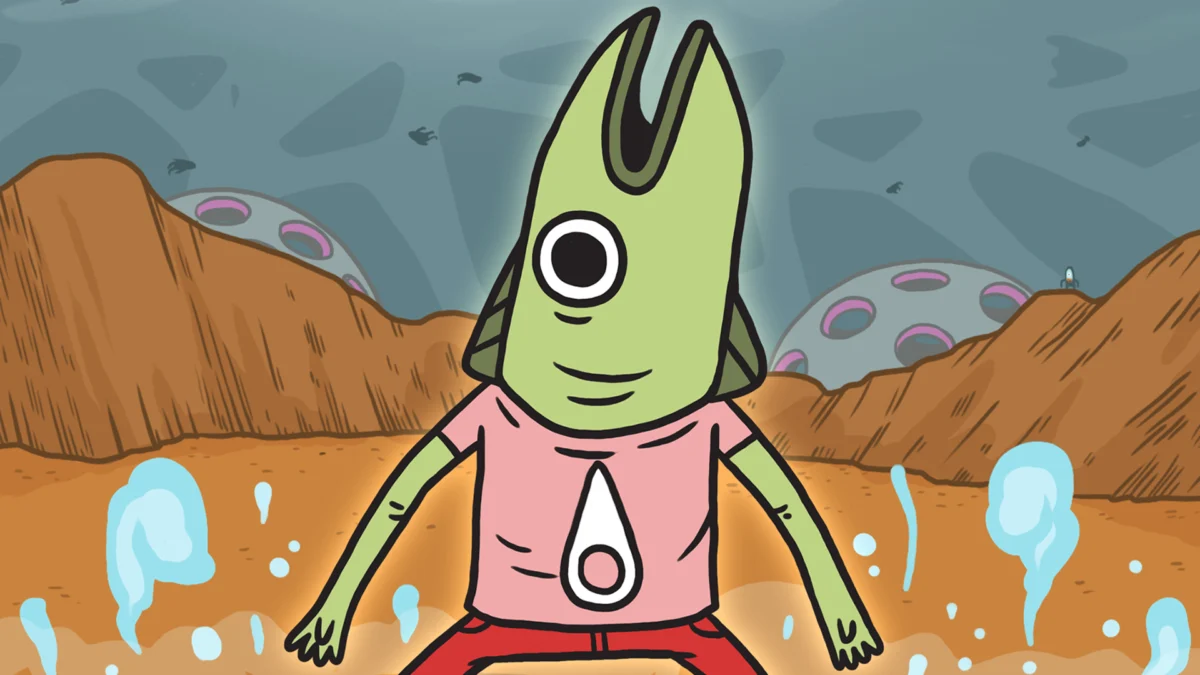
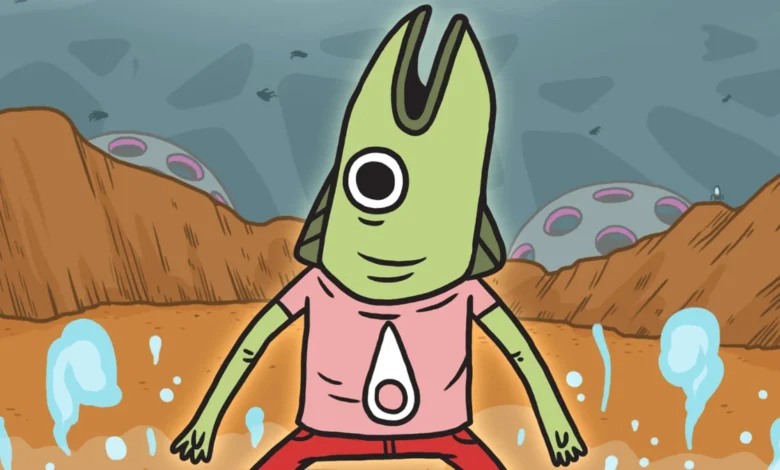
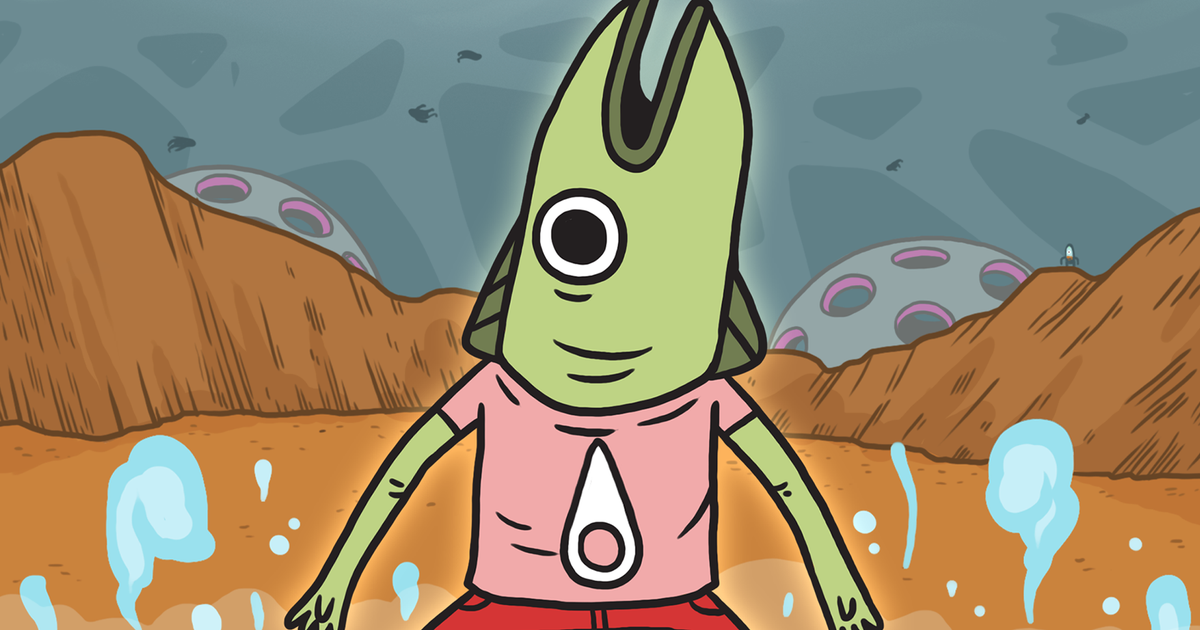
Freak War utilizes a central conceit—a second sun has emerged, causing animals to undergo bizarre, often humorous mutations. This lore-driven setting allows for a roster of eccentric characters, ranging from "Man Cat"—a human in a feline costume—to more surreal entities like a dog with a goldfish bowl for a head. By stripping away the need for exhaustive deck-building—though allowing for it as an optional advanced feature—Galbraith has positioned the game to compete with established party game staples such as Exploding Kittens.
Mechanics and Gameplay Modes
Unlike the traditional 1-on-1 format associated with giants like Magic: The Gathering or the Pokémon TCG, Freak War is designed to accommodate up to four players simultaneously. The core loop is intentionally straightforward: players play a creature card, and the highest attack value determines the victor. However, the game introduces layers of complexity through "modifier" cards and evolving creature mechanics.
The game offers two primary modes of engagement, which allow players to modulate the level of strategy involved:
- War Mode: A more chaotic, fast-paced version where players flip the top cards of their decks.
- Battle Mode: A more controlled experience where players draw from their hands, allowing for tactical decision-making regarding which creatures to deploy and which modifiers to hold in reserve.
Additional variations, such as "King of the Hill" and team-based play, further extend the replayability of the decks. When a tie occurs in attack power, the game mandates a discard phase followed by a secondary face-off, mimicking the tension of high-stakes duels while maintaining the rapid tempo required of a party game.
Market Context and Crowdfunding Performance
The crowdfunding campaign for Freak War, hosted on Kickstarter, surpassed its initial $10,000 goal within the first weeks of its launch. This figure, while modest compared to major tabletop industry giants that often pull in millions, serves as a proof-of-concept for independent designers seeking to enter the saturated card game market. The campaign, which concluded on June 13, 2024, saw significant support from backers interested in the intersection of TCG-style collecting and "pick-up-and-play" accessibility.
The success of such campaigns reflects a broader shift in the gaming industry. According to industry analysis from the Toy Association and various tabletop tracking outlets, there has been a notable move toward "micro-games" and titles that require under five minutes to learn. Consumers are increasingly wary of "rulebook fatigue," leading designers to incorporate familiar mechanics—like the high-card-wins mechanic of War—to bypass the need for lengthy onboarding.
Creative Direction and Artistic Influence
The visual language of Freak War is explicitly derivative of the Pokémon aesthetic, utilizing a layout that will be instantly familiar to anyone who grew up in the late 1990s and early 2000s. The cards feature stats, evolution paths, and modifier slots. However, the tone is decidedly self-aware and comedic. The inclusion of meta-game effects—such as the "Fly Guy" creature, which gains power if there is physical food present in the gaming area—serves as a bridge between the game and the social environment of the players.
This blend of "take-that" mechanics and humorous illustration addresses a growing fatigue among adult gamers regarding the current party game market. Many titles have relied on "edgy" humor or derivative content that often alienates broader audiences. By pivoting toward the "goofy" and "weird" sub-genre, Sheltonshire Games is aiming for a multi-generational appeal, making the game suitable for both children and adult gaming groups who prefer lighthearted competition over abrasive social-deduction gameplay.
Broader Implications for the TCG Genre
The emergence of Freak War highlights a potential path forward for TCGs in an age of digital distraction. Traditional TCGs require significant financial investment and time commitments that can prove prohibitive. By offering a $20 entry point for a complete, self-contained experience that does not strictly necessitate additional purchases to remain competitive, Sheltonshire Games is challenging the "pay-to-win" stigma that plagues many larger trading card ecosystems.

Industry experts suggest that as the cost of production for tabletop games rises due to logistical and supply chain pressures, the "starter deck" model—where the box itself contains the entirety of the intended experience—will become increasingly popular. Freak War’s decision to allow for custom deck building while providing a functional "out-of-the-box" experience allows it to serve two masters: the casual party-goer and the burgeoning hobbyist who wants to experiment with deck construction without the risks associated with blind-buy booster packs.
Projected Timeline and Future Development
With the crowdfunding phase now closed, the focus for Sheltonshire Games shifts to production and fulfillment. The current production schedule estimates that backers will receive their copies of Freak War by June 2025. This year-long production window is standard for independent tabletop titles, accounting for manufacturing, quality assurance, and international shipping logistics.
Moving forward, the scalability of the game will depend on the reception of these initial sets. The current catalogue of creatures, ranging from buff penguins to aquatic humanoids, demonstrates a flexible design philosophy. Should the game succeed upon delivery, the potential for expansion sets is high, as the "second sun" lore allows for an almost infinite variety of mutated creatures to be introduced into the rotation.
Analysis: The Future of Hybrid Gaming
The success of Freak War serves as a case study for the "hybridization" of tabletop gaming genres. By borrowing the aesthetic of a global phenomenon (Pokémon) and the mechanical simplicity of a playground classic (War), the game mitigates the risk of being ignored in a crowded market. It does not attempt to reinvent the wheel, but rather to optimize the user experience for the modern, time-poor consumer.
Furthermore, the game’s meta-humor suggests a pivot in design trends. As players become more sophisticated in their understanding of card games, they respond more positively to games that acknowledge their own inherent absurdity. Freak War is not attempting to be a serious, competitive tournament game; it is attempting to be a communal experience. In the contemporary tabletop climate, where social connection is often the primary driver for a game’s success, this focus on "breezy" and "silly" interactions is likely to be a significant competitive advantage.
As the industry looks toward the 2025 release cycle, Freak War stands as a representative of a healthy, diversified tabletop ecosystem. It proves that there is still room for small-scale, high-concept games to thrive alongside the monolithic franchises that dominate retail shelf space. Whether it can maintain its momentum beyond the initial excitement of its crowdfunding campaign will depend on the final quality of the physical components and the community’s ability to sustain interest through organic, word-of-mouth social play. For now, it offers a compelling argument for the value of simplicity in a complex world.