Ungraded Aims to Revolutionize the Trading Card Market with High-Definition 3D Imaging Technology

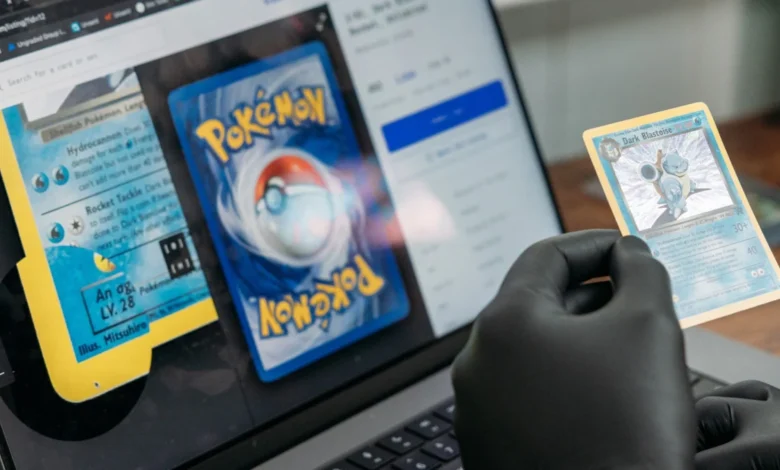
The multi-billion dollar trading card industry has long been defined by a dichotomy: the high-stakes world of professional third-party grading and the "Wild West" of raw, ungraded marketplaces. For collectors of Pokémon, Magic: The Gathering (MTG), and Yu-Gi-Oh!, the experience of purchasing raw cards online is often fraught with uncertainty. Buyers frequently contend with deceptive photography, inconsistent condition reporting, and the persistent threat of counterfeit merchandise. A new startup, Ungraded, is entering this space with a proposition designed to bridge the trust gap through advanced imaging technology, seeking to standardize the presentation of uncertified assets.
The Problem with the Current Secondary Market
The secondary market for trading cards has experienced an unprecedented boom since 2020. Driven by both nostalgia and a shift toward viewing cards as tangible alternative assets, the valuation of rare cards has reached record highs. However, the infrastructure for trading these assets has struggled to keep pace with the influx of new market participants.
Professional grading services—such as the Professional Sports Authenticator (PSA), Beckett Grading Services (BGS), and CGC Trading Cards—provide a gold standard for condition, encapsulating cards in tamper-evident "slabs" with a numerical grade. Yet, grading is a time-consuming and expensive process, often taking months and costing significant premiums. Consequently, a vast majority of cards remain "raw." When these raw cards are listed on platforms like eBay, the reliance on static, two-dimensional photography often leads to disputes. Sellers may inadvertently or intentionally hide surface micro-scratches, edge whitening, or print defects, leaving the buyer at a disadvantage. This informational asymmetry is the primary pain point that Ungraded seeks to eliminate.
The Technological Solution: 3D Visualization
Ungraded, founded by a team of collectors based in Cornwall, England, aims to institutionalize the raw card market. The company’s core innovation is an automated, high-resolution imaging suite. Instead of leaving it to the seller to photograph their items, Ungraded requires sellers to submit their inventory to the company’s facility. Once received, the cards are subjected to a rigorous photographic process.

Using hundreds of ultra-high-definition images, the company generates a fully interactive 3D digital replica of each card. This technology allows prospective buyers to manipulate the image in a browser, rotating and zooming in on specific sections of the card. The resolution is purportedly high enough to reveal microscopic details, including CMYK dot patterns—which can be crucial for verifying authenticity—as well as the fine details of the card’s surface, such as centering, corner wear, and holo-foil scratches. By providing a digital twin of the card, Ungraded intends to offer buyers a level of due diligence that previously required physical inspection.
Chronology and Operational Timeline
The rollout of the Ungraded marketplace is structured in several phases to ensure platform stability and market interest.
- May 2024: The company will initiate a series of "auction drops." These events serve as a controlled launch, showcasing the capabilities of the platform by featuring high-profile inventory from the Pokémon, Yu-Gi-Oh!, and MTG categories. These drops are intended to demonstrate the 3D imaging technology to a wider audience before the full marketplace launch.
- July 2024: The official launch of the Ungraded marketplace. At this juncture, the platform will open to general user submissions, allowing collectors to list their raw cards under the company’s verification and imaging process.
Fee Structure and Economic Incentives
Ungraded has implemented a tiered commission model designed to balance affordability for casual collectors with professional-grade service for high-end investors. The model is categorized by the value of the transaction:
- Cards valued up to £250: The buyer pays a fee equal to 20% of the sold value.
- Cards valued between £250 and £1,000: The buyer fee is reduced to 17.5%.
- Cards valued over £1,000: The buyer fee is reduced further to 15%.
- Fixed-Price Listings: For cards sold at a set price, the seller pays a 15% commission, and the buyer is exempt from the additional buyer fee.
- Low-Value Listings: For items under £25, the seller is responsible for the difference between the buyer’s 20% contribution and a £5 minimum fee.
A notable feature of the Ungraded business model is the management of logistics. By centralizing the photography process, Ungraded handles the postage and insurance for the cards it hosts. However, the model includes a "holding cost" to prevent inventory stagnation: if a card remains unsold for more than 30 days, the seller incurs a recurring fee of 1% of the card’s average market value every subsequent 30 days. This incentivizes sellers to list their items at competitive market prices, preventing the platform from becoming a repository for "dead" or overpriced inventory.
Market Implications and Analysis
The introduction of Ungraded represents a significant shift in how trading card assets are treated. If successful, the platform could create a "semi-graded" tier in the marketplace. By offering a standardized digital presentation, Ungraded effectively creates a verifiable record of the card’s state at a specific point in time, which can act as a deterrent for fraudulent claims regarding condition or authenticity.

From an analytical perspective, the success of the platform will depend on two critical factors: logistical throughput and market adoption. The company must prove it can handle a high volume of cards without creating the massive backlogs that currently plague the third-party grading industry. Furthermore, it must gain the trust of the "hardcore" collector community, who are often skeptical of any entity that attempts to mediate their transactions.
The implications for the broader hobby are substantial. If high-resolution 3D imaging becomes the standard for raw cards, the barrier to entry for new collectors could be lowered. Buyers may feel more comfortable spending significant sums on unslabbed cards, potentially increasing the velocity of trade within the hobby. Conversely, if the technology fails to capture defects that are only visible under specific lighting conditions—or if the cost of the service discourages small-scale sellers—the platform may find itself limited to a niche segment of the market.
Conclusion
As the digital transformation of physical collectibles continues, Ungraded represents the latest attempt to bring modern technology to a centuries-old tradition of trading. By prioritizing transparency through imaging, the company is attempting to solve the fundamental problem of trust in online auctions. With the initial auction drops set to commence in late May, the hobbyist community will soon have the opportunity to evaluate whether this high-tech approach to raw cards will indeed redefine the standard for the secondary market or remain a localized experiment in an increasingly complex industry. Whether or not this model can scale to meet the global demand for Pokémon and TCG assets remains the most significant question as the company heads toward its July launch.
Related posts: