As the third season of Prime Video’s The Rings of Power reaches its conclusion, the narrative trajectory has shifted decisively toward one of the most cataclysmic events in J.R.R. Tolkien’s legendarium: the destruction of the island kingdom of Numenor. While the season finale initially positioned Sauron as a conventional military threat, his strategic pivot—a calculated surrender to King Ar-Pharazon—has set into motion a chain of events that will reshape the geography and political landscape of Middle-earth forever.
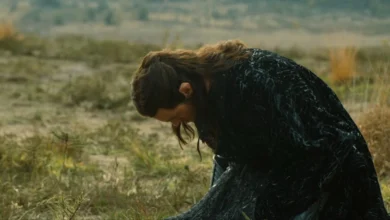
The finale’s closing moments saw the Dark Lord, in possession of the One Ring, choose to disarm and kneel before the Numenorean forces rather than engage in a direct, high-risk confrontation. This subversion of expectation served as the catalyst for the final act of the season, transitioning the conflict from the open fields of war to the treacherous halls of the Numenorean court. By allowing himself to be taken as a prisoner of state, Sauron has effectively infiltrated the seat of power of his most formidable mortal adversary.
The Strategic Calculus of the Deceiver
To understand the weight of this development, one must examine the established lore regarding the Second Age. In Tolkien’s writings, Sauron’s military campaigns were never intended to be won solely through force. He recognized early on that the Numenoreans possessed a naval and terrestrial power unmatched by any other civilization in Middle-earth. Therefore, he adopted a strategy of psychological warfare. By allowing himself to be captured, Sauron bypassed the need for an expensive and potentially losing war of attrition, instead positioning himself as a captive advisor—a "wolf in sheep’s clothing" who could exploit the inherent vulnerabilities of the Numenorean leadership.

Ar-Pharazon, whose hubris has been a central theme throughout the series, is the perfect vessel for this manipulation. The Numenorean king’s resentment toward the Elves and his obsession with mortality—specifically his jealousy of the "Gift of Men," which he perceives as a curse of death—aligns perfectly with the discord Sauron intends to sow. By fostering this resentment, Sauron is not merely acting as a prisoner; he is actively corrupting the foundation of the kingdom.
A Chronology of the Downfall
The events depicted in the season three finale represent the beginning of the end for the island civilization. Historically, the chronology of the Downfall of Numenor follows a distinct path that the series is now mirroring:
- The Captivity: Sauron is brought to the capital, Armenelos, as a prisoner. Initially feigning humility, he quickly becomes the chief advisor to the King, utilizing his knowledge to sway the royal court.
- The Cult of Melkor: Under Sauron’s tutelage, a temple is erected, and the worship of the Dark Lord’s former master, Morgoth, is introduced. This marks the spiritual collapse of Numenorean society, alienating the "Faithful" who remain loyal to the Valar.
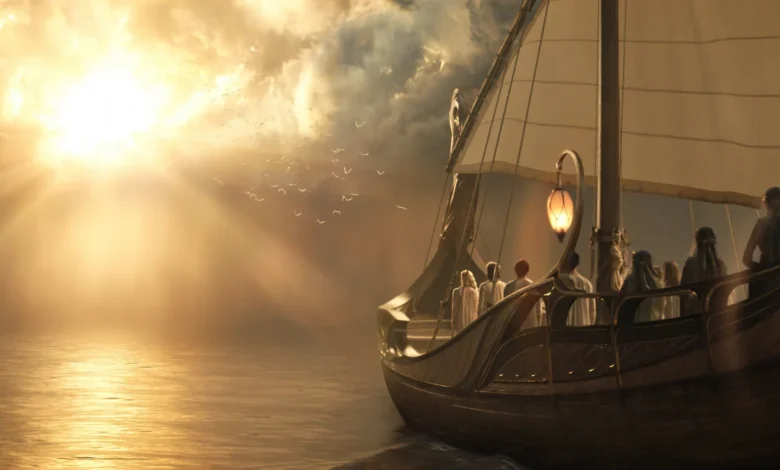
- The Great Armament: Convinced by Sauron that the Valar are keeping the secret of immortality for themselves in the Undying Lands, Ar-Pharazon commissions the largest fleet ever built to invade Valinor.
- The Cataclysm: The landing of the Numenorean fleet on the shores of Valinor triggers the intervention of Eru Iluvatar. The world is physically reshaped; Numenor is submerged beneath the sea, and the straight path to the Undying Lands is removed from the mortal world.
The Implications of the One Ring
A critical point of analysis regarding the season finale is the presence of the One Ring during Sauron’s surrender. Throughout the series, the Ring has been depicted as a source of both power and vulnerability. By carrying the Ring into the heart of his enemy’s capital, Sauron is taking a calculated risk. However, his ability to retain the object while in captivity suggests that his influence over the Numenorean court will be bolstered by the Ring’s inherent power to dominate the will of others.
The reaction from the Elven leadership, specifically Gil-Galad, has been one of profound alarm. The Elves, who understand the nature of the Rings of Power, perceive the surrender not as a defeat for Sauron, but as a tactical maneuver. Their inability to intervene directly in Numenorean affairs leaves the kingdom vulnerable to the ideological infection that Sauron brings. This creates a tragic irony: while the Numenoreans believe they are the victors who have successfully subdued the Dark Lord, they are in fact the architects of their own destruction.

Historical Context and Canonical Divergence
While The Rings of Power has frequently adapted Tolkien’s source material with a degree of creative license, the narrative arc concerning the Downfall remains consistent with the core tenets of The Silmarillion and The Fall of Numenor. The central conflict remains the struggle between the mortality of Men and the immortality of the Elves, a tension that Sauron exploits to turn the greatest of human civilizations against the divine order of Arda.
The showrunners have successfully maintained the central thesis of this era: that the corruption of Numenor was an internal rot, facilitated by external manipulation. By focusing on the psychological erosion of Ar-Pharazon, the series provides a grounded look at how a society descends into tyranny. The transition from a proud, seafaring nation to a kingdom of fear and servitude is the direct result of the king’s refusal to accept the limitations of his mortal life.
Broader Impacts on Middle-earth
The consequences of the season three finale will reverberate far beyond the borders of Numenor. The eventual destruction of the island is not merely a tragedy for the humans involved; it is the event that clears the way for the rise of Sauron’s unchallenged power in Middle-earth during the remainder of the Second Age.
With the destruction of the Numenorean armada, the only remnants of the civilization will be those few individuals who fled to Middle-earth—the ancestors of the Dúnedain, led by figures like Elendil and his sons, Isildur and Anarion. These survivors will go on to found the kingdoms of Arnor and Gondor, setting the stage for the conflicts that define the Third Age and the eventual struggle depicted in The Lord of the Rings.

Furthermore, the physical reshaping of the world serves as a metaphysical barrier. By making the world a sphere, the narrative establishes the finality of the separation between the physical world of Men and the spiritual realm of the Undying Lands. This shift marks the definitive transition of Middle-earth into an age where divine intervention becomes increasingly rare, forcing the inhabitants to confront their challenges without the direct presence of the Valar.
Conclusion and Future Outlook
As audiences look toward the future of the series, the trajectory is clear. The "Doom of Men" has been set in motion. Sauron’s smirk, seen in the final moments of the season, serves as a chilling confirmation that he has achieved his objective. He does not require a battlefield victory to destroy the Numenoreans; he only needs time.
The upcoming seasons are expected to delve deeper into the construction of the temple to Morgoth and the internal civil strife between the King’s Men and the Faithful. This period of the Second Age is arguably the most politically complex portion of Tolkien’s history, and the series appears committed to exploring the nuances of this decline. For those following the adaptation, the primary focus will now shift to how the series handles the final, inevitable sinking of the island—a moment that will serve as the ultimate test of the show’s ability to balance its visual spectacle with the profound theological and philosophical weight of Tolkien’s original text.
The story of Numenor is a cautionary tale of hubris, and as the show moves into its next phase, the viewer is left to contemplate the reality that, in the world of Middle-earth, the most dangerous enemies are often those we invite into our homes, believing them to be defeated.