Bandai Namco Filmworks Announces New Short Anime for Future GPX Cyber Formula in Commemoration of the Series’ 35th Anniversary

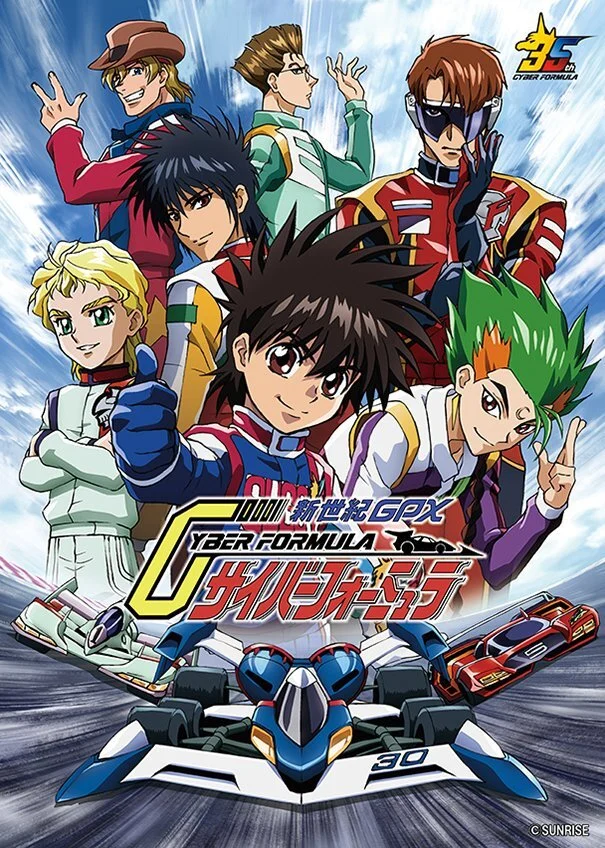
The landscape of classic mecha and racing animation received a significant update on Wednesday as Bandai Namco Filmworks officially unveiled a new short anime project for the storied Future GPX Cyber Formula franchise. This announcement serves as the centerpiece of the series’ 35th-anniversary celebrations, marking a revitalized interest in a property that defined high-speed futuristic racing for a generation of fans. Along with the confirmation of the new production, the studio released a commemorative 35th-anniversary visual and a promotional video that highlights the legacy of the series while teasing the technological advancements of the upcoming installment.
This new project is positioned as a direct narrative successor to the Future GPX Cyber Formula Sin original video anime (OVA), which concluded over two decades ago. One of the most anticipated elements of the announcement is the introduction of a brand-new cyber machine, the Zenith Asurada AKF-S0/G. The machine’s design is credited to Shouji Kawamori, a legendary figure in the industry known for his work on the Sousei no Aquarion and Macross franchises. Kawamori’s involvement signals a commitment to the mechanical intricacy and aerodynamic realism that have long been the hallmarks of the Cyber Formula brand.
Historical Context and Franchise Evolution
The Future GPX Cyber Formula franchise first debuted on Japanese television in the spring of 1991. Produced by Sunrise—the studio world-renowned for the Mobile Suit Gundam series—the original television run consisted of 37 episodes. While the initial TV series focused on the growth of young protagonist Hayato Kazami and his partnership with the AI-driven racing machine Asurada, it laid the groundwork for a more mature and technically sophisticated saga that would unfold in the years to follow.
Between 1992 and 2000, the franchise transitioned from television broadcast to the OVA format, allowing for higher production values and more complex storytelling. This era saw the release of four distinct sequels: Future GPX Cyber Formula 11, Future GPX Cyber Formula Zero, Future GPX Cyber Formula Saga, and finally, Future GPX Cyber Formula Sin. The final OVA, Sin, which ran for five episodes from December 1998 to March 2000, is widely considered the pinnacle of the series, focusing on the intense rivalry between Hayato Kazami and Bleed Kaga. By returning to the timeline immediately following Sin, Bandai Namco Filmworks is addressing long-standing fan curiosity regarding the future of the Cyber Formula world.
Technical Specifications and Design Philosophy
The reveal of the Zenith Asurada AKF-S0/G has sparked significant discussion among mechanical design enthusiasts. Shouji Kawamori’s return to the franchise ensures that the new machine will adhere to the "Real Robot" aesthetic applied to racing. In the Cyber Formula universe, vehicles are not merely cars but sophisticated entities equipped with "Cyber Systems"—highly advanced artificial intelligences that assist drivers in navigating tracks at speeds exceeding 500 kilometers per hour.
The Zenith Asurada AKF-S0/G is expected to represent the next leap in this fictional technology. Historically, the Asurada line has been characterized by its "Aero Mode" and "Circuit Mode" transformations, which adjust the vehicle’s chassis and downforce in real-time. Analysts suggest that the "Zenith" designation implies a culmination of the design philosophy seen in the previous AKF-0/G model, potentially incorporating new energy systems or adaptive materials that reflect modern-day advancements in automotive engineering and aerodynamics.
Chronology of the Future GPX Cyber Formula Series
To understand the weight of this new announcement, one must look at the chronological progression of the franchise’s release history and its internal timeline:
- 1991: Future GPX Cyber Formula (TV Series) – The introduction of the 10th Cyber Formula World Grand Prix and Hayato Kazami’s debut.
- 1992–1993: Future GPX Cyber Formula 11 (OVA) – Following Hayato as he defends his championship title in the 11th Grand Prix.
- 1994–1995: Future GPX Cyber Formula Zero (OVA) – A darker turn for the series, exploring the "Zero Realm," a state of heightened sensory perception that puts drivers at extreme risk.
- 1996–1997: Future GPX Cyber Formula Saga (OVA) – Focusing on the shift toward Al-Zard and the ethical implications of fully automated racing systems.
- 1998–2000: Future GPX Cyber Formula Sin (OVA) – The climactic showdown between the Asurada and the Ogre, concluding the primary narrative arc of the original era.
- 2003: North American release of the original TV series by Bandai Entertainment.
- 2024: Announcement of the 35th Anniversary Short Anime and the Zenith Asurada.
Official Responses and Industry Impact
While specific plot details remain under wraps, the reaction from the animation industry has been one of calculated excitement. Bandai Namco Filmworks, the entity that absorbed Sunrise’s production assets, has been strategically reviving legacy IPs to cater to both nostalgic older audiences and new viewers. Industry insiders suggest that this short anime might serve as a "pilot" or a "proof of concept" to gauge market interest for a larger-scale revival of the franchise.
Shouji Kawamori’s participation is seen as a major endorsement of the project’s quality. In various interviews throughout his career, Kawamori has emphasized the importance of "variable" designs—machines that change form to meet functional needs. His return to Cyber Formula suggests that the new short will focus heavily on the visceral, mechanical thrill of the race, a move that aligns with the current trend of high-fidelity "mechanical" animation seen in modern reboots.
Fan communities have also noted the timing of the release. The original series was set in a "future" that has now largely passed or is currently occurring (the TV series was set in 2015, and the OVAs extended into the early 2020s). This meta-contextual layer—where the "future" envisioned in 1991 is now the "past" or "present"—provides a unique opportunity for the writers to redefine what "Cyber Formula" racing looks like in a world that now possesses actual autonomous vehicles and advanced AI.
The Legacy of Cyber Formula in Global Markets
Although Future GPX Cyber Formula saw its greatest success in Japan and East Asia (particularly in Hong Kong, Taiwan, and South Korea), it maintains a dedicated cult following in the West. Bandai Entertainment’s 2003 DVD release introduced the series to a North American audience, though the subsequent OVAs never received the same level of mainstream distribution in the region.
The 35th-anniversary project represents a potential turning point for the franchise’s international footprint. With the global rise of streaming platforms, a new production under the Bandai Namco banner has a significantly higher chance of reaching a worldwide audience simultaneously. Furthermore, the franchise has remained relevant through various media, including video games on the PlayStation 2 and PlayStation Portable, as well as high-end collector figures produced by Megahouse under the "Variable Action" line. These merchandising avenues continue to provide steady revenue, justifying the investment in new animated content.
Broader Implications for the Racing Genre
The announcement of a Cyber Formula sequel comes at a time when the racing genre in anime is experiencing a modest resurgence. With titles like MF Ghost and Highspeed Étoile hitting the airwaves, the return of the "Grandfather" of futuristic racing anime adds a layer of prestige to the current landscape. Unlike the drift-centric or street-racing themes of other series, Cyber Formula occupies a niche that blends Formula 1 aesthetics with science fiction elements.
The focus on the relationship between man and machine—specifically the symbiotic link between the driver and the AI—remains more relevant today than it was in 1991. As real-world racing series like Formula 1 explore increased hybridization and AI-assisted telemetry, the thematic core of Cyber Formula resonates with contemporary technological debates.
Conclusion and Future Outlook
The 35th-anniversary short anime for Future GPX Cyber Formula is more than just a nostalgic trip; it is a strategic move by Bandai Namco Filmworks to breathe new life into a sophisticated mechanical universe. By securing Shouji Kawamori for the design of the Zenith Asurada and choosing to follow the narrative high point of Sin, the production team is signaling to fans that this project will respect the established canon while pushing the boundaries of modern animation technology.
As the official website and X (formerly Twitter) account continue to roll out updates, the global anime community will be watching closely. Whether this short anime leads to a full-length series or remains a high-quality standalone tribute, it confirms that the legacy of Hayato Kazami and the Asurada is far from over. The "Cyber Formula" world, where the limits of speed and human endurance are constantly tested, is once again ready to take the green flag.