Lords of War brings back the Merchant of Death for a high-stakes generational power struggle

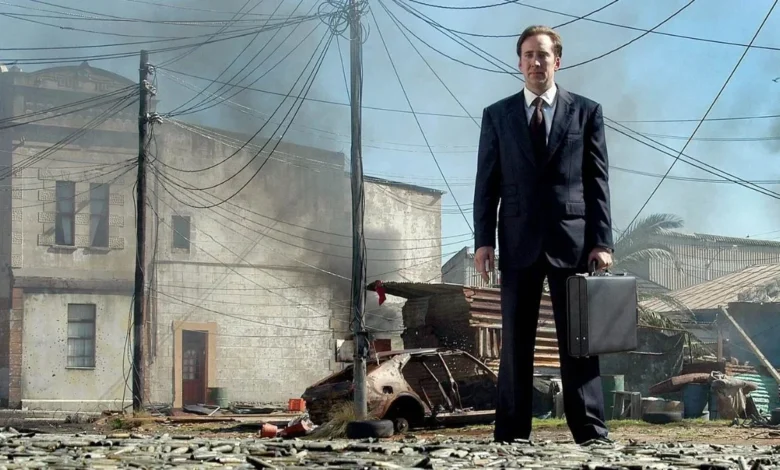
Two decades after the release of the cult classic Lord of War, audiences are set to return to the morally ambiguous and gritty world of international arms trafficking. Director Andrew Niccol has officially confirmed the production of a sequel, titled Lords of War, which is scheduled for release on January 22. The project marks a significant return to the franchise, with Nicolas Cage reprising his iconic role as Yuri Orlov, now joined by Bill Skarsgård, who portrays Anton, the estranged and ambitious son of the notorious dealer.
The Evolution of the Merchant of Death
The original 2005 film served as a cynical examination of the global arms trade, following the rise of Yuri Orlov from his beginnings in the Brighton Beach neighborhood of Brooklyn to his status as a kingpin operating in the shadow of the post-Soviet power vacuum. Orlov’s character was a composite of several real-world figures, most notably Viktor Bout, the Russian arms dealer often referred to as the "Merchant of Death."
In the original narrative, Orlov capitalized on the collapse of the Soviet Union, procuring vast caches of abandoned military hardware—from Kalashnikovs to heavy artillery—and distributing them to various conflict zones in Africa and the Middle East. The film was notable for its dark humor and the cold, detached narration provided by Cage, which offered a window into the psyche of a man who viewed human conflict primarily as a logistics challenge. The story concluded with a bleak, ironic twist: while Orlov was finally apprehended by Interpol, his expertise was deemed too valuable by the United States government for him to remain behind bars. He was released under the guise of a "necessary evil," allowed to continue his operations as long as his clientele aligned with the geopolitical interests of Washington.

A New Generation of Conflict
Lords of War shifts the focus toward a volatile father-son dynamic that mirrors the cyclical nature of the arms industry. According to production details released by the studio, the sequel finds an older, more entrenched Yuri Orlov facing a challenger who knows his tactics, his network, and his weaknesses better than anyone: his own son.
Anton, played by Bill Skarsgård, enters the narrative as an ambitious protégé eager to surpass his father’s legacy. His objectives are grander and more aggressive, focusing on the development of a private military force designed to intervene in contemporary Middle Eastern conflicts. This shift represents a transition in the industry from the Cold War-era surplus peddling seen in the original film to the modern landscape of private military contractors and high-tech warfare, where influence is bought and sold through decentralized organizations.
Production and Creative Direction
Andrew Niccol, who wrote and directed the original film, returns to helm the sequel. His commitment to the project is rooted in a desire to further dissect the moral erosion of the arms trade. In recent statements to industry press, Niccol emphasized that the character of Yuri Orlov remains a bottomless well for narrative exploration. He posits that the "Merchant of Death" is not merely an individual, but a function of global political instability.
Nicolas Cage has expressed significant enthusiasm for the project, viewing the sequel through the lens of classical tragedy. In interviews, Cage has described the script as "Arthurian," suggesting that the conflict between Yuri and Anton is destined to be a struggle for succession that will likely result in a pyrrhic victory for whichever side prevails. The actor has been instrumental in the development of the sequel, working alongside Niccol through his production company, Saturn Films, to ensure the sequel retains the intellectual and complex tone of its predecessor.
Chronology of the Franchise
The journey from the 2005 original to the 2027 sequel spans over two decades of global geopolitical shifts, which serves as the backdrop for the new narrative:
- 2005: The release of Lord of War. The film receives critical acclaim for its screenplay and Cage’s performance, though it faced challenges in financing due to its controversial subject matter.
- 2008–2010: The real-world archetype for the film, Viktor Bout, is arrested in Thailand following a sting operation orchestrated by the U.S. Drug Enforcement Administration. He is extradited to the United States in 2010.
- 2022: As geopolitical tensions rise, the relevance of the original film experiences a resurgence in public discourse, prompting renewed interest in a potential continuation.
- 2025: Official confirmation of Lords of War is made public. Pre-production begins with the announcement of Bill Skarsgård joining the cast.
- 2026: Principal photography concludes. The film enters post-production, with early teaser footage released to capitalize on the anticipation of a return to the franchise.
- 2027: Scheduled theatrical release.
Analytical Implications: The Modern Arms Landscape
The shift in narrative focus toward private armies reflects a genuine trend in global security. Since the release of the original film, the world has seen a proliferation of Private Military Companies (PMCs). These organizations operate in a legal gray area, often contracted by sovereign states to perform tasks that would otherwise require official military deployment.
In the film, Anton’s desire to build a private army represents the privatization of war. While Yuri Orlov represented the era of the individual smuggler, his son represents the corporate, systemic approach to warfare. This evolution provides a stark commentary on how the "Merchant of Death" archetype has adapted to a world where conflict is increasingly managed by entities that prioritize profit over national allegiance.
Financial and Market Context
The success of the 2005 original, which grossed approximately $72 million against a $50 million budget, established a template for low-to-mid-budget character-driven dramas that possess international appeal. The sequel enters a very different theatrical market. With the rise of streaming services and the consolidation of major film studios, the decision to produce a high-profile sequel to a 20-year-old intellectual property indicates a strategic focus on established brand recognition.

Industry analysts suggest that the inclusion of Bill Skarsgård, who has garnered a reputation for intense, high-stakes performances, is a move to attract a younger demographic that may be familiar with the original through digital archives or cable syndication, while also providing a contemporary foil to Cage’s seasoned, weary portrayal of Orlov.
Official Responses and Expectations
While the original cast, including Jared Leto, Ethan Hawke, and Bridget Moynahan, are not currently slated to return, the production team maintains that the story is focused on the new, evolving conflict. The absence of these characters serves to highlight the isolation of Yuri Orlov, who has systematically alienated those closest to him in his pursuit of global power.
The film is expected to maintain the stylistic signature of the first installment, utilizing a mix of fast-paced montage, dark satire, and moral introspection. As the trailer suggests, the stakes in Lords of War are significantly elevated. Where the first film focused on the logistics of moving small arms, the sequel appears to lean into the geopolitical consequences of high-level influence and the unchecked growth of private, militarized corporations.
As the release date approaches, the film stands as a unique case study in cinematic longevity. It is a rare example of a sequel being developed not because of a franchise mandate, but due to the continued resonance of its central themes. Whether or not Lords of War can capture the lightning-in-a-bottle success of its predecessor remains to be seen, but the narrative setup promises a compelling, if deeply unsettling, exploration of the mechanics of modern warfare. As Yuri Orlov famously noted in the original film, "evil prevails when good men fail to act"—a sentiment that seems poised to define the upcoming struggle between father and son.