Kino Lorber is set to bring Maya Annik Bedward’s impactful directorial debut, "Black Zombie," to select theaters across the United States on September 11th, following a critically lauded festival run. This powerful documentary embarks on a profound exploration of the zombie’s origins, tracing its evolution from ancient Haitian spiritual traditions to its pervasive presence in contemporary Hollywood horror. The film delves into the intricate cinematic and historical contexts that have shaped the zombie archetype, ultimately reclaiming its deeper cultural significance as a potent symbol of survival and resistance.
The documentary world-premiered at the 2026 SXSW Film Festival, where it garnered immediate attention for its rigorous scholarship and compelling narrative. Since its debut, "Black Zombie" has continued to collect accolades and significant attention at prominent film festivals worldwide, including Hot Docs and the Blackstar Film Festival. Its upcoming screening at the Fantasia Film Festival in Montreal marks another significant milestone before its theatrical debut.
Unearthing the Deeper Meanings of the Zombie
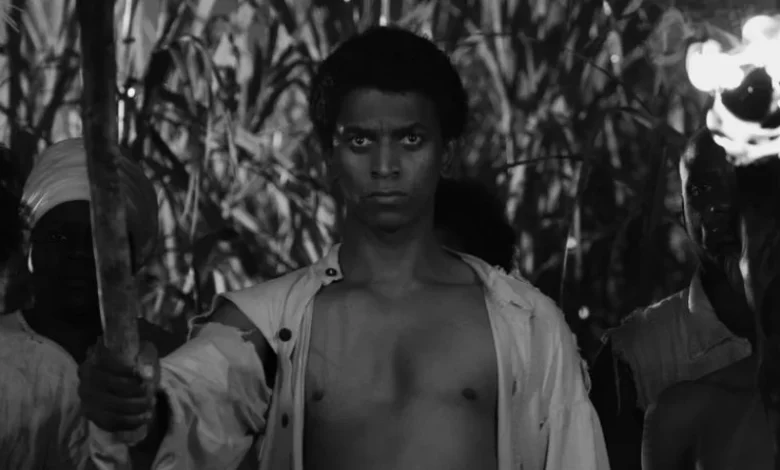
"Black Zombie" challenges the prevalent, often gratuitous, depiction of zombies as mere flesh-eating antagonists. The film meticulously excavates the buried and often unsettling origins of the zombie, revealing a history far removed from the blood-soaked spectacles of modern cinema. Long before the trope of the reanimated corpse became synonymous with mindless consumption, the zombie existed as a potent, living metaphor for the brutal realities of slavery. It was not conceived as a monster, but rather as the ultimate victim of colonial power structures, a chilling representation of stolen agency and dehumanization.
The documentary meticulously details how this profound symbol of subjugation was systematically recast as an object of fear and horror. Simultaneously, it highlights the distortion, sensationalization, and erasure of vital Black spiritual traditions that were foundational to the original concept of the zombie. Director Maya Annik Bedward guides audiences through this complex transformation, charting the zombie’s journey from its roots in colonial Haiti to its ubiquitous status in contemporary Hollywood.
A Cinematic and Cultural Re-Examination
"Black Zombie" undertakes a critical re-examination of iconic films that have shaped the zombie genre, including landmark titles such as "White Zombie," "Night of the Living Dead," and "The Serpent and the Rainbow." This analysis is enriched by a compelling blend of archival footage, verité scenes that capture raw reality, and insightful interviews. The film features a distinguished array of voices, including cultural historians, artists, and genre legends, such as Yves-Grégoire Francois, Mambo Labelle Déesse, Slash, Tom Savini, and Zandashé Brown. Their contributions offer diverse perspectives on the zombie’s cultural resonance and its historical trajectory.
The documentary is presented as a dual undertaking: a cultural reckoning and a horror remix. It boldly exposes how a figure born from the crucible of enslavement, profound spiritual belief, and enduring resistance was ultimately transformed into one of popular culture’s most profitable and pervasive monsters. This transformation has, in effect, obscured its original, deeply significant meaning.
Festival Circuit and Theatrical Launch
The journey of "Black Zombie" through the festival circuit underscores its critical and audience appeal. Its inclusion at prestigious events like SXSW, Hot Docs, and Blackstar Film Festival signals a growing recognition of its importance. The upcoming Fantasia Film Festival screening is scheduled for Wednesday, July 29, 2026, at 6:45 pm in Salle J.A. De Sève, located at 1400 De Maisonneuve Blvd. West (Level LB-125) in Montreal, Quebec, Canada. Additional screenings at Fantasia are slated for Friday, July 31, 2026, at 1:50 pm in the same venue.
Following these international festival engagements, "Black Zombie" will commence its theatrical run on Friday, September 11th, opening in select theaters across the United States. This release, courtesy of Kino Lorber, marks a significant moment for independent documentary filmmaking, bringing a vital historical and cultural narrative to a wider audience. The Blackstar Film Festival also featured a screening on Friday, August 7, 2026, at 7:30 pm at the Suzanne Roberts Theater, 480 S Broad St, Philadelphia, PA, further amplifying the film’s reach and impact within diverse cultural communities.
The Historical Context of the Haitian Zombie
To fully appreciate the depth of "Black Zombie," it is crucial to understand the historical and cultural context from which the concept of the zombie emerged. In Haitian Vodou, the concept of the zombi (a living person who has been reanimated through sorcery and is under the control of their captor) is intrinsically linked to the brutal legacy of slavery in Haiti. The Haitian Revolution, a monumental struggle for liberation from French colonial rule, was a deeply traumatic and transformative period.
The fear of becoming a zombi was not merely a supernatural dread; it was a visceral manifestation of the profound loss of autonomy and the terror of perpetual servitude. In this context, the zombi was a potent symbol of the ultimate degradation, a person stripped of their will, identity, and soul, forced to labor endlessly without reprieve. This original interpretation is a stark contrast to the sensationalized, mindless hordes that populate Western horror films. "Black Zombie" aims to re-center this original understanding, highlighting the resilience and spiritual traditions that the concept of the zombi was intertwined with, rather than solely focusing on the horror aspect.
"Black Zombie" as a Metaphor for Oppression and Resistance
The documentary’s exploration of the zombie as a metaphor for slavery and colonial oppression is particularly relevant in today’s global discourse on systemic injustice and historical trauma. By tracing the evolution of the zombie, Bedward’s film implicitly critiques how dominant cultural narratives can distort and sanitize the experiences of marginalized communities. The shift from a symbol of the enslaved to a monstrous entity serves as a commentary on how the victims of historical atrocities can be re-framed as threats, thus perpetuating cycles of fear and othering.
The film’s emphasis on survival and resistance is a critical counter-narrative. It suggests that the figure of the zombie, even in its corrupted form, still carries echoes of its origins – the resilience of those who endured unimaginable suffering and fought for their freedom. This perspective invites viewers to engage with horror not just as a genre for entertainment, but as a lens through which to examine societal power dynamics and historical injustices.
Emerging Horror Narratives: "Plucked" and "Accursed"
Beyond the profound historical analysis of "Black Zombie," the news cycle also brings attention to new cinematic offerings within the horror and thriller genres, showcasing diverse storytelling approaches.
"Plucked" Teaser Trailer Reveals Domestic Noir Thriller
A teaser trailer has been released for "Plucked," a new film set to explore the dark undercurrents of Gilded Age New York society. The narrative centers on Katherine Greene, whose decision to divorce her emotionally unstable husband ignites a chain of escalating events. Her choice tragically intersects with a high-stakes dinner party meticulously planned to maintain social appearances. As the evening progresses, buried secrets begin to surface, and unchecked impulses lead to a spiraling descent into chaos, fueled by jealousy and a relentless pursuit of revenge.
The film boasts a notable cast, including Katie Vincent, Catherine Curtin ("Stranger Things," "Orange Is the New Black"), J. Anthony Crane ("Outer Banks"), Susan Gallagher ("Cobra Kai," "Loki"), Jared Canfield, and Bryant Carroll. "Plucked" is co-written and co-directed by Katie Vincent and Usher Morgan, suggesting a collaborative vision for this psychological thriller. The film is slated for a theatrical release in select U.S. cities, including New York, Los Angeles, and Rhode Island, on November 13, 2026. A subsequent digital release is scheduled for February 12, 2027, providing broader access to audiences.
"Accursed" Trailer Promises Supernatural Terror and Cultish Intrigue
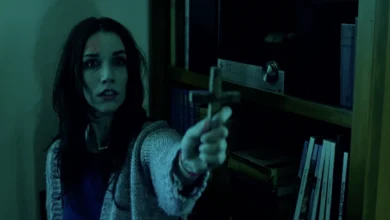
Adding to the slate of upcoming horror releases is "Accursed," a supernatural thriller with a trailer that hints at a dark and foreboding narrative. The story unfolds on Emma’s 21st birthday, a milestone that unexpectedly resurfaces a nun’s cursed secret. This revelation transforms a seemingly innocuous lake-house reunion into a deadly ordeal. A mysterious masked cult and an ancient prophecy propel Emma and her friends into a terrifying confrontation with possession, betrayal, and a midnight ritual that threatens to unleash an ancient evil.
The ensemble cast of "Accursed" features Danny Trejo, Gabriel Sousa, Paris Dylan, Philippe A. Haddad, Kira Cahill, Lulu Bailey, Rafael Amadeu, and Vivien Soraya. The film is directed by Humberto Rosa and Brian Frank Visciglia. "Accursed" is scheduled for a digital release across the U.S. on July 24th, distributed by Buffalo 8. Pre-orders for the film are currently available, allowing eager viewers to secure their access to this anticipated horror offering.
Broader Implications for Genre and Cultural Discourse
The simultaneous emergence of "Black Zombie" and other genre films like "Plucked" and "Accursed" highlights the dynamic and evolving landscape of horror and thriller cinema. While "Black Zombie" offers a critical, historically grounded perspective that challenges conventional genre tropes, films like "Plucked" and "Accursed" explore more traditional, albeit often nuanced, avenues of fear and suspense.
The success and critical reception of "Black Zombie" could signal a growing audience appetite for films that engage with complex social and historical themes, even within genre frameworks. This trend suggests a potential shift towards more thematically rich and culturally relevant storytelling within the horror genre, moving beyond pure shock value to provoke thought and deeper understanding. The theatrical release of "Black Zombie" is not just a distribution event for a film; it is an invitation to re-examine a cultural icon and its profound, often overlooked, origins.