Saudi Arabia’s Public Investment Fund and Silver Lake explore potential acquisition of game engine giant Unity Software

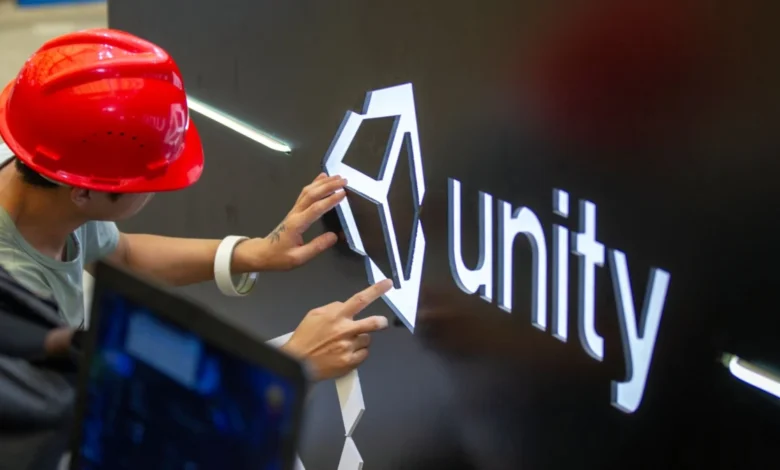
The global gaming industry is bracing for a potential seismic shift as reports emerge that a consortium led by Saudi Arabia’s Public Investment Fund (PIF) and the private equity firm Silver Lake is exploring a high-stakes acquisition of Unity Software. This move follows a period of aggressive expansion by the Saudi sovereign wealth fund into the interactive entertainment sector, most notably its recent $55 billion involvement in the acquisition of Electronic Arts earlier this year. As one of the most vital pieces of infrastructure in game development, Unity’s potential privatization marks a critical inflection point for the software company, which has navigated significant public scrutiny and internal restructuring over the past twenty-four months.
A History of Strategic Investment
Silver Lake’s interest in Unity is not a sudden development. The investment firm has maintained a significant footprint within the company since 2017, when it injected approximately $400 million in capital, securing an ownership stake of roughly 8%. This relationship has provided Silver Lake with intimate knowledge of Unity’s operational roadmap, exemplified by the presence of Egon Durban, a managing partner at Silver Lake, on Unity’s board of directors.
Industry analysts have noted that this dual role presents a unique governance challenge. Under standard corporate regulatory frameworks, Durban would typically be required to recuse himself from any board-level deliberations regarding a sale to a group that includes his own firm. This potential conflict of interest underscores the complexity of the ongoing discussions, which reportedly value the engine provider at approximately $25 billion.
Chronology of Unity’s Recent Transformation
To understand the current appetite for a buyout, one must look at Unity’s trajectory over the last three years. In September 2020, the company went public, entering the market with high expectations for growth. However, the period between 2022 and 2024 proved tumultuous.
The company faced a massive reputational crisis in 2023 following the introduction of its "Runtime Fee" policy. The announcement, which sought to charge developers based on game installs, sparked a widespread revolt among the independent developer community, leading to the departure of high-level executives and a total reversal of the policy under intense public pressure.
Since that low point, Unity has pivoted toward fiscal austerity and technological diversification. The company has focused on integrating its engine with cross-platform tools—even allowing for the seamless import of Unreal Engine assets—and aggressively monetizing its AI-powered "Vector" advertising platform. This strategy recently bore fruit, as the company reported its first quarterly profit on a GAAP (Generally Accepted Accounting Principles) basis since its initial public offering, signaling a stabilization of its business model that has likely caught the eye of institutional investors like the PIF.
Supporting Financial Data and Market Context
The valuation of $25 billion sits against a backdrop of fluctuating market confidence in tech-heavy software firms. Unity’s market capitalization has been volatile, reflecting the broader economic headwinds facing the technology sector. However, the move by the PIF is part of a larger, long-term strategic initiative known as "Vision 2030," which seeks to diversify Saudi Arabia’s economy away from oil dependence by pouring billions into global sports, entertainment, and digital media.

By targeting Unity, the PIF is not merely buying a software tool; it is acquiring a foundational layer of the internet’s future. Unity powers approximately 50% of all mobile games and is increasingly used in architectural visualization, automotive design, and film production. Controlling such a platform offers the PIF unparalleled influence over the tools that define the "metaverse" and industrial digital twinning.
Implications of Industry Consolidation
The prospect of this acquisition has reignited concerns regarding the consolidation of the gaming industry. Critics argue that when a small number of massive consortiums control both the content (such as EA) and the means of production (such as Unity), the risk of monopolistic behavior increases.
The experience of Electronic Arts serves as a case study for what employees might fear. Following the acquisition of EA by the same consortium now eyeing Unity, the publisher implemented significant cost-cutting measures, including mass layoffs and the assumption of substantial debt obligations, totaling $18 billion. These measures are common in private equity-led buyouts, which prioritize rapid debt servicing and increased operational efficiency—often at the expense of long-term R&D investment and workforce stability.
Expert Analysis: What a Privatization Means
For the average game developer, the transition from a public company to one owned by private equity consortiums can result in a shift in corporate priorities. Public companies are beholden to shareholders and quarterly growth, but private equity firms often exert tighter control over product roadmaps, focusing heavily on high-margin services like advertising platforms rather than the core engine functionality.
"The industry is currently in a state of rapid consolidation," says one industry analyst familiar with private equity structures. "When you combine the financial might of the PIF with the operational efficiency models of firms like Silver Lake, the result is almost always a restructuring of the workforce. The question for Unity is whether they can maintain their ‘developer-first’ identity while servicing the massive debt and revenue expectations that a $25 billion deal would inevitably place upon them."
Official Responses and Future Outlook
As of this reporting, both Unity Software and representatives for the PIF-Silver Lake consortium have remained largely silent, citing standard policies regarding rumors and speculation. The formal filing of any potential merger would trigger mandatory regulatory reviews in several jurisdictions, including the United States, the European Union, and China—a process that could take months, if not longer.
The outcome of these talks remains uncertain. If the deal proceeds, it would effectively consolidate two of the largest pillars of the gaming industry under the same financial umbrella. If it falters, it would leave Unity to continue its attempt to rebuild its reputation as an independent, publicly traded entity—a path that would require sustained growth and the continued support of the developer community it alienated just over a year ago.
The coming weeks will likely see increased scrutiny from labor unions, government regulators, and the gaming community at large. As the industry watches the clock, the message from the development floor is one of apprehension. For a company that recently survived an existential threat to its reputation, a buyout by a massive private equity group may offer financial security, but it also risks trading one form of instability for another. The saga of Unity Software continues, and the stakes for the future of digital creation have never been higher.