Review: ‘Star Trek: Outposts Unknown’ Is All About Managing Resources… Less About Exploration

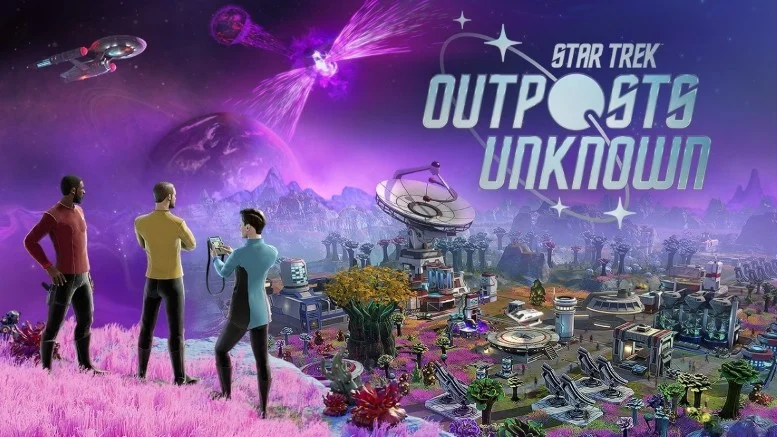
The release of Star Trek: Outposts Unknown marks a significant expansion for the Star Trek gaming franchise, moving away from traditional combat-focused titles to embrace the simulation and management genre. Developed by Magic Fuel Games and published by Playstack, the title represents an ambitious attempt to synthesize the colony-building mechanics popularized by games like SimCity and RimWorld with the established lore of the Paramount+ series Star Trek: Strange New Worlds. Set within a volatile, uncharted sector of space, the game tasks players with commanding the U.S.S. Resonant, a science-focused vessel charged with establishing sustainable Federation outposts while navigating the geopolitical and environmental hazards of the "Rift."
The Narrative and Mechanical Framework
The core premise of Outposts Unknown centers on a cooperative effort between the Federation and a localized species known as the X’Lehari. This partnership is necessitated by a persistent subspace phenomenon designated as "The Rift," which creates periodic, highly destructive tetryon schisms throughout the sector. As the captain of the U.S.S. Resonant, the player is responsible for deploying specialized teams to planetary surfaces to extract resources, conduct research, and construct defensive and scientific infrastructure.

The game’s narrative integration is designed to ground the experience in the Strange New Worlds timeline. Players interact with familiar figures such as Admiral Robert April, who serves as a primary contact for resource allocation and mission directives, and Communications Officer Nyota Uhura, who acts as a secondary liaison to the U.S.S. Enterprise. Despite these inclusions, the primary gameplay loop remains heavily focused on logistics, resource management, and organizational hierarchy.
Chronology of Development and Release
The path to the game’s launch has been marked by a series of strategic reveals and public testing phases. The project was first formally announced in June 2026, with an accompanying demo that introduced the public to the title’s core loop: base building, crew management, and resource extraction. Subsequent updates in August 2026 provided deeper insight into the game’s planetary exploration mechanics and the specific role of the X’Lehari in the overarching plot. Following the release on October 20, 2026, the development team entered an immediate post-launch support cycle, releasing two major patches within the first 72 hours to address widespread reports of technical instability.
Gameplay Complexity and Structural Challenges
Outposts Unknown distinguishes itself through a high level of micro-management. Unlike many casual builders, this title demands that players juggle over 55 unique, interdependent resources. This complexity is compounded by a multi-tiered tech tree that governs the research and construction of advanced facilities.

A central mechanic in the game is the management of personnel. The crew is divided into departments—science, engineering, security, and command—each with specific requirements for upkeep. The game introduces a sophisticated, if punishing, morale system; failing to meet the physical or psychological needs of the staff, which are often exacerbated by the volatile nature of The Rift, can lead to crew members requesting transfers back to Starfleet Command, effectively stripping the player of essential, high-level personnel.
Further complicating the experience is a day/night cycle that requires the player to split the workforce, creating a constant scarcity of manpower during the early and mid-game stages. This design choice aims to simulate the realities of long-term deep-space operations but has been a primary source of friction for players, as the lack of automated scheduling often leads to bottlenecks in production chains.
Technical Performance and User Feedback
In the days immediately following its release, the user experience has been characterized by reports of technical difficulties. Players have documented instances where the game’s time-progression logic fails, resulting in a cessation of all resource collection and building fabrication. These "soft-lock" bugs, which often persist through save-file reloads, have necessitated multiple restarts of the campaign for many users.

Furthermore, the game’s interface has been criticized for a lack of intuitive guidance. While the tutorial covers basic navigation, it fails to adequately explain the complexities of the tech tree, particularly regarding the prerequisites for refining advanced materials like duranium. The absence of a "click-to-navigate" feature in the tech tree, combined with non-specific tooltip information, has resulted in a steep and frequently frustrating learning curve.
Official Response and Development Strategy
Magic Fuel Games has maintained an active line of communication with the community via the Steam platform. In an official update addressing the initial launch concerns, the developers acknowledged that the game’s pacing and tutorialization were not meeting player expectations.
"Our game is a complex logistics management game with over 55 unique resources, but the discovery of these systems and how that complexity is absorbed are areas we need to improve on," the studio stated in a post-launch briefing. "Localization errors are also being rectified, and numerous quality-of-life improvements are scheduled, including better upkeep systems and clearer building footprint indicators."

The studio has committed to a long-term support plan, characterizing the initial post-launch patches as the beginning of a sustained effort to stabilize and refine the game. However, the efficacy of these updates remains a point of debate, as some of the more significant progression-blocking bugs reported by the community were not explicitly addressed in the first two rounds of patches.
Broader Implications for the Star Trek Gaming Brand
The release of Outposts Unknown highlights a broader trend in the licensed video game market: the shift toward genre-specific titles that cater to niche audiences rather than broad-spectrum action-adventure experiences. By leveraging the aesthetic and intellectual property of the Star Trek brand, Magic Fuel Games aimed to capture the interest of the simulation-management community.
However, the current state of the game raises questions about the balance between "Star Trek" thematic elements and "Colony Builder" mechanical depth. Critics and players alike have noted that while the game features recognizable Starfleet assets—such as shuttles, uniforms, and character likenesses—the core experience frequently feels disconnected from the spirit of exploration and first-contact diplomacy that defines the franchise. The focus on repetitive resource collection and rigid management systems often overshadows the narrative potential of the X’Lehari setting.

For the publisher, Playstack, the commercial performance of Outposts Unknown will likely serve as a litmus test for future collaborations within the Star Trek license. If the developers can successfully streamline the UI, fix the persistent technical barriers, and better align the game’s pacing with player expectations, the title may yet find a dedicated audience. If, however, the technical issues persist and the gameplay loop remains perceived as overly monotonous, it may underscore the risks of applying high-complexity simulation mechanics to established franchises without sufficient quality-assurance testing.
Future Outlook and Console Availability
As of late October 2026, the game is available exclusively on PC and Mac via the Steam store for $32.99. While console availability was a key component of the game’s initial marketing strategy back in June, there has been no further disclosure regarding specific platforms or release windows for PlayStation, Xbox, or Nintendo consoles. Given the current focus on addressing PC performance and technical bugs, it is reasonable to infer that any console port has been deprioritized until the core experience reaches a stable state.
For the average player, the decision to invest in Star Trek: Outposts Unknown currently requires a tolerance for early-release-style technical hurdles and a significant time commitment to learning its intricate, albeit occasionally opaque, systems. While the game possesses the potential to be a deep, rewarding simulation experience, it remains in a formative stage where the promise of future patches is currently as significant as the present reality of the gameplay. As the development team continues its work, the trajectory of the game will be closely monitored by both the gaming press and the dedicated Star Trek fanbase to see if the U.S.S. Resonant can overcome its current operational challenges and successfully chart a course through the unknown.