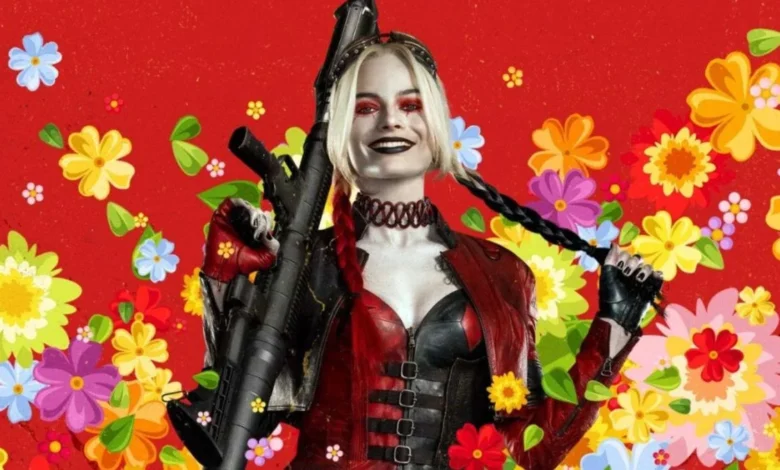
The transition from the defunct DC Extended Universe (DCEU) to the newly established DC Universe (DCU) under the leadership of James Gunn and Peter Safran has been defined by a complex process of canon consolidation and creative recalibration. Among the most significant questions lingering from this transition is the future of Harley Quinn, a character portrayed with high critical acclaim by Margot Robbie. In a recent podcast special titled The Suicide Squad: Is It Canon?, DC Studios co-CEO James Gunn provided the most comprehensive update to date regarding the character’s future, suggesting that while the path forward is narratively complicated, the door remains wide open for Robbie should she choose to return.
The Evolution of a Cinematic Icon
Margot Robbie’s tenure as Dr. Harleen Quinzel began in 2016 with David Ayer’s Suicide Squad. Despite the film receiving polarized reviews, Robbie’s performance was widely cited as a standout element of the production. Her portrayal brought a nuanced energy to the character, balancing chaotic villainy with an underlying emotional complexity that resonated with audiences. This performance earned her significant accolades and solidified the character as a cornerstone of the DCEU.
Following her debut, Robbie reprised the role in 2020’s Birds of Prey (and the Fantabulous Emancipation of Our Harley Quinn), a film that shifted the focus toward Harley’s liberation from the Joker and her evolution into an independent anti-hero. She returned once more for James Gunn’s 2021 soft reboot, The Suicide Squad, which further refined the character’s aesthetic and personality traits. Collectively, these three appearances have positioned Robbie’s Harley Quinn as one of the most recognizable and successful character interpretations in modern comic book film history.
The Canonization Dilemma
The central challenge facing James Gunn as he constructs the new DCU is the integration of legacy characters from a previous continuity that lacked a unified narrative roadmap. During his podcast, Gunn addressed the structural difficulties of maintaining Harley Quinn’s established history within a rebooted timeline.
"Harley’s role is one of the more difficult things to justify as being canon in the DCU," Gunn stated, highlighting the absence of established pillars like the Joker or Batman in the current iteration of the universe. For the DCU to remain coherent, any character carry-over requires a narrative bridge that accounts for their past actions without tethering the new universe to the failures or limitations of the previous one. Gunn’s concern is not necessarily with the character herself, but with the "baggage" that comes with a multi-film cinematic history that no longer aligns with his overarching vision for the DCU.
Timeline of Robbie’s Harley Quinn Appearances
- August 2016: Suicide Squad premieres, introducing Margot Robbie as Harley Quinn to global audiences. The film grosses over $746 million worldwide, establishing the character as a commercial powerhouse.
- February 2020: Birds of Prey is released, focusing on Harley’s post-Joker arc. The film receives positive critical reception, specifically for its stylistic direction and Robbie’s performance.
- August 2021: James Gunn’s The Suicide Squad debuts, featuring a revised look and tone for the character, cementing her status as a fan favorite.
- October 2026: James Gunn addresses the status of the character in his podcast, The Suicide Squad: Is It Canon?, clarifying that her inclusion in future projects is contingent upon both narrative necessity and actress availability.
The "Gunn Doctrine" on Casting and Continuity
James Gunn’s approach to the DCU has been characterized by a willingness to "bend over backwards" to accommodate talent he respects, while maintaining a strict adherence to the new, cohesive timeline. Gunn’s statement regarding Robbie is telling: "I don’t know if she wants to play Harley again. She may be over that. Harley is a character I’m almost certainly going to use in the DCU. And if Margot wants to play her, then I’ll bend over backwards to explain that in the world."

This indicates a clear distinction between the character and the actor. While Harley Quinn is considered essential to the DC brand—a testament to her enduring popularity—Robbie’s involvement is treated as a professional partnership rather than a contractual obligation. If Robbie opts to step away from the role, Gunn has signaled a readiness to recast, ensuring that the character can continue to exist within the DCU without being beholden to the narrative constraints of the previous DCEU films.
Cultural Impact and Marketability
The cultural footprint of Margot Robbie’s Harley Quinn cannot be overstated. Beyond the box office figures, the character has become a fixture in global pop culture, from Halloween costume sales to merchandise and social media iconography. Market research from the last decade consistently places Harley Quinn among the most popular DC characters, frequently rivaling Batman and Superman in terms of licensing revenue and brand engagement.
Analysts suggest that retaining a performer of Robbie’s caliber provides an immediate sense of continuity for legacy fans while simultaneously offering a "hook" for casual viewers. However, there is a counter-argument: a total reboot allows for a fresh interpretation that may appeal to a younger demographic or align better with the specific tone of the new DCU, which promises to be more interconnected and serialized than its predecessor.
Implications for the Future of the DCU
The implications of this potential casting scenario extend to the broader strategy of DC Studios. If Gunn succeeds in bringing back established actors like Robbie to portray their characters in a new continuity, he effectively bridges the gap between the old and new fanbases. If he chooses to recast, he establishes a firm "Year Zero" for the franchise, signaling to audiences that the new DCU is a clean slate.
The uncertainty surrounding the Joker in the DCU adds another layer to this puzzle. Harley Quinn’s history is inextricably linked to the Clown Prince of Crime; to introduce her without him requires a creative workaround that justifies her origin story. As Gunn noted, "If she doesn’t [want to return], then I might go with somebody else, where I don’t have to be attached to what happens to Harley in this movie." This suggests that the studio is prioritizing flexibility in its storytelling, refusing to let the canon of the past dictate the potential of the future.
Looking Ahead
The ball, for all intents and purposes, is in Margot Robbie’s court. Having played the character across three distinct projects over a five-year period, the actress is in a position to choose her next career steps carefully. Whether she returns to the vibrant, chaotic world of Harley Quinn or moves on to new creative endeavors, the character itself is destined to remain a focal point of DC Studios’ output.
For the DCU, the path forward is clear: the studio is committed to the character of Harley Quinn regardless of the performer. The decision to either bridge the old universe with the new through a return of the original cast, or to initiate a complete reimagining, will serve as a bellwether for the long-term success and identity of the DCU. For now, the prospect of a Robbie-led Harley Quinn remains one of the most anticipated potential developments in the comic book film industry, keeping fans and analysts alike watching for any signal from the actress regarding her willingness to don the makeup once more.