Coachella 2024 Brand Activations Transform The Music Festival Landscape Through Experiential Strategy And Utility
Coachella 2024: How Brand Activations Redefined Experiential Strategy and Utility
The 2024 Coachella Valley Music and Arts Festival served as a definitive case study in the evolution of brand marketing. No longer content with mere visibility, major brands pivoted toward a model of "experiential utility"—integrating themselves into the festival ecosystem by providing tangible value, logistical solutions, and deeply immersive narratives that blurred the line between corporate presence and artistic expression. As the festival landscape faces increasing pressure to justify high ticket prices and compete with the "festival fatigue" of the digital age, the activations at Coachella 2024 demonstrated that the brands winning the most engagement were those that functioned as essential components of the attendee experience rather than disruptive advertisements.
The Shift from Passive Visibility to Service-Oriented Utility
For years, the gold standard for Coachella activations was the "step-and-repeat" photo backdrop. While social media shareability remains a core metric, 2024 marked a departure toward high-utility engagement. Brands recognized that a festival attendee in the desert is constantly battling three primary pain points: physical exhaustion, dehydration, and the need for connectivity.
By solving these problems, brands transitioned from being "noise" to being "navigational anchors." For instance, luxury beauty and skincare brands moved beyond simple product sampling. Instead, they transformed tent spaces into comprehensive rejuvenation hubs. These areas provided air-conditioned sanctuaries, charging stations, and professional grooming services, effectively trading brand awareness for a moment of genuine relief from the harsh Indio sun. This strategy transforms the brand from an opportunistic advertiser into a trusted partner, building a level of brand loyalty that a billboard could never achieve. The psychology is simple: when a consumer associates a brand with the preservation of their energy or the enhancement of their comfort, the conversion from attendee to advocate becomes organic.
The Gamification of Immersion
Coachella 2024 saw a maturation of gamification techniques, where brands moved beyond simple interactive touchscreens to sophisticated, narrative-driven quests. Gaming companies and lifestyle brands alike utilized the sprawling acreage of the Empire Polo Club to create multi-stage activations that functioned like real-life RPGs (role-playing games).
These activations incentivized movement and prolonged dwell time. Attendees weren’t just walking through a booth; they were completing tasks, collecting digital and physical tokens, and unlocking rewards that functioned as social currency within the festival grounds. By integrating digital interactivity—such as QR-code-based scavenger hunts that synced with mobile apps—brands created a feedback loop of engagement. This data-driven approach allowed sponsors to track attendee behavior in real-time, mapping the journey from discovery to interaction, and finally to point-of-sale or digital sign-up. This shift mirrors the broader transition in marketing toward "phygital" (physical + digital) experiences, where the goal is to capture the audience’s attention across multiple touchpoints simultaneously.
Aesthetic Continuity and the Architecture of Hype
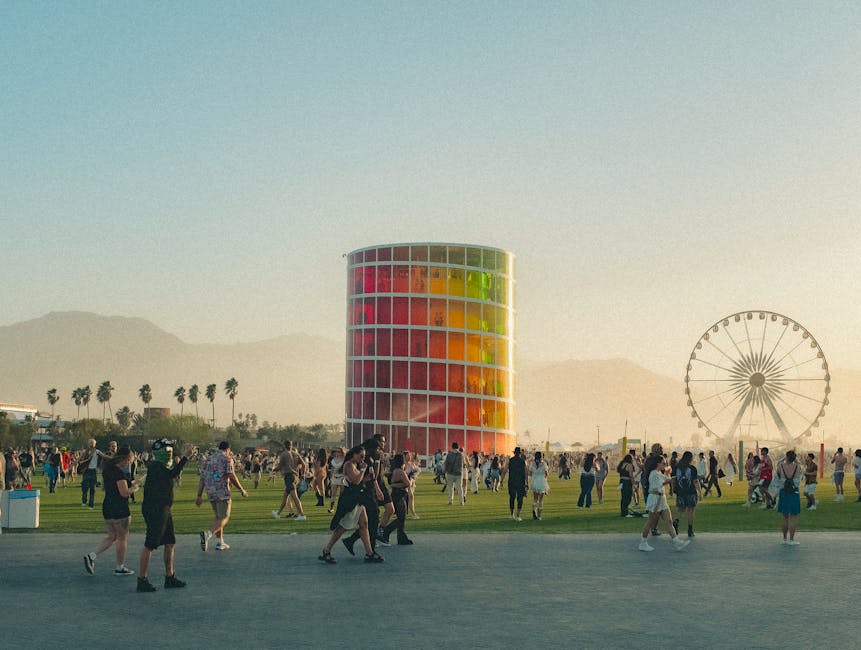
The visual language of Coachella 2024 was defined by "architecture of hype." Large-scale, site-specific installations acted as beacons, drawing crowds not just because of the brand name, but because the structure itself provided a must-see visual moment. Architectural design played a pivotal role in the effectiveness of these activations. Brands hired top-tier creative agencies and set designers to build structures that felt like natural extensions of the festival’s art-centric ethos.
There is a distinct tension between the "authentic" aesthetic of Coachella and the commercial necessity of corporate sponsorship. The activations that succeeded in 2024 were the ones that aestheticized their corporate identity. By prioritizing color palettes, lighting design, and spatial flow that matched the bohemian-futurist vibe of the desert, brands avoided the "clash" that often makes corporate booths feel like eyesores. This design-forward strategy is essential for the Gen Z and Millennial demographic, who possess a highly tuned radar for inauthentic marketing. When a brand treats their activation like a piece of public art rather than an advertising deck, the audience is far more likely to engage voluntarily, film the content for their own social feeds, and effectively do the marketing for the brand.
Data as the New Currency of Experiential Marketing
Behind the scenes of the flashy neon lights and curated photo ops, 2024 was defined by rigorous data capture. Brand activations at Coachella are massive expenditures, and to justify the ROI to stakeholders, companies have turned to advanced data collection methods. The use of RFID integration, NFC-enabled wristbands, and opt-in Wi-Fi portals allowed brands to understand exactly who was engaging with their space.
This is the "utility" aspect for the brand side. By capturing anonymized behavioral data—such as how long an attendee spent in a specific activation, what product samples they gravitated toward, and the time of day they were most active—brands are optimizing their experiential strategy for future iterations. This isn’t just about tallying foot traffic; it’s about understanding the "why" behind the engagement. Did the brand’s activation lead to a measurable increase in app downloads? Did it trigger social media mentions during peak festival hours? The integration of digital tracking into physical activations ensures that Coachella is no longer a "black box" of marketing spend, but a precise, scalable laboratory for consumer sentiment.
Influencer Ecosystems and the Co-Creation of Content
The role of the influencer at Coachella has shifted from "attendee" to "co-creator." In 2024, the most successful brands didn’t just invite influencers to their activations; they provided them with private, hyper-curated spaces designed specifically for high-end content production. By offering influencers unique, behind-the-scenes access or exclusive, limited-edition merchandise, brands ensured their presence remained a consistent fixture in the digital narrative of the weekend.
This represents a sophisticated understanding of the content funnel. A brand activation serves as the "set," the influencers serve as the "actors," and the social media algorithms serve as the "distribution network." By facilitating the production of professional-grade content within their booths, brands ensured that the Coachella narrative was permeated with their visual identity. This bypasses the need for traditional media buying, as the organic reach of influencers, when coupled with the high aesthetic quality of the activation space, provides a higher ROI than a traditional digital advertisement.
Sustainability and the Future of Experiential Responsibility
One cannot discuss the landscape of Coachella 2024 without addressing the growing scrutiny regarding sustainability. As festivals face criticism for the waste generated by promotional materials and pop-up structures, forward-thinking brands are incorporating circularity into their experiential strategy.
We saw a clear trend toward modular architecture, where structures were designed to be dismantled and reused for future events rather than scrapped. Brands that utilized sustainable materials, offered upcycled products, or emphasized water conservation and waste reduction saw a notable uptick in positive sentiment. In 2024, "utility" also meant "responsibility." The brands that integrated sustainability into their activation’s mission statement—by, for example, offering a reward for participating in a recycling program—tapped into the values of their audience. This alignment of corporate values with attendee ethics is becoming a non-negotiable requirement for brand success in the modern festival landscape.
The Convergence of Commerce and Culture
Ultimately, Coachella 2024 solidified the fact that the traditional walls between brand, festival, and commerce have collapsed. The festival is no longer just a musical gathering; it is a global content platform, and the brands that thrive within this space are those that recognize they are part of the talent roster.
The successful brands of 2024 acted as curators of the festival experience. They provided the refreshments, the recharge points, the aesthetic photo opportunities, and the exclusive, FOMO-inducing moments that define the "Coachella vibe." By shifting the focus from "what are we trying to sell?" to "how are we enhancing the weekend?", brands have managed to turn corporate marketing into an essential, welcomed part of the desert experience.
Looking ahead, this trajectory suggests that the future of experiential strategy will be even more heavily weighted toward personalization. With the rise of AI-driven personalization and real-time interaction, we can expect future festival activations to be increasingly dynamic, responding to individual attendee preferences in real-time. The blueprint set by Coachella 2024 is clear: the most effective activations are those that disappear into the fabric of the event while providing maximum utility to the attendee. The brands that win will be those that provide the most seamless, high-value, and shareable experiences, proving that in the digital era, the most powerful marketing is the marketing that doesn’t feel like marketing at all, but rather, a natural, essential enhancement to the music, the art, and the community.
