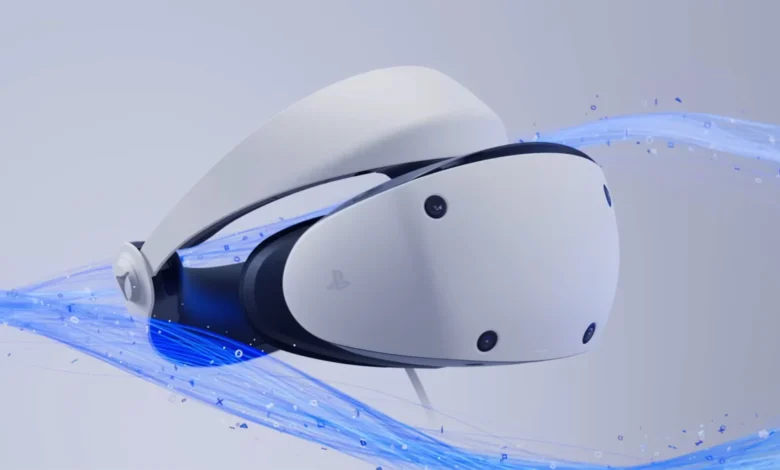
The landscape of virtual reality hardware continues to undergo significant corporate restructuring, marked most recently by Sony Interactive Entertainment transferring a substantial portfolio of virtual, augmented, and mixed reality patents to rival tech giant Meta. Industry trackers and legal filings have confirmed that between June and September 2026, Sony offloaded 43 United States patents to Meta, capping off a broader intellectual property transfer agreement originally established in December 2025. This multi-territory pact involves the migration of 419 global patents—including 180 from the U.S. and 239 from international jurisdictions—originally filed by Sony between 2010 and 2022. This specific filing window directly encapsulates the research, development, and active lifecycle periods for both the original PlayStation VR (PSVR) launched in 2016 and its successor, the PlayStation VR2 (PSVR2), released in February 2023.
The transfer of foundational intellectual property to a primary competitor serves as the latest indicator that Sony is systematically divesting from its proprietary hardware ecosystem for virtual reality. Ever since the commercial debut of the PSVR2, industry observers have noted a distinct lack of first-party corporate backing. While third-party publishers and independent developers have attempted to sustain the hardware platform, their collective output has been insufficient to secure the headset’s long-term viability within the broader PlayStation 5 product family. By relinquishing patents foundational to head-mounted display systems, Sony appears to be signaling a definitive strategic shift away from hardware-level virtual reality innovation.
A Retrospective Chronology of the PSVR2 Lifecycle
The trajectory of the PlayStation VR2 has been defined by a progressive scaling back of internal resources and publisher support since its inception. To understand the current state of the platform, it is necessary to examine the chronological milestones that brought the hardware to this juncture.
Between 2010 and 2022, Sony heavily invested in research and development, culminating in the 2016 release of the original PSVR for the PlayStation 4—a tethered system that eventually achieved roughly 5 million unit sales over a three-year span. Buoyed by this initial moderate success, Sony engineered the PSVR2 for the PlayStation 5, implementing advanced technical specifications such as 4K OLED HDR displays, a 110-degree field of view, foveated rendering via eye-tracking, and headset feedback.
In February 2023, the PSVR2 launched globally at a retail price of $549.99. Crucially, this price point exceeded the cost of the PlayStation 5 console itself, creating an immediate barrier to entry for mainstream consumers. Despite critical acclaim for the hardware’s technical capabilities, first-party software support remained strikingly sparse. Throughout the entire lifespan of the device, Sony published only three dedicated first-party games: Horizon Call of the Mountain developed by Guerrilla Games and Firesprite, Firewall Ultra developed by First Contact Entertainment, and My First Gran Turismo, a complimentary software entry designed to showcase the platform.
The commercial outcomes for these foundational releases proved challenging. While Horizon Call of the Mountain functioned as the primary launch showcase, it received mixed critical reception regarding its gameplay depth relative to its high production values. Meanwhile, the multiplayer tactical shooter Firewall Ultra struggled to capture a sustainable player base, leading Sony to shutter its developer, First Contact Entertainment, merely four months after the game’s release. Other established franchises, such as Gran Turismo 7, received retroactive patches for VR compatibility, but core system-seller experiences remained scarce. Furthermore, Sony elected not to remaster or port critically acclaimed legacy titles from the original PSVR library—such as Astro Bot Rescue Mission and Blood & Truth—effectively starving the new hardware of a robust backward-compatible catalog.
Financial Realities and the Production Pause
The commercial struggles of the PSVR2 culminated in early 2024 with adjustments to manufacturing output. By March 2024, reports from industry analysts at Bloomberg revealed that Sony had quietly paused production of the headset as unsold inventory accumulated across global distribution channels. Estimates indicated that total manufacturing volume hovered just above 2 million units, though precise lifetime sales figures were never publicly disclosed by corporate leadership.
The high cost of entry, paired with an uncertain software roadmap, heavily contributed to sluggish consumer adoption. Gamers proved hesitant to invest in a peripheral that cost more than the console required to run it, particularly as Sony’s internal studios pivoted away from virtual reality development. Notably, Firesprite—Sony’s premier internal studio with extensive VR expertise—was reassigned to traditional flat-screen development, most notably leading the production of Until Dawn 2. This reallocation of internal human capital underscored a corporate mandate to reallocate resources toward traditional console blockbusters.
Third-Party Dependencies and Financial Incentives
In the absence of robust first-party software production, Sony relied heavily on external partnerships and financial incentives to populate the PSVR2 software library. Historical precedent for these financial arrangements came to light during a massive ransomware and data leak involving Capcom in late 2020. Internal documents revealed that Sony had previously paid Capcom approximately $5 million to secure platform-exclusive or timed-exclusive VR implementation for Resident Evil 7: Biohazard on the original PSVR.
While unconfirmed by official corporate statements, industry analysts widely presume similar fiscal arrangements facilitated the VR modes for subsequent franchise entries, including Resident Evil Village and the remake of Resident Evil 4. However, as Sony’s enthusiasm for the platform waned, future franchise entries like Resident Evil Requiem notably launched without any official virtual reality integration. Without continued subsidization from PlayStation, third-party publishers grew increasingly reluctant to absorb the financial risks associated with developing high-budget VR titles exclusively for a hardware base with limited adoption.
The Pivot to PC Compatibility: An Admission of Defeat?
In June 2024, Sony announced the release of the PSVR2 PC Adapter, a hardware peripheral designed to allow the headset to connect to compatible Windows personal computers via Steam. While market analysts initially praised the move for granting consumers hardware versatility and access to the expansive SteamVR software library, the strategic implications pointed toward a retreat from console-bound exclusivity.
By enabling the hardware to function on competing computing platforms, Sony effectively mitigated consumer complaints regarding a lack of software, but it did so by outsourcing the content curation to Valve’s Steam ecosystem. Rather than funding high-end games for the PlayStation 5, Sony positioned the PSVR2 as generic PC hardware. For many market watchers, this peripheral launch functioned as a tacit acknowledgment that the PlayStation ecosystem could no longer sustain dedicated, high-budget virtual reality development on its own terms.
Broader Industry Context: Contraction in the VR Sector
Sony’s cooling stance on virtual reality mirrors a broader market contraction across the entire immersive technology sector. Throughout 2024, 2025, and into 2026, numerous prominent independent and mid-tier VR development studios experienced severe corporate restructuring, layoffs, or outright closures.
Polyarc, the studio behind the critically acclaimed Moss series; Mighty Coconut, the developer of Walkabout Mini Golf; and Cloudhead Games, creators of Pistol Whip, all implemented significant workforce reductions or operational downsizing to survive a stagnant market. Concurrently, Meta—the primary champion of standalone virtual reality hardware—restructured its internal development studios, closing operations at Ready At Dawn, Twisted Pixel Games, Sanzaru Games, and Armature Studio, while cutting staff at Camouflaj, the studio responsible for Batman: Arkham Shadow.
These widespread closures highlight the ongoing economic hurdles of developing commercially viable virtual reality software, where high development expenditures frequently outpace the total addressable market of active hardware owners.
The Current Ecosystem and Future Outlook
Despite the withdrawal of first-party funding and the recent transfer of key patents to Meta, the PlayStation VR2 has not been entirely abandoned by the development community. The PlayStation Store continues to receive software updates and new releases, driven almost entirely by independent developers and dedicated third-party publishers who recognize the hardware’s robust technical capabilities, including its OLED panels and precise eye-tracking functionality.
Niche publishing entities have actively stepped in to serve the platform’s dedicated enthusiast base. For instance, independent VR publisher Impact Inked launched its "Unlock the Vault" initiative, committing to porting a curated slate of legacy and unreleased virtual reality titles to the PSVR2 hardware platform. This grassroots support ensures that the headset retains a functioning, albeit niche, community of users.
Ultimately, the sale of Sony’s foundational patents to Meta and the historical lack of software investment illustrate the ephemeral nature of corporate commitments to emerging hardware segments. While the PSVR2 remains a technically impressive piece of engineering, its trajectory serves as a case study in the economic complexities of modern high-end virtual reality—where sophisticated hardware specifications alone are insufficient to sustain commercial momentum without sustained, first-party software backing and favorable market economics.