Mike Flanagan’s Adaptation of Stephen King’s Carrie Premieres on Prime Video, Bringing Modern Terror to a Classic Coming-of-Age Tale

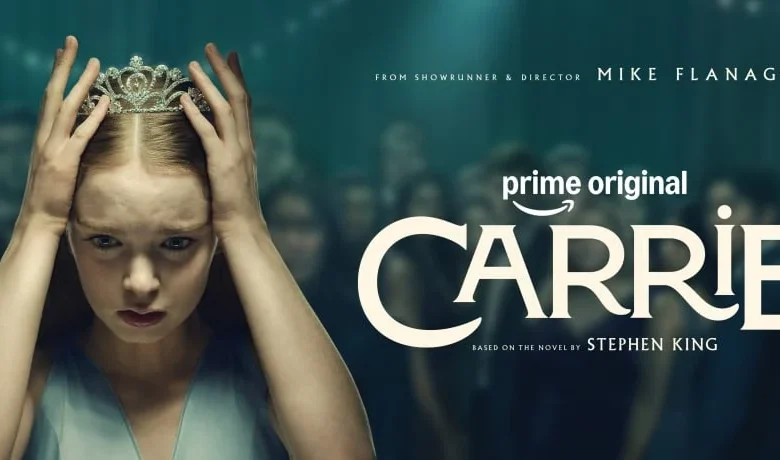
All eight episodes of the highly anticipated television adaptation of Stephen King’s landmark debut novel, Carrie, are officially available for streaming on Prime Video. Spearheaded by acclaimed horror visionary Mike Flanagan, the series reimagines the chilling 1974 literary classic for a contemporary audience, transporting the telekinetic high schooler’s nightmarish ordeal into the hyper-connected, digital age of viral media and relentless online harassment.
The premiere marks a significant milestone in the horror genre, representing the first time King’s foundational novel has been adapted specifically for television. While Brian De Palma’s iconic 1976 feature film remains a cinematic touchstone, and subsequent adaptations have attempted to recapture its magic, Flanagan’s eight-part series offers an expansive, slow-burn exploration of the underlying social pressures that drive a teenager to the brink of mass destruction.
Main Facts of the Production and Release
The newly released Prime Video series dives deep into the psychological underpinnings of its protagonist, Carrie White, portrayed by rising talent Summer H. Howell. Sheltered for her entire life within the confines of a suffocating, fanatically religious home by her fiercely protective mother, Margaret White—played with chilling precision by Samantha Sloyan—Carrie’s world is upended following a sudden family tragedy. Thrust abruptly into the hostile ecosystem of a public high school, Carrie immediately becomes the epicenter of a vicious viral bullying scandal.
As the digital cruelty of her peers intensifies, so too does the awakening of her dormant telekinetic abilities. Over the course of eight propulsive episodes, the narrative traces the compounding weight of everyday microaggressions, adolescent cruelty, and systemic failures, ultimately hurtling toward the inevitable, shattering night of the senior prom. Rather than rushing to the horrific climax, Flanagan’s adaptation dedicates substantial runtime to examining the humanity—and the escalating desperation—of its characters, questioning whether the audience is witnessing the origin of a hero, a villain, or an inevitability shaped by societal malice.
Chronology and Development History
The journey of bringing Mike Flanagan’s vision of Carrie to the small screen has been years in the making within the horror community. Stephen King published his debut novel, Carrie, on April 5, 1974, following numerous rejections before Doubleday finally picked it up. The novel’s epistolary format—comprising news clippings, scientific reports, and diary entries—laid the groundwork for a multi-perspective examination of a small-town tragedy.
Over the decades, the intellectual property has seen multiple adaptations. The most famous remains the 1976 feature film directed by Brian De Palma, which earned Academy Award nominations for Sissy Spacek and Piper Laurie. A stage musical followed in 1988, alongside a made-for-television film in 2002, and a theatrical remake starring Chloë Grace Moretz in 2013.
Discussions regarding a modern television revival began to gain significant traction as prestige horror television proved capable of handling complex literary source material. Mike Flanagan, known for his thoughtful, character-driven horror work on projects such as The Haunting of Hill House, Midnight Mass, and The Fall of the House of Usher, emerged as the ideal showrunner to tackle King’s classic text. Production officially moved forward under Amazon MGM Studios for Prime Video, casting Summer H. Howell to lead the ensemble. Press days leading up to the release featured extensive interviews with Flanagan, Howell, and supporting cast members, highlighting the careful measures taken to update the material for a generation defined by smartphones, social media, and instant digital exposure.
Supporting Data and Modern Context
The decision to frame Carrie’s torment around modern technology is more than a superficial aesthetic choice; it reflects alarming statistical trends regarding contemporary youth culture. According to data compiled by the Cyberbullying Research Center, approximately 37% of students aged 12-17 have experienced cyberbullying in their lifetimes, with roughly 30% reporting having been cyberbullied multiple times. Furthermore, studies consistently link severe, persistent online harassment to heightened risks of clinical depression, anxiety, and social isolation among adolescents.
By anchoring the narrative in a viral bullying scandal, Flanagan’s series updates King’s critique of institutional indifference and teenage cruelty. In the 1974 novel and the 1976 film, Carrie’s humiliation was largely confined to the locker room showers and the gymnasium floor. In the 2026 Prime Video adaptation, a single moment of humiliation is instantly broadcast, replicated, and archived indefinitely across digital networks. This modern amplification fundamentally alters the pressure cooker in which Carrie exists, providing a chillingly realistic context for her psychological fracture.
Official Responses and Creative Approach
During recent press junkets supporting the series launch, Mike Flanagan and the primary cast discussed the delicate balance of honoring Stephen King’s original text while constructing a narrative tailored for modern television audiences. Flanagan emphasized that the primary goal of the eight-episode format was to de-escalate the "monster" label often unfairly assigned to Carrie in cultural memory, choosing instead to focus on the compounding failures of the adults and peers surrounding her.
Summer H. Howell shared insights into taking on the iconic role previously defined by cinematic legends, noting the challenge and responsibility of embodying a character who shifts from absolute vulnerability to terrifying power. Samantha Sloyan, discussing her portrayal of the zealous and overbearing mother Margaret White, pointed to the psychological complexity of their mother-daughter dynamic, grounding the supernatural elements in the stark reality of domestic isolation and fanaticism. Cast interviews uniformly praised the series’ ability to utilize the television medium to flesh out secondary characters who, in previous adaptations, functioned merely as plot devices.
Broader Impact and Industry Implications
The release of Carrie on Prime Video arrives at a time when prestige horror television commands significant cultural and commercial weight. By treating King’s foundational text with the dramatic weight usually reserved for prestige drama, the series bridges the gap between traditional literary adaptations and contemporary genre storytelling.
Industry analysts are closely monitoring the reception of the series, viewing it as a bellwether for how classic intellectual properties can be successfully modernized without losing the core themes that made them enduring literature in the first place. By focusing on the mechanics of cruelty, empathy, and the terrifying reach of digital peer pressure, Flanagan’s Carrie transcends standard genre tropes, offering a deeply reflective examination of what happens when a community pushes its most vulnerable members past the point of endurance. With all eight episodes now streaming worldwide on Prime Video, audiences are invited to reexamine a familiar nightmare through a thoroughly modern, razor-sharp lens.