Microsoft Consolidates Gaming Operations by Transitioning Halo Franchise Oversight to Activision

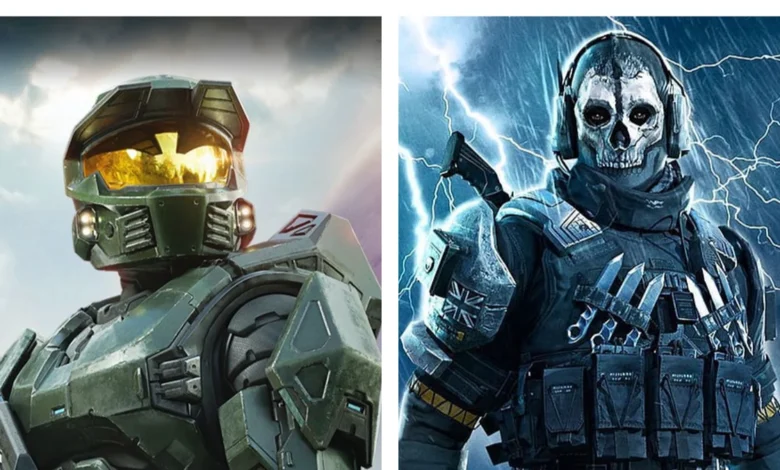
In a major strategic realignment of its interactive entertainment division, Microsoft has officially transferred the development stewardship of its flagship franchise, Halo, to Activision. This decision marks a significant turning point for the Halo intellectual property, which has served as the bedrock of the Xbox brand since the launch of the original console in 2001. Under the new corporate structure, Halo Studios will shift its focus exclusively to the long-term maintenance and community support of existing titles, effectively ending its role as the primary developer for future installments. This move coincides with a broader organizational restructuring initiated by newly appointed Xbox CEO Asha Sharma, which has resulted in significant workforce reductions across several high-profile development houses.
The Scope of the Organizational Restructuring
The transition of Halo to Activision is part of a wider administrative shift that affects several of Microsoft’s most prominent internal studios. In addition to the changes at Halo Studios, the development teams behind the nautical adventure hit Sea of Thieves, Rare Limited, and the legendary real-time strategy series Age of Empires, managed by World’s Edge, have also been brought under the Activision organizational umbrella. This consolidation is framed as part of a "reset" policy, a term utilized by CEO Asha Sharma to describe the recent layoffs impacting over 1,600 employees across the Xbox gaming division.
The decision to fold these studios into Activision reflects a pivot toward centralizing production resources. By grouping these iconic franchises under a single corporate entity, Microsoft aims to streamline development pipelines and leverage the infrastructure that Activision has cultivated through its long-term management of the Call of Duty franchise. For stakeholders, this represents a shift from a decentralized studio model—where individual teams operated with high degrees of autonomy—to a more integrated, efficiency-focused operational framework.
Historical Context and Development Challenges
The Halo franchise has faced a turbulent development cycle over the past decade. Following the transition from the original creators, Bungie, to the internal Microsoft team 343 Industries, the series struggled to maintain the critical momentum that defined its earlier years. The release of Halo Infinite in 2021, while commercially significant, was marred by a protracted development period, multiple delays, and criticism regarding the post-launch content cadence.
The history of Halo development can be categorized into three distinct eras:
- The Bungie Era (2001–2010): The foundational years characterized by technical innovation and the establishment of the Master Chief as a global gaming icon.
- The 343 Industries Era (2011–2024): A period of experimentation and attempts to modernize the gameplay loop, often met with mixed reception regarding narrative direction and live-service implementation.
- The Activision Era (2025–Present): A new phase defined by cross-studio integration and the application of proven, high-frequency release methodologies associated with the Call of Duty brand.
The transition to Activision is widely viewed as a move to resolve the creative stagnation and project management bottlenecks that plagued the series during the latter half of the 343 Industries tenure. By handing the reins to the team behind Call of Duty—the industry’s most commercially successful shooter franchise—Microsoft is signaling an intent to prioritize operational consistency and technical stability.
Official Statements and Corporate Strategy
Rob Kostich, President of Activision, addressed the transition in a formal statement, emphasizing the gravity of inheriting such a storied intellectual property. "We’re thrilled to welcome Halo, Rare, and World’s Edge to Activision," Kostich noted. "It’s an honor and a responsibility that we do not take lightly. For Halo, our goal is clear: make the greatest Halo game ever, worthy of its universe and legacy, while staying true to what made players love it in the first place."
The sentiment from the Activision leadership team focuses on "purpose-built" teams and a commitment to the community. By assembling specialized units with experience in high-fidelity shooter development, Activision aims to restore Halo to its former status as the industry standard-bearer for the first-person shooter genre. However, the move has generated a polarized response from the fan base. Proponents argue that Activision’s logistical expertise is exactly what the franchise needs to overcome its recent history of delays, while detractors express concern that the "Call of Duty-fication" of Halo could strip the series of its unique identity and tactical pace.
Financial Implications and Market Positioning
The restructuring arrives at a time when Microsoft is under intense scrutiny regarding its aggressive acquisition strategy. Since the $68.7 billion acquisition of Activision Blizzard, Microsoft has faced significant anti-trust hurdles in various jurisdictions, including the United States, the United Kingdom, and the European Union. Despite the massive capital expenditure, the division has struggled to demonstrate immediate, outsized financial returns, prompting investors to question the long-term viability of the company’s "expansion at all costs" strategy.
Furthermore, Microsoft is balancing these gaming investments against its massive financial commitment to Artificial Intelligence, with billions of dollars being allocated toward the construction of large-scale data centers. Industry analysts suggest that the pressure to make the gaming division self-sustaining and highly profitable is higher than it has ever been. The restructuring is, in part, an effort to optimize margins and ensure that high-value franchises like Halo, Fallout, and Age of Empires can generate consistent, repeatable revenue streams.
Future Implications for the Gaming Industry
The integration of Rare Limited and World’s Edge under the Activision umbrella further signals that Microsoft is moving toward a "super-publisher" model. By pooling the talent of these studios, the company intends to create a powerhouse capable of maintaining a constant, high-quality output of content. This, however, poses a risk to the diversity of creative vision within the Xbox ecosystem. When multiple, distinct studios are forced to adhere to the workflows and production methodologies of a singular parent entity, there is an inherent danger of creative homogenization.
For the Halo franchise specifically, the next two years will be critical. The industry will be watching to see if Activision can replicate the success of the Modern Warfare or Black Ops series while respecting the deep lore and specific mechanical requirements of the Halo universe. If the strategy succeeds, it could set a new template for how legacy franchises are managed within the current era of mega-corporations. If it fails, it may lead to further disillusionment among a player base that is already wary of the shift in stewardship.
Ultimately, this transition is a reflection of the modern gaming landscape, where the demand for consistent live-service updates and high-fidelity, high-budget experiences has forced publishers to prioritize efficiency over the decentralized, auteur-driven development models of the past. As Microsoft continues to navigate the complexities of its vast portfolio, the fate of Master Chief remains the most visible test of its ability to harmonize legacy prestige with modern corporate pragmatism. Whether this "reset" leads to a renaissance for the franchise or a dilution of its core identity remains to be seen, but the shift marks an irreversible change in the trajectory of one of gaming’s most important legacies.