The inception of the modern cinematic and television obsession with the multiverse can be traced back not to Hollywood screenwriters, but to the theoretical framework proposed by physicist Hugh Everett III. In 1957, Everett formulated the Many-Worlds Interpretation (MWI) of quantum mechanics, positing that quantum possibilities evolve without wave function collapse. While initially met with skepticism within the broader physics community, Everett’s hypothesis captured the imagination of science fiction creators, eventually evolving into a cornerstone trope for franchises ranging from Star Trek to the Academy Award-winning Everything Everywhere All at Once.
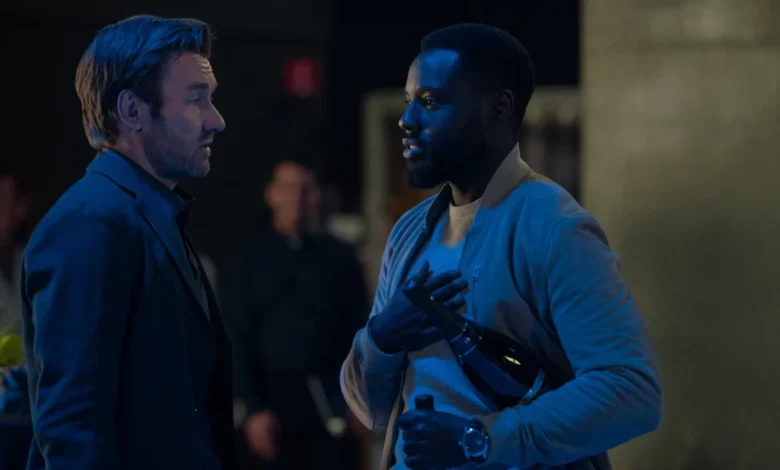
Within the streaming landscape, Apple TV+’s sci-fi thriller Dark Matter has emerged as a premier exploration of these theoretical mechanics. Premiering on May 8, 2024, the series stars Joel Edgerton as Jason Dessen, a college physics professor abducted by an alternate-reality doppelganger who has successfully constructed a multiverse-traveling apparatus known as "the Box." As Dessen navigates an infinite array of alternate Earths to reclaim his life and family, the series has quietly begun executing a narrative arc regarding inter-dimensional conquest and variant networking that mirrors—and arguably surpasses—the overarching multiversal trajectory abandoned by the Marvel Cinematic Universe.
Main Facts and Narrative Foundations
At its core, Dark Matter examines the perilous ethical implications of technological breakthroughs across infinite realities. The narrative catalyst is Leighton Vance, a venture capitalist and startup CEO portrayed by Dayo Okeniyi, who financed the development of the Box. Initially pitched as an altruistic enterprise capable of eradicating disease, eliminating poverty, and ending global conflict by harvesting the technological and medical advancements of parallel worlds, the project quickly devolves into an existential hazard.
By the conclusion of the show’s first season, Vance utilizes the Box to navigate alternate realities, ultimately suffering physical and psychological tolls that compel him to seek out alternate versions of himself. Rather than battling hostile iterations of his own consciousness—a struggle that plagues Edgerton’s Jason Dessen as hundreds of variants converge on Chicago—Vance adopts a strategy of consolidation. He aligns with a variant who serves as a meditation instructor, mastering the psychological discipline required to traverse the multiverse safely. This alliance serves as the foundation for an expanding network of Leightons who utilize inter-dimensional trade to accumulate wealth and geopolitical influence across realities.

Chronology of the Multiversal Subgenre in Television and Film
The contemporary television landscape has spent the past half-decade saturated with multiverse narratives, creating a distinct chronology of conceptual escalation:
- 2019–2023: Marvel Studios announces and initiates its Multiverse Saga, punctuated by projects such as Loki, Spider-Man: No Way Home, and Doctor Strange in the Multiverse of Madness.
- December 2022: Everything Everywhere All at Once dominates the global box office and subsequent awards circuit, culminating in seven Academy Awards at the 95th Oscars in March 2023, cementing the indie film as a cultural touchstone for MWI narratives.
- February 2023: Ant-Man and the Wasp: Quantumania debuts in theaters, introducing the Council of Kangs in its mid-credits sequence, designed to establish the primary antagonists for the remainder of Marvel’s Multiverse Saga.
- May 2024: Apple TV+ premieres Dark Matter, shifting the streaming platform’s prestige sci-fi catalog toward grounded, physics-adjacent existential dread.
- Late 2023–2024: Major structural shifts occur within Marvel Studios’ production slate following the removal of actor Jonathan Majors, resulting in the creative pivot away from Kang the Conqueror toward alternate villain concepts, most notably Doctor Doom in upcoming crossover events.
- 2025–2026: Subsequent seasons of series like Dark Matter expand upon inter-dimensional cartels, effectively illustrating the scale of multiversal friction that cinematic universes have struggled to sustain.
The Parallel Evolution of Narrative Risks: Council of Kangs vs. Legion of Leightons
The structural similarities between the multiversal conflicts depicted in Marvel’s properties and Apple TV+’s Dark Matter highlight a shared fascination with the dangers of self-replication. In the Season 1 finale of Loki, the character He Who Remains (played by Jonathan Majors) details the genesis of the first multiversal war. He explains that a 31st-century variant discovered parallel universes, initially fostering peaceful scientific and cultural exchanges with alternate versions of himself. However, certain variants ultimately perceived these new dimensions as territories ripe for subjugation, culminating in an apocalyptic war across time and space.
This monumental conflict, however, was largely communicated to audiences through rapid exposition rather than direct narrative dramatization. The planned payoff—the Council of Kangs teased in Quantumania—was abruptly sidelined following real-world legal proceedings involving Majors, leading Disney and Marvel Studios to restructure their multi-year roadmap toward Avengers: Doomsday and the integration of alternative antagonists.
Dark Matter, conversely, is methodically dramatizing this exact thematic trajectory through the expansion of the "Legion of Leightons." Flashbacks in the second season illustrate the initial optimism surrounding the Box, mirroring the idealistic early days of the scientific discoveries described in Loki. Yet, as the narrative progresses, Vance’s networking with his multiversal variants transitions from mutual scientific aid to a coordinated inter-dimensional monopoly. When an investigator in a parallel timeline discovers that their domestic enterprise has been systematically beaten to market by advanced microprocessors and mobile technology, the source is revealed to be Vance funneling intellectual property across dimensional barriers for corporate profit.

Broader Impact, Industry Implications, and Analysis
The divergent paths taken by Marvel Studios and Apple TV+ reflect differing production philosophies regarding high-concept science fiction. While cinematic universes are bound by vast financial stakes, interconnected release schedules, and the unpredictability of marquee casting, streaming series like Dark Matter operate within a more contained narrative environment. This structural flexibility allows showrunners to explore the darker sociological consequences of the Many-Worlds Interpretation without needing to maintain strict continuity with a multi-billion-dollar franchise ecosystem.
Furthermore, the emergence of the Legion of Leightons offers a grounded, character-driven alternative to the cosmic-scale destruction frequently utilized in superhero cinema. Rather than relying on mystical artifacts or temporal pruning agencies, Dark Matter grounds its multiversal conflict in corporate greed, ethical compromise, and psychological fragmentation. As the series continues to explore the friction between infinite Earths and finite resources, it inadvertently provides the detailed, methodical examination of multiversal imperialism that cinematic counterparts have been forced to bypass.
Industry analysts note that as audiences experience fatigue with superficial uses of the multiverse as a mere cameo device, storytelling that investigates the structural and moral costs of cross-dimensional contact—exemplified by both Loki and Dark Matter—represents the maturation of the subgenre. Whether Apple’s prestige drama can sustain its meticulous pacing through subsequent seasons will serve as an essential bellwether for how deeply streaming platforms can engage with complex theoretical physics without alienating general viewership.