American Horror Story Season 13 Claims the Top Spot on Disney+ Amid a Divided Critical and Fan Reception

In the modern television landscape, achieving a longevity of 15 years is an exceedingly rare feat, particularly within the horror and fantasy genres. While mainstream juggernauts like AMC’s The Walking Dead managed to shatter conventional expectations regarding the lifespan of supernatural and speculative storytelling, most genre series face an uphill battle securing renewals beyond a standard two- or three-season run. Networks and streaming platforms typically operate under the assumption that even if a supernatural drama breaks through its initial years, a natural narrative ceiling will be reached by season five, culminating in a swift cancellation or planned conclusion.
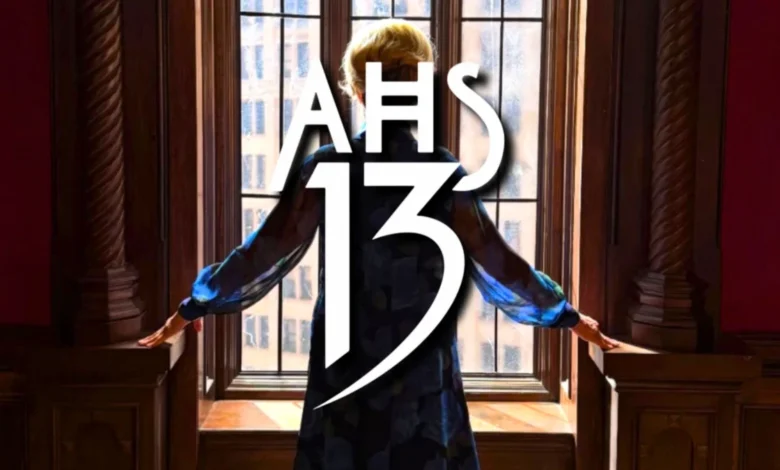
Yet, Ryan Murphy’s trailblazing horror anthology franchise has steadily defied these industry gravity metrics. Now entering its 15th year of existence with its 13th broadcast season, the series has once again demonstrated its formidable drawing power by catapulting straight to the number-one position on the Disney+ viewership charts. This streaming dominance coincides with the release of its latest batch of episodes, inviting audiences back into one of television’s most disturbing, visually striking, and narratively diverse universes. However, this commercial triumph is accompanied by a sharp cultural dichotomy, as the critical consensus stands in stark contrast to a deeply polarized and frustrated fan base.
A Critical Resurgence Meets Fan Discontent
The debut of the thirteenth season of this long-running anthology has ignited an immediate debate across digital entertainment platforms. On critical aggregators such as Rotten Tomatoes, the early trajectory of the new season has registered positively, earning a "fresh" designation. Historically, returning long-running television programs experience a steep decline in critical attention compared to their initial breakout seasons, often resulting in a sparse review log. For this cycle, a selective group of seven professional critics have published reviews, predominantly praising the ambitious scope and the sheer audacity of the production.
Conversely, the audience reception tells an entirely different story. Viewers and dedicated long-term followers have taken to social media and review boards to voice severe dissatisfaction, frequently labeling the current iteration as a "shadow of what it was." A common grievance among the fan base is the accusation that the new episodes have "ruined the show with nostalgia," relying on complex callbacks and requiring viewers to possess extensive institutional memory of previous seasons. For many veteran watchers, the barrier to entry has become unnecessarily steep, transforming what was once an accessible, self-contained seasonal horror experience into homework-heavy serialized lore.
The Avengers of Horror: Building an Interconnected Universe
To understand the structural pivot driving these polarized perspectives, one must examine the foundational evolution of the series. Unlike traditional seasons of the anthology—which historically operated as self-contained narratives with distinct settings, time periods, and character rosters before occasionally introducing subtle, loose connective tissue—the 13th season abandons the clean slate format entirely. Series co-creator Ryan Murphy previously characterized this creative direction as an "Avengers-style crossover event," designed to pull iconic characters from across the entire 15-year history of the franchise into a singular, overarching conflict against an ultimate evil.
This ambitious crossover strategy has yielded a massive ensemble cast featuring the triumphant return of foundational franchise heavyweights. Fan-favorite actors including Sarah Paulson, Evan Peters, Emma Roberts, and Jessica Lange have returned to the fold. Notably, the scale of the narrative requires several performers to juggle multiple roles simultaneously. Sarah Paulson anchors a staggering slate of five distinct characters from across the series’ history, while Jessica Lange—who had previously announced her definitive departure from the franchise—returned to reprise four separate roles, signaling a monumental coup for the production team.
Chronology of an Anthology Titan

The journey of this landmark horror property began in October 2011, when the pilot episode premiered on the FX cable network. Created by Ryan Murphy and Brad Falchuk, the series revolutionized modern television by popularizing the seasonal anthology format, proving that audiences would tune in year after year for recurring casts playing entirely new roles within self-contained thematic arcs.
Throughout its decade-and-a-half timeline, the anthology explored distinct American nightmares, ranging from haunted houses and lunatic asylums to coven witchcraft, freak shows, cults, and apocalyptic fallout. Despite creative fluctuations across its prolific run, the franchise maintained a remarkably stable production cadence, cementing its status as a foundational pillar of FX’s brand identity and later expanding its footprint globally via streaming services like Disney+.
However, production hurdles, narrative fatigue, and shifting television trends occasionally disrupted its momentum. The COVID-19 pandemic impacted production schedules for earlier seasons, and the transition toward complex interconnected lore—beginning subtly around season eight with Apocalypse—gradually shifted the show away from its purely episodic roots. The culmination of this serialized experiment arrives with season 13, representing the most complex narrative web the creative team has ever attempted to construct.
Audience Friction and Narrative Realities
Despite the star-studded homecoming and the unprecedented scale of the crossover event, the early episodes have alienated a segment of the viewership that preferred the traditional, standalone anthology model. One prominent critique emerging from the fan community centers on pacing and character development. With a reduced episode count relative to the expansive ensemble size, many viewers have reported feeling that they "do not have time to connect with any characters," as the narrative rushes to service dozens of legacy figures simultaneously.
Furthermore, cultural analysts and television critics note that long-running franchises inevitably face a tension between innovation and fan service. When a series leans heavily into its past glory days by resurrecting beloved icons, it risks validating accusations that it has exhausted its original creative vitality and is now surviving purely on nostalgic impulse.
Broad Impact and Commercial Implications
Despite the vocal backlash from purist fans, the commercial metrics paint a picture of undeniable mainstream health. Reclaiming the top spot on Disney+ demonstrates that the brand equity of Murphy’s creation remains exceptionally high, drawing both nostalgic veterans and curious new subscribers to the platform.
Adding to this commercial success, companion media surrounding the release has also performed robustly. FX’s official companion podcast for the series secured the number-four position on national podcast charts concurrently with the show’s premiere, indicating a high level of active audience engagement and transmedia consumption.
Ultimately, the friction surrounding the 13th season highlights the complex balancing act required to sustain a major franchise over fifteen years. While critical praise suggests the ambition of the project has paid off artistically for a segment of reviewers, the audience divide proves that evolving a beloved intellectual property is rarely a frictionless process. Whether this massive crossover experiment ultimately revitalizes the anthology or signals the need for a structural reset moving forward, the latest chapter proves that the series remains a dominant force in contemporary television, ensuring that the number 13 will not translate to bad luck for its enduring legacy.
Related posts: