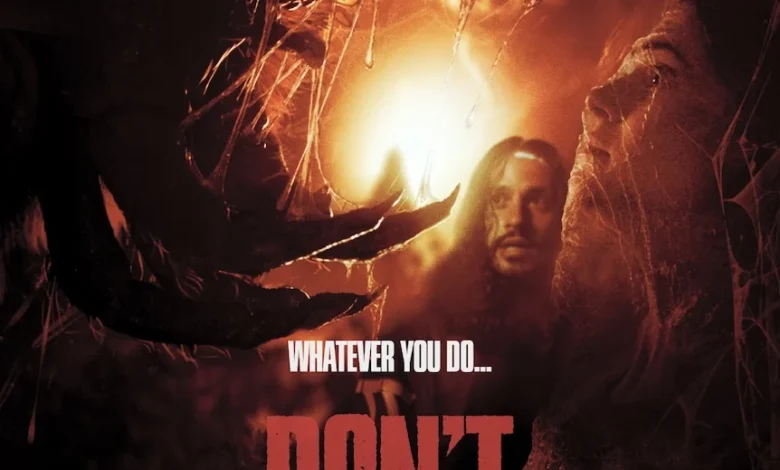
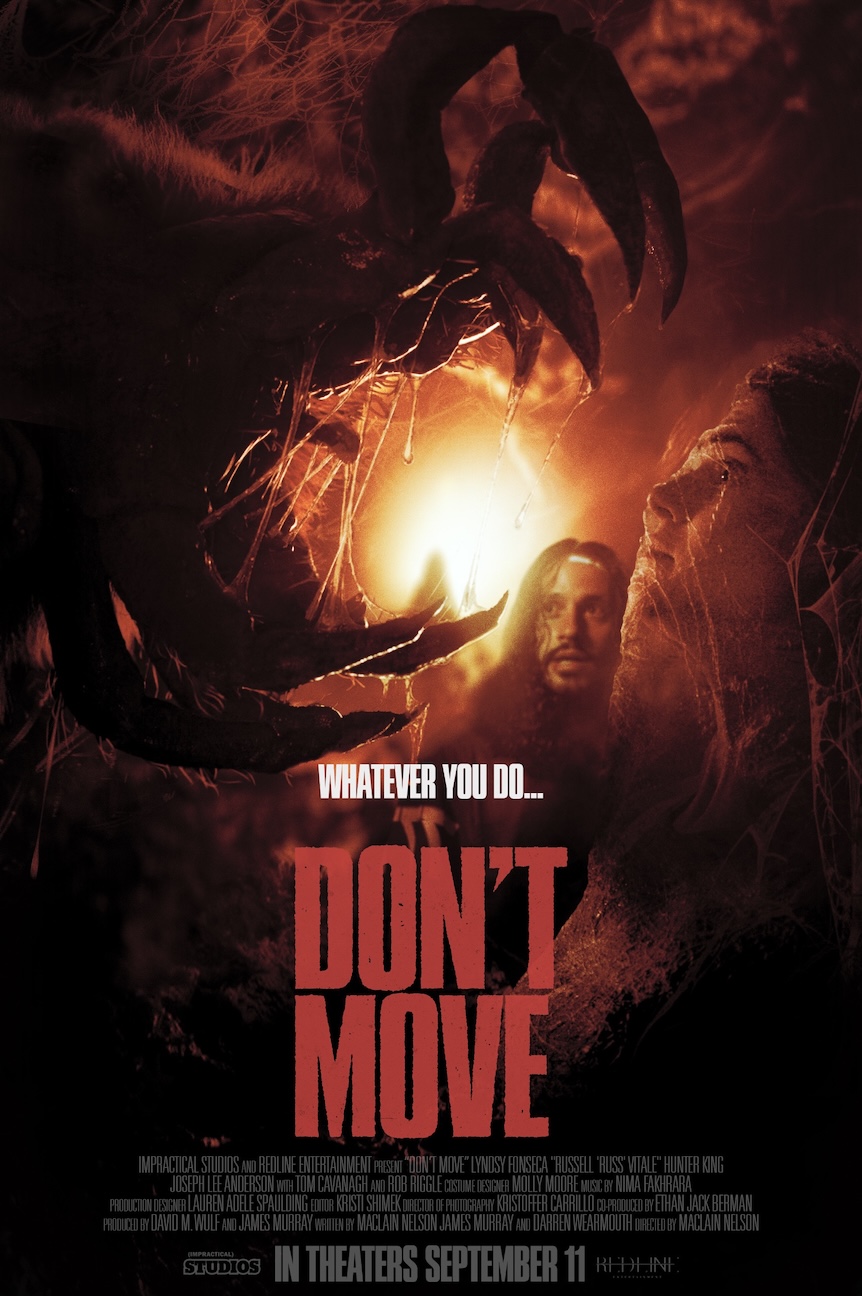
The contemporary horror landscape has seen a notable resurgence of cinematic arachnids, yet the latest entry into the subgenre struggles to carve out a distinct identity. Released in theaters on September 11, 2026, Don’t Move marks the second horror feature within a two-year span to utilize this exact title. Directed by Maclain Nelson and co-written by Nelson, James Murray, and Darren Wearmouth, the film leans heavily on established creature-feature tropes rather than charting new territory. Backed by Impractical Studios and Redline Entertainment, the production features an ensemble cast led by Lyndsy Fonseca, Russell “Russ” Vitale, and Hunter King, alongside recognizable faces like Tom Cavanagh and Rob Riggle. Despite moments of effective tension and a striking creature concept, the film ultimately suffers from a predictable narrative structure, uneven pacing, and a reluctance to fully commit to the visceral terror promised by its premise.
Main Facts and Production Background
Don’t Move unfolds against the backdrop of the Missouri Ozarks, blending traditional survival horror mechanics with familiar interpersonal melodrama. The narrative is rooted in a source novel authored by James Murray—widely known as “Murr” from the hidden-camera comedy troupe Impractical Jokers—and Darren Wearmouth. The transition of creators from a background in comedy to the horror genre is underscored by the casting of comedic actor Rob Riggle, who plays the role of a bus driver whose outdoor expertise is questionable at best.

Director Maclain Nelson, whose previous credits lean heavily toward holiday romantic comedies, brings a clean aesthetic to the project, though critics note a distinct lack of the ambitious tonal subversion found in contemporary horror breakouts by auteurs like Jordan Peele or Zach Cregger. Instead, Don’t Move relies on a mechanical adherence to genre conventions. The central antagonist—a colossal, hyper-fast spider capable of leaping through treetops—was brought to life through a combination of practical creature design by Ukrainian dark artist Sadan Vague and digital visual effects by Reactor FX. Despite these creative efforts, the film’s execution fluctuates between practical grit and inconsistent CGI, dampening the potential for sustained dread.

Chronology and Narrative Progression
The film’s structure follows a well-worn narrative arc, beginning with a high-intensity cold open designed to establish the mandatory tragic backstory for its protagonist. This sequence takes place in an amusement-park haunted house, evoking the elaborate, fatal Rube Goldberg-style set pieces popularized by the Final Destination franchise. Brutal and uncompromising in its execution, the opening scene delivers a jolt of visceral energy that ultimately creates a false expectation for the remainder of the runtime, which fails to match that initial level of graphic intensity.

Fast-forwarding one year, the plot shifts to Megan Forrester (Lyndsy Fonseca), who remains mired in grief over her lost loved ones. Seeking solace and a fresh start, she accepts an invitation to a church-sponsored camping retreat in the Missouri Ozarks, organized by Pastor Rizzo (Tom Cavanagh).

Even before the group departs, underlying tensions bubble to the surface. Pastor Rizzo’s daughter, Emma (Hunter King), is accompanied by her boyfriend, Ryan (Joseph Lee Anderson). Conflict immediately flares between Ryan and a disruptive, late-arriving camper named Ricky—played by rapper Russell “Russ” Vitale in a performance introduced incongruously to Tiffany’s pop classic "I Think We’re Alone Now." The ensemble is rounded out by young Connor (Patrick Bippus), grandparents Jim (Mark Vaughn) and Maryann (Dee Freeman), and the aforementioned bus driver, Paul (Rob Riggle).

As the group embarks into the wilderness—navigating without the basic convenience of a functional GPS—they arrive at an unintended destination. Following a traditional setting-up-camp montage and exposition regarding past tragedies in the local area, the narrative transitions into survival mode. As daylight yields to night, the giant arachnid emerges from the tree canopy, methodically picking off the campers through sudden, bloodless disappearances rather than sustained, harrowing confrontations. The survivors are eventually forced to barricade themselves inside a rustic cabin, culminating in a climactic confrontation that attempts to realize the thematic promise of the film’s title.

Supporting Data and Genre Context
Don’t Move enters a crowded theatrical and streaming marketplace characterized by a sharp uptick in killer-spider cinema. Over the preceding twenty-four months, the subgenre has experienced a notable revival, fueled by international hits and domestic releases such as Infested and Sting in 2024, alongside the rapid-fire release of Spider Island and the upcoming creature feature Crawlers.

Within this competitive ecosystem, box office and critical performance rely heavily on distinct creature mechanics and high-concept execution. Films like Sting leveraged practical creature effects and claustrophobic apartment settings to maximize tension, while Infested utilized thousands of real, venomous spiders to generate visceral audience discomfort. By comparison, Don’t Move operates on a more modest narrative scale, leaning on recognizable television and music talent to drive initial interest. However, the film’s reliance on sudden disappearances over explicit creature attacks places it at a disadvantage among hardened horror enthusiasts seeking relentless intensity.

Critical Analysis and Narrative Shortcomings
While Don’t Move benefits from competent cinematography and occasional, well-executed jump scares, critical evaluation reveals several structural and narrative shortcomings. Reviewers have noted persistent continuity errors throughout the survival sequences, alongside significant plot threads that are left unresolved by the time the credits roll.

Furthermore, the film’s climax—designed to pay off its central title through a sequence where characters must remain entirely motionless to evade detection—suffers from inadequate narrative setup, reducing its emotional and psychological impact. While the practical creature elements designed by Sadan Vague offer moments of genuine visual unease, the fluctuating quality of the digital effects by Reactor FX breaks immersion at critical junctures. The film successfully establishes a baseline of tension, but it frequently undercuts its own stakes by retreating into predictable character arcs and safe narrative resolutions.
Broader Impact and Industry Implications
The release of Don’t Move highlights a continuing trend of crossover talent from comedy and reality television venturing into independent horror production. Projects backed by figures from platforms like Impractical Jokers demonstrate the commercial viability of utilizing established personalities to secure distribution in a saturated genre market.

At the same time, the film’s reception underscores the challenges faced by mid-tier horror releases in distinguishing themselves amidst a barrage of similar creature features. As audiences grow increasingly discerning due to the output of elevated horror studios and innovative micro-budget breakouts, standard formulaic adherence is met with diminishing returns. For Don’t Move, the missed opportunity to match its brutal opening sequence with sustained atmospheric terror serves as a case study in the necessity of narrative cohesion and risk-taking within modern monster cinema.