Tokyo Ravens Light Novel Series to Conclude with Eighteenth Volume This Winter Following Extended Hiatus

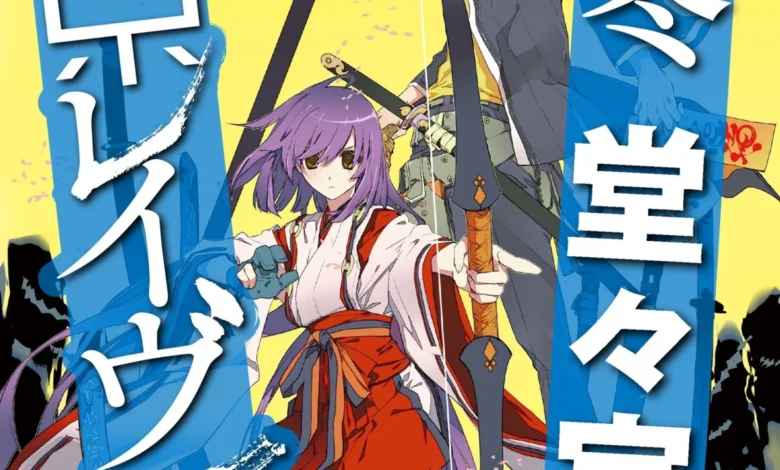
The official X (formerly Twitter) account for the popular supernatural light novel series Tokyo Ravens announced on Friday that the overarching narrative will officially conclude with the release of its eighteenth volume, scheduled to hit shelves this coming winter. Authored by Kouhei Azano, best known for his work on Black Blood Brothers, and featuring striking illustrations by Sumihei, the publication milestone marks the end of an era for fans of the contemporary occult franchise. The announcement brings a definitive sense of closure to a literary journey that began nearly a decade and a half ago under Kadokawa’s Fujimi Fantasia Bunko imprint.
A Legacy of Supernatural Action and Urban Fantasy
Since its inception in May 2010, Tokyo Ravens carved out a distinct niche within the crowded school supernatural genre. The narrative follows Tsuchimikado Harutora, a young man born into a prestigious family of Onmyouji—traditional Japanese occult practitioners—who unfortunately lacks the innate spiritual power necessary to see or manipulate spirit energy. Living a relatively ordinary life away from the heavy burdens of his clan, Harutora’s world is upended when a childhood promise intersects with a sudden crisis, forcing him to step into the dangerous, unseen world of Tokyo’s spiritual underworld alongside his estranged childhood friend, Natsume Tsuchimikado.
Azano’s intricate world-building seamlessly blended modern urban landscapes with traditional Japanese folklore, centering on Onmyoudou, esoteric rituals, familiar spirits known as Shikigami, and bureaucratic magical institutions. The series resonated strongly with readers seeking a blend of high-stakes action, tactical supernatural warfare, and interpersonal drama, propelling it into the upper echelons of contemporary light novel popularity during the early 2010s.
Chronology and Publication History
The journey of Tokyo Ravens spans multiple media formats, extended hiatuses, and spin-off projects that expanded the depth of its fictional universe. Understanding the trajectory of the franchise requires examining its complex timeline:
- May 2010: Kouhei Azano launches the main Tokyo Ravens light novel series under the Fujimi Fantasia Bunko imprint, illustrated by Sumihei. Simultaneously, Atsushi Suzumi begins a manga adaptation in Kadokawa’s Shounen Ace magazine, running through July 2017 and concluding with 15 volumes.
- July 2013: The franchise expands with the launch of Tokyo Ravens EX, a four-volume side-story light novel series that explores peripheral characters and world lore, concluding in August 2016.
- September 2013: Kadokawa reports that the light novel series has achieved a cumulative milestone of one million copies in circulation.
- October 2013 – March 2014: Studio 8bit adapts the light novel series into a 24-episode television anime, directed by Takaomi Kanasaki. Funimation licenses the series for North American streaming and home video distribution.
- October 2018: Following the release of the 16th main volume, the light novel series enters an extended, multi-year hiatus that lasts for more than six years.
- March 2025: Kadokawa publishes the 17th volume of Tokyo Ravens, signaling the long-awaited return of the main narrative arc.
- Winter 2025/2026 (Upcoming): The franchise is officially scheduled to conclude with the release of the 18th volume, finally bringing Azano’s expansive story to its intended resolution.
Expanding the Universe: Manga Adaptations and Media Mix
In addition to the primary light novel and manga adaptations, Tokyo Ravens became a prime example of the successful media-mix strategy employed by Japanese publishers during the peak of the light novel boom. The intellectual property spawned numerous spin-off manga series that explored different facets of the universe. These included Tokyo Ravens: Tokyo Fox, Tokyo Ravens: Sword of Song, Tokyo Ravens: Red and White, Tokyo Ravens: ANOTHER×holiday, and Tokyo Ravens: Girls Photograph.
International accessibility also evolved over the years. Kadokawa initially published the first eleven volumes of the primary manga adaptation digitally in English via BookWalker between October 2014 and June 2015. Later, Yen Press acquired the digital licensing rights, ensuring that overseas fans could legally access the printed and digital iterations of the manga in English-speaking markets.
Critical acclaim further solidified the franchise’s standing in the industry. In 2014, Tokyo Ravens secured the 7th position in the tankobon division of Takarajimasha’s prestigious Kono Light Novel ga Sugoi! guidebook, one of the most influential annual rankings in the light novel community. Furthermore, the property placed 10th in the light novel category of the 2014 Denshi Shoseki Award, highlighting its strong performance in both physical and digital sales channels.
The Significance of the Anime Adaptation by Studio 8bit
A major catalyst for the global recognition of Tokyo Ravens was its 2013 anime television adaptation. Produced by studio 8bit—renowned for later high-profile works such as That Time I Got Reincarnated as a Slime—the 24-episode series brought the dynamic spellcasting battles and intricate political machinations of the Tsuchimikado clan to life.
The anime adaptation significantly boosted the source material’s visibility. Through international streaming platforms like Funimation (now integrated into Crunchyroll), the series reached a broad Western audience, complete with multi-language subtitles and an English dub. The availability of home video releases in North America further cemented its cult-classic status among fans of 2010s supernatural anime. However, because the anime covered only a portion of the ongoing light novel narrative, many viewers transitioned to the books to follow the continuation of the plot, making the eventual return and conclusion of the light novel series a point of high anticipation for the fandom.
Analyzing the Impact of the Long-Awaiting Conclusion
The announcement that Tokyo Ravens will officially wrap up with its eighteenth volume carries notable implications for the light novel industry, particularly regarding long-running franchises that experience prolonged hiatuses.
In the light novel publishing ecosystem, it is not uncommon for authors to take extended breaks due to health, shifting creative priorities, or involvement in other concurrent projects. The six-year gap between the sixteenth volume in 2018 and the seventeenth volume in March 2025 left many dedicated readers wondering if the story would ever receive a proper resolution. By officially scheduling the eighteenth volume for this winter, Kadokawa and Azano are providing definitive closure, offering reassurance to a patient readership that has supported the intellectual property for over a decade.
For the publishing industry, the conclusion of Tokyo Ravens closes the book on a defining title from the early 2010s supernatural boom. While the era of school-based occult battle light novels has evolved to make room for subsequent trends—such as the massive influx of isekai and villainess reincarnation stories—classics like Tokyo Ravens laid the foundation for modern urban fantasy tropes in Japanese media.
As the release date for the final volume approaches, fan communities online have expressed a mix of nostalgia, relief, and celebration. Whether the conclusion will spark renewed interest in the anime or prompt retrospective appreciation for Azano’s work remains to be seen, but the completion of the Tokyo Ravens saga marks a significant milestone in contemporary light novel history.