9 to 5 Returns to Theaters to Honor the Legacy of Dolly Parton and Support Childhood Literacy

The global cinematic and musical landscape continues to reflect on the immense cultural contributions of Dolly Parton, who recently passed away at the age of 80. In response to the widespread public desire to commemorate her life, Twentieth Century Studios has announced a special weeklong theatrical re-release of the 1980 satirical comedy 9 to 5. This initiative serves a dual purpose: providing audiences with an opportunity to revisit one of Parton’s most significant cinematic performances while generating financial support for The Dollywood Foundation. Specifically, all proceeds from ticket sales will be directed toward the Imagination Library, the foundation’s flagship program dedicated to fostering early childhood literacy.
The re-release is scheduled to commence on October 9, with the announcement timed to coincide with September 25—a date stylized as "9/25" to align with the film’s title. This date has been officially designated as "Give Like Dolly Day," a new annual observance intended to encourage charitable contributions aimed at improving children’s lives. The initiative underscores Parton’s lifelong commitment to education, a mission she championed with fervor throughout her career.
A Landmark in Feminist Cinema and Popular Culture
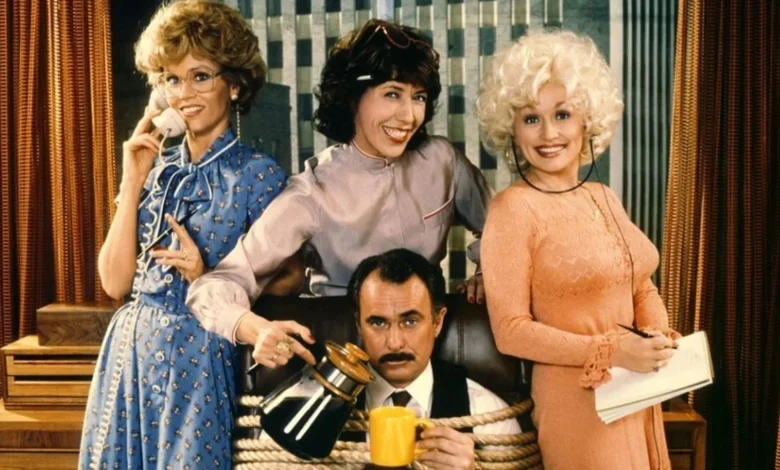
Released in December 1980, 9 to 5 arrived at a critical juncture in American labor history. Directed by Colin Higgins and starring Jane Fonda, Lily Tomlin, and Dolly Parton, the film explored the frustrations of the American working class, specifically addressing systemic gender inequality and the prevalence of misogyny in the corporate environment. The plot follows three female employees who, driven by the indignities suffered under their sexist and egotistical boss, Franklin Hart Jr. (played by Dabney Coleman), orchestrate a complex revenge scheme.
The film’s success was immediate and profound. It became the second-highest-grossing film of 1980, trailing only the cultural juggernaut The Empire Strikes Back. Beyond its commercial performance, 9 to 5 is widely recognized by film historians as a significant cultural touchstone. It provided a mainstream, comedic lens through which the public could examine the evolving roles of women in the workplace during the height of the second-wave feminist movement.
The title track, written and performed by Parton, transcended the film to become a generational anthem. The song’s infectious rhythm and relatable lyrics regarding the demands of the modern workplace solidified Parton’s status not only as a country music icon but as a pop-culture force capable of articulating the frustrations of the average worker.
The Evolution of the Imagination Library
The beneficiary of this theatrical event, the Imagination Library, remains one of the most successful literacy programs in history. Established by Parton in 1995, the initiative was originally conceived to support children in her home county of Sevier County, Tennessee. Parton, inspired by her father’s inability to read and write, sought to ensure that children from all socioeconomic backgrounds had access to high-quality books.
The program works by mailing one age-appropriate book every month to enrolled children from birth until they reach the age of five, regardless of their family’s financial status. Since its inception, the Imagination Library has expanded globally, operating across the United States, the United Kingdom, Canada, Australia, and the Republic of Ireland. As of the most recent reporting, the program has gifted over 200 million books to children worldwide. By linking the re-release of 9 to 5 to this foundation, Twentieth Century Studios is effectively bridging the gap between Parton’s cinematic legacy and her philanthropic impact.
Chronology of the Re-release Initiative
The decision to bring 9 to 5 back to the big screen follows a period of intense public reflection regarding Parton’s life. Following the announcement of her passing, social media platforms were flooded with tributes, including clips from her storied career, television appearances—notably her celebrated interactions with Jim Henson’s Muppets—and recordings of her most iconic musical performances.
- Late 2026: Initial discussions between Twentieth Century Studios and The Dollywood Foundation regarding a formal tribute.
- September 25, 2026: The official announcement of the "Give Like Dolly Day" initiative and the corresponding theatrical re-release of 9 to 5.
- October 9, 2026: The nationwide commencement of the weeklong theatrical run.
This structured rollout is designed to maximize public participation during a time of collective mourning. By utilizing the "9/25" date as a focal point, the organizers have created a sustainable framework for future annual charitable events, ensuring that the spirit of Parton’s advocacy survives long after the initial theatrical run concludes.
Industry Analysis and Cultural Implications
The decision to re-release a film of this vintage is rarely undertaken without significant research into market sentiment. 9 to 5 remains relevant because the themes it addressed—workplace power dynamics, wage disparities, and the struggle for professional respect—remain central topics of contemporary discourse.
Analysts note that the re-release serves as a "legacy project," which differs from a standard theatrical run. Unlike a new production, a legacy re-release relies on communal nostalgia and the desire for audiences to share a cultural artifact with younger generations. The added component of charitable giving transforms the viewing experience from a passive consumption of media into an act of civic engagement. This model has been increasingly utilized in the entertainment industry to foster brand loyalty while simultaneously fulfilling corporate social responsibility goals.
Furthermore, the involvement of major studios in supporting a literacy program highlights the growing trend of media companies aligning with non-profit entities to demonstrate societal value. The Imagination Library’s operational model is particularly attractive to corporate partners because of its documented success in improving literacy rates and its low administrative overhead.
Official Statements and Public Reception
While formal statements from the surviving cast members have been limited as they grieve their longtime colleague, the public response has been overwhelming. Ticket sales on platforms such as Fandango surged within hours of the initial announcement.
Representatives from the Dollywood Foundation have expressed gratitude for the initiative, noting that the funds generated will be critical in sustaining the program’s rapid global expansion. "Dolly always believed that if you can read, you can do anything," a spokesperson noted, reflecting on the late artist’s core philosophy. "Bringing 9 to 5 back to theaters allows us to celebrate the artist she was, while continuing the work she cared about most."
How to Participate
The theatrical run is scheduled to be a limited engagement, with screenings available in select markets nationwide. Consumers are encouraged to visit the official Fandango portal or the Twentieth Century Studios website to locate participating venues. By attending these screenings, audiences are not merely viewing a film; they are participating in a coordinated effort to fund the next generation of readers.
As the industry prepares for the October 9 launch, the focus remains on the intersection of art and altruism. In the final years of her life, Parton often spoke of wanting her legacy to be one of kindness and opportunity. Through this initiative, the film that once defined the working woman’s experience in 1980 is being repurposed to serve as a catalyst for educational equity, ensuring that the "Dolly Parton effect" continues to reach children for years to come.
Whether one is a longtime fan of the film’s satirical humor or a new viewer discovering the chemistry between Fonda, Tomlin, and Parton for the first time, the upcoming re-release offers a rare opportunity to contribute to a legacy that has, and will continue to, shape the cultural and educational fabric of society.