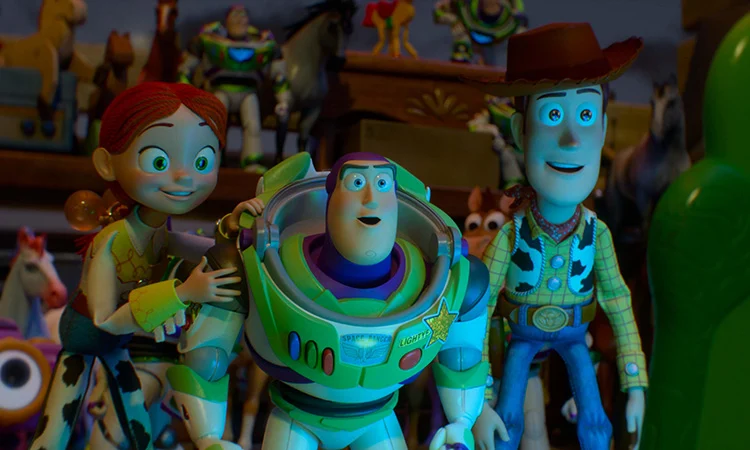
Thirty years after its groundbreaking debut, Disney and Pixar’s iconic Toy Story franchise embarks on its fourth decade, facing the perennial challenge of retaining relevance for a new generation of viewers. As Toy Story 5 lands in cinemas, hinting at further installments with director/writer Andrew Stanton already alluding to a sixth outing, early indications suggest a promising continuation of the beloved saga. The enduring appeal of these animated companions remains potent, signaling that the toys are indeed back, ready to engage with contemporary themes and evolving childhood experiences.
The Evolving Landscape of Childhood Play
The narrative of Toy Story 5 picks up following the events of its predecessor. At the conclusion of Toy Story 4, Woody, voiced by Tom Hanks, departed Bonnie’s room to assist Bo Peep in finding new homes for discarded toys, leaving the core group without their natural leader. The latest installment revisits this familiar ensemble and the now eight-year-old Bonnie. Jessie, the spirited cowgirl voiced by Joan Cusack, has assumed leadership, with Buzz Lightyear, voiced by Tim Allen, serving as her trusted second-in-command. This shift reflects a broader evolution in the toys’ environment. In an era where personal computers are ubiquitous in households, Bonnie’s attention has been captured by a new, all-consuming plaything: Lilypad. Voiced by Greta Lee, Lilypad is a frog-like tablet device that introduces disruptive ideas about what constitutes optimal engagement for its young owner. This technological encroachment poses an existential threat to the toys, casting a shadow over their roles, their home, and their very purpose. The toys find themselves in a precarious position, facing the potential obsolescence of their traditional play patterns and the risk of losing their place in Bonnie’s life. The urgency of their situation necessitates a swift intervention.
A Familiar Face, A New Perspective
The identity of the rescuer is hardly a mystery, yet the returning hero, Woody, presents a subtly altered persona. His mid-life is humorously depicted, with his attire—a vibrantly colored poncho—concealing any perceived physical changes, and his Stetson covering a receding hairline, suggesting a man embracing his advancing years. While his competitive spirit with Buzz remains undimmed, the focus of Toy Story 5 has shifted. This installment is not solely their story; it largely belongs to Jessie. Introduced in Toy Story 2 after being abandoned by her original owner, the resilient cowgirl has demonstrably earned her prominent role, with Woody and Buzz now occupying supporting capacities.
The narrative’s momentum is notably propelled by its female characters. Both Bonnie and her slightly older companion, Blaze, voiced by Mykal-Michelle Harris, are given emotionally resonant storylines that explore the unique challenges and complexities of being an only child. The film addresses the pervasive issue of online bullying with remarkable accuracy, illustrating the detrimental effects of social media while also highlighting the pain that arises from the callous indifference of peers. However, director Andrew Stanton demonstrates a nuanced approach, balancing these negative aspects with a recognition of technology’s positive contributions. Lilypad, initially appearing as a potential antagonist, evolves into a more complex character, challenging simplistic notions of villainy.
Navigating the Crowded Toy Box
Despite its commendable effort to present a balanced perspective on contemporary issues, Toy Story 5 occasionally feels overpopulated. Several new characters introduced in previous films are regrettably underutilized. Forky, voiced by Tony Hale, who gained a girlfriend in Toy Story 4, has minimal dialogue in the new film. Duke Caboom, the daredevil stuntman voiced by Keanu Reeves, is conspicuously absent from any significant stunt performances. Ducky and Bunny, the comedic duo voiced by Keegan Michael Key and Jordan Peele respectively, make only a brief, silent appearance. Even some of the established supporting characters fade into the background, including the beloved three-eyed aliens, who are relegated to a single, fleeting cameo.
This sense of narrative crowding suggests that the filmmakers struggled to accommodate the expansive roster of beloved characters within the new story’s arc. The introduction of new faces, most notably Lilypad and Smarty Pants, voiced by Conan O’Brien, further contributes to this feeling. The long-term viability of these new characters within the franchise remains an open question, leaving audiences to speculate whether they will feature in future installments.
Enduring Appeal and Emotional Resonance
Notwithstanding these structural challenges, Toy Story 5 delivers ample material to satisfy long-time fans of the franchise, while also eliciting poignant emotional responses. The characteristic humor and the franchise’s signature emotional depth remain intact. The film successfully appeals to audiences across all age groups, demonstrating its continued relevance despite a seven-year hiatus during which the world has undergone significant transformations. The enduring quality of these animated characters suggests that there is indeed considerable life left in these venerable toys, capable of captivating new audiences and resonating with familiar ones.
The film’s exploration of evolving childhood, the impact of technology on play, and the timeless themes of friendship and belonging positions it as a relevant commentary on contemporary life. The narrative’s ability to weave these modern concerns into the established Toy Story universe is a testament to the creative team’s skill.
Historical Context and Franchise Longevity
The Toy Story franchise, launched in 1995, revolutionized the animation industry with its pioneering use of computer-generated imagery (CGI). Its initial success paved the way for a new era of animated filmmaking, establishing Pixar Animation Studios as a powerhouse of creativity and technical innovation. The subsequent sequels, Toy Story 2 (1999), Toy Story 3 (2010), and Toy Story 4 (2019), each met with critical acclaim and commercial success, further cementing the franchise’s cultural impact.
The original film introduced audiences to Woody, a pull-string cowboy doll, and Buzz Lightyear, a space ranger action figure, whose initial rivalry blossomed into an enduring friendship. Their adventures explored themes of jealousy, loyalty, and the inherent value of toys in the lives of children. Over the decades, the franchise has adeptly evolved alongside its audience, introducing new characters and addressing increasingly complex themes. Toy Story 3, for instance, dealt with the bittersweet prospect of growing up and leaving childhood behind, resonating deeply with audiences who had themselves aged alongside the characters. Toy Story 4 explored themes of purpose and belonging, particularly for toys who had been discarded or felt lost.
Toy Story 5 continues this tradition by tackling the contemporary issue of digital immersion and its effect on traditional forms of play. The introduction of Lilypad, a smart device, serves as a direct reflection of the technological landscape children navigate today. This thematic choice underscores the franchise’s commitment to remaining relevant by addressing the evolving realities of childhood.
Data and Audience Reception
The Toy Story franchise has consistently performed well at the box office. The original film grossed over $373 million worldwide. Toy Story 2 earned over $497 million, while Toy Story 3 became a massive hit, grossing over $1.067 billion globally. Toy Story 4 continued this success, earning over $1.073 billion worldwide. These figures demonstrate a sustained and growing audience engagement over more than two decades.
Critically, the franchise has garnered widespread praise. Toy Story is often cited as one of the greatest animated films of all time, and its sequels have consistently received high ratings from critics, with particular commendation for their storytelling, emotional depth, and technical achievements. The franchise has also received numerous awards, including Academy Awards, Golden Globes, and BAFTA Awards.
Broader Impact and Implications
The enduring success of the Toy Story franchise has had a profound impact on the animation industry and popular culture. It demonstrated the commercial viability of CGI animation and inspired countless other studios to invest in the technology. Furthermore, the franchise has become a cultural touchstone, with its characters and themes permeating popular discourse.
Toy Story 5‘s exploration of the tension between analog and digital play offers a timely commentary on modern childhood. The film’s nuanced portrayal of technology suggests a balanced perspective, acknowledging both its potential benefits and its drawbacks. This approach is crucial in a world where children are increasingly immersed in digital environments. The film’s success in navigating these complex themes will likely influence how other franchises approach similar contemporary issues. The continued relevance of these characters, now entering their fourth decade, speaks volumes about their universal appeal and the enduring power of storytelling that connects with fundamental human emotions and experiences.
Toy Story 5 is released in cinemas in the UK on June 19.
Find more reviews, news, exclusive celebrity interviews, competitions and more at SciFiNow.