Star Trek: Strange New Worlds Season 4 Premieres with Genre-Bending Episodes, Offering a Mix of Familiar and Experimental Storytelling

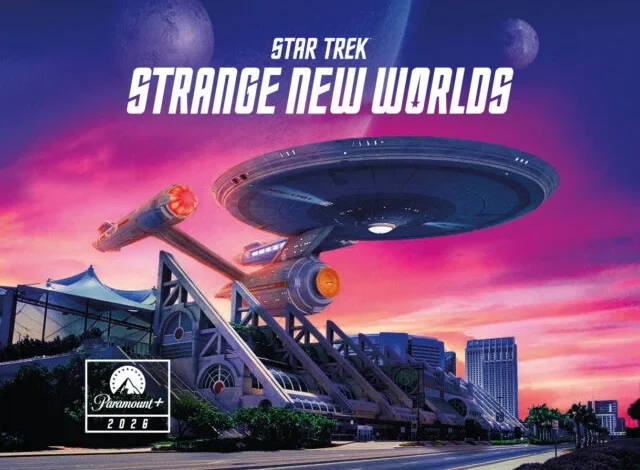
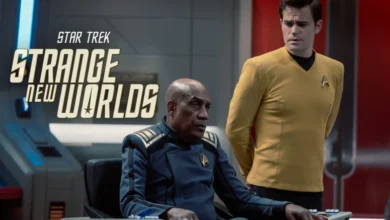
Paramount has provided members of the media with early access to the first six episodes of Star Trek: Strange New Worlds Season 4, ahead of its highly anticipated premiere on Thursday, July 23. While showrunners Akiva Goldsman and Henry Alonso Myers had indicated a shift towards more traditional Star Trek narratives for the later seasons, the initial batch of episodes showcases a bold continuation of the series’ penchant for genre experimentation. This early look reveals a season that, while containing elements of classic Trek, leans heavily into its established reputation for innovative and often surprising storytelling.

The season launches with a premise that immediately signals its unconventional approach. While the specific details of the premiere episode, "Valles Marineris," remain under wraps to avoid major spoilers, early reports suggest it involves dinosaurs and a confrontation with a species of "pointy-shouldered aliens." This sets a tone for the subsequent episodes, which are packed with a diverse array of thematic explorations, including horror in "The Griffin Incident," a heartwarming narrative in "Human Best Friend," a film noir mystery in "A Case of Chiaroscuro," a surreal puppet-centric adventure in "Level-Five Transporter Accident," and a disaster movie scenario in "Off-Hour."
This willingness to embrace disparate genres is not new to Star Trek. Throughout its long history, the franchise has consistently pushed creative boundaries, from the iconic "The Trouble with Tribbles" to the ambitious musical episode "Subspace Rhapsody" in Strange New Worlds Season 3, or the thought-provoking allegory of The Next Generation‘s "Rascals." However, the current season appears to be making these genre excursions the norm rather than the exception. Reviewers note that out of the six previewed episodes, only one, possibly two, could be classified as strictly "traditional" Star Trek outings. The remaining episodes are described as the show at its most distinctly "Strange New Worlds-y," reveling in stylistic experimentation.

The critical reception to this approach appears to be varied. While the puppet episode is highlighted as a particular success, praised for its ability to explore its premise from a unique perspective and offer an engaging ride, other genre experiments, such as the horror episode, are met with more measured enthusiasm. These episodes are sometimes criticized for prioritizing style over substance, with the genre conceit dominating the narrative rather than serving it. The underlying concern is that the creative impulse may sometimes stem from a "what if?" scenario, with the story being retrofitted to accommodate the chosen genre, potentially leading to a less cohesive or impactful narrative.
A Return to Traditional Trek? The Showrunners’ Intentions
Following a season 3 that received a somewhat mixed reception from fans and critics alike, showrunners Akiva Goldsman and Henry Alonso Myers publicly stated their intention to steer Strange New Worlds toward a more classic Star Trek feel in its subsequent seasons, particularly in anticipation of its final run. This pivot was intended to address fan desires for more traditional episodic storytelling and thematic exploration. However, based on the initial six episodes made available for preview, this shift is not yet fully evident. The early episodes demonstrate a continued commitment to bold genre experimentation, suggesting that the promised return to a more traditional Trek may be a gradual evolution, potentially unfolding more prominently in the latter half of the season.

Historically, Star Trek has employed genre deviations as a means to explore deeper themes and character development. Episodes like "Subspace Rhapsody" provided a unique avenue to delve into the characters’ inner thoughts and emotions, while "What is Starfleet?" used a documentary format to question the ethical underpinnings of the Federation. Even The Next Generation‘s "Rascals," which saw crew members de-aged into children, served as a vehicle to explore themes of identity, past trauma, and the consequences of ambition. The critique leveled against some of the season 4 episodes is that the "why" behind the genre choice can sometimes feel elusive, making the narrative feel lighter and less thematically resonant than its predecessors.
This trend towards lighter, more experimental storytelling, some critics argue, stands in contrast to Star Trek‘s historical strength in allegorical storytelling, which often provided commentary on contemporary societal issues. In an era where television is increasingly recognized for its capacity for nuanced social and political commentary, Strange New Worlds‘ perceived departure from this tradition is noted as potentially "off-brand" for the franchise. This is juxtaposed with the challenges faced by other modern Trek series, such as Discovery‘s season-long exploration of uncertainty during the COVID-19 pandemic, which, despite its thematic relevance, was criticized for its prolonged nature.

Character Arcs and Interpersonal Dynamics
Despite the emphasis on genre exploration, Star Trek: Strange New Worlds continues to be lauded for its strong ensemble cast and their compelling character moments. The series has successfully maintained the franchise’s tradition of creating investment-worthy characters, though the pacing of their development is a recurring point of discussion. Some observers feel that significant character growth and dramatic shifts occasionally occur "off-screen" or fluctuate between episodes, leaving viewers to witness the outcomes rather than the nuanced process of change.
Key character arcs are being explored. La’an Noonien-Singh, in particular, is noted as embarking on a significant journey tied to her heritage, expanding her narrative beyond her romantic relationship with Spock, which has seemingly settled into a more comfortable, "cute couple" dynamic by the season’s commencement. Captain Pike continues to grapple with the weight of his foreknowledge of his eventual fate, a burden that is amplified by events in his post-Batel life.

Ethan Peck’s portrayal of Spock remains a highlight, though his character’s path toward embracing logic while navigating his human emotions is described as non-linear and at times difficult to calibrate. The evolving relationship between Scotty and Erica Ortegas is singled out as a particularly enjoyable and entertaining thread that spans multiple episodes. This dynamic, starting with a lighthearted rivalry between pilot and engineer, is praised for its development and for potentially offering an in-universe explanation for the iconic bridge sounds of the original series. The article also points to a need for clearer definition of professional roles for characters like Pelia and Scotty, and M’Benga and Chapel, suggesting that more explicit delineations could enhance narrative clarity.
The season also features notable guest stars and returning characters. Gia Sandhu reprises her role as T’Pring, delivering a performance that is commended, though her arc does not offer definitive clarity on Spock’s romantic entanglements. Dave Foley, known for his work in The Kids in the Hall and NewsRadio, makes an appearance as a "weird and wacky character" in episode four, marking his second foray into the Star Trek universe after voicing a character in Lower Decks. The return of some Original Series characters is also anticipated, though the article hints that these may not be the most obvious choices.

Production Values and Visual Storytelling
Visually, Star Trek: Strange New Worlds continues to impress. The production design, encompassing sets, starships, visual effects, and costumes, is consistently creative and captivating. The series effectively transports viewers to "strange new worlds" with diverse environments and inhabitants. The aliens featured in the season premiere, with their "pointy shoulder costumes and old-school sci-fi vibes," are particularly highlighted. The crew’s enhanced proficiency in utilizing the AR wall technology is also noted, contributing to the seamless integration of fantastical elements. The dinosaurs, a prominent feature in the premiere, are reported to be rendered with impressive visual fidelity.
However, the article raises a concern regarding the allocation of screen time. While the show’s visual splendor is undeniable, there are instances where significant narrative moments or character decisions are not given sufficient depth. The season premiere, for example, concludes with a lengthy, albeit beautiful, VFX sequence that could have been better utilized to explore Captain Pike’s critical decisions or the emotional impact of revelations on the characters’ faces. This emphasis on visual spectacle, while enhancing the show’s aesthetic appeal, sometimes comes at the expense of deeper thematic exploration and character development.

A Question of Substance and Future Direction
The overarching critique of the first half of season 4 is a perceived imbalance between style and substance. While the series excels in its visual presentation and its willingness to experiment with narrative formats, the depth of thematic exploration and character development is sometimes found wanting. The limited episode count of 10 episodes per season exacerbates this issue, as every minute becomes precious. Extended, lighthearted sequences, while entertaining, can detract from opportunities for more profound storytelling and viewer investment.
The article concludes with a reflection on the franchise’s need for reinvention to maintain relevance. It notes a perceived paradox: at a time when television has achieved new heights of prestige and narrative complexity, Strange New Worlds appears to be moving in a direction that emphasizes lighter fare, potentially making it feel more "immature" than even the upcoming YA-centric Starfleet Academy.

Despite these criticisms, the article acknowledges that viewers who appreciate Strange New Worlds‘ unconventional approach will likely find much to enjoy. The cast remains a strong asset, and the production quality continues to be top-notch. The season promises intriguing ideas, compelling character interactions, humor, and a wealth of "weird adventures." The producers have indicated that the latter half of the season will lean more heavily into the classic Star Trek feel, a promise that offers hope for a more thematically resonant conclusion to the season and a bridge to its eventual final season.
The season premiere of Star Trek: Strange New Worlds is set to debut on Thursday, July 23, on Paramount+. Following the premiere, TrekMovie will be providing extensive recap reviews and podcast discussions for each episode. The outlet also plans to release interviews with the cast and crew, including director Chris Fisher for episode one, and coverage of the Strange New Worlds panel at San Diego Comic-Con. The series is slated to be followed by a fifth season in 2027, alongside the second and final season of Starfleet Academy.