The Legend of Zelda: Ocarina of Time Remake Pre-Order Date Leaked by GameStop, Fueling Nintendo Switch 2 Hype and Direct Speculation

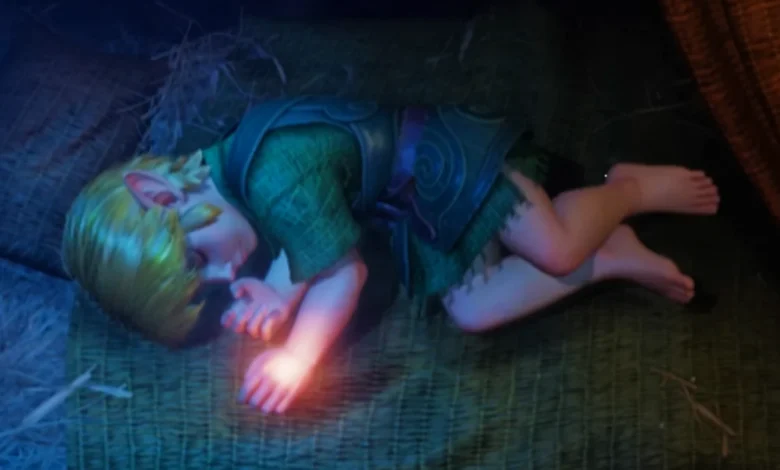
A significant leak from major retailer GameStop has ignited fervent speculation among the gaming community, suggesting that pre-orders for the highly anticipated The Legend of Zelda: Ocarina of Time Remake are slated to commence on August 4. This revelation, which briefly appeared on GameStop’s official listing before being swiftly removed, points towards an imminent marketing push for the 2026 Nintendo Switch 2 title, potentially coinciding with a dedicated Nintendo Direct presentation. The original announcement of the remake on June 9 positioned it as a cornerstone title for Nintendo’s next-generation console, exclusively launching on the Switch 2 in 2026, and this latest development has only intensified the already immense anticipation surrounding both the game and the new hardware.
The Initial Leak and Its Immediate Aftermath
The leak originated when GameStop’s online product page for The Legend of Zelda: Ocarina of Time Remake was updated to display a specific pre-order date: August 4. This information quickly circulated across social media platforms and gaming forums, captured by vigilant internet users before GameStop could rectify the error. Within hours, the date field on the listing was was adjusted to no longer show any specific pre-order window, reverting to a generic "coming soon" or similar placeholder. However, the digital breadcrumbs had already been laid, sparking widespread discussion and analysis regarding the legitimacy and implications of the brief disclosure.
The choice of August 4 is particularly noteworthy within the gaming industry. Tuesdays frequently serve as pivotal days for major announcements, game reveals, and content drops, including Nintendo’s signature "Direct" presentations. These pre-recorded broadcasts are Nintendo’s primary method for communicating directly with its audience, unveiling new games, trailers, and release details. The confluence of a leaked pre-order date and a historically significant day for Nintendo announcements has led many to infer that August 4 could mark not just the opening of pre-orders, but also a significant Nintendo Direct event focused on the Ocarina of Time Remake, potentially providing a deeper look at the game, its mechanics, and a definitive release date for 2026. This timing also aligns with broader fan expectations that Nintendo would offer new details on the game "soon," especially following the release of other major titles like Splatoon Raiders, which is scheduled for July 23. This strategic spacing would allow Nintendo to dedicate distinct marketing cycles to each tentpole release.
A Legacy Reimagined: The Significance of Ocarina of Time
To understand the magnitude of this leak, one must first appreciate the profound legacy of The Legend of Zelda: Ocarina of Time. Released in 1998 for the Nintendo 64, Ocarina of Time is not merely a beloved video game; it is widely regarded as one of the most influential and critically acclaimed titles in the history of interactive entertainment. Upon its debut, it redefined 3D action-adventure gaming, pioneering concepts such as target-locking combat, contextual actions, and a dynamic day-night cycle that became industry standards. Its innovative gameplay, sprawling Hyrule overworld, memorable characters, and groundbreaking narrative earned it universal praise, with many critics and players consistently ranking it among the greatest video games ever created. Its Metacritic score of 99, based on 22 critic reviews, remains one of the highest ever achieved by any game, underscoring its unparalleled critical reception.
The game’s enduring impact has led to multiple re-releases and remasters over the years. In 2003, it was re-released on the GameCube as part of The Legend of Zelda: Collector’s Edition. It later became available on the Wii’s Virtual Console in 2007 and the Wii U’s Virtual Console in 2015, allowing newer generations to experience the classic. The most significant re-imagining prior to this remake was The Legend of Zelda: Ocarina of Time 3D, released for the Nintendo 3DS in 2011. This version featured updated graphics, stereoscopic 3D effects, and touch-screen controls, serving as a faithful remaster rather than a full-scale remake.
The prospect of a full "remake" for the Nintendo Switch 2 signifies a much more ambitious undertaking. Unlike a remaster that primarily enhances visuals and performance, a remake often involves rebuilding the game from the ground up, incorporating modern graphical fidelity, potentially re-imagined gameplay mechanics, expanded lore, and entirely new assets. This approach allows developers to leverage contemporary hardware capabilities to deliver an experience that honors the original’s spirit while feeling fresh and new for both returning fans and newcomers. For a title as iconic as Ocarina of Time, a full remake on cutting-edge hardware is a monumental event, promising to rekindle the magic of Hyrule for millions.
The Nintendo Switch 2: A New Era for Nintendo
The Ocarina of Time Remake is inextricably linked to the forthcoming Nintendo Switch 2, Nintendo’s next-generation console. While Nintendo has maintained a characteristic silence regarding the specifics of its successor to the immensely successful Nintendo Switch, industry analysts and enthusiasts widely anticipate its release in late 2024 or 2025, with games like Ocarina of Time Remake slated for 2026. The original Switch, launched in 2017, has sold over 140 million units worldwide, establishing itself as one of the best-selling consoles of all time. Its hybrid nature, offering both portable and home console gaming, revolutionized the market.
The Switch 2 is expected to build upon this foundation, offering significant hardware upgrades, including enhanced graphical processing power, faster loading times, and potentially new features that expand on the hybrid concept. A title of Ocarina of Time‘s stature serving as an early flagship release or launch window game for the Switch 2 is a strategic move by Nintendo. It leverages nostalgia and the immense popularity of the Zelda franchise to drive early adoption of the new console. Announcing such a highly anticipated remake exclusively for the Switch 2 immediately creates a compelling reason for existing Switch owners and new consumers to upgrade, showcasing the new console’s capabilities with a familiar yet visually stunning experience. This strategy mirrors historical patterns where Nintendo has often used beloved franchises to introduce new hardware, such as Super Mario 64 for the N64 or The Legend of Zelda: Twilight Princess for the Wii.
A Chronology of Anticipation
The journey to this leaked pre-order date has been marked by several key moments:
- 1998: Original The Legend of Zelda: Ocarina of Time releases on Nintendo 64, setting a new benchmark for gaming.
- 2011: The Legend of Zelda: Ocarina of Time 3D, a graphical remaster, launches for the Nintendo 3DS.
- Early 2020s: Rumors and speculation about a "Switch Pro" or next-generation Nintendo console begin to intensify, often accompanied by desires for remakes of classic titles.
- June 9 (Current Year): Nintendo officially announces The Legend of Zelda: Ocarina of Time Remake during a major presentation (e.g., a Nintendo Direct or similar digital showcase). The announcement includes a teaser trailer, confirms its exclusivity to the Nintendo Switch 2, and sets a release window of 2026. This announcement immediately becomes one of the most talked-about reveals of the year.
- Post-June 9: Fan communities worldwide erupt with excitement, analyzing every frame of the teaser and speculating on potential gameplay changes, graphical fidelity, and the implications for the Switch 2.
- July 23 (Current Year): Splatoon Raiders, another anticipated Nintendo title, is slated for release. Many fans and analysts anticipate that Nintendo will likely allow this title its own spotlight before shifting significant marketing attention to Ocarina of Time Remake.
- Recently (Leading up to the Leak): GameStop’s product listing for The Legend of Zelda: Ocarina of Time Remake is updated, briefly displaying the August 4 pre-order date.
- August 4 (Leaked Date): The potential date for pre-orders to go live, possibly coinciding with a Nintendo Direct.
- 2026: The confirmed release year for The Legend of Zelda: Ocarina of Time Remake on the Nintendo Switch 2.
This timeline illustrates a deliberate, long-term strategy by Nintendo, carefully orchestrating the reveal of a major remake to coincide with its next-generation hardware. The leaked pre-order date merely accelerates the visible portion of this carefully laid plan.

Evaluating the Reliability: Retailer Leaks vs. Nintendo’s Secrecy
While the leak has undeniably generated significant buzz, its reliability must be critically assessed, particularly given Nintendo’s historical reputation for extreme secrecy. Retailer leaks are a common phenomenon in the gaming industry; often, online listings are updated prematurely by store employees who receive internal marketing schedules ahead of official announcements. These leaks frequently occur just days or even hours before a planned reveal, making their information highly accurate. However, a pre-order date several weeks in advance, particularly for a Nintendo title, is less common.
Nintendo is renowned for its ironclad control over information regarding its upcoming products. Unlike other major publishers whose plans are frequently divulged by a network of industry insiders and data miners, Nintendo’s internal operations are notoriously airtight. Most Nintendo-related leaks typically emanate from a small, trusted circle of well-connected insiders who have a proven track record of accurate predictions, rather than from retail partners. The fact that this particular leak comes from a retailer like GameStop, and weeks ahead of the alleged date, raises a degree of caution among seasoned observers.
It is possible that the August 4 date was a placeholder, entered in error, or part of an internal planning document that was not intended for public consumption. Retailers often use such placeholders to prepare their systems for future product launches, and sometimes these internal dates can mistakenly become public. GameStop’s rapid removal of the date lends credence to the idea that it was either erroneous or prematurely disclosed.
However, the timing of August 4 aligning with a typical Nintendo Direct day cannot be entirely dismissed as mere coincidence. If a Nintendo Direct dedicated to Ocarina of Time Remake were indeed less than a month away, one might expect whispers or more concrete insider reports to have surfaced by now. The absence of such widespread insider chatter concerning an August Direct could be seen as a counter-argument to the leak’s veracity, or perhaps an indicator of Nintendo’s enhanced security measures surrounding this particular title.
Nevertheless, a pre-order date fundamentally implies that a significant amount of marketing material and logistical planning has already been finalized. To open pre-orders, Nintendo would likely need to provide consumers with a fresh trailer, gameplay footage, and potentially a more refined release window or even a specific release date within 2026. Such information would almost certainly be delivered via a Nintendo Direct, reinforcing the logical connection between the leaked date and a potential broadcast.
Official Silence and Broader Implications
As is standard practice for Nintendo, there has been no official statement from the company regarding the GameStop leak or the speculation it has generated. Nintendo’s policy is to refrain from commenting on rumors or unconfirmed information. Similarly, GameStop has not issued any public clarification, allowing the rapid removal of the listing to serve as its de facto response. This silence, while expected, only fuels further speculation and discussion within the gaming community.
The implications of this leak, whether accurate or not, are multifaceted. For Nintendo, it highlights the constant challenge of maintaining secrecy in an era of instant global information dissemination. Even minor slip-ups can lead to widespread speculation and potentially disrupt carefully planned marketing strategies.
More broadly, this event underscores the immense anticipation for the Nintendo Switch 2 and its accompanying software lineup. The Ocarina of Time Remake is clearly positioned as a major system seller, a title capable of driving significant hardware adoption. By bringing one of its most revered classics into the modern era with a full remake, Nintendo is appealing to both veteran fans seeking a nostalgic yet fresh experience and new players who may have never journeyed through the original Hyrule. This strategy could set a precedent for future remakes of other beloved Nintendo franchises, potentially revitalizing their back catalog for new generations.
The pre-order period itself is a crucial phase in a game’s lifecycle. Strong pre-order numbers provide publishers with valuable data on consumer interest, helping to forecast demand, optimize production, and inform subsequent marketing efforts. An early pre-order window, especially for a game slated for release more than a year out, allows Nintendo to build sustained hype and lock in early sales commitments.
In conclusion, while the GameStop leak of an August 4 pre-order date for The Legend of Zelda: Ocarina of Time Remake remains unconfirmed and requires a healthy dose of skepticism, it has undoubtedly served as a powerful catalyst for discussion. It has brought the highly anticipated Nintendo Switch 2 title back into the spotlight, reinforced the likelihood of a near-future Nintendo Direct, and reminded the world of the enduring legacy of one of gaming’s greatest masterpieces. As the gaming world watches keenly, only time will tell if August 4 indeed marks the beginning of a new chapter for Link’s timeless adventure.