South Korean Indie Game Contest Challenges Developers to Fit Entire Projects onto a Single 1.44 MB Floppy Disk

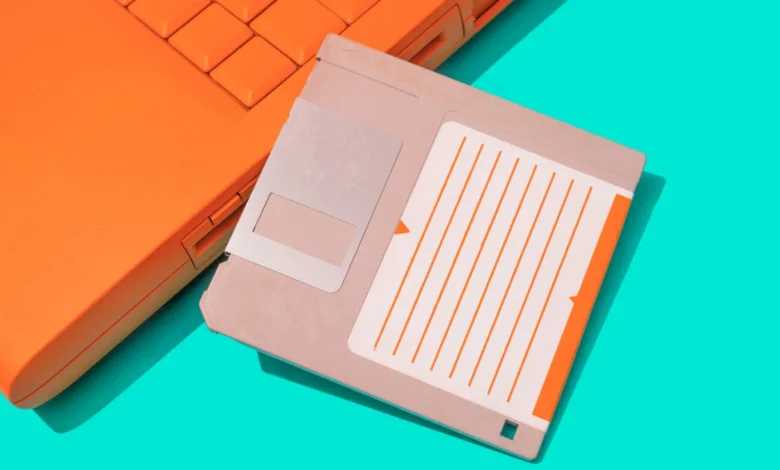
The South Korean indie gaming community is currently witnessing a unique technical challenge that harks back to the dawn of the personal computing era, as the 2P Game Arcade site officially launched its "1.44MB Contest." This initiative tasks developers with a seemingly impossible feat in the modern era of gaming: creating a fully functional, entertaining video game that occupies no more than 1,474,560 bytes of storage space. This specific figure represents the exact capacity of a high-density 3.5-inch floppy disk, a medium that served as the industry standard for data distribution throughout the late 1980s and 1990s but has since been relegated to the status of a vintage relic.
The contest, which was formally announced on May 26, represents a stark departure from the current trajectory of the global gaming industry, where "AAA" titles frequently exceed 100 gigabytes in size. By imposing a strict limitation of 1.44 megabytes after decompression, the organizers are forcing participants to prioritize code efficiency, creative asset management, and fundamental gameplay mechanics over the high-fidelity graphical assets and cinematic sequences that define modern software development.
Technical Parameters and Contest Regulations
The 2P Game Arcade has established a rigorous set of rules to ensure the integrity of the competition. While there are no specific restrictions on the development environment or game engine used, the final output must be a standalone executable file. This requirement effectively disqualifies browser-based games or projects that rely on external web-hosted assets, ensuring that every byte of logic, sound, and visual data is contained within the specified 1.44 MB limit.
The timeline for the event is strictly defined. Following the May 26 announcement, developers were given several months to conceptualize and build their projects, with a final submission deadline set for midnight on September 4. Crucially, the rules stipulate that all entries must be original works created specifically for this contest; porting existing projects or using pre-made templates that exceed the size limit during the development phase is prohibited.
Judging will be conducted based on three primary criteria. First, the technical completeness of the game will be assessed to ensure it is a finished product rather than a prototype. Second, the capacity will be strictly measured to ensure it does not exceed the 1,474,560-byte threshold. Finally, and perhaps most subjectively, the "fun factor" of the game will be evaluated. This third criterion highlights the ultimate goal of the contest: to prove that compelling interactive experiences do not require massive storage footprints.
The Economic and Cultural Context of the Prize Pool
In an industry where major e-sports tournaments and developer grants can reach into the millions of dollars, the 1.44MB Contest offers a more modest incentive structure. The first-place winner is slated to receive 720,000 South Korean won, which converts to approximately $490 USD. The organizers have described the rewards as "small souvenirs," suggesting that the primary motivation for participation is not financial gain, but rather the prestige associated with overcoming a significant engineering hurdle and the opportunity to showcase one’s skills within the indie community.
This modest prize pool stands in contrast to other recent developer challenges. For example, the developers of the massively multiplayer online game EVE Online recently distributed $80,000 in prizes for a modding contest related to an experimental survival title. However, the 2P Game Arcade contest is viewed by many in the South Korean "Newtro" (new retro) scene as a labor of love, focusing on the craftsmanship of "size-coding" rather than commercial viability.
The Historical Significance of 1.44 Megabytes
To understand the magnitude of the challenge, one must look at the history of the 3.5-inch floppy disk. Introduced by Sony in 1981 and popularized by Apple and IBM throughout the decade, the high-density version of the disk became the ubiquitous storage medium of the 1990s. At the time, 1.44 MB was considered ample space for many applications. Iconic titles such as the original Doom (1993) were distributed on multiple floppy disks, with the initial shareware release fitting onto just a few.
However, as software complexity grew, the industry moved toward CD-ROMs (700 MB), DVDs (4.7 GB), and eventually Blu-ray discs and digital downloads that can reach 150 GB. In the modern context, a single high-resolution 4K texture map or a few seconds of uncompressed audio can easily exceed 1.44 MB. A standard empty project in a modern engine like Unity or Unreal Engine often starts at 20 MB to 100 MB before a single line of code is written, meaning participants in this contest will likely have to eschew modern commercial engines in favor of custom-built frameworks or low-level programming languages like C, C++, or even Assembly.
The Phenomenon of "Game Bloat" and Modern Storage Concerns
The 1.44MB Contest arrives at a time of increasing frustration regarding "game bloat." Recent industry reports have highlighted the ballooning sizes of modern titles; for instance, the upcoming Oblivion remaster has been noted for having a file size significantly larger than the 2006 original, reflecting the move toward high-definition assets. This trend has significant implications for consumers, as SSD (Solid State Drive) and DRAM prices remain volatile. As storage comes at a premium, the ability to produce small, efficient software is becoming an increasingly valued, albeit rare, skill.
The environmental impact of data transmission is also a growing concern. Large game downloads contribute to increased energy consumption in data centers and across global telecommunications networks. By promoting ultra-efficient coding, the 2P Game Arcade contest indirectly addresses the sustainability of digital entertainment, echoing the sentiments of the "permacomputing" movement which advocates for the use of older hardware and more efficient software to reduce electronic waste.

The Art of Size-Coding and Optimization
The practice of fitting complex software into tiny footprints is known as "size-coding," a discipline that has been kept alive by the international "demoscene." The demoscene is a subculture of computer programmers who compete to create "demos"—non-interactive audio-visual presentations—that run in real-time and are constrained by extreme size limits, often as small as 64 kilobytes or even 4 kilobytes.
For the participants of the Korean contest, achieving a 1.44 MB limit will require several advanced optimization techniques:
- Procedural Generation: Instead of storing large image or sound files, developers write algorithms that generate textures, landscapes, and music on the fly as the game runs.
- Code Stripping: Removing all unnecessary libraries and metadata that modern compilers often include by default.
- Custom Asset Compression: Developing bespoke compression formats tailored specifically to the game’s data.
- Low-Level Graphics APIs: Utilizing older or more direct ways of communicating with hardware to bypass the overhead of modern graphics wrappers.
Broader Implications for the Indie Development Scene
The South Korean indie scene has historically been overshadowed by the country’s massive mobile gaming and MMORPG (Massively Multiplayer Online Role-Playing Game) sectors. However, events like the 1.44MB Contest signal a burgeoning interest in experimental and "hardcore" development practices. By focusing on the constraints of the past, these developers are honing skills that are directly applicable to the future of technology, particularly in fields like Internet of Things (IoT) development and embedded systems, where hardware resources remain limited.
Furthermore, the contest serves as a reminder of the "limitations breed creativity" philosophy. When developers cannot rely on photorealistic graphics or massive orchestral scores to carry a project, they must focus on the core loop of the game—the mechanics that make it "fun." This often leads to more innovative and tightly designed gameplay experiences that stand out in a saturated market.
Conclusion and Outlook
As the September 4 deadline approaches, the indie gaming community is eager to see what the participants of the 2P Game Arcade contest will produce. The entries will serve as a testament to human ingenuity and a reminder that the essence of a great game is not found in the number of gigabytes it occupies, but in the elegance of its code and the joy of its play.
While the floppy disk may be a dead medium for the general public, its spirit lives on in this competition. The 1.44MB Contest is more than just a nostalgic exercise; it is a rigorous technical challenge that bridges the gap between the foundational era of computing and the high-tech landscape of today. Whether the resulting games are simple arcade clones or complex procedural wonders, they will undoubtedly prove that 1,474,560 bytes is still more than enough room for a big idea.