Unlocking Advanced Multi Frame Generation on Nvidia RTX 40-Series Graphics Cards Through Community Tools

Multi Frame Generation represents the latest evolution in AI-driven graphical upscaling and frame interpolation, a technology that significantly bolsters frame rates by synthesizing up to five intermediate frames for every single frame rendered by the GPU. While this capability was introduced as a cornerstone feature of the Nvidia RTX 50-series architecture in early 2025, a growing community of enthusiasts has successfully developed methods to bypass official hardware restrictions, enabling similar functionality on the previous-generation RTX 40-series cards. This development has sparked a broader conversation regarding the intersection of proprietary hardware gating and the capabilities of modern GPU silicon.
Technical Foundations of Multi Frame Generation
To understand the significance of this unofficial modification, one must first examine the architecture behind Nvidia’s frame generation stack. The RTX 50-series, built upon the Blackwell architecture, incorporates specialized hardware components specifically engineered for AI-driven image processing. Central to this is the AI Management Processor (AMP), a dedicated silicon block designed to handle the overhead of generating multiple frames without introducing the significant latency or visual artifacts typically associated with earlier frame interpolation techniques.
In contrast, the RTX 40-series, based on the Ada Lovelace architecture, relies on the Optical Flow Accelerator and the Tensor Cores to perform DLSS Frame Generation. While highly effective at doubling frame rates (the 2x mode), the Ada architecture lacks the dedicated AMP and advanced "Flip Metering" logic required to maintain high-fidelity, low-latency performance when extending to 4x, 5x, or 6x generation modes. Consequently, Nvidia limited higher-tier Multi Frame Generation (MFG) to the newer Blackwell cards, citing the necessity of hardware-level synchronization to avoid image "smearing" and input lag—common side effects of aggressive frame interpolation.

Chronology and the Rise of Unofficial Modding
The discourse surrounding MFG began in earnest following the launch of the RTX 50-series in January 2025. During the product reveal, Nvidia highlighted the "Dynamic Multi Frame Generation" as a key performance differentiator. By February 2025, technical analysts and hobbyists began probing the driver-level restrictions that tethered these features to Blackwell hardware.
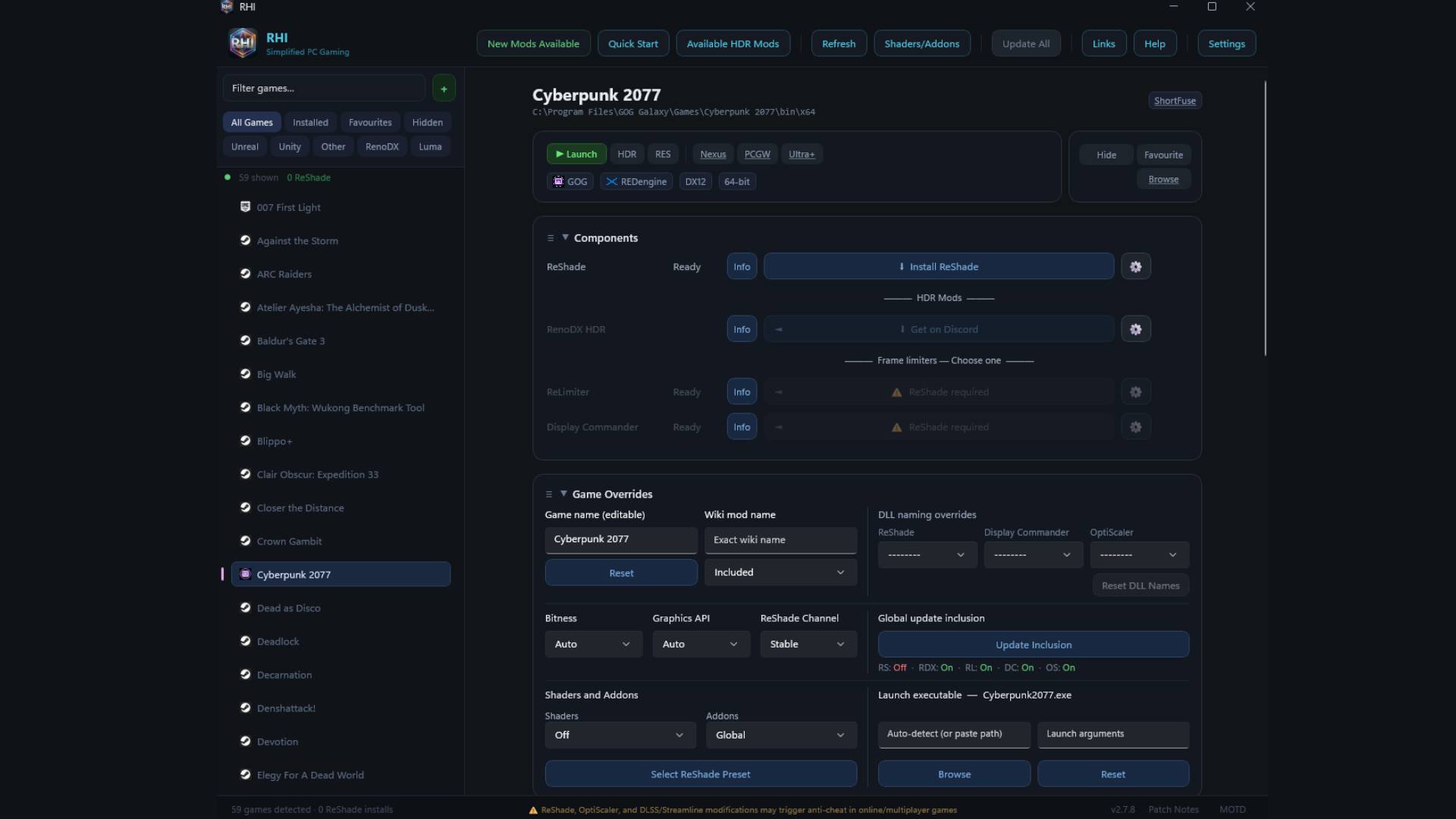
The emergence of the ReShade HDR Installer (RHI), a utility designed to inject post-processing mods into games, provided the framework for bypassing these software locks. By mid-2025, developers in the modding community identified that the underlying AI models for frame generation were largely compatible with the Ada Lovelace architecture, provided the game’s API could be tricked into accepting the configuration. This led to the creation of specific overrides within the RHI environment that allow users to force the 4x MFG mode on RTX 40-series hardware.
Implementing the Modification: A Procedural Overview
Users seeking to experiment with 4x MFG on unsupported hardware must follow a precise sequence, though it is critical to note that this process is entirely unsupported by Nvidia and may interfere with anti-cheat software.
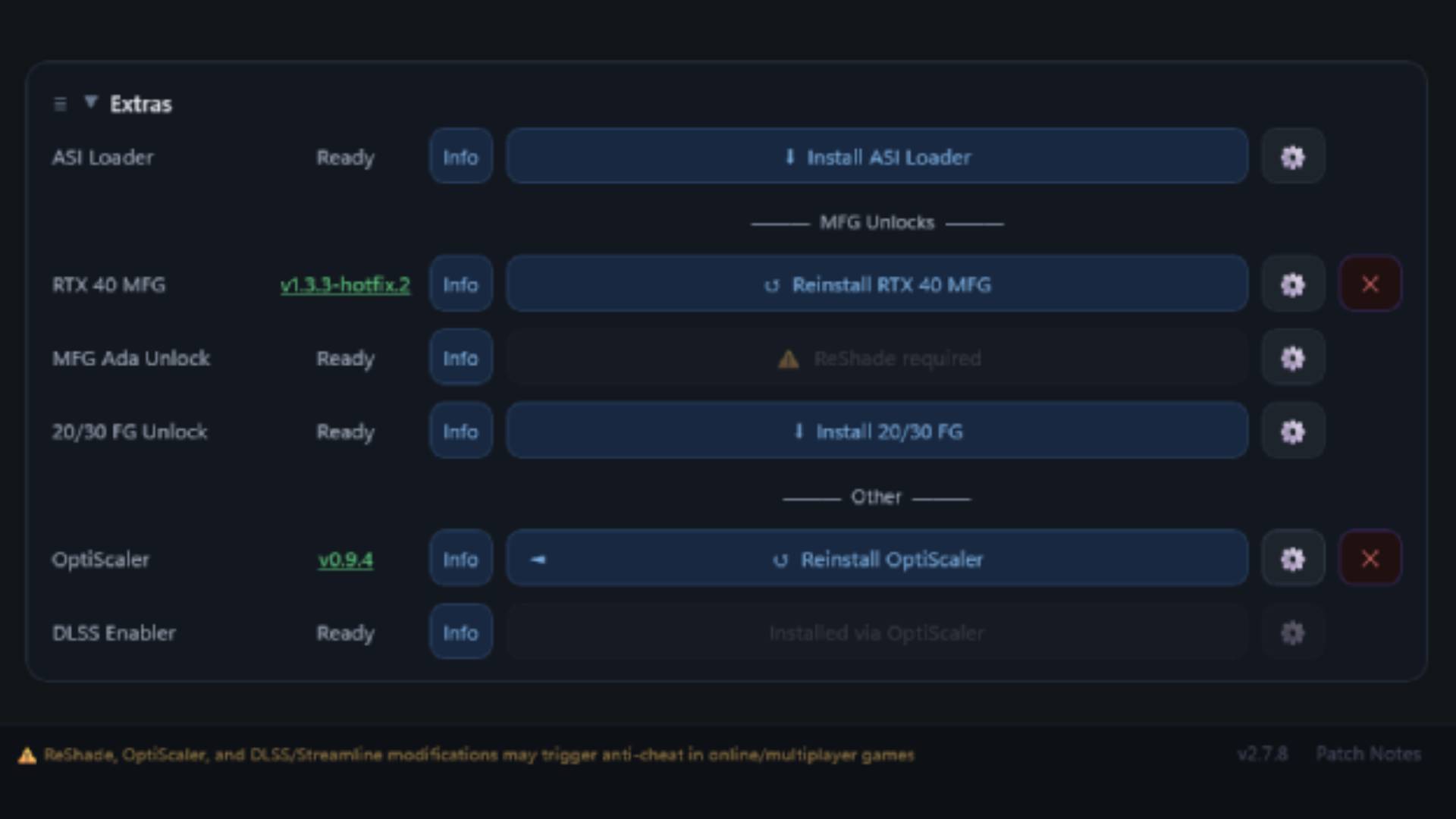
- Software Acquisition: The process utilizes the ReShade HDR Installer (RHI) from community-maintained repositories. This tool acts as an automation layer for installing mod files that bridge the gap between game engines and the GPU’s rendering pipeline.
- Environment Setup: Upon launching RHI, the software scans the local machine for installed games. Users must cross-reference their library with Nvidia’s official list of games that natively support DLSS technologies, as these titles contain the necessary hooks for the mod to function.
- Mod Injection: Within the RHI interface, users must select the target application and install the ‘RTX 40 MFG’ and ‘OptiScaler’ components. These packages act as the translation layer, forcing the GPU to execute the higher-order frame generation routines.
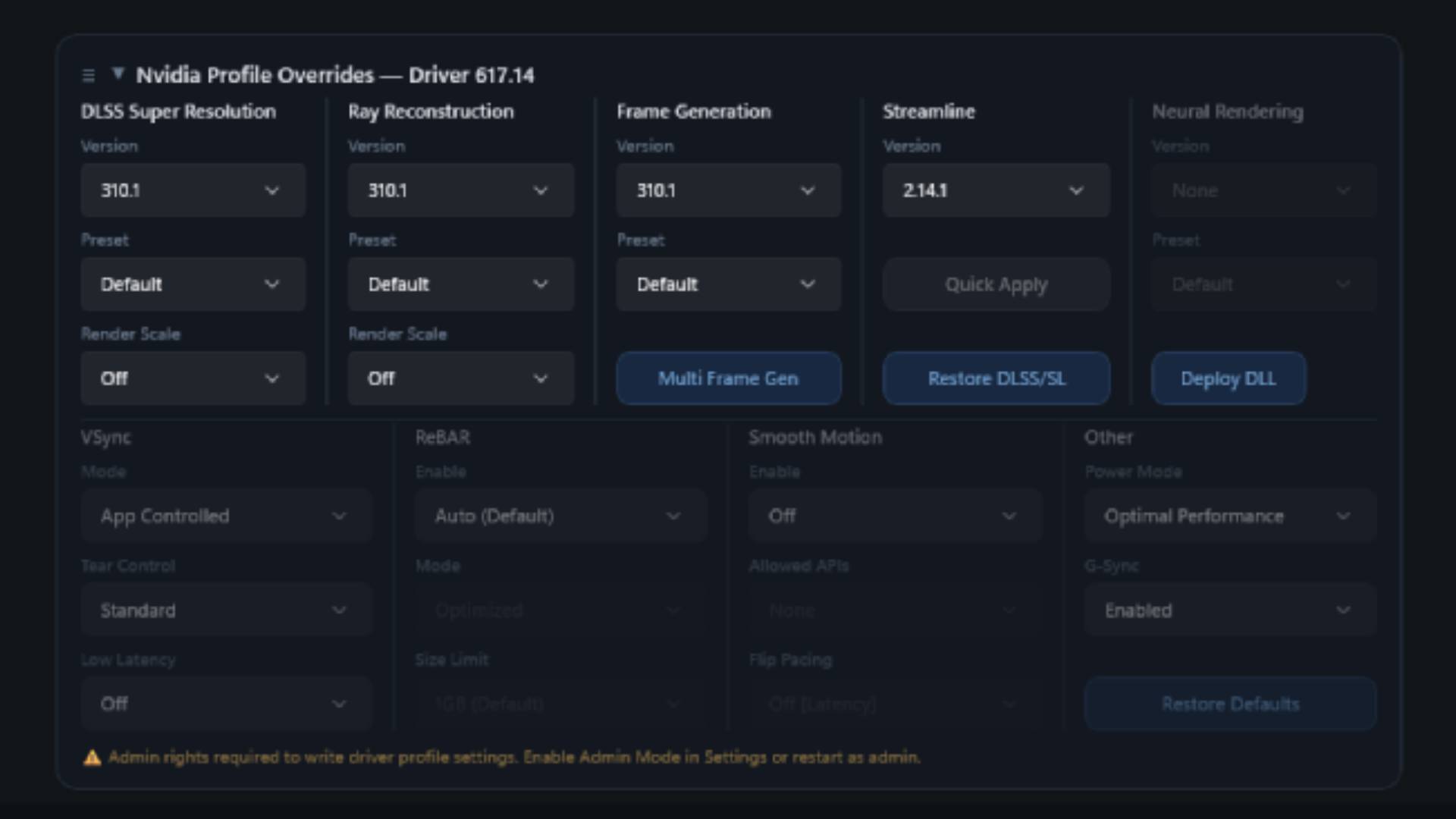
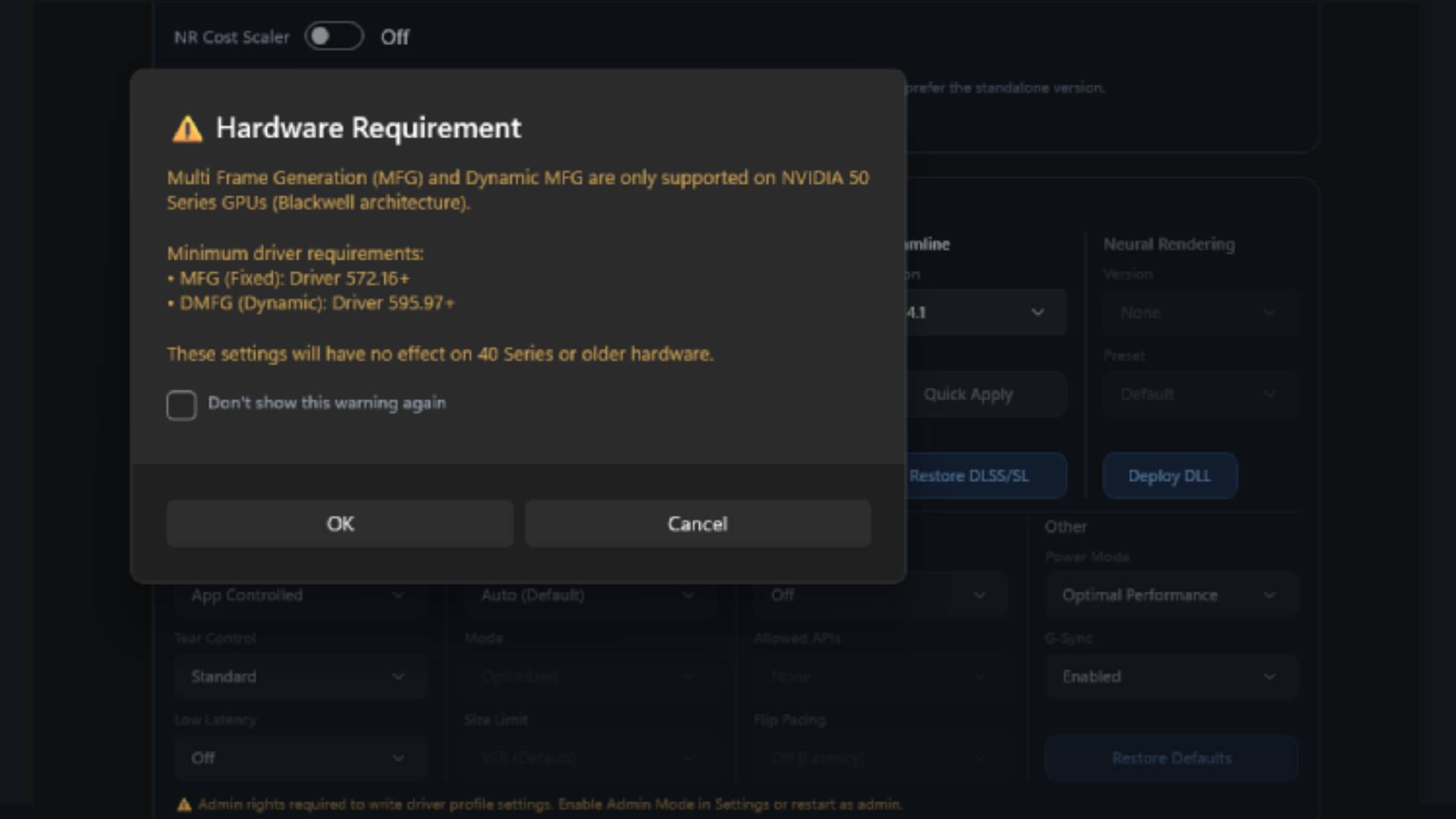
- Profile Overrides: The final stage involves accessing the ‘Nvidia Profile Overrides’ menu. Despite receiving a warning that the feature is restricted to the 50-series architecture, users can manually select ‘Dynamic’ in the FG (Frame Generation) settings and set the ‘Frame Count’ to ‘4x’. Setting the ‘Target Frame Rate’ to ‘Off’ typically allows the system to utilize the full extent of the generated frames.
Data Analysis and Performance Considerations
While the ability to push a 40-series card to 4x frame generation is a technical achievement, empirical testing reveals significant trade-offs. Synthetic benchmarks and real-world gameplay indicate that while the "FPS counter" may show a substantial increase, the quality of the visual output and the responsiveness of the input are not on par with the native 50-series implementation.
Internal testing, often monitored via Nvidia’s FrameView application, shows that even when 4x MFG is successfully enabled, the latency remains higher than that of native rendering or 2x DLSS Frame Generation. Furthermore, because the Ada Lovelace architecture lacks the specific "Flip Metering" found in Blackwell, the generated frames may occasionally suffer from inconsistent pacing, leading to perceived "stutter" despite high frame numbers. This highlights the validity of Nvidia’s decision to gate the feature; the hardware-level optimizations provided by the AMP are essential for maintaining the frame consistency necessary for a fluid gaming experience.
Official Stance and Future Implications
Nvidia’s official position, as articulated by CEO Jensen Huang, suggests that while bringing advanced AI features to older generations is technically possible, it presents significant engineering challenges. Huang has noted that optimization is not merely about enabling a software toggle, but about ensuring that the entire pipeline—from the GPU core to the display output—is tuned for the specific timing requirements of high-frequency frame synthesis.
The existence of these community mods places Nvidia in a difficult position regarding proprietary software. On one hand, the modding community serves as a stress-tester for new technologies, pushing the boundaries of what the hardware can achieve. On the other, the risk of negative user experiences caused by unstable mods could potentially tarnish the reputation of the underlying DLSS technology.
Broader Market Impact
The push to unlock these features on older hardware underscores a shift in consumer expectations. As AI becomes a permanent fixture of gaming hardware, the lifecycle of a GPU is increasingly determined by software feature sets rather than raw compute power. The fact that RTX 40-series users are actively seeking to replicate Blackwell-exclusive features suggests that the hardware remains highly capable, leading to questions about the longevity of the 40-series as Nvidia continues to iterate on its AI stack.
For the average user, the takeaway remains clear: while tools exist to bridge the gap between hardware generations, they are not a replacement for native architectural support. The 4x MFG mod is a testament to the ingenuity of the PC enthusiast community, but it also serves as a reminder of the complex engineering hurdles that separate one generation of silicon from the next. As AI-driven performance becomes the industry standard, the role of community-driven optimizations will likely continue to expand, forcing manufacturers to balance proprietary software exclusivity with the evolving demands of their user base.
Related posts: