Narnia The Magicians Nephew Official Trailer Released as Greta Gerwig Prepares Epic Netflix and IMAX Cinematic Event

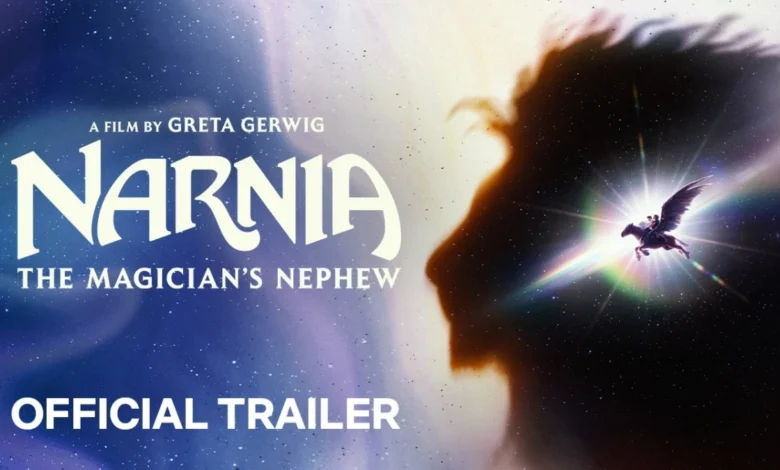
Long before the wardrobe opened to the snowy expanse of a parallel world, there was a song, a lion, and the genesis of an empire. Netflix has officially released the first trailer for Narnia: The Magician’s Nephew, marking the beginning of Academy Award-nominated filmmaker Greta Gerwig’s highly anticipated cinematic journey into C.S. Lewis’s beloved fantasy universe. Serving as the first-ever screen adaptation of Lewis’s 1955 foundational novel, the film aims to explore the creation myth of Narnia, tracing the roots of the universe back to its very first days. The production represents a monumental shift for modern fantasy distribution, boasting a dual theatrical and streaming rollout strategy designed to capture both traditional cinema audiences and home viewers on an unprecedented global scale.
According to the official release schedule announced by Netflix and IMAX, the epic feature film is slated to premiere globally in IMAX theaters on February 12, 2027, followed by its streaming debut on Netflix on April 2, 2027. Ahead of the wide theatrical release, exclusive sneak previews will begin in IMAX venues starting February 10, 2027. This hybrid release model underscores a growing industry trend where major streaming platforms collaborate with premium theatrical formats to maximize box office prestige and event-level cultural impact.
Written for the screen and directed by Greta Gerwig, the project has drawn intense industry scrutiny and fan excitement since its inception. Gerwig, a lifelong fan of the literary series, has frequently spoken about her profound personal connection to Lewis’s works. Transitioning from her critically acclaimed independent roots and blockbuster success with Barbie, Gerwig brings a singular, visionary approach to a franchise that has long sought a definitive, overarching cinematic vision.
Main Facts and Production Scale
The production of Narnia: The Magician’s Nephew stands as one of the most ambitious undertakings in contemporary Hollywood history. Backed by Netflix, which acquired the rights to C.S. Lewis’s entire The Chronicles of Narnia book series in 2018, this film serves as the cornerstone of what is planned to be an expansive cinematic and television universe.
The scale of the production is further highlighted by its stellar, award-winning ensemble cast. The film features performances by David McKenna, Beatrice Campbell, Emma Mackey, Carey Mulligan, Ciarán Hinds, Daniel Craig, Meryl Streep, Kobna Holdbrook-Smith, Denise Gough, and Susan Wokoma. The integration of such high-caliber talent signals Netflix’s intent to position the Narnia franchise not merely as children’s fantasy, but as prestige cinema capable of attracting adult audiences and garnering major awards consideration.
The narrative of The Magician’s Nephew serves as a prequel to the events of The Lion, the Witch and the Wardrobe. It follows young Digory Kirke and his friend Polly Plummer as they are inadvertently pulled into other worlds via magical rings created by Digory’s eccentric Uncle Andrew. Their adventures lead them to the dying world of Charn, the awakening of the wicked Queen Jadis, and ultimately to the dark, silent void where the great lion Aslan sings Narnia into existence.
Background Context and Literary Origins
Published in 1955, The Magician’s Nephew is the sixth published book in C.S. Lewis’s seven-part series, but chronologically the first. While The Lion, the Witch and the Wardrobe was written and published first in 1950, Lewis later structured the internal chronology of the series to place The Magician’s Nephew at the narrative inception.
Adapting this specific book first represents a bold strategic decision by Greta Gerwig and Netflix. Rather than starting with the most culturally ubiquitous story—the adventures of the Pevensie siblings and the wardrobe—the filmmakers have chosen to ground the entire franchise in its mythological origins. This allows audiences to understand the metaphysical rules, the origins of the White Witch, the creation of the lamp post, and the backstory of the enigmatic Professor Kirke before encountering them in subsequent stories.
The history of cinematic adaptations of Narnia is mixed. Walden Media, in partnership with Walt Disney Pictures and later 20th Century Fox, successfully brought three of the books to the screen: The Lion, the Witch and the Wardrobe (2005), Prince Caspian (2008), and The Voyage of the Dawn Treader (2010). While these films grossed over $1.5 billion combined at the global box office, the franchise stalled before adapting the entire series. In October 2018, Netflix announced a multi-year deal with The C.S. Lewis Company to develop series and film projects across the entire literary canon, marking the first time a single company has held the rights to all seven books.
Chronology of the Production and Release Strategy
The path from Netflix’s initial acquisition of the Narnia rights to the current release date has been defined by careful development and high-profile creative recruitment.
- October 2018: Netflix enters into a multi-year agreement with The C.S. Lewis Company to develop adaptations of The Chronicles of Narnia into films and series.
- July 2023: Reports emerge confirming that Greta Gerwig has officially signed on to write and direct at least two films in the planned Narnia universe for Netflix.
- Late 2023 through 2025: Pre-production, casting announcements, and large-scale virtual production and practical set construction take place, utilizing advanced filmmaking technologies similar to those used in modern cinematic universes.
- January 2026: Early promotional teasers and announcements begin to circulate within industry circles, building anticipation for the official trailer drop.
- February 2027: Official global trailer release, setting the marketing campaign into motion.
- February 10, 2027: Exclusive sneak previews begin in IMAX theaters worldwide.
- February 12, 2027: Official global theatrical release in IMAX venues.
- April 2, 2027: Streaming premiere exclusively on Netflix.
Supporting Data and Industry Implications
The distribution strategy chosen for Narnia: The Magician’s Nephew reflects an evolving relationship between streaming giants and traditional theatrical exhibitors. Historically, companies like Netflix prioritized platform-exclusive streaming windows, occasionally offering limited theatrical releases solely to qualify for Academy Award consideration. However, the decision to launch a major intellectual property with a prominent, global IMAX run weeks before its streaming debut signals a pragmatic shift toward capturing premium theatrical revenues and elevating the cultural prestige of the release.
IMAX CEO Rich Gelfond and industry analysts have frequently noted that event-driven fantasy films perform exceptionally well in premium large formats (PLFs). By locking in an IMAX release for mid-February 2027, Netflix ensures that the film can command box office attention during a traditionally lucrative window, while building immense word-of-mouth momentum ahead of the streaming launch in April.
Financially, the Narnia franchise represents one of Netflix’s largest capital investments in intellectual property to date. With budgets for high-end fantasy series and films frequently exceeding $150 million to $200 million per installment, the streaming platform is banking on the global name recognition of C.S. Lewis’s work, combined with Gerwig’s proven box office appeal, to drive subscriber growth, retention, and merchandising opportunities.
Official Responses and Creative Vision
While direct statements from the cast have been tightly managed under standard studio publicity rollouts, Greta Gerwig’s past interviews regarding the project shed light on her approach. Gerwig has often expressed a sense of awe and responsibility toward the material, noting that the fantastical imagery of Narnia—the dying world of Charn, the apple trees of life, and the sonic creation of a universe—requires a delicate balance of childlike wonder and sophisticated thematic depth.
Industry observers have noted that Gerwig’s directorial style, characterized by emotional intelligence, sharp character development, and visually rich set designs, makes her uniquely suited to handle the psychological and spiritual undertones of Lewis’s writing. The casting of seasoned dramatic actors such as Meryl Streep, Daniel Craig, and Carey Mulligan alongside emerging talent suggests that the human and moral conflicts at the heart of the story will be given as much weight as the visual effects spectacle.
Broader Impact and Cultural Resonance
The cultural footprint of The Chronicles of Narnia spans nearly seven decades. Generations of readers have grown up exploring the moral and allegorical landscapes crafted by C.S. Lewis. Bringing The Magician’s Nephew to the screen for the first time offers a unique opportunity to reintroduce these themes to a modern audience that increasingly consumes complex, serialized storytelling across multiple formats.
Furthermore, the success or failure of Gerwig’s vision will likely dictate the trajectory of Netflix’s ambitions in the high-fantasy space. As traditional studios grapple with shifting consumer habits and box office volatility, Netflix’s hybrid model for Narnia could serve as a blueprint for how major streaming platforms manage blockbuster intellectual property in the latter half of the 2020s.
As the countdown to February 2027 begins, audiences worldwide are left to ponder the vast, magical landscapes waiting to be unlocked. With a visionary director at the helm, a legendary cast bringing the characters to life, and a distribution model bridging the gap between cinema halls and home screens, Narnia: The Magician’s Nephew stands poised to redefine the modern fantasy epic.