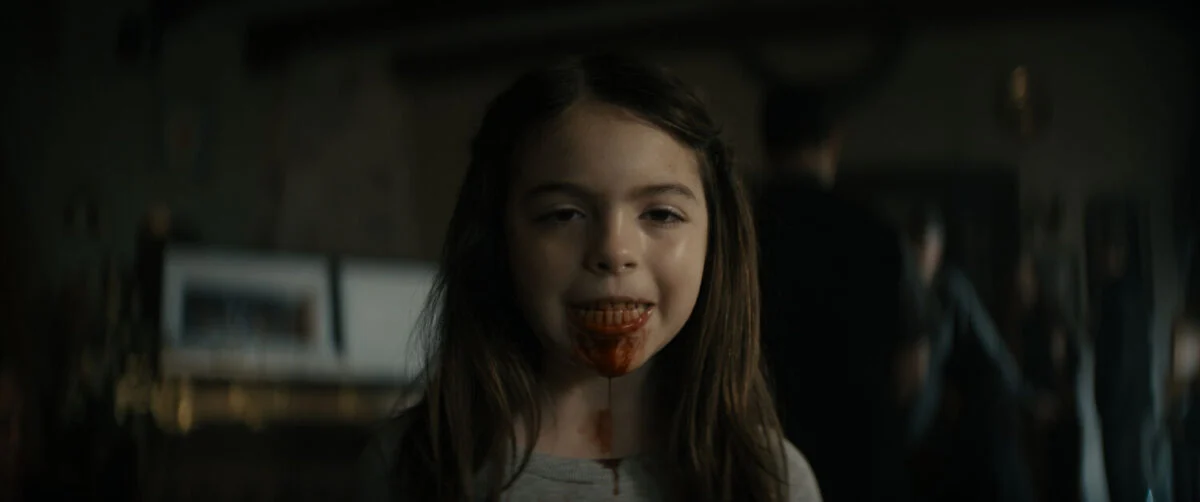
Director Lee Cronin, a filmmaker whose career has been marked by a rapid ascent and a distinct vision for horror, has once again plunged audiences into the unsettling depths of the genre with his latest offering, Lee Cronin’s The Mummy. The 44-year-old Irish filmmaker, known for his ability to twist familiar horror tropes into something uniquely his own, has demonstrated a consistent fascination with the visceral, the familial, and the horrors that fester just beneath the surface of everyday life. Following the promising unease of 2019’s The Hole in the Ground and the unbridled brutality of 2023’s Evil Dead Rise, Cronin now takes on a legendary cinematic monster, promising an excavation of terror that is both deeply personal and relentlessly disturbing.
Cronin’s bold move to stake authorship in the very title, Lee Cronin’s The Mummy, serves as an immediate declaration of intent. This is not a conventional revival or a nostalgic retread. The film deliberately severs ties with its predecessors, eschewing the gothic grandeur of Boris Karloff’s 1932 original and the adventurous spirit of the beloved 1999 Brendan Fraser and Rachel Weisz vehicle, a franchise that itself is slated for a new installment in 2028. It also consciously distances itself from the more action-oriented, albeit critically panned, 2017 attempt starring Tom Cruise. Instead, Cronin crafts an experience that is deliberately claustrophobic and confrontational, drawing comparisons to the unsettling intensity of The Exorcist (1973) rather than its more fantastical contemporaries. While this assertive directorial stamp is evident, the film occasionally leans into its influences, resulting in moments that, despite their ambition, can feel somewhat generic, though its commitment to unflinching gore will undoubtedly resonate with dedicated horror aficionados.
A Departure from Tradition: Thematic and Tonal Shifts
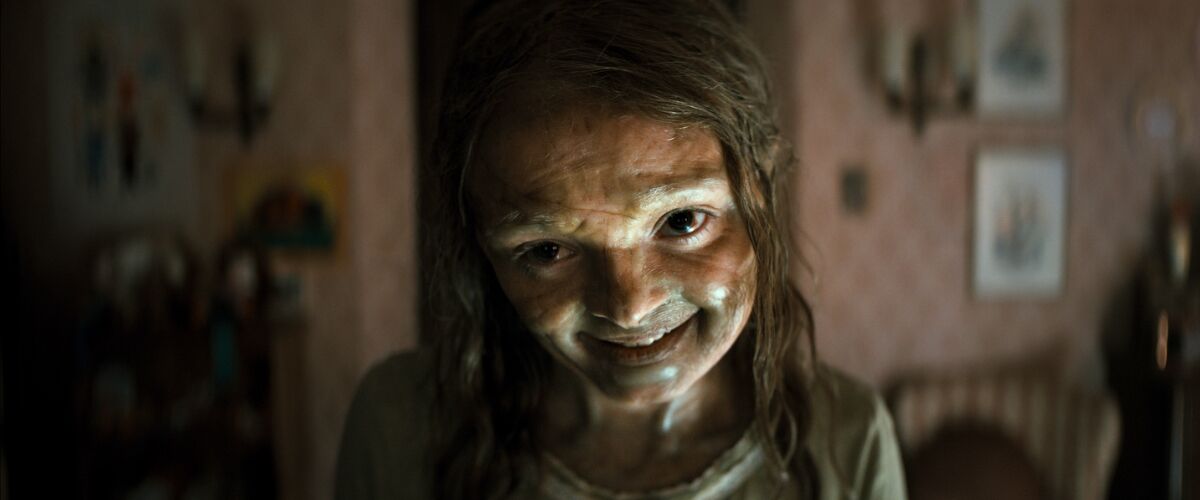
The departure from established Mummy lore is profound. Cronin’s reimagining eschews the charming rogue at its center, the sweeping desert escapades, and any semblance of lighthearted fun. The narrative is stripped down, focusing instead on a suffocatingly intimate and deeply psychological terror. This is a horror film that prioritizes confrontation over restraint, a thematic choice that permeates every frame. The film’s runtime, a considerable two hours and twenty minutes, at times feels indulgent as Cronin cycles through a series of gruesome set pieces. While each escalation in intensity is palpable, the narrative purpose can feel repetitive, leading to a prolonged barrage of visceral shocks that occasionally blur into a single, sustained assault. This excess, however, exists alongside a surprisingly straightforward premise, beginning with a deceptively quiet prologue set in rural Egypt.
The Seeds of Dread: An Ominous Prologue
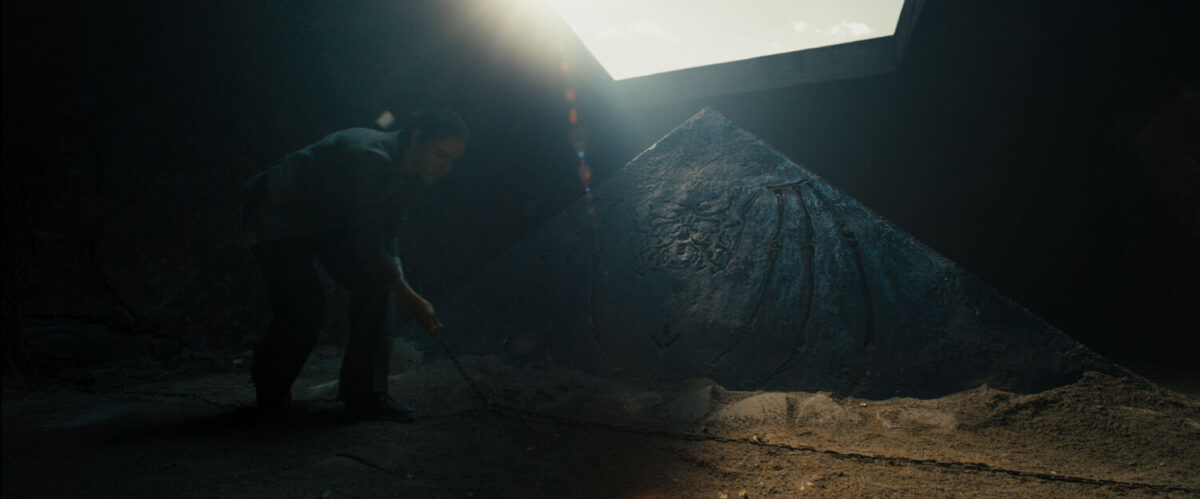
The film’s opening moments are steeped in an almost palpable unease. A seemingly ordinary family outing in rural Egypt is underscored by a creeping sense of dread. Hayat Kamille’s portrayal of a withdrawn mother figure offers an early, subtle signal that something is profoundly amiss, long before the supernatural elements fully manifest. The inclusion of a mutilated pet canary, fleeting glimpses of a basalt pyramid embedded incongruously within nectarine farmland, and an overarching atmosphere of disquiet are meticulously laid groundwork. This precision, however, stands in curious contrast to the subsequent narrative and visual excess.
The focus then shifts to an American family residing in Cairo: journalist Charlie Cannon, played by Jack Reynor, his pregnant wife Larissa (Laia Costa), and their two young children, Katie (Emily Mitchell) and Sebastián (Dean Allen Williams). As they prepare to return to their home in the United States, they remain blissfully unaware that their departure will be irrevocably altered.
The Cataclysmic Disappearance and Its Lingering Shadow
The turning point arrives with a violent inevitability. During a sandstorm sequence, one of the film’s most striking and disorienting moments, young Katie is drawn away by a seemingly kind woman offering sweets. In the swirling dust and rising panic, her father Charlie tragically loses sight of her, a harrowing depiction of helplessness. Accusations quickly surface, with local authorities casting suspicion upon Charlie. Meanwhile, missing-persons detective Dalia Zaki, portrayed by May Calamawy, attempts to navigate the indifference of her superiors.
Years pass without resolution, the unresolved disappearance calcifying into permanent grief. The Cannon family attempts to rebuild their lives in Albuquerque, New Mexico, marked by uneasy efforts towards normalcy. This includes the presence of Larissa’s devout mother, Carmen (Veronica Falcón), whose constant prayers offer little solace in the face of their enduring trauma. Katie remains missing, while Sebastián grows into adolescence (now played by Shylo Molina), and a new child, Maud (Billie Roy), is born, filling a void that can never truly be replaced.
An Unnatural Return: The Altered Child
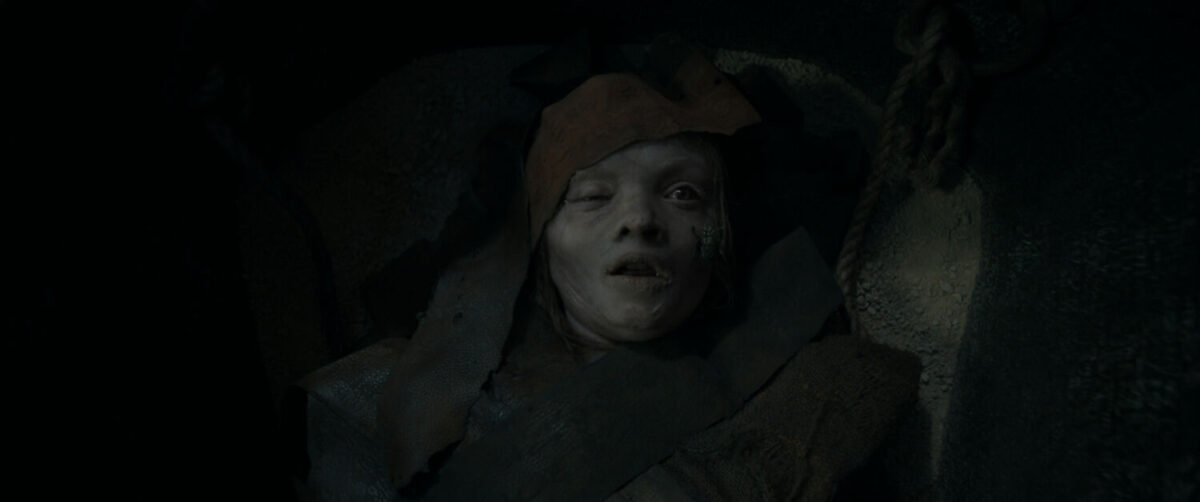
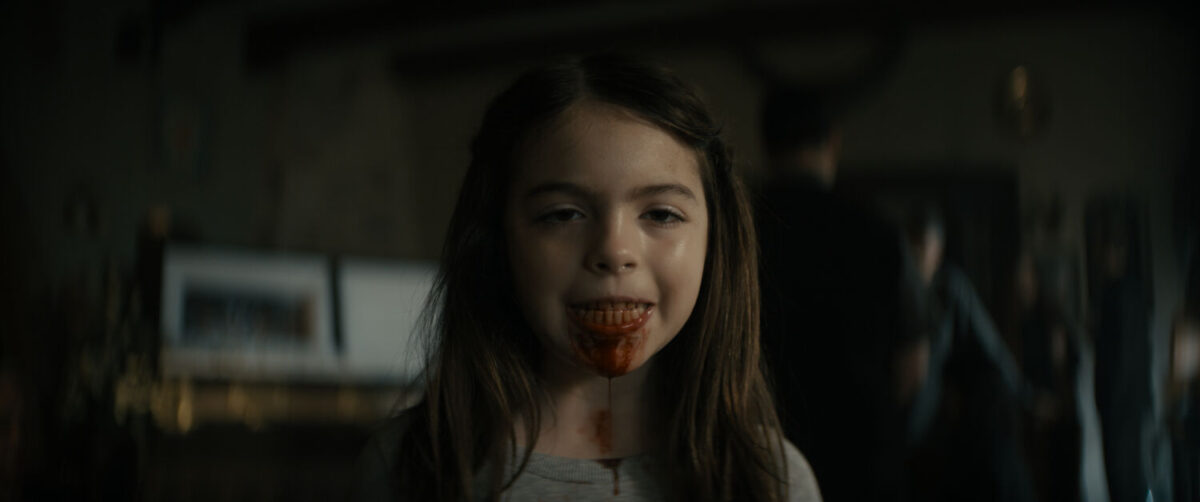
Eight years later, a semblance of closure arrives through the most unnatural means. A catastrophic plane crash in Egypt unearths a long-buried tomb. Within it, Katie is found alive but profoundly altered, her physical form bearing the unmistakable marks of something ancient and malevolent. Upon her return home, initial relief rapidly succumbs to profound unease. Katie, now portrayed by newcomer Natalie Grace, delivers a physically demanding performance that draws parallels to the harrowing contortions of Regan MacNeil in The Exorcist. She resists every attempt at reintegration into her former life.
True recovery is never truly on the table. What has returned requires not healing, but containment. Katie’s nights are consumed by unsettling twists and convulsions, and she is seen engaging in disturbing behavior, such as consuming insects and small scorpions. The absence of medical supervision is particularly jarring, even as Katie’s deterioration becomes starkly evident. Confined largely to her bedroom, her wheezing fits, sudden outbursts, and increasingly disturbing actions become a disturbing routine. Efforts to normalize her presence falter swiftly, leaving Charlie and Larissa to navigate a situation that has spiraled far beyond recognition.
The Escalation of Visceral Horror
As the narrative progresses, a sense of predictability begins to set in. However, Cronin counters this with an unwavering determination to push every horrific image to its absolute limit. Violence erupts in lurid, unflinching bursts: eyes are forced from their sockets, teeth find new and disturbing placements, and bodies are subjected to brutal harm before being finished off with cruel enthusiasm. Each encounter is treated as an opportunity to explore another grisly variation on the theme of physical violation.
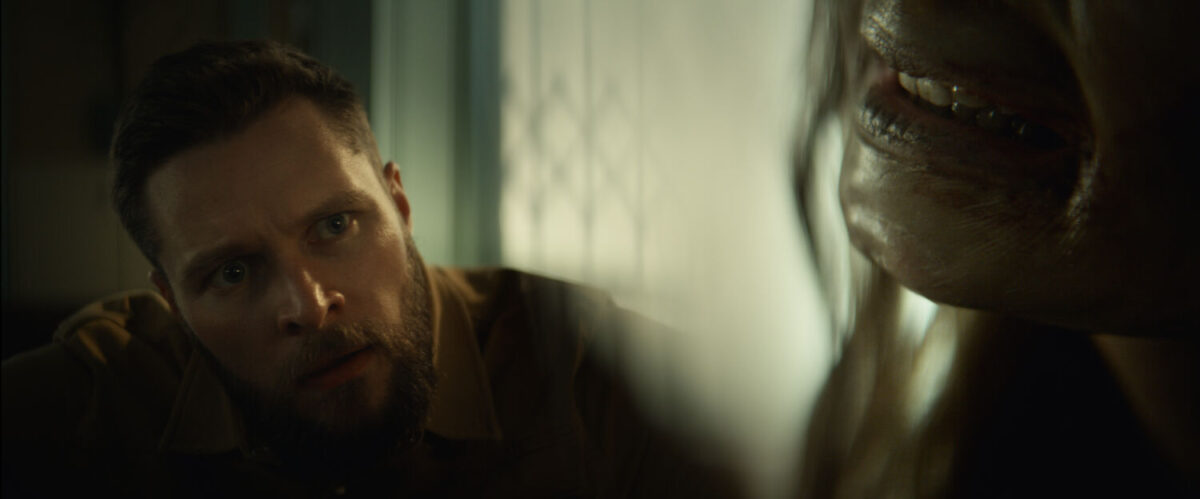
The film’s visual language is meticulously crafted to amplify this sense of unease. Split diopter shots frequently place Katie looming in the foreground, her presence swelling into something almost grotesque as her parents struggle to focus on anything beyond her terrifying transformation. An overabundance of close-ups on mouths chewing, fluids escaping, and bodies reacting pushes the film into a queasy, almost tactile intimacy, forcing the audience to confront the raw physicality of the horror.
A Symphony of Discomfort: Cinematography and Sound Design
Body horror proves particularly effective in isolated stretches, with moments like a grisly nail-clipping sequence landing with an almost tactile discomfort. Composure slips, skin follows, and the cast commits fully to the escalating madness, playing every moment with unnerving sincerity, even as prosthetics and practical effects threaten to steal the show. Dave Garbett’s sickly, mustard-tinted cinematography casts a jaundiced glow over the proceedings, imbuing the film with a sense of pervasive decay. Stephen McKeon’s score, which previously underscored the intensity of Evil Dead Rise, collides with an aggressive wall of sound that functions as a persistent, auditory assault.
Attempts to broaden the film’s scope, particularly through the investigative thread involving Egyptian detective Zaki, add a sense of movement. However, these elements do not always translate into narrative momentum, occasionally causing the film to veer sideways when a more direct forward trajectory might have been more effective.
The Unearthing of Terror: A Final Reckoning
By the time all narrative threads converge, Cronin appears intent on unleashing every tool in his directorial arsenal. The film stitches together elements of possession horror, occult mystery, and outright splatter into a cohesive, albeit often jarring, whole that lurches forward on sheer, unadulterated momentum. For devoted horror fans, the sheer excess and the willingness to explore the darkest corners of human fear will likely prove immensely satisfying, even if the journey to that point feels protracted.
However, purists of the Mummy legend may find themselves questioning the film’s titular promise. There is no shambling, linen-wrapped relic here, nor a grand excavation of ancient myth in the traditional sense. Yet, Lee Cronin’s The Mummy undeniably leaves its mark, rattling bones, fraying nerves, and challenging the stomach in equal measure. It is a film that interrogates the fragility of family, the enduring power of trauma, and the terrifying possibility that some things are better left buried.
Geck Review Score
Summary: There is real nerve in how far Cronin is willing to go, and as a mean, queasy reinvention, The Mummy has just enough rot under its bandages to leave an impression.