Avengers Doomsday Final Trailer Confirms Longstanding Fan Theories Regarding Steve Rogers and Earth-828

The release of the final trailer for Marvel Studios’ highly anticipated blockbuster, Avengers: Doomsday, has provided definitive answers to a mystery that has puzzled the Marvel Cinematic Universe (MCU) fandom since the 2019 release of Avengers: Endgame. For years, viewers have debated the logistical and chronological implications of Steve Rogers’ decision to remain in the past to live out his life with Peggy Carter. The new footage confirms that this narrative thread is not merely a nostalgic epilogue, but a central catalyst for the multiversal instability that defines the plot of the upcoming film.
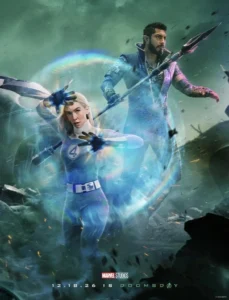
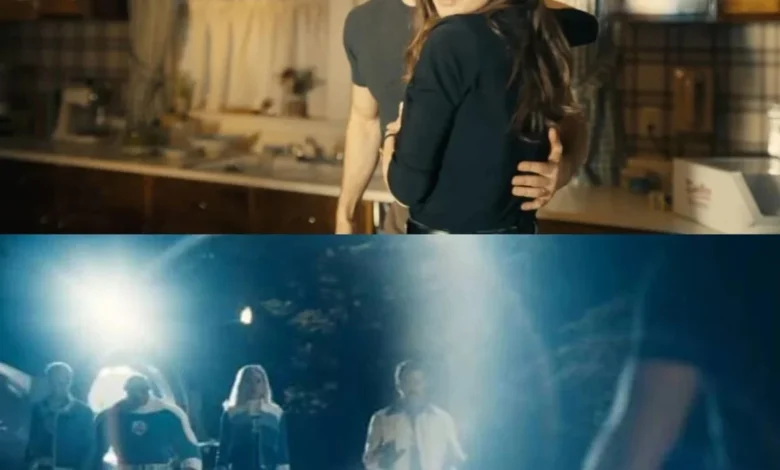
The trailer features a pivotal sequence in which Reed Richards, portrayed by Pedro Pascal, encounters a middle-aged Steve Rogers and his family. This interaction appears to confirm that Rogers’ presence in the past was not a closed loop within the primary MCU timeline, but rather a migration to a distinct reality designated as Earth-828. This revelation aligns with long-standing reports that Loki, in his capacity as the steward of the Multiverse, facilitated this transition, effectively relocating Rogers and Carter to a reality where they were not native, to prune the dangerous branches created by his temporal interference.
Chronology of a Multiversal Anomaly
The timeline of these events begins with the conclusion of Avengers: Endgame. When Steve Rogers returned the Infinity Stones to their respective points in history, he chose to remain in the past. While fans initially assumed this meant he lived in the shadows of the "Sacred Timeline," the evidence from the new trailer suggests a more complex reality. By integrating himself into Earth-828, Rogers inadvertently created a temporal divergence.
Earth-828 is established as the home reality of the Fantastic Four, a team whose history predates the formation of the Avengers by several decades. The timeline of this reality appears to run parallel to the 1960s. The presence of a son, who appears to be of middle-school age in the trailer, suggests that Rogers and Carter likely settled into this reality in the late 1950s. This timeline provides a stark contrast to the post-credits sequence of The Fantastic Four: First Steps, which depicted a father and son watching an in-universe animated program. With the context provided by the new footage, it is now widely accepted that the figures in that post-credits scene were indeed Steve Rogers and his child, living a quiet, secluded life in a reality that was never meant to contain them.
Data and Multiversal Mechanics
The concept of "incursions"—the collision of two universes leading to the destruction of one or both—has been a cornerstone of the MCU’s Phase 5 and 6 narrative arc. Scientific lore established in Doctor Strange in the Multiverse of Madness suggests that frequent travel or long-term residence in a reality not one’s own can destabilize the borders between dimensions.
If Steve Rogers and Peggy Carter were indeed placed on Earth-828 by the TVA or a similar multiversal entity, their very existence there represents a massive accumulation of temporal "weight." Analysts observing the trailer note that the meeting between the Fantastic Four and the Rogers family is not social in nature, but rather a necessity born of an unfolding incursion event. The destabilization of Earth-828 appears to be the primary conflict, forcing the Fantastic Four to confront the reality that their world is physically collapsing due to the presence of an displaced super-soldier.
Statements and Theoretical Implications
While Marvel Studios has kept the official plot details under tight security, the implications of these revelations have sparked significant discussion among industry analysts. If the "selfish" choice made by Steve Rogers—to pursue a personal life at the expense of temporal integrity—has resulted in the systemic collapse of an entire reality, it reframes the character’s legacy.

There is also the matter of the primary antagonist, Doctor Doom. Recent promotional materials and character studies suggest that this iteration of Victor Von Doom is driven by profound grief, specifically the loss of his family. The theory circulating within the production community is that the incursion triggered by the Rogers family’s presence on Earth-828 may have directly caused the catastrophic event that claimed Doom’s family. If the "hero" of the Infinity Saga is responsible for the origin story of the Multiverse’s most dangerous villain, the moral complexity of Avengers: Doomsday becomes significantly heightened.
The TVA and the Role of Loki
Loki’s involvement as the guardian of the multiverse provides the necessary context for how such a significant temporal displacement could occur. In the series Loki, the character transitioned from an agent of chaos to the anchor of the Yggdrasil-like structure of the multiverse. His decision to move Rogers to Earth-828 might have been intended as an act of mercy, a way to allow Steve and Peggy the life they were denied without alerting the main timeline to their survival.
However, the laws of the multiverse are rarely forgiving. By choosing to prioritize the happiness of two individuals, the architect of the new multiverse may have inadvertently set the stage for the destruction of the Fantastic Four’s home. This irony—that a benevolent act leads to the rise of a tyrant—is a hallmark of modern Marvel storytelling and serves to bridge the gap between the character-focused dramas of the past and the grand, cosmic scale of the current phase.
Broader Impact on the MCU
The integration of the Fantastic Four into this specific plot thread serves a dual purpose. It establishes the team not just as explorers, but as victims of a failing reality, providing them with a concrete emotional stake in the survival of the multiverse. Furthermore, it validates the strategy of using post-credits scenes as long-form narrative seeds. The brief, obscured view of a father and son in The Fantastic Four: First Steps now serves as a foundational piece of the Avengers: Doomsday puzzle, rewarding attentive viewers and creating a cohesive narrative thread that spans multiple films.
As the release date for Avengers: Doomsday approaches, the focus of the discourse has shifted from the spectacle of the action to the consequences of the characters’ choices. The audience is no longer just watching a battle between heroes and villains; they are witnessing a reckoning with the past. The return of Chris Evans as Steve Rogers, albeit in a context that defies traditional heroics, is a significant event that forces the audience to question whether any action in the multiverse can truly be considered "right" if it comes at the cost of another world’s existence.
Analytical Perspective
From a narrative standpoint, this development suggests that Marvel Studios is moving away from the binary morality of the Infinity Saga. The conflict in Avengers: Doomsday appears to be rooted in the unintended ripple effects of heroic actions. The "Steve Rogers Problem"—the idea that a hero’s personal desire for peace could have negative external consequences—is a mature exploration of legacy.
If the studio follows through on these implications, the film will likely serve as a definitive end to the era defined by the original Avengers, while simultaneously cementing the Fantastic Four as the new protagonists of a fractured, dangerous, and interconnected reality. The, approximately, one-month lead-up to the premiere will undoubtedly see further scrutiny of these details, but the trajectory is clear: the history of the MCU is being rewritten, and the choices made in 2019 are finally demanding payment.
The weight of these revelations indicates that Avengers: Doomsday is positioned to be more than a team-up movie. It is an indictment of the status quo that existed before the multiverse was fully understood. By focusing on the intersection of the most iconic hero of the past and the most vital team of the future, the film promises to redefine the stakes for all future installments in the Marvel Cinematic Universe. Whether this leads to a restoration of order or a total collapse remains the central question that audiences will answer upon the film’s release.
Related posts: