Massive Effect: The BioWare Story Chronicles the Rise and Final Chapter of a Gaming Titan

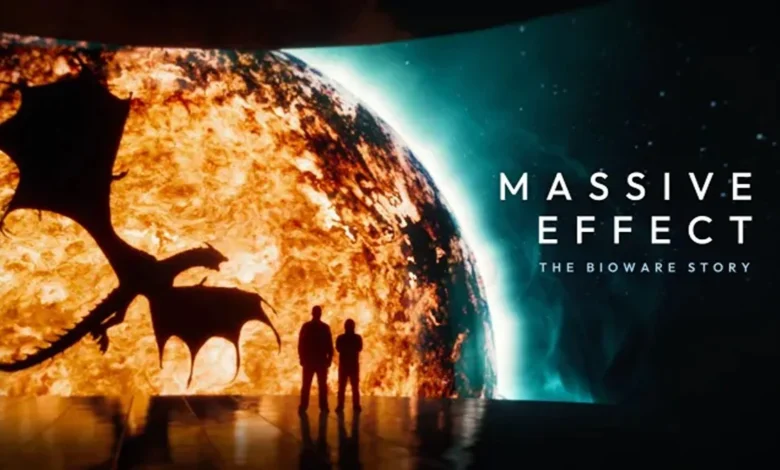
The gaming industry is currently reconciling with the closure of one of its most storied institutions, as the curtain falls on the legacy of BioWare. Following the formal cessation of operations in 2026, the studio—once synonymous with the pinnacle of role-playing game (RPG) development—has become the subject of a comprehensive feature-length documentary. Titled Massive Effect: The BioWare Story, the project is a collaborative effort between Fennessey Films and Score G Productions. Directed by Akash Sherman, known for his work on Clara, the documentary aims to provide an objective, exhaustive account of the studio’s evolution from a fledgling medical-tech-adjacent startup to a global powerhouse, and finally, its eventual dissolution under Electronic Arts (EA).
The Genesis: Three MDs and a Vision for Interactive Fiction
The story of BioWare began in 1995, an era when the PC gaming landscape was vastly different. The studio was founded in Edmonton, Alberta, by three medical doctors: Ray Muzyka, Greg Zeschuk, and Augustine Yip. Their initial foray into the software market, Shattered Steel (1996), established a technical baseline, but it was their subsequent pivot toward narrative-heavy RPGs that would redefine the genre.
Throughout the late 1990s and early 2000s, BioWare became the gold standard for player-choice-driven narratives. With the release of Baldur’s Gate (1998), the studio demonstrated that deep, complex Dungeons & Dragons mechanics could be successfully translated to the digital medium. This was followed by a string of critical and commercial successes, including Neverwinter Nights, Star Wars: Knights of the Old Republic, and the Jade Empire. The studio’s ability to weave intricate branching storylines with high-fidelity cinematic presentation earned it a cult following and immense industry prestige.
A Chronology of Growth and Acquisition
The trajectory of BioWare is best understood through its pivotal milestones, which reflect both the rapid expansion of the gaming industry and the complexities of corporate integration.
- 1995: BioWare is established in Edmonton, Canada, by Ray Muzyka, Greg Zeschuk, and Augustine Yip.
- 1998: The release of Baldur’s Gate marks the studio’s breakout success, cementing its reputation in the RPG space.
- 2003: Star Wars: Knights of the Old Republic launches, setting new standards for narrative depth in licensed properties.
- 2007: BioWare is acquired by Electronic Arts (EA) for approximately $860 million, marking a transition from an independent developer to a subsidiary of a massive multinational corporation.
- 2007–2012: The release of Mass Effect and Dragon Age: Origins solidifies the studio’s position as a premier developer for both console and PC markets.
- 2012: Founders Ray Muzyka and Greg Zeschuk depart the studio.
- 2012–2026: A period of significant internal restructuring, mixed critical reception, and evolving studio leadership.
- 2026: Electronic Arts officially closes BioWare, ending the studio’s three-decade tenure.
The EA Era: A Period of Complexity
The 2007 acquisition by Electronic Arts remains one of the most debated chapters in gaming history. While the partnership provided BioWare with the capital to produce larger-scale, cinematic experiences—such as the Mass Effect trilogy—it also introduced the frictions inherent in aligning a prestige studio’s creative culture with a publicly traded publisher’s operational requirements.
Over the last two decades, industry analysts have frequently pointed to the “EA Model” as a catalyst for creative stagnation. While BioWare continued to achieve significant sales figures, reaching a cumulative total of over 100 million units sold across its catalog, internal reports in the latter half of its existence cited "crunch" culture, high staff turnover, and the difficult transition to live-service models as primary sources of instability. The documentary Massive Effect is expected to provide an unprecedented, transparent look at the final two years of the studio’s operation, documenting the internal climate that led to the eventual shutdown.
Official Commentary and Artistic Legacy
The documentary project has received the endorsement of the studio’s original founders. In a joint statement, Ray Muzyka and Greg Zeschuk emphasized the human element behind the software. “BioWare was never just about the logo or the building,” the founders stated. “It was about the stories brought to life by the amazing people on our dev teams, and the fans who defended those worlds, championed them, and carried them forward. We’re proud this film honors those who made it all possible. The best stories never really end. They live on in our memories and wait for someone to pick them up again.”
Director Akash Sherman, who has long cited the studio’s work as a formative influence on his own career, views the film as both a tribute and a historical record. “The BioWare founders are my hometown heroes,” Sherman said in an interview with Deadline. “It’s a privilege and responsibility to share the journey of underdogs who came together to create deeply beloved storytelling. Their golden era kindled a spark in me and in an entire generation. With the studio’s recent closure, the film is now a profound valediction.”
Industry Implications and Future Outlook
The closure of BioWare serves as a bellwether for the broader gaming industry. The shift away from legacy mid-to-large-tier studios toward leaner, more agile development models has left many long-time fans questioning the future of the single-player RPG genre. However, the legacy of BioWare persists in the professional DNA of the industry. Thousands of developers who cut their teeth at the Edmonton studio have since moved on to form their own independent teams or occupy leadership roles at other major developers, effectively disseminating the "BioWare method" of storytelling throughout the wider ecosystem.
From a business perspective, the dissolution of BioWare highlights the difficulty of maintaining creative identity within a corporate conglomerate over a thirty-year span. While Electronic Arts has not released a comprehensive post-mortem regarding the closure, analysts suggest that the decision was driven by a need to consolidate resources and pivot toward higher-margin, lower-risk projects.
Conclusion: The Preservation of Digital Heritage
As the industry prepares for the 2027 festival premiere of Massive Effect, the film represents more than just a retrospective; it is a critical piece of digital preservation. By documenting the technical challenges, the interpersonal dynamics, and the economic pressures that dictated the life and death of the studio, the documentary provides future developers with a roadmap—and a warning—regarding the sustainability of creative institutions in a corporate-dominated market.
Whether through the lens of Dragon Age: The Veil Guard or the foundational work on Shattered Steel, BioWare’s impact on interactive media remains substantial. The documentary serves as a final, cohesive narrative for an entity that spent decades crafting narratives for others. As the industry moves forward, the "spark" mentioned by Sherman remains a tangible metric of the studio’s success: the ability to foster a global community that continues to engage with these worlds long after the servers have gone dark. The story of BioWare is ultimately a testament to the fact that while corporate entities are transient, the intellectual property and the emotional connection forged between developers and players possess a longevity that outlasts any balance sheet or closing statement.