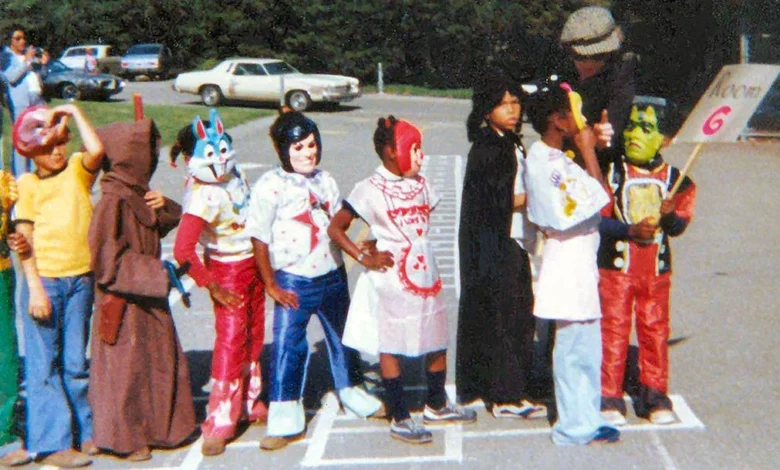
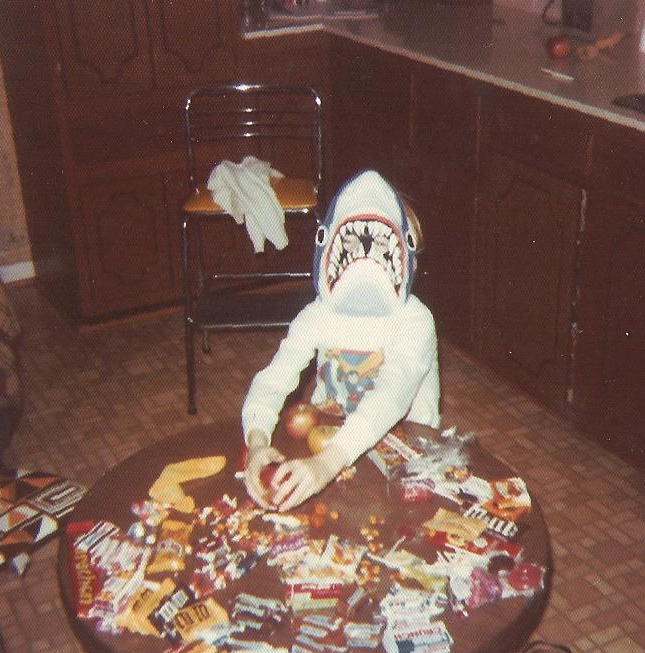
The cultural landscape of Halloween has undergone a profound transformation over the past several decades, shifting from a spontaneous neighborhood-wide ritual of door-to-door exploration into a highly curated, safety-monitored, and often commercialized holiday. Archival photographic collections, particularly those curated from mid-20th-century family albums and shared through historical preservation forums like Reddit’s r/TheWayWeWere, offer a vivid window into a bygone era of trick-or-treating. These snapshots—spanning the 1930s through the 1980s—capture an epoch characterized by rudimentary, homemade costumes, unmonitored neighborhood roaming, and a distinct community ethos that many modern sociologists and cultural historians argue has been lost to changing societal norms and heightened safety protocols.

The Evolution of Halloween Culture and Modern Safety Paradoxes
To understand the contemporary landscape of Halloween, one must examine the socio-cultural shifts that have redefined public space and childhood independence since the mid-20th century. Historically, All Hallows’ Eve operated on a baseline of community trust. Neighborhoods functioned as extended support networks where parents allowed children aged five and older to traverse blocks unaccompanied after dusk.
Sociological data compiled by child development researchers indicates a dramatic contraction in children’s independent mobility over the last fifty years. In the mid-20th century, the "radius of autonomy"—the distance children were permitted to travel from home without adult supervision—extended for miles. By the early 21st century, this radius had shrunk significantly, driven by a combination of media-amplified stranger danger narratives, suburban architectural shifts, and the proliferation of vehicular traffic.
Consequently, modern trick-or-treating has largely migrated away from traditional neighborhood canvassing. Today, parents frequently opt for controlled environments such as "trunk-or-treat" events in church parking lots, indoor mall festivals, or heavily policed master-planned communities. While these alternatives prioritize physical safety, cultural critics note that they dilute the authentic, exploratory thrill of navigating darkened suburban streets with friends, a core memory for generations of Americans who grew up between the 1950s and 1980s.
Chronological Overview of Mid-Century and Late-Century Halloween Traditions
The evolution of costumes and community celebrations across five decades highlights how resourcefulness and popular culture shaped the holiday experience.
The Pre-War and Post-War Era (1930s–1950s)
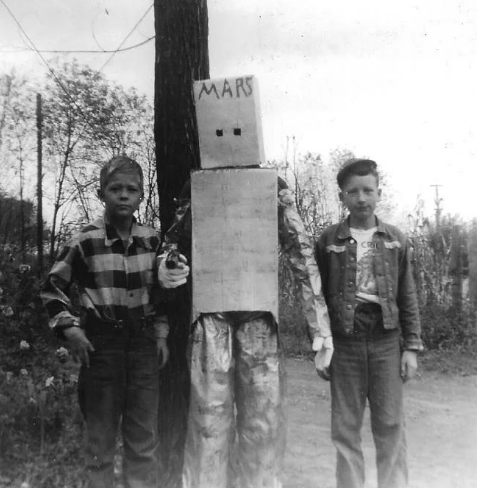
During the Great Depression and the immediate post-World War II period, commercial Halloween costumes were virtually nonexistent for the average American household. Costumes were constructed from household items, discarded clothing, and basic arts and crafts supplies. The photographic record from this era—such as the stark, atmospheric imagery of children in the 1930s—reveals an aesthetic defined by eerie, handmade papier-mâché masks and burlap sacks.
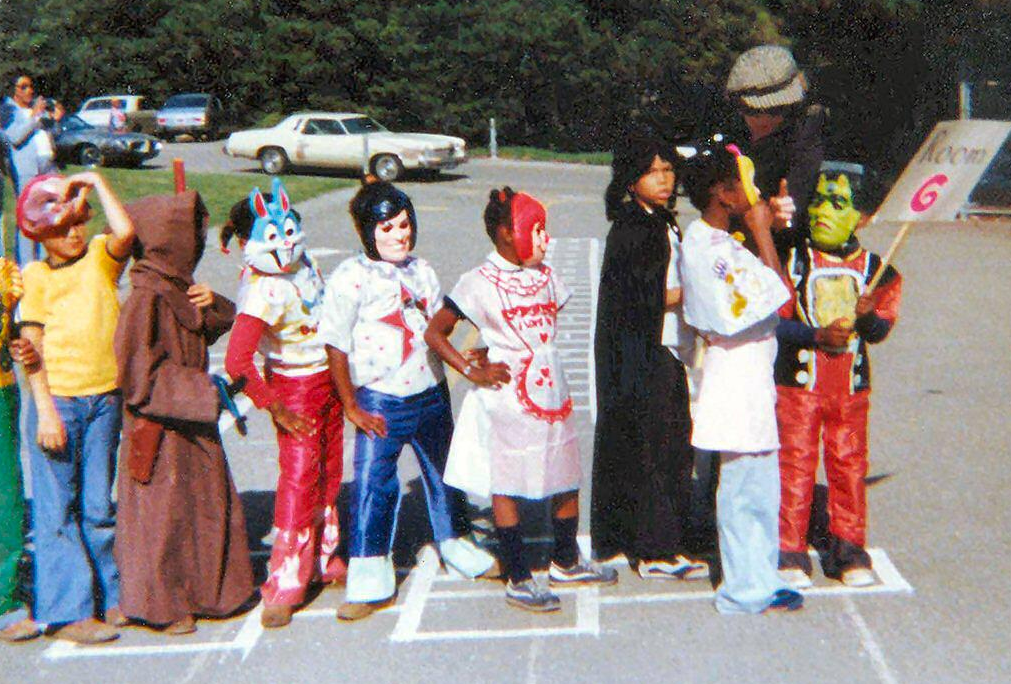
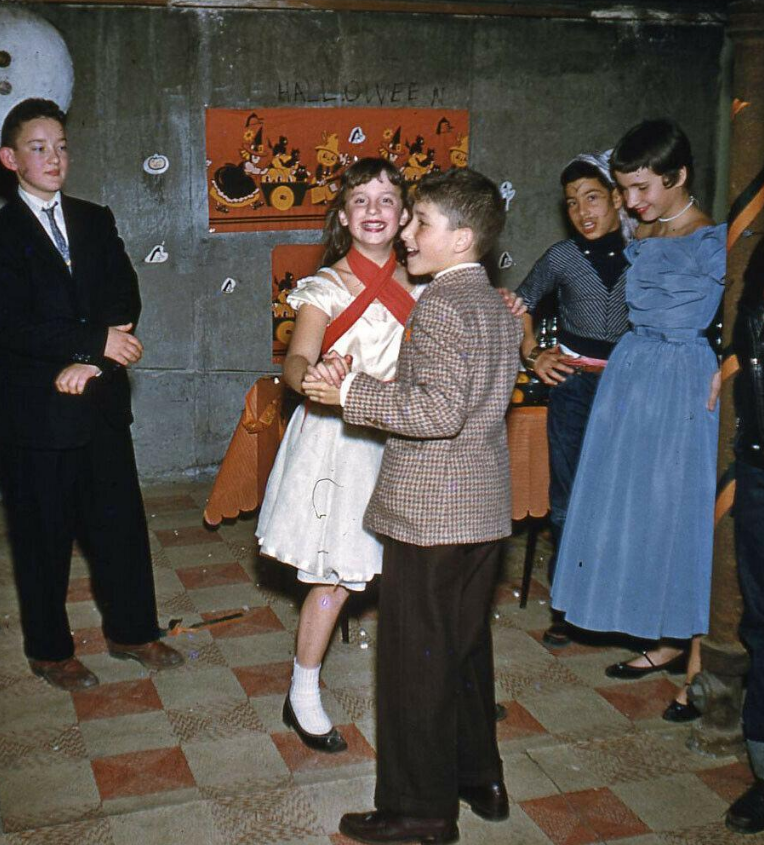
By the 1950s, post-war economic expansion brought modest consumer goods to the holiday, though homemade ingenuity remained dominant. The introduction of school-sponsored daytime festivities and community dance gatherings, popular in 1955, underscored how local institutions integrated Halloween into civic life, ensuring that celebration was not confined solely to nocturnal begging for sweets.
The Golden Age of Neighborhood Roaming (1960s–1970s)
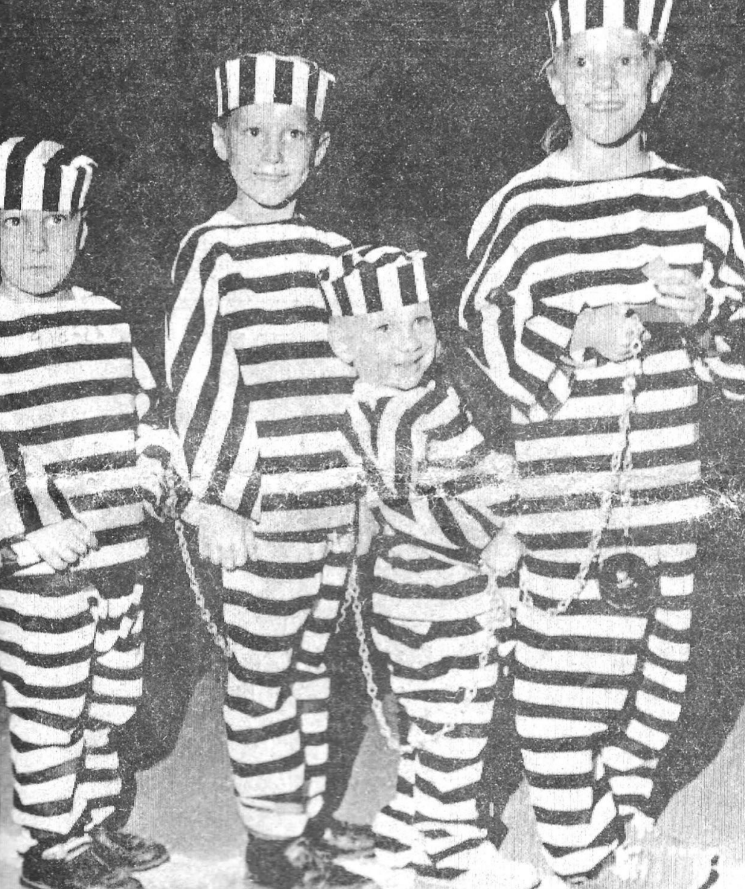
The 1960s and 1970s represent the apex of traditional trick-or-treating as a mass cultural phenomenon for American youth. Group costumes became increasingly elaborate yet remarkably simple in execution. Archival images from 1967 depict groups of children coordinating thematic outfits, such as chained prison chain gangs, relying on physical proximity and shared props rather than store-bought polyester jumpsuits.
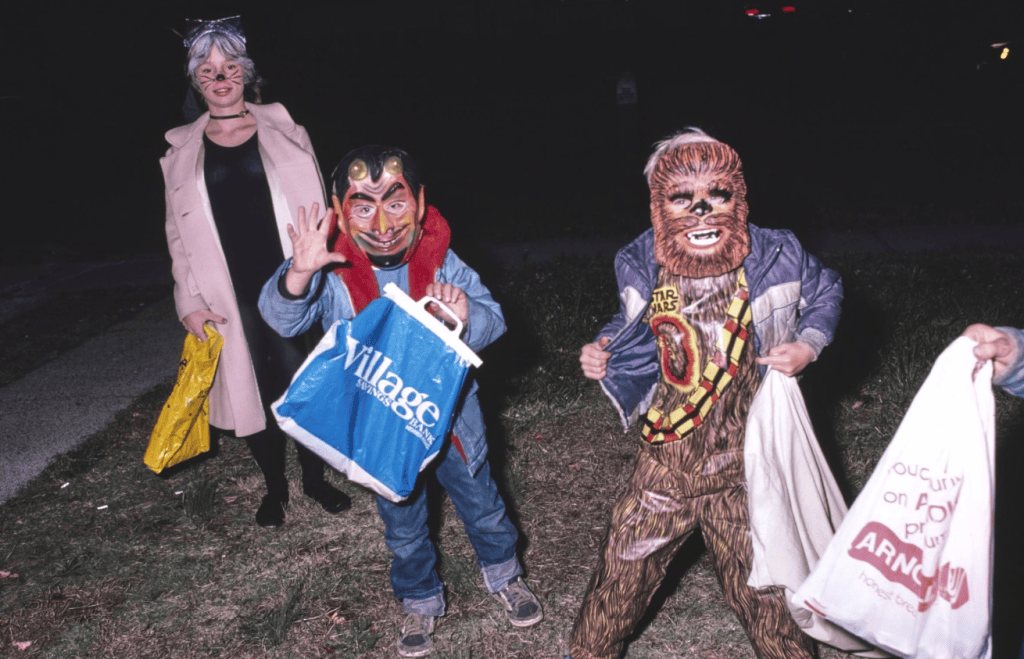
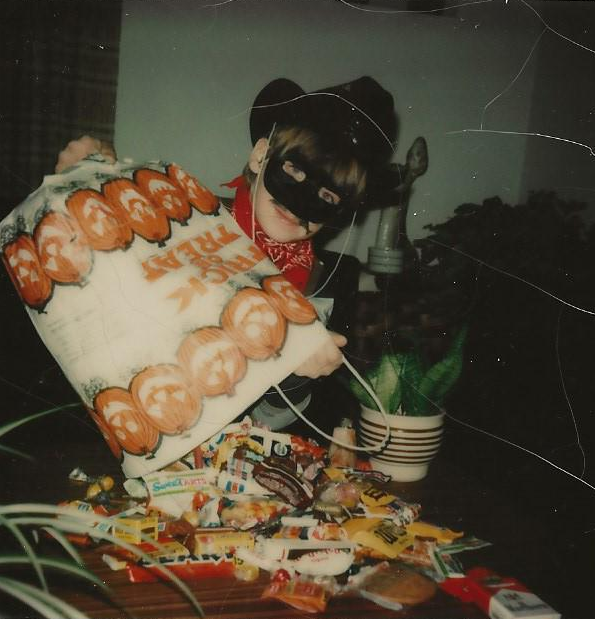
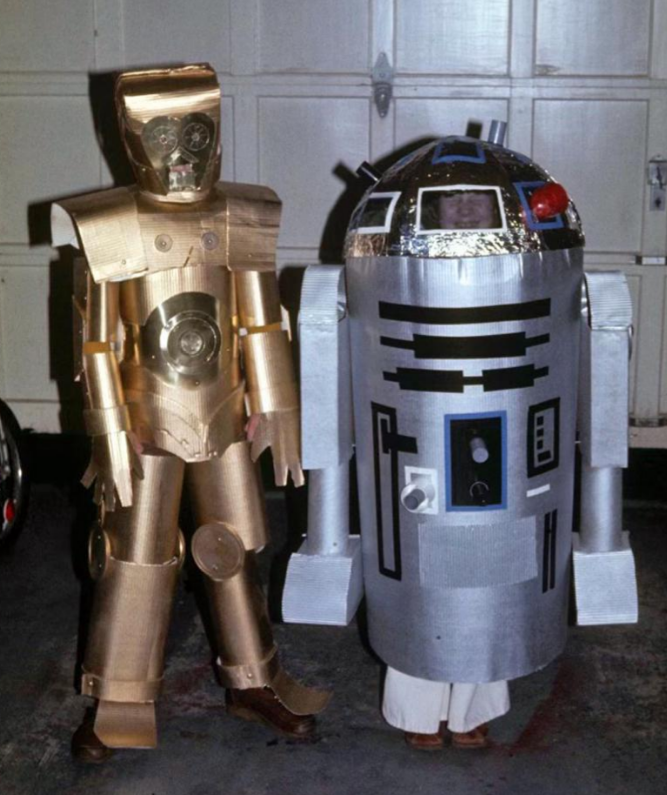
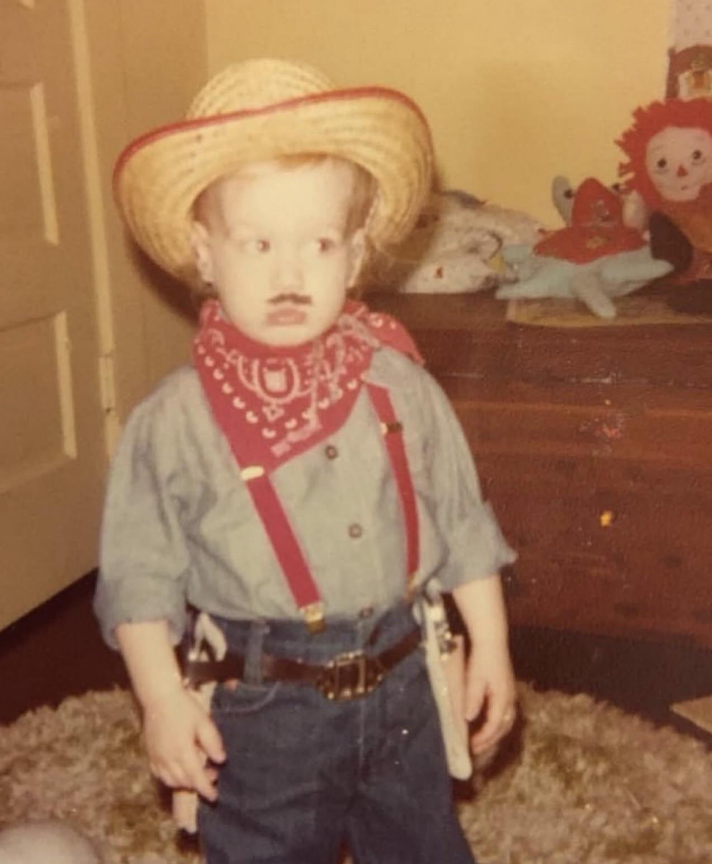
Pop culture began exerting a heavier influence by the late 1970s, catalyzed by cinematic milestones like Star Wars (1977). Children eagerly translated science-fiction epics into street-level reality, crafting R2-D2 units and cowboy personas from cardboard and thrift store finds. The emphasis during this period remained firmly on the journey—hauling heavy pillowcases and plastic pumpkins overflowing with candy over miles of pavement without parental escorts trailing behind.
The Pop Culture Shift of the 1980s
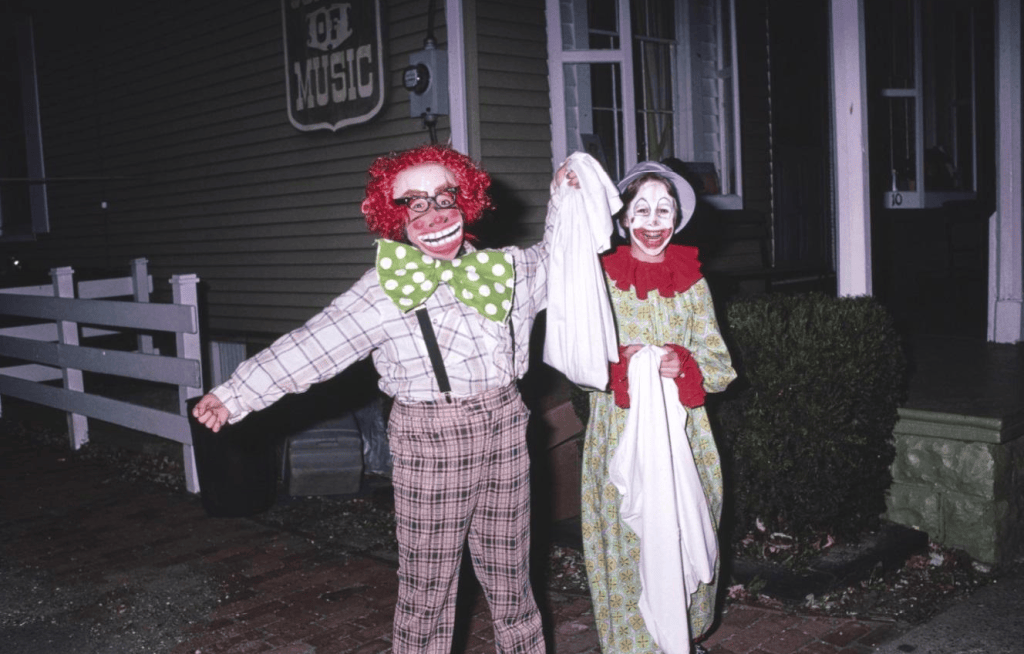
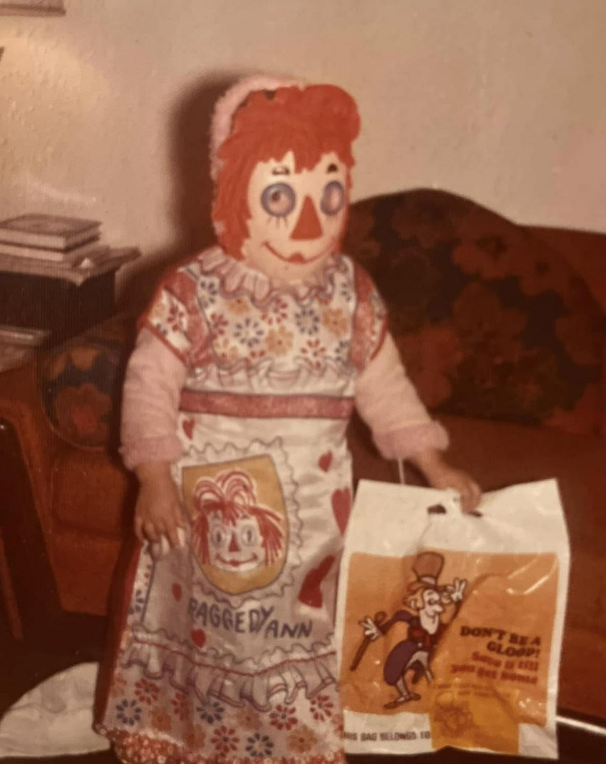
Entering the 1980s, the commercialization of Halloween accelerated rapidly. Mass-market plastic masks attached to thin, flammable vinyl smocks became ubiquitous. Despite this commercial shift, the foundational traditions of doorstep interaction remained resilient. Children dressed as television icons, classic monsters, and cinematic characters—such as a hybrid Devil-Chewbacca figure from 1983—continued to test the hospitality of their neighbors. However, this decade also marked the beginning of heightened public anxiety regarding food tampering, a moral panic that slowly began to erode the unbridled trust between homeowners and youthful strangers.
Sociological and Psychological Implications of Archival Imagery
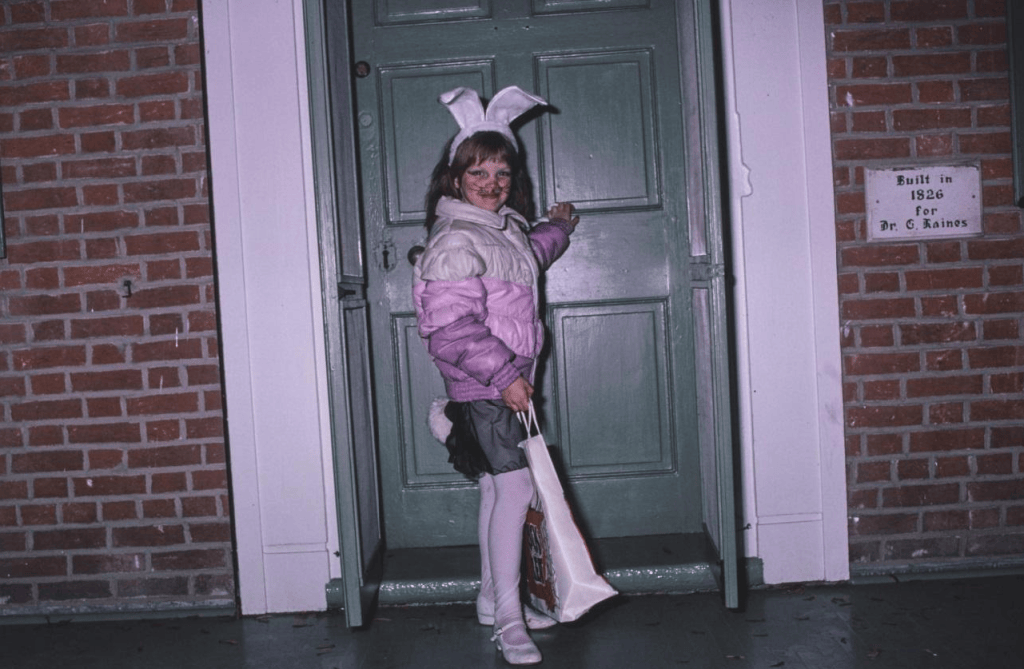
The resurgence of interest in vintage Halloween photography is not merely a product of nostalgic sentimentality; it reflects a broader cultural yearning for simplicity and perceived authenticity. Psychologists studying collective memory suggest that historical photographs act as external hard drives for cultural identity, allowing younger generations to project idealized narratives onto the past.
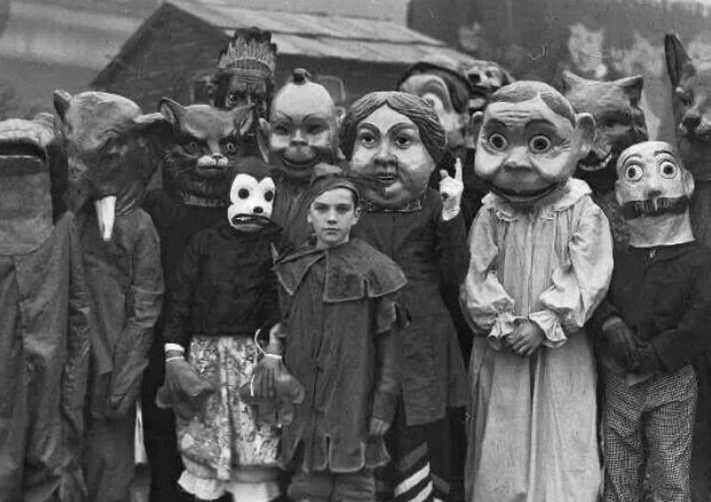
Cultural historian Dr. Elena Vance notes that contemporary adults view these mid-century images through a lens of profound temporal contrast. "When modern observers look at a photograph of an unaccompanied child in a rudimentary ghost costume from 1950, they are reacting as much to the spatial freedom depicted as they are to the aesthetic of the era," Vance explains. "The underlying emotion is often a sense of loss—not just of childhood, but of a public commons where children could navigate the world independently and safely."
Furthermore, consumer analysts point out that the commercialization of Halloween has inverted the holiday’s economic footprint. Mid-century trick-or-treating was a low-cost, high-engagement community ritual where the quality of the experience relied on interpersonal neighborhood interactions. Today, Halloween ranks among the top commercial retail holidays in North America, with billions of dollars spent annually on elaborate lawn decorations, professional-grade costumes, and mass-produced confectionery.
Preservation and the Digital Archive
The preservation of these historical snapshots has been largely democratized by digital archival platforms and social media communities. Subreddits such as r/TheWayWeWere serve as crowdsourced museums where families upload digitized Kodachrome slides and faded Polaroid prints. These digital repositories perform a vital archival function, rescuing anonymous domestic history from the physical decay of basements and attics.
As contemporary society navigates an increasingly digital, hyper-supervised, and risk-averse environment, these vintage photographs serve as both a historical record and a cultural benchmark. They document a time when the boundary between the private home and the public street was fluid, and when the simple act of walking up to a stranger’s porch in the dark was regarded not as a hazard, but as an adventure.