Sauron preserves the legacy of Adar through a chilling display of conquest in The Rings of Power season three

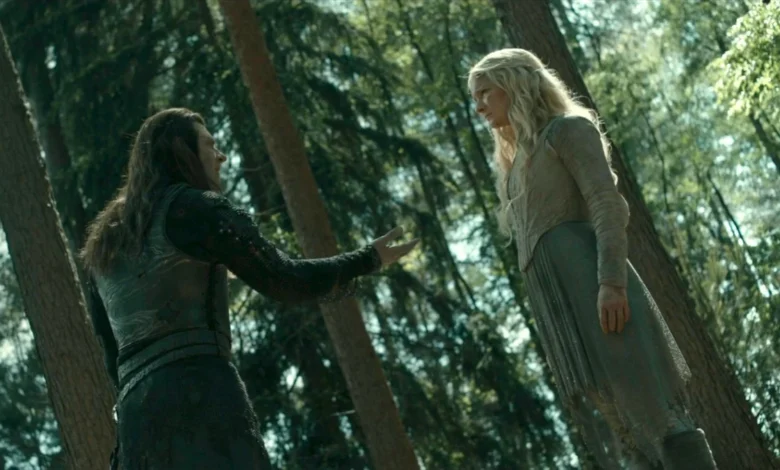
The third season of Prime Video’s The Lord of the Rings: The Rings of Power is set to debut on November 11, and ahead of the premiere, recent exclusive insights from the production’s set reveal how the narrative maintains continuity following the dramatic conclusion of the second season. Among the most significant developments in the world-building of Barad-dûr is the inclusion of specific artifacts belonging to defeated adversaries, most notably the sword of the Uruk leader, Adar. This deliberate inclusion serves as a testament to the show’s commitment to thematic weight and historical continuity within the Second Age of Middle-earth.
A Chronology of Conflict: From Eregion to Barad-dûr
The arc of Adar, the father of the Uruks, reached a definitive and tragic conclusion in the final episodes of season two. Having led his followers with a singular vision of autonomy and protection for his "children," Adar’s death marked the end of an era for the orcish factions within the series. Following the destruction of Eregion and the consolidation of power by Sauron, the power structure of the lands surrounding Mordor underwent a seismic shift.

In the aftermath of these conflicts, the narrative transition into season three focuses on the consolidation of Sauron’s influence. Production design teams, working under the guidance of showrunners J.D. Payne and Patrick McKay, have meticulously crafted the interior of the Dark Tower, Barad-dûr. During a recent set visit, observers noted that the tower is not merely a stronghold but a curated museum of Sauron’s military and psychological triumphs. The placement of Adar’s sword upon one of the Dark Lord’s personal desks functions as a symbolic anchor, grounding the audience in the reality of the political and physical changes that have occurred since the fall of the Elven realms.
The Significance of Narrative Trophies
The use of physical objects to signify historical character arcs is a sophisticated storytelling device, particularly in fantasy epics where the scale of conflict can often obscure individual loss. By keeping the sword of his former rival, Sauron is not merely storing a weapon; he is signaling his total dominion over the forces that once opposed his ascendancy.
Charlie Vickers, who portrays the central antagonist, provided context regarding the character’s psychological state during production interviews. According to Vickers, the presence of these items—which also include the remains of Celebrimbor—reflects a complex, almost vanity-driven compulsion to catalog his conquests. Vickers drew a parallel to the way high-achieving professionals might display accolades in their homes, characterizing these remnants as the "trophies" of a career defined by manipulation, war, and the subjugation of Middle-earth’s diverse cultures. This characterization adds a layer of depth to Sauron’s portrayal, moving him beyond a one-dimensional villain into a figure who derives satisfaction from the tangible proof of his victories.

Production Design and Environmental Storytelling
The production design of Barad-dûr is intended to convey a sense of dread and oppressive history. The choice to display Adar’s sword alongside the remains of Celebrimbor creates a visual narrative that links the two most significant hurdles Sauron faced during the second season. While the decay of Celebrimbor serves as a stark reminder of the cost of defiance against the Dark Lord, the sword of Adar acts as a more nuanced symbol of the ideological shift occurring within the orcish ranks.
For the audience, these visual cues act as a bridge between seasons. They prevent the narrative from suffering from a "short half-life of memory," a common pitfall in serialized television where previous stakes are quickly discarded in favor of new plot points. By acknowledging the past through these objects, the showrunners ensure that the consequences of previous seasons remain visible and relevant to the ongoing struggle for power in the Third Age’s prelude.
Implications for the Future of the Orcs
While the sword remains a static reminder of the past, the influence of Adar’s ideals continues to ripple through the show’s narrative. The central question facing the series as it enters its third season is whether the orcs, now under the control of Sauron, will retain the sense of identity and agency that Adar fought to instill in them.

Showrunners J.D. Payne and Patrick McKay have indicated that the transition of the orcs into a new status quo will be a primary focus of the upcoming season. They have confirmed that a new orc character will be introduced, serving as a focal point for the evolving culture of the Uruks. This character is expected to bring a new dynamic to the narrative, testing whether the "nuance" and "humanity" (or, in this case, "orc-ity") that Adar fostered can survive under the shadow of the Eye. The promise of this new arc suggests that while the leader is gone, the ideological conflict—the struggle between subservience to a dark god and the desire for self-determination—is far from resolved.
Data and Contextual Analysis of the Second Age
The historical context of the Second Age, as established by J.R.R. Tolkien and adapted by the show, requires a delicate balance between established lore and the necessity of character-driven drama. The inclusion of these specific, non-canonical (in the sense of direct textual source material) objects like Adar’s sword allows the show to humanize the scale of the conflict.
In terms of world-building data, the third season represents a significant shift in tone. The first two seasons focused on the creation of the Rings and the deception of the Elves; the third season shifts toward the expansion of Mordor’s influence and the integration of the Orcs into a more structured, albeit terrifying, society. The "trophy" motif serves as a crucial data point for the audience, signaling that the era of subtle manipulation has ended, replaced by an era of overt, documented, and enforced tyranny.

Official Statements and Industry Perspective
The deliberate nature of these design choices reflects the collaborative relationship between the show’s creative team and its cast. Both Payne and McKay have emphasized that every element of the set is designed to tell a story. When discussing the "CelebrimBONES" moniker used by the production team, the showrunners underscored that even in dark moments, the show maintains a consistent internal logic: Sauron is a collector of broken things, both literal and metaphorical.
Charlie Vickers’ insights further clarify the logic behind why certain features, such as the Elven ears of the Dark Lord, remain present. The actor’s interpretation—that these features serve as a persistent reminder of his ability to infiltrate and destroy the Elven kingdoms—adds a layer of psychological horror to his performance. It suggests that for Sauron, his physical appearance and his collection of relics are all parts of a singular, coherent strategy to assert his dominance over the inhabitants of Middle-earth.
Looking Ahead to November 11
As the premiere of season three approaches, the anticipation centers on how these various threads—the memory of Adar, the new orcish leadership, and the expanding power of the Dark Lord—will coalesce. The presence of Adar’s sword in the halls of Barad-dûr serves as a silent, glimmering reminder that in the world of The Rings of Power, nothing is truly lost. Every act of defiance, every fallen leader, and every sacrifice contributes to the tapestry of history that will eventually lead to the events familiar to all fans of the legendarium.

The third season is poised to be a pivotal chapter, moving beyond the initial conflicts to explore the long-term ramifications of Sauron’s rise. By maintaining a focus on the personal and physical remnants of the past, the series ensures that its viewers remain emotionally invested in the broader geopolitical changes of the era. Whether through the cold steel of a sword or the introduction of new characters, the legacy of the previous seasons is clearly being woven into the fabric of the future, setting the stage for an intense and consequential continuation of the saga.