Inside the Virtual Canvas: How XR Designer Abraham Lopez and Kashus Culpepper Brought ‘Til The Sun Goes Down’ to Life on Honda Stage

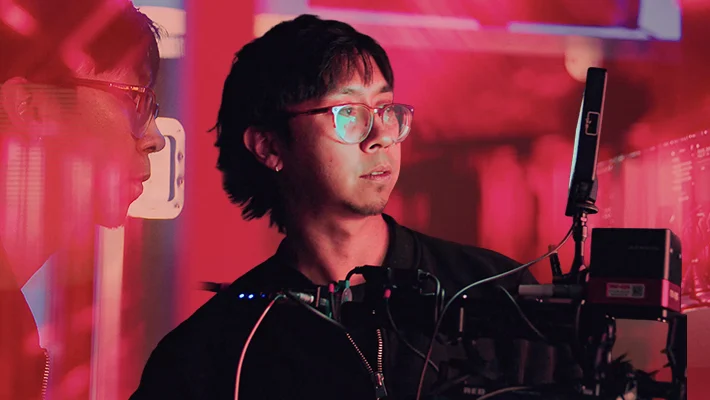
When rising musical artist Kashus Culpepper recently brought his evocative track “Til The Sun Goes Down” to UPROXX’s FYI Studios for a high-profile Honda Stage session, the performance was elevated far beyond a standard live studio recording. Framing Culpepper’s gritty, soulful vocals was a swirling, psychedelic virtual environment that seemed to breathe and pulse in real-time with the music. The mastermind responsible for constructing this immersive digital dreamscape was extended reality (XR) designer and artist Abraham Lopez.
The collaboration between Culpepper and Lopez represents a growing trend in modern music production, where cutting-edge extended reality technology merges with raw musical talent to create cinematic, deeply personalized visual accompaniments for live performances. For a track as atmospheric and narrative-driven as “Til The Sun Goes Down,” the visual world needed to be more than just a passive backdrop; it had to function as a visual extension of the song’s emotional core.
The Roots of a Visual Visionary
Abraham Lopez’s journey toward becoming one of the industry’s most sought-after XR designers began decades before the advent of modern virtual production tools. Design has been a lifelong pursuit for the artist, who traces his passion back to his earliest years in primary school.
“I first discovered my love of design in first grade. I was referred to this art competition,” Lopez recalls, reflecting on the foundational moments of his career. “Seeing people react to my art at such a young age inspired me to want to pursue that and take it to its limits.”
That early validation set off a lifelong exploration of visual mediums, eventually leading Lopez into the highly specialized and technically demanding field of Extended Reality design. Unlike traditional set design, which relies on physical materials, carpentry, and lighting grids, XR design requires artists to build entire ecosystems within digital engines. For the Honda Stage session, Lopez was tasked with translating the abstract, hallucinatory world that Culpepper envisioned when he originally penned “Til The Sun Goes Down” into a functional, interactive digital reality.
When the opportunity arose to team up with Culpepper, Lopez expressed immediate enthusiasm, recognizing a rare synergy between his own design philosophy and the vivid imagery embedded in the musician’s songwriting.
The Complex Craft of Extended Reality Production
Creating a seamless XR environment for a live musical performance is a monumental technical hurdle. The process is famously laborious and intricate, requiring a delicate balance between digital artistry and rigorous engineering.
An XR designer working on a stage production must successfully bridge the physical and virtual worlds. This involves not only designing high-fidelity 3D assets and dynamic lighting schemes within game engines like Unreal Engine, but also integrating complex physical studio spaces with advanced camera tracking systems. Every movement of the studio camera must correspond precisely with the virtual camera inside the software in real-time, ensuring that the perspective of the digital horizon shifts naturally as the camera pans, tilts, and tracks the artist.
In Lopez’s hands, however, these disparate technologies dissolve into the background, leaving only the hypnotic atmosphere of the song. For Culpepper, the technical wizardry served to validate a creative vision that had existed since the earliest days of the composition process.
“How I look at songwriting and songs in general is visually,” Culpepper explains, noting how closely intertwined his auditory and visual senses are when creating music. Standing on the Honda Stage surrounded by Lopez’s reactive digital landscapes, the musician watched his internal mental imagery materialize on massive LED volumes. “I’m pretty pumped to see it on the screen,” he adds.
Fans interested in the meticulous process behind the performance can watch Lopez’s exclusive behind-the-scenes footage, which details the step-by-step construction of the virtual environment. The final, polished marriage of Culpepper’s soul-stirring vocals and Lopez’s psychedelic architecture is currently available for streaming via the official Honda Stage YouTube channel.
Honda Stage: A Launchpad for Emerging Talent and Cultural Expression
The collaboration between Culpepper and Lopez underscores the core mission of Honda Stage, the automotive brand’s long-running flagship platform dedicated to music, culture, and the elevation of emerging talent.
Established to build upon Honda’s deep foundation of celebrating breakthrough artists, the platform acts as a catalyst during pivotal moments in a musician’s career. As artists navigate their journeys of discovery and pursue their professional dreams, Honda Stage provides them with the resources, visibility, and creative freedom needed to experiment with their craft.
The platform offers exclusive content, behind-the-scenes access, and immersive live experiences that allow fans to delve deeper into the artistic process. Rather than presenting conventional promotional interviews or standard music videos, Honda Stage emphasizes the inspirations, struggles, and creative breakthroughs that define a modern artist’s trajectory.
From breakout musical moments to unique expressions intersecting with fashion, dance, and broader contemporary art culture, Honda Stage consistently showcases the raw creativity and unrelenting drive required to break through in today’s crowded entertainment landscape. By pairing artists like Kashus Culpepper with technical pioneers like Abraham Lopez, the platform bridges the gap between traditional performance and futuristic media art.
Broader Implications for the Future of Live Performance
The integration of XR technology into live music sessions—as demonstrated on the Honda Stage—signals a profound shift in how audiences consume live music and how artists conceptualize their performances.
In the wake of rapid advancements in virtual production, LED volume stages, and real-time rendering, the traditional music video and the static live session are undergoing a complete reinvention. Artists are no longer restricted by the physical limitations of brick-and-mortar studios or the prohibitive costs of location shooting. Instead, they can transport themselves and their audiences into entirely fabricated, hyper-personalized cinematic universes within a matter of hours.
For singer-songwriters working in roots, Americana, and alternative genres—spaces traditionally defined by acoustic authenticity and minimalist staging—the adoption of advanced digital tools represents an exciting new frontier. It allows artists like Culpepper to externalize the psychological and emotional landscapes of their lyrics in ways that were previously impossible on a standard soundstage.
Furthermore, the collaboration highlights the rising prominence of behind-the-scenes creators in the public eye. While musicians have historically occupied the entirety of the spotlight, platforms like Honda Stage and creators like Abraham Lopez are helping to demystify the collaborative ecosystem of modern media production. By showcasing the intricate labor of XR designers, programmers, and camera engineers, the industry acknowledges that a compelling artistic output is increasingly the result of a multidisciplinary collective.
As virtual production tools become more accessible and refined, the standard for live music presentation will continue to rise. Audiences now expect a synesthetic experience where sound and sight are inextricably linked, dynamic, and emotionally resonant. The successful union of Kashus Culpepper’s acoustic storytelling and Abraham Lopez’s psychedelic virtual architecture on the Honda Stage serves as a blueprint for how future artists can leverage technology to deepen their connection with fans, pushing the boundaries of what a live musical performance can achieve.