Kingdom Come Chapter Two: A 2026 Retrospective on Power, Authority, and the Perils of Vigilante Justice

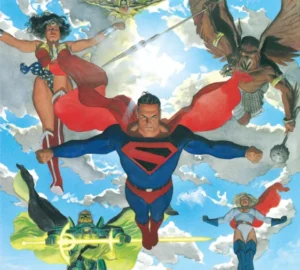
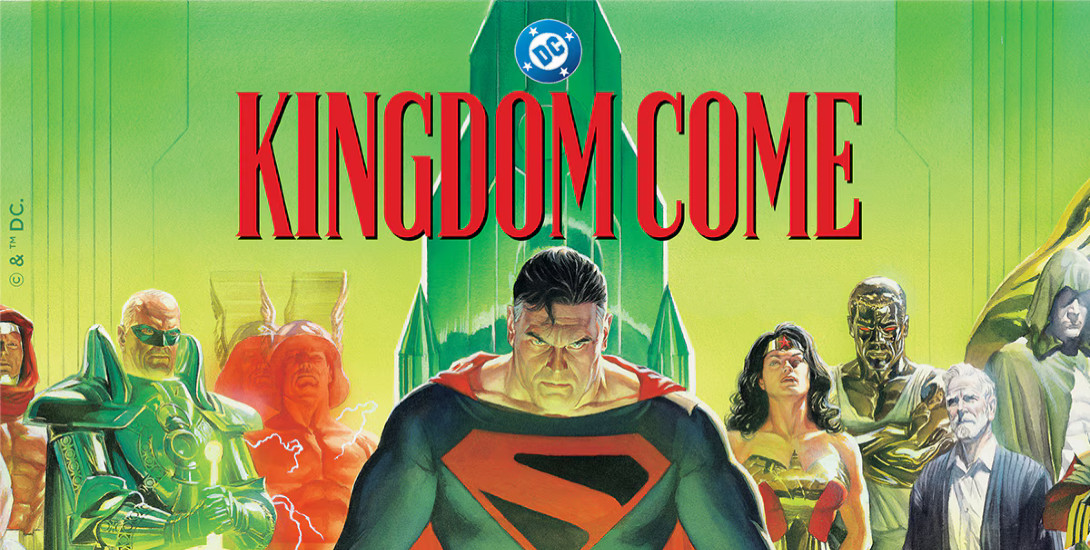
The second chapter of Mark Waid and Alex Ross’s seminal 1996 graphic novel, Kingdom Come, continues its potent exploration of power dynamics, moral ambiguities, and the erosion of traditional societal structures, themes that resonate with profound prescience three decades later in 2026. Following the disquieting events of the first chapter, which saw the tumultuous return of Superman amidst a world overrun by a new, violent generation of metahumans, Chapter Two intensifies the ideological conflict and introduces critical questions about authority, surveillance, and the ultimate cost of order. This installment plunges readers into a stark reflection of a hyper-powered world grappling with issues eerily mirrored in contemporary global debates, from immigration crises to the rise of unaccountable tech titans.
The Chaos of the New Age: A World on the Brink
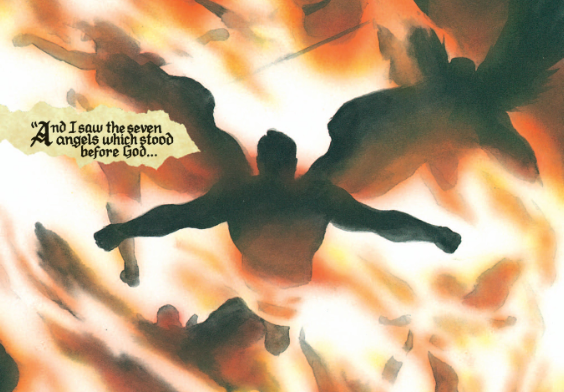
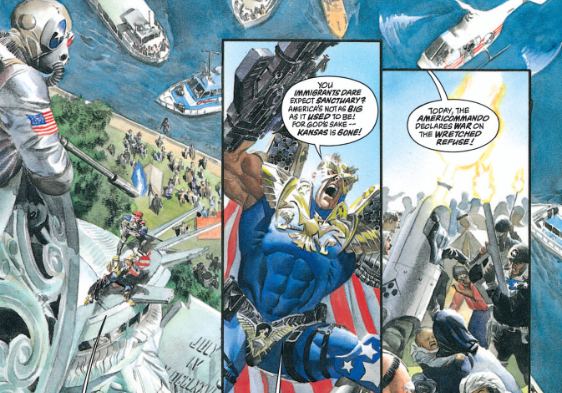
The narrative commences with another unsettling vision from Wesley Dodds, the aged Spectre’s human host, echoing the biblical Book of Revelation. This foreshadowing sets a somber tone for the escalating conflicts. The scene immediately transports readers to the Statue of Liberty, a crumbling symbol besieged by an escalating immigration debate on Earth-22 (or Earth-96, depending on multiversal classification). Here, Americommando, a jingoistic metahuman clad in patriotic regalia and wielding a powerful arm-cannon, confronts a throng of newly arrived immigrants, declaring the nation his to defend from "insidious menaces." His "Minutemen" are swiftly engaged by another faction of robotic vigilantes, also adorned in nationalistic colors, claiming their own right to defend the land.
This chaotic skirmish, marked by projectiles and flames endangering terrified families, underscores the breakdown of conventional law enforcement and civil discourse. Both vigilante groups, despite their claims of protection, demonstrate a disturbing disregard for human lives caught in the crossfire. Wesley’s horrified observation that "someone should do something" is answered by the dramatic arrival of the reunited Justice League.
The Gods Descend: Superman’s Return and Unilateral Authority
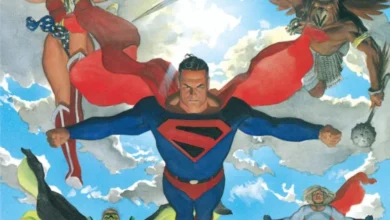
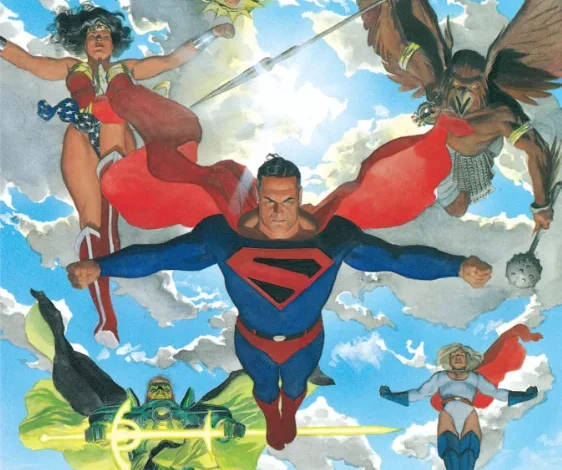
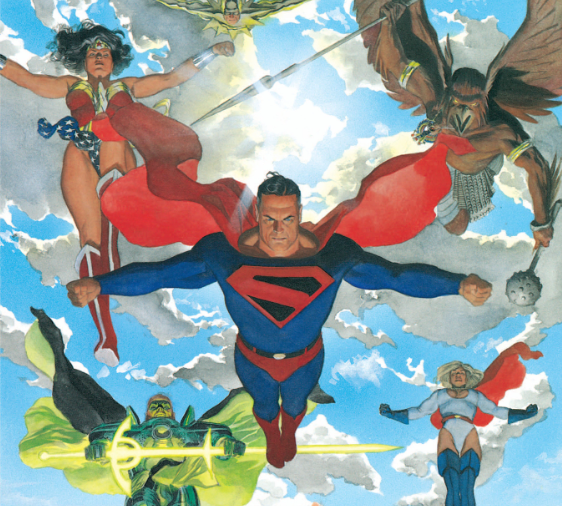
The Justice League’s intervention is swift and decisive. Superman effortlessly disarms Americommando, while Green Lantern and other members protect civilians and contain the chaos. Wesley’s initial relief, calling them "angels," quickly shifts to a more sobering realization: "Gods." This distinction is critical, highlighting the immense, almost divine, power wielded by these individuals who operate outside traditional legal and governmental frameworks. The fact that their authority is self-appointed, mirroring that of the very instigators they subdue, immediately raises a central ethical dilemma that Kingdom Come relentlessly scrutinizes.
A subtle but significant plot thread emerges during this incident: the "Brain Trust," two figures in metal suits, are shown orchestrating the robotic vigilantes. Their mental link is severed by Red Robin (Dick Grayson), revealing that not all metahuman chaos is spontaneous; some conflicts are calculated, designed by unseen hands for clandestine purposes. This introduces an element of engineered societal destabilization, a concept resonating with 2026 concerns about misinformation campaigns and hidden actors manipulating public perception.
The United Nations Confrontation: A Vague Mandate for Order
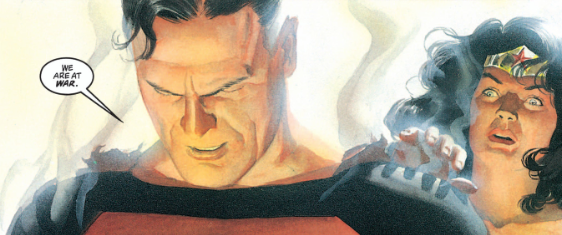
In the immediate aftermath, the press descends upon the Justice League, demanding answers. To preempt speculation, Superman holds a press conference at the United Nations. He declares the Justice League’s previous withdrawal a mistake and vows to teach the new generation of metahumans "the meaning of truth and justice," promising to restore order through "wisdom" and, chillingly, "if necessary, with force." His plan, however, remains conspicuously vague, raising concerns among UN leaders about the League’s self-appointed role as global arbiters.
From a 2026 perspective, this scene is particularly poignant. The original article’s 1996 publication date predates widespread anxieties about non-state actors wielding immense power and influencing global policy without accountability. In 2026, where the influence of private entities and powerful individuals often eclipses that of traditional governance, Superman’s unilateral declaration of intent, bypassing political and legal bodies, serves as a stark warning. The UN leaders’ unease reflects the universal concern over sovereignty and democratic process when faced with overwhelming, unelected power. Superman’s stated aim to "make things right again" is undermined by the absence of established legal and ethical protocols, leaving law and order subject to the discretion of powerful vigilantes. Wesley, despite his relief, grows increasingly anxious as his visions connect Superman to a looming judgment.
Wayne Manor: The Dark Knight’s Panopticon
The narrative shifts to the desolate ruins of Wayne Manor, where Superman confronts Bruce Wayne in the waterlogged Bat-Cave. The tension between the former allies, now ideologically estranged, is palpable. Bruce, isolated amidst a labyrinth of advanced technology, monitors Gotham through a vast network of screens. He dismisses the destruction of his manor by villains like Bane and Two-Face, seeing it as inconsequential to his larger mission. Superman reveals the annihilation of major prisons like Arkham, Belle Reve, and Blackgate by a rogue metahuman, further emphasizing the breakdown of traditional justice systems.
Bruce’s response to Superman’s plea to rejoin the Justice League is a stark articulation of his alternative vision. He argues that the exponential growth of metahuman numbers necessitates "finesse and meticulous, careful planning," contrasting it with the League’s "punch now, ask questions later" approach. Batman’s solution is a pervasive, high-tech surveillance state across Gotham and Star City, enforced by robotic agents. He believes this system returns control to non-powered humans by meticulously monitoring and neutralizing threats.
Superman, however, views Batman’s Gotham as a "police state," where constant surveillance and robotic enforcement cultivate a perpetual atmosphere of fear and paranoia. Batman, unfazed, highlights his expansive network and his own coalition of allies, whom he believes are more attuned to humanity’s needs, dismissing the Justice League as "totalitarian." This exchange is a critical juncture, presenting two contrasting, yet equally problematic, approaches to restoring order.
In 2026, Batman’s vision resonates with alarming clarity. The original article’s observation about the pre-2017 "delightful ignorance" of pervasive tech surveillance now feels like a distant memory. In a world increasingly dominated by powerful tech companies and billionaires, where personal data—from biometric identifiers to digital footprints—is routinely collected and analyzed without explicit consent, Batman’s surveillance state reflects real-world anxieties. The potential for such privately operated systems to be co-opted or to erode fundamental rights, particularly when operated by non-elected entities, is a central concern in contemporary discussions around AI governance, data privacy, and the influence of tech moguls on public life. Kingdom Come masterfully anticipates this future, forcing readers to question the cost of safety when it necessitates the sacrifice of personal freedom.
The Diverging Paths: Allies and Antagonists
Upon Superman’s departure, Batman’s hidden allies emerge: Dinah Lance (Black Canary), Oliver Queen (Green Arrow), and Ted Kord (Blue Beetle). They share Batman’s skepticism about the Justice League’s methods and reveal their own contingency plans, including a metahuman team. The complex relationship between Superman and Batman, often seen as an unlikely partnership, is here portrayed as a profound ideological rift.
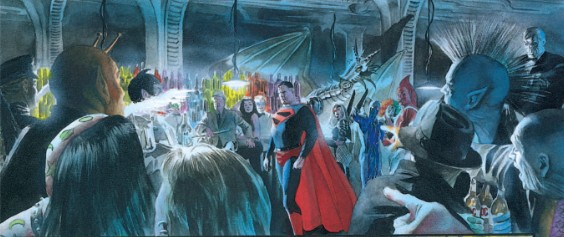
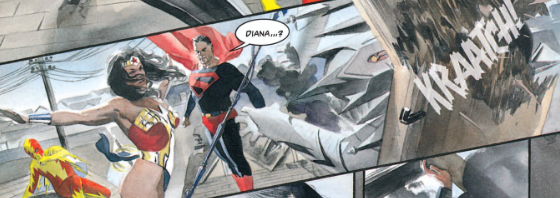
As days pass, the Justice League attempts to resolve conflicts globally, employing both negotiation and force. Their methods become increasingly militant, epitomized by an incident where they infiltrate a metahuman nightclub, needlessly destroying property before "encouraging" attendees to join the League, with a clear implied threat. Wonder Woman, in particular, exhibits a growing weariness and rage, exemplified by her violent reaction to an untrained metahuman offering "assistance." Her frustration with the constant cleanup and the new generation’s recklessness leads to a quiet but significant fracture with Superman, who, despite agreeing on the problem, subtly rebukes her by emphasizing the sacredness of human life. This ideological divergence within the League itself further destabilizes their claim to absolute moral authority.
Lex Luthor’s Master Plan: The Mankind Liberation Front
Meanwhile, Lex Luthor resurfaces as the architect of the "Mankind Liberation Front," a coalition of former supervillains including Catwoman (Selina Kyle) and The Riddler (Edward Nigma). Ostensibly focused on relief efforts for the victims of the devastating Kansas disaster, Luthor’s true agenda is far more sinister. He exploits the chaos to expand his influence, revealing that his cohort has repurposed metahuman survivors from Arkham and Belle Reve, rebranding them as new "superheroes." While these manipulated vigilantes account for only 8% of the new metahuman population, they are strategically deployed to escalate conflicts and further erode public trust in all superheroes. Luthor’s ultimate goal is to incite humanity to rise up against all metahumans, thereby consolidating power for himself and his human-centric faction. The Justice League’s resurgence is an unexpected obstacle, but Luthor already has a countermeasure: Billy Batson, also known as Captain Marvel, a being of immense power who will play a critical role in his scheme. This manipulation of public perception and the weaponization of manufactured chaos are chillingly resonant with political strategies observed in 2026.
The Ghosts of Kansas: Magog’s Accusation and Superman’s Retreat
The narrative converges on Magog, the catalyst for Superman’s original withdrawal, found attempting to rebuild in the desolate Kansas wasteland. Superman confronts him, brimming with moral indignation. Magog, however, is unphased, asserting that Superman’s inaction, rather than his own violent methods, is responsible for the current state of the world.
A crucial flashback unfolds: ten years prior, after the Joker murdered the staff of the Daily Planet, including Lois Lane, Magog executed the Joker in the streets. Superman, devastated but committed to the law, brought Magog in for trial. Magog was acquitted, and public sentiment overwhelmingly sided with him, believing he had the courage to do what Superman would not: permanently remove a persistent threat from a flawed justice system. Rather than engage in this profound moral and legal debate, Superman, out of fear of the future Magog represented, turned his back on humanity, withdrawing from the world. Magog bitterly accuses Superman of leaving humanity vulnerable to the very forces he now decries. This revelation recontextualizes Superman’s moral authority, highlighting the profound consequences of his principled but ultimately disengaging choice.
After a brief, one-sided confrontation, Magog is defeated and begs Superman for death, haunted by the "million ghosts" of his choices. This plea forces Superman to confront the inescapable question of what to do with metahumans who refuse to align with the League or who have committed unforgivable acts. His answer: a "Big Prison." This seemingly pragmatic solution—a massive facility to contain violent metahumans—is immediately problematic. As Wesley observes, a prison controlled solely by the Justice League bypasses standard legal protocols for arrest, sentencing, and oversight, effectively removing human agency from the metahuman crisis. More alarmingly, it concentrates immense, volatile power in one location, creating a veritable "ticking time bomb."
The Unholy Alliance: Batman and Luthor
Chapter Two culminates in an unthinkable alliance: Bruce Wayne and Lex Luthor. Batman, upon learning of the Justice League’s super-prison, concludes that Superman’s methods have crossed an intolerable line. His disdain for Superman’s unilateral imposition of order outweighs decades of animosity between himself and Luthor, and indeed, many of the villains now allied with Luthor were once part of Batman’s own rogues gallery. By establishing a prison where the Justice League acts as judge, jury, and potentially executioner, Superman has inadvertently unified the disparate forces opposing him. Batman, unwilling to await the full extent of the League’s self-appointed authority, forges this desperate alliance, setting the stage for an unprecedented confrontation. This shocking development underscores the extreme ideological chasm that has opened between the former allies, with the perceived threat of absolute power leading to alliances of convenience that defy traditional morality.
Broader Implications in 2026
The enduring relevance of Kingdom Come in 2026 lies in its prophetic examination of power, governance, and the human condition. The narrative’s critique of the Justice League’s operation without governmental input mirrors contemporary concerns about the democratic deficit in an increasingly globalized and technologically advanced world. When non-elected entities, however well-intentioned, seize control of societal reins, the fundamental power of ordinary citizens to influence their destiny through established democratic processes is severely undermined. Superman’s unilateralism, however noble in intent, inadvertently fosters the very chaos it seeks to quell by eroding trust in legitimate institutions.
Similarly, Batman’s surveillance state, once perhaps a more distant dystopian concept, reflects 2026 realities where constant monitoring by tech companies and the weaponization of personal data are pervasive. The comic forces a critical examination of the trade-off between security and liberty, asking who gets to decide the terms of that exchange and whether the erosion of basic rights is a justifiable price for order. The notion of law enforcement being augmented or even replaced by remotely controlled (or AI-controlled) robots, once science fiction, is a growing consideration in modern policing and military strategies, making Batman’s Gotham a chillingly plausible future.
Kingdom Come compels readers to dissect the reality of a world where superheroes define right and wrong. While in traditional narratives, the Justice League’s moral superiority is often implied, this story exposes the fragility of such assumptions when their values diverge or when their actions operate outside a framework of checks and balances. The escalating tensions between Superman and Wonder Woman serve as a potent example of how even benevolent, experienced heroes can become fractured by the pressures of absolute power.
Ultimately, Kingdom Come Chapter Two serves as a powerful cautionary tale, urging continuous scrutiny of who holds power, how that power is exercised, and the critical importance of accountability. It underscores that when the safety and well-being of humanity are placed solely in the hands of individuals who perceive themselves as above the law, the path forward becomes tragically unstable and fraught with injustice, a lesson that resonates with ever-increasing urgency in 2026.