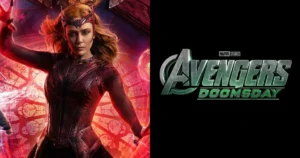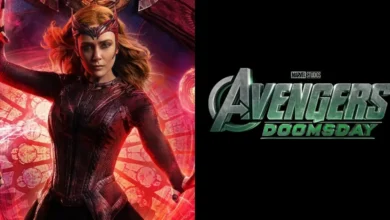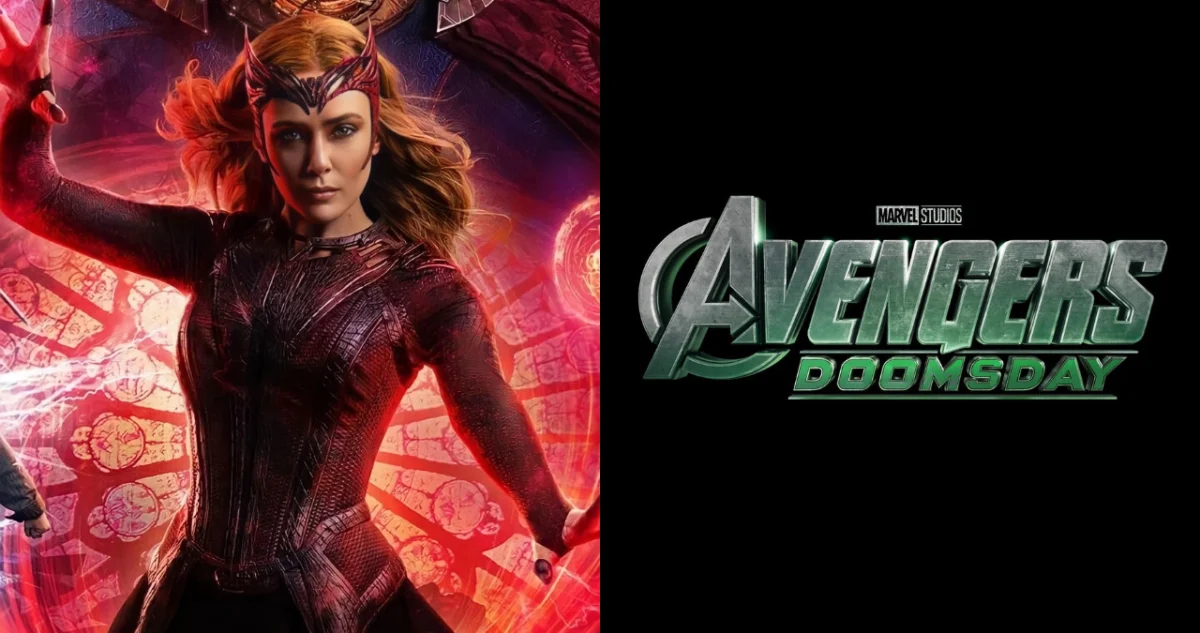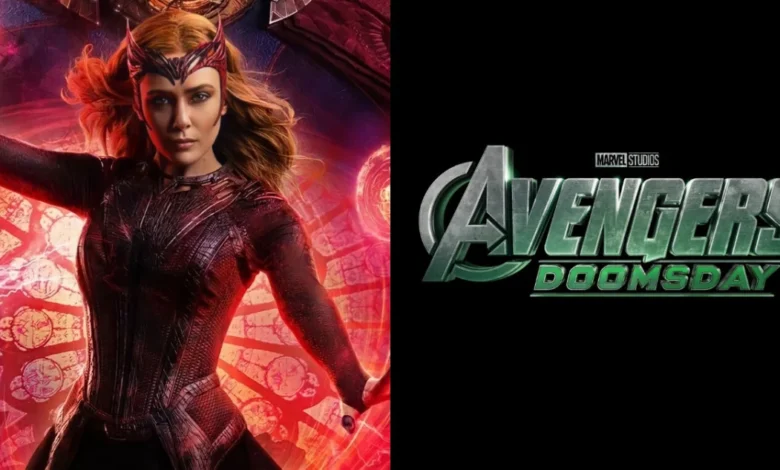
Elizabeth Olsen, renowned for her portrayal of Wanda Maximoff, the Scarlet Witch, in the Marvel Cinematic Universe, recently addressed persistent inquiries regarding her potential involvement in the forthcoming Avengers: Doomsday. Appearing at the Chicago Comics and Entertainment Expo (C2E2), Olsen stated a definitive lack of information concerning the film, a response that, while standard for actors in a notoriously secretive franchise, has only intensified fan speculation given her character’s pivotal role in the MCU’s recent narrative trajectory. Despite her verbal denial, a significant visual detail from her C2E2 appearance—a photograph circulating online showing her posing with a replica of Doctor Doom’s helmet—provides a compelling counterpoint, adding layers of intrigue to her possible future within the saga.
The Enduring Legacy of the Scarlet Witch in the MCU
Over the past decade, Wanda Maximoff has evolved from a morally ambiguous enhanced individual to arguably one of the most powerful and narratively central figures in the Marvel Cinematic Universe. Introduced in Avengers: Age of Ultron (2015) as a Sokovian experiment of Hydra, gaining her psionic and telekinetic abilities through exposure to the Mind Stone, Wanda’s initial journey was marked by a struggle for control over her burgeoning powers and a complex relationship with societal perception. Her character deepened significantly in Captain America: Civil War (2016), where her efforts to contain an explosive event inadvertently led to civilian casualties, fueling the Sokovia Accords and further complicating her place among the Avengers.
Her relationship with Vision, an artificial intelligence with a synthetic body also powered by the Mind Stone, became a cornerstone of her character arc. Their tragic romance was brutally severed in Avengers: Infinity War (2018), where Wanda was forced to destroy Vision to prevent Thanos from acquiring the Mind Stone, only for Thanos to reverse time and kill him again. This profound loss was a critical turning point, setting the stage for the immense emotional and magical outburst seen in subsequent projects.
The Disney+ series WandaVision (2021) served as a transformative chapter for the character, elevating her to her comic book moniker, the Scarlet Witch. Plagued by grief and trauma, Wanda inadvertently created a reality warp over the town of Westview, manifesting her deepest desires and exploring the full, devastating extent of her chaos magic. It was here that she truly embraced her identity as the Scarlet Witch, a being of immense magical power destined to wield the Darkhold, an ancient book of dark magic. This period marked her as a central, if tragic, figure whose influence reshaped the very fabric of the MCU’s magical landscape.
Her journey culminated, or seemingly so, in Doctor Strange in the Multiverse of Madness (2022). Corrupted by the Darkhold and driven by a desperate desire to reunite with her children, Billy and Tommy (born from her Westview reality), Wanda embarked on a destructive multiversal rampage, becoming the primary antagonist. Her arc ended with an apparent self-sacrifice on Mount Wundagore, collapsing the Darkhold’s temple upon herself to prevent its evil from spreading further across the multiverse. Her death, however, was deliberately ambiguous, leaving open the possibility of her return, a possibility eagerly anticipated by a vast segment of the fanbase.
Navigating the Multiverse Saga and Future MCU Trajectory
The Marvel Cinematic Universe is currently immersed in "The Multiverse Saga," an overarching narrative arc spanning Phases 4, 5, and 6, designed to culminate in the seismic events of Avengers: Doomsday (scheduled for December 2026) and Avengers: Secret Wars. This saga has introduced audiences to the vastness of the multiverse, the concept of variants, and the looming threat of Kang the Conqueror, a multiversal antagonist whose various iterations have been central to projects like Loki and Ant-Man and the Wasp: Quantumania.
The lead-up to Avengers: Doomsday is characterized by a series of interconnected films and Disney+ series that are incrementally expanding the scope of the MCU. While specific plot details for Doomsday remain under stringent wraps, it is widely understood to be a pivotal nexus point, potentially involving a convergence of various multiversal threats or a direct confrontation with a formidable foe, possibly even Doctor Doom himself, given the film’s title and Olsen’s intriguing photo opportunity.
Elizabeth Olsen’s C2E2 remarks alluded to her knowledge of VisionQuest, an upcoming Disney+ series expected to focus on Paul Bettany’s Vision. This project could potentially explore Vision’s resurrection, a new iteration, or delve into the aftermath of Wanda’s actions in Westview. Her confusion regarding Secret Wars, questioning if there were "two Secret Wars," likely stems from the comic book lore, which features multiple major Secret Wars events (the 1984 original and the 2015 iteration), both pivotal for the multiverse and character crossovers. This confusion highlights the intricate and often dense nature of the source material that the MCU is now drawing upon.

The Strategic Silence: MCU’s Secrecy Protocol
Marvel Studios is infamous for its rigorous secrecy protocols, particularly concerning plot details and character appearances in its tentpole films. Actors are routinely coached, and often contractually obligated, to deny involvement or feign ignorance regarding major spoilers. This strategy is employed to preserve the element of surprise for audiences and to maximize impact upon reveal. Notable instances include the denials by Andrew Garfield and Tobey Maguire regarding their appearances in Spider-Man: No Way Home, which were ultimately proven false upon the film’s release.
Olsen’s unequivocal statement—"I know nothing. I know about VisionQuest, because I’ve seen Paul [Bettany] in the last six months. I know nothing about any of it. Is [Secret Wars] what happens after? I’m not kidding. Why did I think there were two Secret Wars? Are there not?"—fits squarely within this established pattern of MCU actor non-disclosure. Her tone of genuine confusion, whether entirely authentic or a masterful performance, serves to both deflect direct questions and, ironically, amplify the underlying rumors.
However, the photograph of Olsen posing with Doctor Doom’s helmet at the same event introduces a compelling layer of ambiguity. While this could be dismissed as a playful interaction with a popular comic book prop, the specific context of Avengers: Doomsday and the well-known comic book connection between Scarlet Witch and Doctor Doom (particularly in storylines involving magic and reality manipulation) makes this visual "statement" highly suggestive. In a franchise where every detail is scrutinized, such an image, especially from a key actor, is rarely coincidental. It could be a deliberate, non-verbal tease, subtly hinting at a future collaboration or conflict.
Implications: Scarlet Witch, Doctor Doom, and the Mutant Saga
The potential return of the Scarlet Witch in Avengers: Doomsday carries significant implications for the broader MCU, especially in light of the impending "Mutant Saga," which promises the full integration of the X-Men and other mutant characters into the cinematic universe.
In Marvel Comics, Wanda Maximoff is a mutant, daughter of Magneto, and a central figure in mutant lore, most famously for the "House of M" storyline where her reality-warping powers led to the decimation of the mutant population with the phrase "No More Mutants." The MCU, however, initially retconned her origins, attributing her powers to Hydra experimentation and the Mind Stone, thereby distancing her from the mutant gene. With the arrival of mutants, the MCU faces a crucial narrative decision regarding Wanda’s history. Could Avengers: Doomsday or Secret Wars serve as the platform for a "re-retcon," where Wanda’s true mutant heritage is revealed, or perhaps a variant of Wanda from another reality is introduced who possesses mutant abilities? This would reconcile her comic book roots with her cinematic portrayal and provide a powerful bridge between the current Multiverse Saga and the nascent Mutant Saga.
Furthermore, the title Avengers: Doomsday itself strongly hints at the involvement of Doctor Doom, one of Marvel’s most iconic and formidable villains. Victor Von Doom, the monarch of Latveria, is a genius scientist, sorcerer, and master strategist who has frequently clashed with the Fantastic Four, the Avengers, and even cosmic entities. His potential introduction as a primary antagonist for Doomsday would align with the escalating threats of the Multiverse Saga. The visual of Elizabeth Olsen with Doom’s helmet, therefore, takes on heightened significance. It could be a subtle nod to a future alliance, a confrontation, or even a scenario where Doom attempts to harness Wanda’s immense powers, much like the Darkhold did.
The comic book history between Doctor Doom and the Scarlet Witch is rich, particularly concerning their involvement in reality-altering events and the manipulation of powerful magical artifacts. A storyline involving Doom and Wanda could explore themes of power, control, and the moral complexities of altering reality, offering a compelling narrative for the next Avengers ensemble.
Whether Wanda’s return manifests as a "final send-off"—a heroic sacrifice that definitively closes her arc, perhaps to prevent a multiversal catastrophe—or a "rebirth" into a new era, potentially as a fully realized mutant or a benevolent magical protector, remains to be seen. Her emotional resonance with audiences, coupled with her immense power set, makes her an invaluable asset to the MCU’s evolving narrative. Her potential to bridge the magical, multiversal, and mutant aspects of the franchise positions her as a character whose future, despite official denials, continues to be a subject of intense speculation and anticipation.
As Avengers: Doomsday inches closer to its December 2026 release, the veil of secrecy around the film will undoubtedly remain thick. However, every carefully chosen word and every seemingly innocuous public appearance by key actors like Elizabeth Olsen will continue to be meticulously analyzed by fans and industry observers alike, eager to piece together the future of the Marvel Cinematic Universe and the fate of its most powerful witch.