The Business of Fear: Inside Blumhouse Atomic, the Future of the Studio, and the 2027 Slate

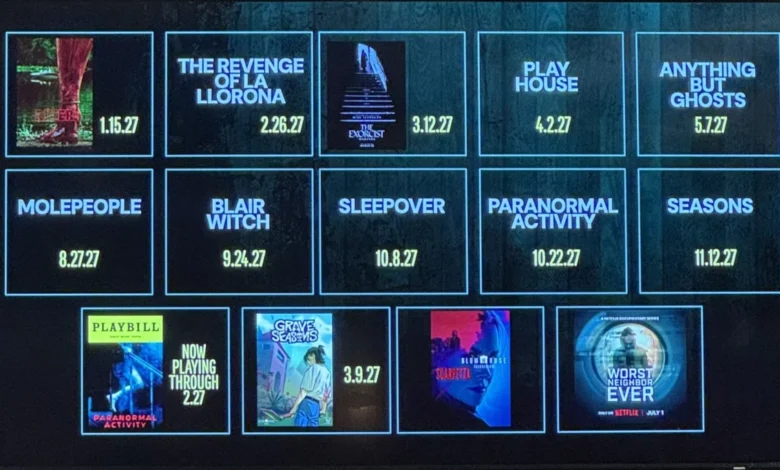
Executives and prominent figures from across the entertainment industry converged this week at a premier hotel in Mid-City Los Angeles for a press event hosted by Blumhouse and Atomic Monster. The gathering, organized to discuss the current operational landscape following the consolidation of the two major horror production companies, brought together Blumhouse President and CEO Jason Blum, Atomic Monster Founder James Wan, and Blumhouse Atomic President Abhijay Prakash. While corporate restructurings can often yield dry and formulaic logistical updates, the discussion provided valuable insights into the strategic direction of the newly unified banner, shedding light on upcoming slates, risk-mitigation philosophies, and the evolving economics of modern horror cinema.
Operational Realities of the Blumhouse Atomic Merger
Addressing early industry confusion surrounding branding and structural changes, studio leadership clarified the nature of the corporate alignment. Company executives admitted that initial communications regarding the merger lacked clarity, leading to speculation about massive creative overhauls. However, leadership confirmed that the transition primarily establishes an overarching parent company for administrative and operational efficiency, rather than altering the fundamental creative output of either studio.
James Wan addressed the press during the panel, emphasizing that the distinct creative identities of the respective brands remain intact. According to Wan, the day-to-day workflow continues to center on distinct slates characterized by "Blumhouse movies" and "Atomic Monster movies." This administrative consolidation is designed to leverage the shared resources, marketing power, and distribution pipelines of both companies while preserving the independent production models that have long defined their success in the marketplace.
The 2027 Film Slate and Diversity in Directing
A central focus of the Los Angeles gathering was the unveiling of the studio’s upcoming project roster. Leadership expressed enthusiasm for an upcoming slate that balances established intellectual properties with original concepts. Notably, the 2027 film schedule features seven pictures helmed by emerging voices, including three first-time feature directors.
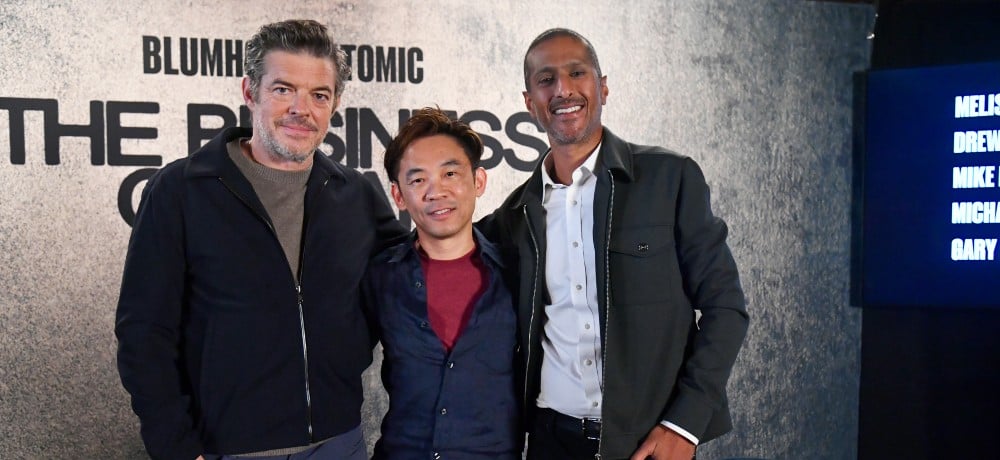
The announcement also prompted inquiries regarding demographic representation behind the camera. When questioned about the absence of female directors in the initial 2027 lineup, Jason Blum defended the studio’s ongoing track record for inclusion, noting that the company had collaborated with numerous female filmmakers during the previous production year. The studio maintains that its overarching talent pipeline remains committed to discovering and elevating diverse perspectives across its broader multi-year slate.
Low-Budget Economics and Box Office Performance
The foundational business model of Blumhouse and Atomic Monster continues to rely on disciplined production budgeting, a strategy that enables the companies to greenlight high-risk, high-reward concepts that traditional Hollywood studios frequently bypass. By keeping initial production costs modest, the studios insulate themselves against potential box office failures while positioning themselves for exponential returns when a project resonates with global audiences.
This economic framework was recently underscored by the performance of Curry Barker’s Obsession. Produced on a remarkably lean budget of approximately $750,000, the film shattered box office expectations, grossing roughly $500 million worldwide. Although global marketing and distribution expenditures significantly expanded the overall capital investment, the return on investment remains a historic milestone for independent horror. Industry analysts point to Obsession as proof that audiences continue to respond favorably to tightly focused, high-concept genre storytelling supported by targeted digital and theatrical campaigns.
Expanding Iconic Franchises
In addition to original features, the studio’s strategy involves the revitalization and expansion of legacy horror properties. During the panel, James Wan was asked about his ongoing involvement with legendary franchises such as The Blair Witch Project and Paranormal Activity. Responding with characteristic levity, Wan simply noted his lifelong passion for the genre, explaining that his participation stems from a genuine fandom for these foundational properties.
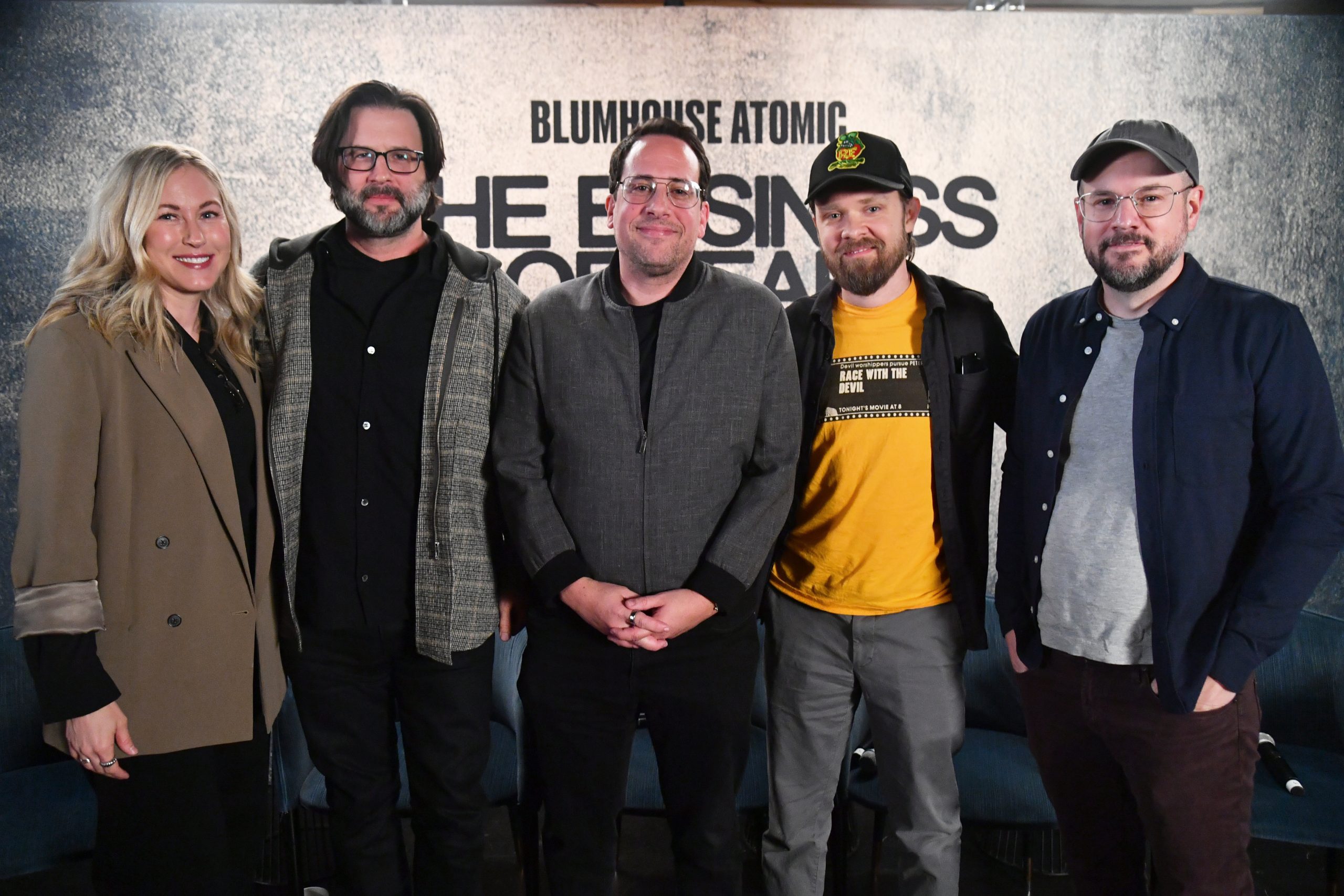
Among the most anticipated additions to the studio’s long-term pipeline is a new installment in the long-running Saw franchise, directed by Mike P. Nelson. While specific plot details and production timelines remain tightly guarded ahead of a planned release window in 2028, Nelson made a public appearance at the Mid-City event. The filmmaker discussed the unique psychological duality of taking on a franchise that originally propelled James Wan to international prominence, describing his experience as a balance of intense professional pressure and robust institutional support from the studio executives. Wan expressed strong confidence in Nelson’s creative vision for the property, signaling a collaborative environment where legacy filmmakers mentor the next generation of genre auteurs.
Diversification Beyond Feature Films
The editorial notes accompanying the studio’s comprehensive roadmap indicate that Blumhouse Atomic’s ambitions extend far beyond traditional cinematic releases. The company is actively diversifying its intellectual property portfolio across television production, interactive video game development, and theatrical stage adaptations. Notably, the studio’s expanding footprint includes a unique live theatrical production of Paranormal Activity slated for Broadway. This cross-media expansion reflects a broader industry trend where production houses seek to maximize brand equity by translating cinematic terror into immersive, multi-platform entertainment experiences.
Broader Industry Implications and Future Outlook
The consolidation of Blumhouse and Atomic Monster into a unified parent entity arrives at a critical juncture for the film industry, which continues to navigate shifting theatrical windows, rising production costs, and changing consumer viewing habits. By maintaining a dual focus on ultra-low-budget original cinema and high-profile intellectual property management, the studio has insulated itself against market volatility.
As the entertainment landscape looks ahead to the 2027 slate and beyond, the success of the Blumhouse Atomic model will likely serve as a benchmark for independent genre filmmaking. By balancing fiscal discipline with creative risk-taking, the studio demonstrates that horror remains one of the most reliable and culturally resonant sectors of the global film economy.
Related posts: