All Sections Alpha: Fred McNamara on Space: 1999 and the Enduring Legacy of Gerry Anderson

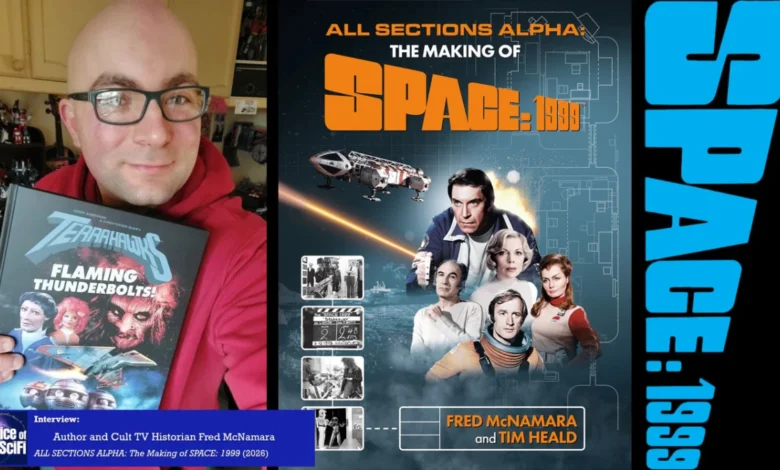
The landscape of classic science fiction literature and television history is set for a major expansion with the upcoming release of All Sections Alpha: The Making of Space: 1999. Author and television historian Fred McNamara recently sat down to discuss the monumental publishing effort behind the upcoming 50th-anniversary hardback edition. Published by Anderson Entertainment and slated for release on September 22, the 344-page coffee table book represents a comprehensive reimagining of Tim Heald’s original 1976 paperback chronicle.
As fandoms continue to celebrate the pioneering practical effects, visionary art direction, and high-concept storytelling of legendary British producer Gerry Anderson, this definitive guide promises to offer the most exhaustive look yet at one of his most ambitious television enterprises.
A Landmark Expansion of a 1970s Classic
The origins of All Sections Alpha trace back more than a year of meticulous editorial and archival work. When Tim Heald penned the original paperback in 1976, Space: 1999 was still actively broadcasting its second season, capturing the imaginations of viewers worldwide with the terrifying premise of Earth’s Moon being blasted out of orbit by a catastrophic nuclear waste explosion.
However, covering just the initial phases of the production left a vast narrative and historical void regarding the show’s entire broadcast run, subsequent cancellations, and eventual evolution into a sprawling multimedia franchise.
Fred McNamara explained that transforming the modest 1970s paperback into a modern, high-end coffee table book required a complete overhaul of the source material. The updated volume covers the entirety of the television series across both seasons, incorporating newly uncovered behind-the-scenes photographs, production memos, and expanded episode guides. Furthermore, the publication serves as a comprehensive index for the broader universe that grew around the television series over the decades, including licensed comic book adaptations, audio dramas produced by Big Finish Productions, and extensive retrospectives focusing on the cast and crew.
Invaluable Contributions from Series Icon Barbara Bain
One of the most remarkable aspects of the new edition’s development is the direct, hands-on involvement of original series star Barbara Bain. Portraying Dr. Helena Russell alongside her late husband and co-star Martin Landau as Commander John Koenig, Bain brought a grounding emotional realism and scientific curiosity to Moonbase Alpha.
According to McNamara, Bain’s collaboration with the editorial team was critical to ensuring the historical accuracy of the book. Providing first-hand recollections, corrections, and nuanced clarifications regarding the day-to-day realities of filming at Pinewood Studios during the mid-1970s, Bain’s participation elevates All Sections Alpha from a standard retrospective to an authoritative primary source document.
Her editorial oversight ensures that the human element of the production—the grueling schedules, the innovative visual effects pioneering, and the interpersonal dynamics of the international cast—is represented with absolute fidelity.
The 4K Restoration Wave and Modern Gerry Anderson Renaissance

The release of All Sections Alpha coincides with a broader resurgence in popularity for the works of Gerry Anderson, spearheaded largely by Anderson Entertainment. During his discussion, McNamara highlighted additional high-profile archival projects currently rolling out to appease dedicated sci-fi collectors.
Chief among these is the newly announced 4K Steelbook release of "The Metamorph," the iconic season two premiere episode of Space: 1999. Featuring the introduction of the shape-shifting alien character Maya, played by Catherine Schell, and the permanent integration of Tony Anholt as Security Officer Tony Verdeschi, the episode has undergone extensive digital restoration.
The upcoming physical media release is packed with robust bonus features, most notably the newly produced retrospective documentary titled 50 Years Out of Orbit, alongside comprehensive audio commentary tracks that break down the technical achievements of the episode’s miniature photography and optical effects.
Beyond Space: 1999, the conversation also touched upon Anderson Entertainment’s aggressive mining of other classic properties. This includes the ongoing publication of Volumes 1 and 2 of the definitive Thunderbirds collected anthologies, preserving rare comic book strips originally published during the height of Supermarionation’s cultural dominance in the 1960s. Discussions regarding potential future comic anthologies for other Anderson properties remain ongoing, reflecting a sustained commercial appetite for vintage British science fiction materials.
The Legacy of Gerry Anderson in Modern Science Fiction
To fully understand the cultural weight of All Sections Alpha, one must examine the unique production history of Space: 1999. Created by Gerry and Sylvia Anderson, the series debuted in 1975 as the most expensive television program produced in Europe up to that point. With an initial budget of approximately £3 million for its first season—an astronomical sum for television at the time—the production demanded absolute perfection from its craftspeople, notably special effects director Brian Johnson, who would later apply his miniature photography expertise to landmark cinematic milestones like Alien and Star Wars.
Despite its lavish production values, lavish wardrobe designs by Rudi Gernreich, and iconic Eagle Transporter spacecraft models that remain holy grails for model kit builders, Space: 1999 faced turbulent syndication and broadcasting challenges, particularly in the United States. Following the conclusion of its second season, which saw a creative retooling aimed at boosting American market appeal through faster pacing and alien encounters, the series quietly ended its run with a total of 48 episodes.
In the decades since its cancellation, the show’s reputation has undergone a significant critical reappraisal. Where contemporary television critics occasionally faulted the series for prioritizing philosophical ambiguity and surrealist imagery over conventional narrative closure, modern audiences and scholars recognize Space: 1999 as a profound precursor to cerebral, high-concept speculative fiction.
Implications for Collectors and Independent Publishing
The arrival of All Sections Alpha: The Making of Space: 1999 on September 22, 2026, represents a vital milestone not only for Anderson enthusiasts but for the broader ecosystem of specialized entertainment publishing. Coffee table books dedicated to cult television series have increasingly become premium collector’s items, bridging the gap between academic film history and fan-driven memorabilia.
With pre-orders currently live across major retail platforms and the official Gerry Anderson Store, the volume is positioned to satisfy both longtime veterans of the 1970s broadcast era and a new generation of viewers discovering the series through streaming platforms and high-definition physical media restorations.
As independent publishers continue to champion detailed, physically luxurious retrospectives, works like All Sections Alpha ensure that the pioneering craftsmanship, bold speculative imagination, and enduring human dramas of television history will remain meticulously documented for decades to come.